Introduction
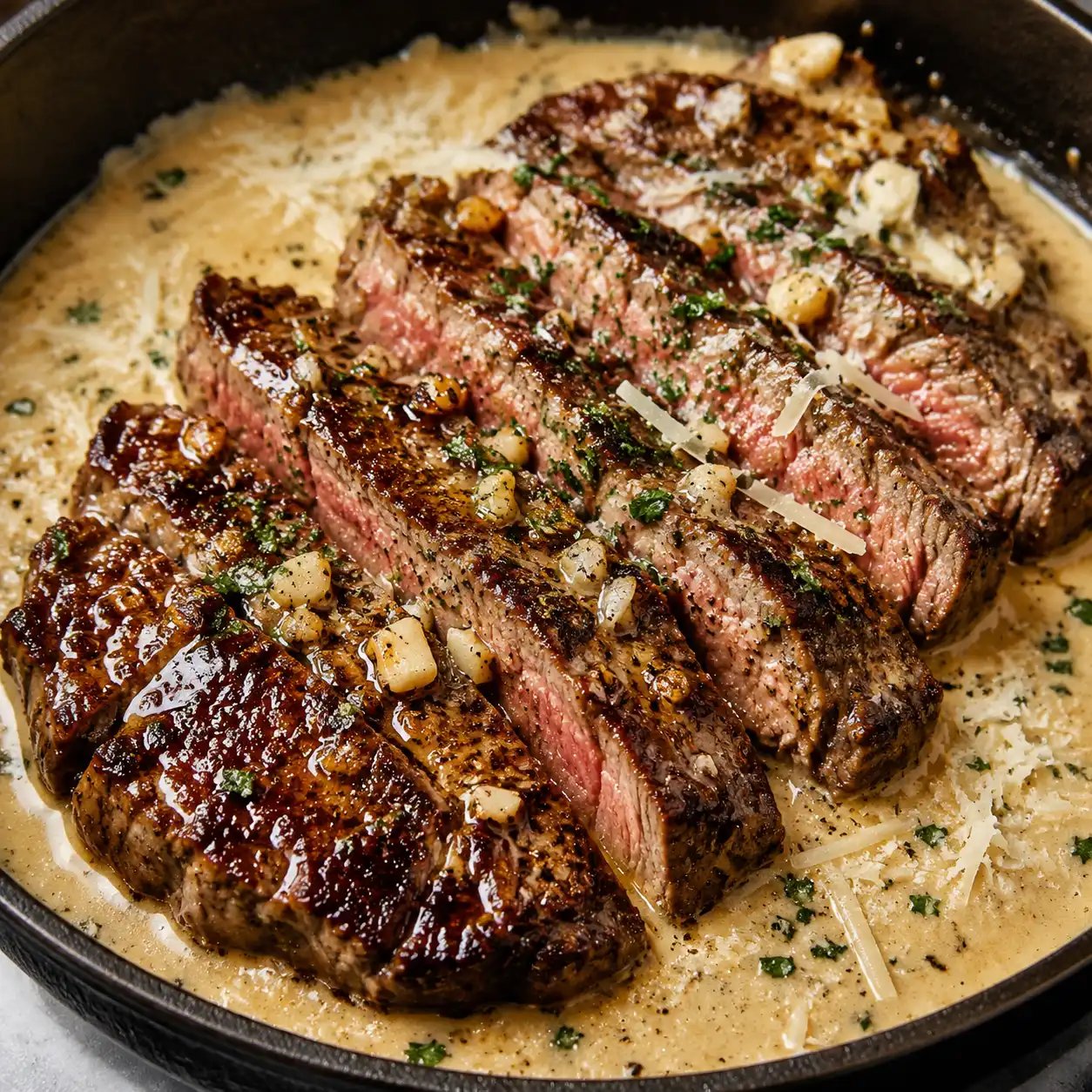
Garlic Butter Steak with Parmesan Cream Sauce is a luxurious, restaurant-quality dish that brings bold, savory depth and velvety richness to the humble steak—elevating it from weeknight dinner to special-occasion centerpiece. This recipe masterfully balances the robust char and umami of a perfectly seared cut of beef with the aromatic warmth of slow-simmered garlic butter and the indulgent silkiness of a hand-crafted Parmesan cream sauce. Every element—from the sizzle of the pan to the golden crust on the steak, from the fragrant swirl of melted butter to the nutty, salty finish of aged Parmigiano-Reggiano—is designed to deliver layered, harmonious flavor in every bite. Whether you’re impressing guests, celebrating a milestone, or simply treating yourself to a deeply satisfying culinary experience, this dish proves that exceptional dining doesn’t require complicated techniques—just quality ingredients, thoughtful timing, and attention to detail.
The History
The roots of Garlic Butter Steak trace back to classic French and Italian bistro traditions, where simplicity and ingredient integrity reigned supreme. In early 20th-century France, steak au beurre emerged as a rustic yet elegant preparation: a tender cut—often entrecôte or bavette—seared over high heat and finished with a generous knob of compound butter infused with garlic, parsley, and shallots. Meanwhile, across the Alps in northern Italy, filetto al burro e aglio followed similar principles but often incorporated local cheeses like Grana Padano or Parmigiano-Reggiano into pan sauces, leveraging their natural glutamates to deepen savoriness. As post-war American cuisine embraced continental influences, chefs began merging these traditions—adding heavy cream for body and richness, and refining the emulsion technique to create stable, luscious sauces. The modern Garlic Butter Steak with Parmesan Cream Sauce crystallized in the 1980s–90s fine-dining boom, popularized by chefs like Paul Bocuse and later adapted by celebrity cooks such as Emeril Lagasse and Giada De Laurentiis for home kitchens. Today, it stands as a beloved fusion icon: French technique meets Italian soul, elevated by American accessibility—and endlessly adaptable to personal taste, dietary needs, and seasonal produce.
Ingredients Breakdown
Understanding each component’s role is essential to mastering this dish—not just for replication, but for intelligent improvisation:
- Steak (Ribeye, New York Strip, or Filet Mignon): Ribeye offers unmatched marbling and beefy richness; New York Strip delivers firm texture and pronounced flavor; filet mignon provides delicate tenderness—ideal if you prefer subtlety over fat-forward intensity. All benefit from dry-brining and high-heat searing.
- Unsalted Butter: Used in two stages—first for searing (high smoke point clarified version preferred), then as finishing butter. Unsalted ensures precise sodium control and purity of flavor. European-style (82–86% butterfat) yields superior mouthfeel and emulsification.
- Fresh Garlic: Minced—not powdered or jarred—for bright, pungent aroma and enzymatic complexity. Sautéed gently to avoid bitterness; raw garlic would overwhelm, burnt garlic turns acrid.
- Heavy Cream (36–40% milkfat): Provides viscosity, richness, and emulsifying power. Lower-fat creams (half-and-half or whole milk) will break or thin the sauce; ultra-pasteurized versions may resist thickening—opt for pasteurized, not ultra-pasteurized, when possible.
- Parmigiano-Reggiano (DOP-certified): Aged minimum 24 months, with granular texture and deep umami notes. Its natural enzymes and crystalline structure dissolve slowly into warm cream, lending nuttiness, salt balance, and subtle crunch. Pre-grated “Parmesan” lacks moisture, contains anti-caking agents, and fails to melt properly—always grate fresh.
- Dry White Wine (e.g., Sauvignon Blanc or Pinot Grigio): Adds acidity to cut richness and lift the sauce. Alcohol cooks off, leaving only bright fruit and mineral notes. Substitute with dry vermouth or unsalted vegetable broth if avoiding alcohol—but never sweet wine or cooking wine.
- Fresh Thyme & Rosemary: Earthy, pine-like aromatics that complement beef without dominating. Stems are tied for easy removal; leaves can be finely chopped and stirred in at the end for freshness.
- Beef Stock (preferably homemade or low-sodium): Concentrated collagen and gelatin add body and glossy sheen. Store-bought should be reduced by half first to intensify flavor and avoid excess salt.
- Smoked Paprika (optional but recommended): A whisper adds warmth and complexity—not heat—echoing the Maillard reaction on the steak’s crust. Use sweet (dulce) variety, not hot or smoked unless desired.
- Finishing Touches: Flaky sea salt (Maldon or Fleur de Sel) for textural contrast and clean salinity; microplaned lemon zest for aromatic brightness; reserved herb leaves for visual appeal and freshness.
Step-by-Step Recipe
- Prep & Dry-Brine (1–24 hours ahead): Pat steaks *extremely* dry with paper towels. Generously season all sides with kosher salt (1 tsp per pound) and freshly ground black pepper. Place on a wire rack over a baking sheet and refrigerate uncovered for at least 1 hour—or up to 24 hours—to enhance surface dehydration and seasoning penetration.
- Bring to Room Temperature (45–60 min before cooking): Remove steaks from fridge. Let rest on counter, loosely covered, until internal temp reaches 65–70°F (18–21°C). Cold meat sears poorly and cooks unevenly.
- Preheat Pan & Oil (5 min before sear): Heat a heavy-bottomed stainless steel or cast-iron skillet over medium-high until shimmering (~400°F / 204°C). Add 1 tbsp high-smoke-point oil (avocado, grapeseed, or refined coconut). Swirl to coat.
- Sear Steaks (3–4 min per side, depending on thickness): Place steaks gently in pan—do not crowd. Press lightly with tongs for full contact. Resist moving. After 2–3 minutes, check for a deep mahogany crust. Flip once using tongs (no fork piercing!). For thicker cuts (>1.5″), sear edges briefly. Transfer to a warmed plate; tent *loosely* with foil. Rest 8–12 minutes—this allows juices to redistribute and internal temp to rise 3–5°F.
- Make Garlic Butter Base (during steak rest): Reduce heat to medium-low. Add 2 tbsp unsalted butter, minced garlic, thyme, rosemary, and optional smoked paprika. Sauté 1–2 min until garlic is fragrant but *not browned*. Stir constantly to prevent scorching.
- Build the Pan Sauce (5–7 min): Pour in ¼ cup dry white wine, scraping vigorously with a wooden spoon to release all browned fond (those caramelized bits are flavor gold). Simmer 1–2 min until alcohol evaporates. Add ½ cup reduced beef stock and simmer 2–3 min until slightly syrupy. Whisk in ½ cup heavy cream; bring to gentle simmer—not boil—as boiling destabilizes the emulsion.
- Incorporate Parmesan (critical step): Reduce heat to low. Gradually whisk in grated Parmigiano-Reggiano, 1 tbsp at a time, allowing each addition to fully melt and incorporate before adding more. Total time: ~2 minutes. Sauce should coat the back of a spoon and hold a clear trail when a finger draws through it. If too thick, add 1 tsp warm stock; if too thin, simmer 30 sec longer.
- Finish with Butter & Balance: Remove from heat. Whisk in remaining 2 tbsp cold, cubed unsalted butter—one piece at a time—until sauce is glossy and luxuriously smooth. Taste and adjust: a pinch of flaky salt, a squeeze of lemon juice (¼ tsp), or a grating of fresh lemon zest brightens richness. Strain through a fine-mesh sieve for absolute silkiness (optional but recommended for formal service).
- Plate & Serve: Slice rested steak against the grain into ½-inch pieces. Spoon warm sauce generously over and around. Garnish with extra Parmesan shavings, fresh herbs, lemon zest, and a crack of black pepper. Serve immediately alongside roasted fingerling potatoes, sautéed wild mushrooms, or garlicky broccolini.
Tips
- The Rest Is Non-Negotiable: Skipping or shortening the resting period causes up to 40% juice loss upon slicing. Use this time to make the sauce—efficiency meets science.
- Thermometer > Guesswork: Invest in an instant-read thermometer. Ideal final temps: 125°F (rare), 135°F (medium-rare), 145°F (medium). Carryover cooking adds 5°F during rest.
- Emulsion Science: Cold butter + warm (not boiling) sauce + constant whisking = stable emulsion. If sauce breaks, whisk in 1 tsp cold cream or a teaspoon of cold water while heating gently.
- Garlic Timing Matters: Add garlic *after* deglazing—never before searing. Raw garlic burns instantly in hot oil. If using roasted garlic for sweetness, stir in during cream stage.
- Wine Substitution Wisdom: If omitting wine, use 2 tbsp apple cider vinegar + 2 tbsp stock for acidity and depth—simmer 1 min longer to mellow sharpness.
- Sauce Consistency Control: Too thin? Simmer 30–60 sec longer. Too thick? Whisk in warm stock, ½ tsp at a time. Never add cold liquid—it shocks the emulsion.
- Pan Choice Impacts Crust: Stainless steel gives superior browning vs. nonstick (which inhibits Maillard). Cast iron retains heat best for consistent sear. Avoid aluminum—it reacts with acidic wine/cream.
- Leftover Sauce Magic: Cool completely, store in airtight container for up to 5 days. Reheat *very gently* in double boiler. Use as pasta toss, dip for grilled vegetables, or base for creamy mushroom risotto.
- Steak Thickness Guide: For even cooking: aim for 1–1.5 inch thick. Under ¾ inch? Sear 1.5–2 min per side—no rest needed beyond 3 min. Over 2 inches? Reverse-sear in oven (250°F) to 10°F below target, then blast in skillet.
- Herb Handling: Add woody stems (rosemary/thyme) at deglaze stage for infusion; remove before finishing. Tender herbs (parsley, chives) added at very end preserve brightness.
Variations and Customizations
- Wine-Forward Version: Replace white wine with ¼ cup full-bodied red (Pinot Noir or Chianti), reduce longer (3–4 min), and finish with 1 tsp balsamic glaze for tangy depth.
- Mushroom & Shallot Upgrade: After garlic step, add 1 cup sliced cremini mushrooms and 2 finely diced shallots. Sauté until golden (5 min) before wine. Adds earthy umami and textural interest.
- Truffle Infusion: Stir in ½ tsp white truffle oil or 1 tsp grated fresh black truffle at the very end—elevates luxury without overpowering.
- Dairy-Free Adaptation: Substitute vegan butter (Miyoko’s or Fora), full-fat coconut cream (chilled, solid part only), and nutritional yeast (2 tbsp) + 1 tsp white miso for Parmesan’s savory depth. Thicken with ¼ tsp xanthan gum if needed.
- Low-Carb/Keto Optimized: Already naturally low-carb! Confirm stock has no hidden sugars. Boost fat by adding 1 tbsp ghee to finishing butter.
- Spiced Variation: Add ¼ tsp crushed red pepper flakes with garlic, or finish with harissa-spiked crème fraîche dollop for North African flair.
- Herb Garden Edition: Swap thyme/rosemary for 1 tbsp chopped fresh oregano + 1 tsp lemon thyme. Finish with basil ribbons and lemon confit for Mediterranean brightness.
- Cheese Alternatives: Pecorino Romano (saltier, sharper), Asiago (nutty, slightly sweet), or Gruyère (caramel notes)—all melt beautifully. Avoid mozzarella or feta—they lack binding power and depth.
- Seafood Twist: Use same sauce technique with pan-seared scallops or halibut. Reduce cream by 1 tbsp and add 1 tsp Dijon mustard for cohesion with delicate proteins.
- Vegetarian “Steak” Option: Seared king oyster mushrooms or marinated, grilled eggplant “steaks” pair stunningly—add 1 tsp soy sauce to stock for extra umami.
Health Considerations and Nutritional Value
This dish is nutrient-dense when prepared mindfully—offering high-quality protein, healthy fats, and bioactive compounds—though portion and preparation choices significantly impact its wellness profile:
- Protein Powerhouse: A 6-oz grass-fed ribeye provides ~42g complete protein, rich in B12, zinc, selenium, and creatine—supporting muscle synthesis, immune function, and neurological health.
- Healthy Fat Profile: Grass-fed beef contains higher levels of omega-3s and CLA (conjugated linoleic acid), linked to reduced inflammation and improved metabolic health. Butter contributes butyrate (gut-supportive) and fat-soluble vitamins A, D, E, K2.
- Parmesan Benefits: Naturally low-lactose, high in calcium (336mg per ¼ cup), phosphorus, and bioactive peptides shown to support bone density and blood pressure regulation.
- Cream Considerations: Heavy cream adds saturated fat (~5g per tbsp), but recent research indicates dietary saturated fat, in context of whole foods and balanced diet, does not inherently increase heart disease risk for most people. Moderation remains key—portion sauce thoughtfully (2–3 tbsp per serving).
- Sodium Awareness: Most sodium comes from added salt and Parmesan. Using low-sodium stock and limiting added salt keeps total sodium under 600mg/serving—well within daily guidelines (<2,300mg).
- Garlic & Polyphenols: Raw garlic contains allicin (antimicrobial, cardioprotective); gentle sautéing preserves beneficial sulfur compounds while mellowing pungency.
- Dietary Accommodations: Naturally gluten-free. For dairy sensitivity, see dairy-free variation above. Not suitable for strict vegans or those with severe lactose intolerance (though aged Parmesan contains minimal lactose).
- Balancing the Meal: Pair with fiber-rich sides—roasted Brussels sprouts, garlic sautéed spinach, or cauliflower purée—to slow digestion, stabilize blood sugar, and enhance satiety.
- Calorie Context: Approximate values per 6-oz steak + ¼ cup sauce: 680–750 kcal (varies by cut/fat content). Ribeye leans higher (720+ kcal); filet lower (620–650 kcal). Focus on nutrient density—not just calories.
- Special Considerations: Those managing hypertension should monitor sodium; consult a dietitian. Individuals on blood thinners (e.g., warfarin) should maintain consistent vitamin K intake—this dish contains modest amounts from herbs and butter.
Ingredients
- 2 (6–8 oz) boneless steaks (ribeye, New York strip, or filet mignon), 1–1.5 inches thick
- 1½ tsp kosher salt (plus more to taste)
- 1 tsp freshly ground black pepper
- 1 tbsp high-smoke-point oil (avocado, grapeseed, or refined coconut)
- 4 tbsp unsalted butter, divided (2 tbsp for garlic base, 2 tbsp cold for finishing)
- 4 garlic cloves, finely minced (about 1 tbsp)
- 2 sprigs fresh thyme (stems included)
- 1 small sprig fresh rosemary (stems included)
- ¼ tsp sweet smoked paprika (optional but recommended)
- ¼ cup dry white wine (Sauvignon Blanc or Pinot Grigio)
- ½ cup low-sodium beef stock, reduced by half (to ¼ cup)
- ½ cup heavy cream (36–40% milkfat)
- ½ cup freshly grated Parmigiano-Reggiano (DOP-certified, not pre-grated)
- Flaky sea salt (Maldon or Fleur de Sel), for finishing
- Optional garnishes: lemon zest, fresh thyme leaves, microplaned lemon zest, cracked black pepper
Directions
- Dry-brine steaks: Pat steaks extremely dry. Season generously with 1½ tsp kosher salt and 1 tsp black pepper. Place on wire rack over baking sheet; refrigerate uncovered 1–24 hours.
- Bring to temperature: Remove steaks from fridge 45–60 minutes before cooking. Let sit at room temperature until cool to touch (~68°F).
- Preheat skillet: Heat heavy skillet (stainless or cast iron) over medium-high heat 5 minutes. Add 1 tbsp oil; heat until shimmering.
- Sear steaks: Place steaks in hot pan. Press gently. Sear undisturbed 3–4 minutes until deep brown crust forms. Flip; sear opposite side same time. For thick cuts, sear edges 30 sec each. Transfer to warmed plate; tent loosely with foil. Rest 8–12 minutes.
- Make garlic base: Reduce heat to medium-low. Add 2 tbsp butter, minced garlic, thyme, rosemary, and smoked paprika. Sauté 1–2 minutes until fragrant (do not brown garlic).
- Build sauce: Pour in wine; scrape pan vigorously. Simmer 1–2 minutes until alcohol evaporates. Add reduced stock; simmer 2–3 minutes until slightly thickened.
- Add cream: Whisk in heavy cream. Bring to gentle simmer (do not boil). Reduce heat to low.
- Incorporate cheese: Gradually whisk in grated Parmesan, 1 tbsp at a time, letting each fully melt before adding next. Sauce should thicken to coat spoon.
- Finish with butter: Remove from heat. Whisk in remaining 2 tbsp cold butter, one piece at a time, until glossy and smooth. Taste; adjust with flaky salt, lemon juice (¼ tsp), or zest.
- Strain & serve: Strain sauce through fine-mesh sieve for silkiness (optional). Slice rested steak against grain. Spoon warm sauce generously over steak. Garnish and serve immediately.
FAQ
- Can I make this sauce ahead of time?
- Yes—but reheat *very gently* (double boiler or low microwave in 15-sec bursts) and whisk constantly. Do not boil. Stir in 1 tsp cold cream if separation occurs. Best used same day; refrigerate up to 3 days.
- Why does my sauce break or look greasy?
- Common causes: overheating after adding cream, adding cold cheese to hot sauce, or vigorous whisking while boiling. Fix: remove from heat, whisk in 1 tsp cold cream or warm stock, then gently reheat while whisking.
- What’s the best cut for beginners?
- New York strip—it’s forgiving, flavorful, and consistently tender. Avoid lean cuts like sirloin for this recipe; they dry out easily.
- Can I use frozen steak?
- Yes—if thawed *slowly in fridge* (24–36 hours) and patted *extremely* dry. Never cook partially frozen; uneven sear and gray band result.
- Is there a shortcut for the sauce?
- Yes—reduce steps by using 1 cup high-quality store-bought beef demi-glace instead of stock + wine. Simmer 2 min, add cream + cheese. Still delicious, though less nuanced than from-scratch.
- How do I store and reheat leftovers?
- Store steak and sauce separately in airtight containers. Steak: refrigerate up to 3 days; reheat gently in skillet with butter or air fryer at 350°F for 3–4 min. Sauce: refrigerate up to 5 days; reheat as above. Freeze sauce (without cheese) up to 2 months—add fresh Parmesan after thawing.
- Can I make this in a grill pan or outdoors?
- Absolutely. Grill steaks over direct high heat (450–500°F) for same timing. Make sauce in a skillet indoors—or use a cast-iron pan on the grill’s cooler side.
- What sides pair best?
- Classic pairings: garlic mashed potatoes, roasted asparagus with lemon, truffle mac & cheese, or farro salad with arugula and cherry tomatoes. For lighter options: shaved fennel & radish salad or grilled zucchini ribbons.
- Why use fresh herbs instead of dried?
- Fresh thyme and rosemary contain volatile oils lost in drying—delivering brighter, more complex aromatics. Dried herbs work in a pinch (use 1 tsp dried thyme, ½ tsp dried rosemary), but add earlier in cooking to rehydrate.
- Can I make this dairy-free without sacrificing richness?
- Yes—see Variations section. Key is using full-fat coconut cream *and* a cultured, enzyme-rich dairy-free butter. Nutritional yeast + white miso replicates Parmesan’s glutamate depth better than any cheese substitute alone.
Summary
Garlic Butter Steak with Parmesan Cream Sauce is a masterclass in balancing bold, rustic flavors with refined technique—where a perfect sear meets an emulsified, velvety sauce built on centuries of culinary wisdom. It rewards patience, honors ingredient quality, and adapts beautifully to personal preference—making it as timeless as it is unforgettable.
Whether you’re cooking for two or hosting a dinner party, this dish delivers restaurant elegance with approachable execution—proving that extraordinary meals begin not with complexity, but with intention, respect for craft, and the simple joy of sharing something truly delicious.