Introduction
Welcome to the ultimate guide for creating an Easy Coconut Chicken Rice Bowl, a dish that perfectly marries creamy tropical flavors with savory umami notes for a dinner that feels both exotic and comforting. In today’s fast-paced world, finding a meal that is quick to prepare, nutritious, and bursting with flavor can often feel like a challenge. This recipe solves that problem by utilizing pantry staples and fresh ingredients to create a harmonious bowl that satisfies the whole family. Whether you are a busy parent looking for a weeknight solution or a food enthusiast eager to explore fusion cuisine, this coconut chicken rice bowl delivers on every front. The richness of coconut milk pairs beautifully with tender chunks of chicken, while aromatic spices and fresh vegetables add texture and depth. Below, we will explore every facet of this dish, from its cultural roots to the nutritional benefits, ensuring you have all the knowledge needed to master this recipe.
The History
The concept of combining chicken, rice, and coconut is not tied to a single specific region but rather represents a beautiful convergence of culinary traditions from across the tropics. Coconut chicken has strong roots in Caribbean cuisine, where coconut milk is frequently used to braise meats, imparting a sweet and creamy texture. Simultaneously, Southeast Asian cuisines, particularly Thai and Vietnamese, have long utilized coconut milk in curries and soups paired with jasmine rice. As globalization increased in the late 20th century, these distinct flavor profiles began to merge in Western kitchens, giving rise to fusion dishes that prioritize ease and bold flavors. The rice bowl format itself gained immense popularity in the 2010s with the rise of fast-casual dining chains that focused on customizable grain bowls. This recipe honors those diverse histories by combining the braising techniques of the Caribbean with the aromatic spice profiles of Southeast Asia, packaged in the convenient and modern format of a dinner bowl.
Ingredients Breakdown
Understanding the role of each component in this recipe is key to achieving the best possible flavor profile. Here is a detailed look at why we choose specific ingredients:
- Chicken Thighs vs. Breasts: While chicken breasts are leaner, boneless skinless chicken thighs are recommended for this recipe. They contain more fat, which keeps the meat moist and tender during the simmering process, preventing the dryness that often plagues quick chicken dinners.
- Full-Fat Coconut Milk: The backbone of the sauce. Full-fat canned coconut milk provides the necessary richness and creaminess. Light coconut milk often contains stabilizers and water that can result in a thin, watery sauce that lacks the luxurious mouthfeel required for a proper bowl.
- Jasmine Rice: Known for its subtle floral aroma and slightly sticky texture, jasmine rice absorbs the coconut sauce beautifully without becoming mushy. Long-grain white rice is a suitable substitute, but brown rice will require adjusted cooking times.
- Aromatics (Garlic and Ginger): These are the flavor builders. Fresh ginger adds a spicy warmth that cuts through the creaminess of the coconut, while garlic provides a savory depth. Using fresh versions rather than powdered ensures a vibrant taste.
- Soy Sauce and Lime Juice: These ingredients provide the essential balance of salt and acid. The soy sauce adds umami, while the lime juice brightens the dish, preventing the heavy coconut milk from feeling too cloying on the palate.
- Vegetables: Bell peppers, snap peas, or broccoli are added for crunch and color. They provide textural contrast to the soft chicken and rice, ensuring every bite is interesting.
Step-by-Step Recipe
Preparing this dish is a linear process that flows smoothly from prep to plating. Follow this narrative guide to understand the cooking logic:
Phase 1: Preparation
Begin by rinsing your rice until the water runs clear. This removes excess surface starch and prevents the grains from clumping together. While the rice cooks, prepare your aromatics. Mince the garlic finely and grate the ginger; this increases their surface area, allowing them to release their oils quickly when sautéed. Cut the chicken into uniform bite-sized pieces to ensure even cooking. Slice your vegetables so they are ready to toss in during the final stages.
Phase 2: Searing the Protein
Heat a large skillet or wok over medium-high heat with a neutral oil. It is crucial to pat the chicken dry before adding it to the pan. Moisture is the enemy of browning; if the chicken is wet, it will steam instead of sear. Cook the chicken in batches if necessary to avoid overcrowding the pan. You want a golden-brown crust to develop, as this adds a layer of complex flavor known as the Maillard reaction.
Phase 3: Building the Sauce
Once the chicken is seared, remove it temporarily. In the same pan, add the garlic and ginger. Sauté for just thirty seconds until fragrant; be careful not to burn them, as burnt garlic tastes bitter. Pour in the coconut milk, soy sauce, and any additional seasonings. Scrape the bottom of the pan to release the browned bits left by the chicken; this is called deglazing and it incorporates all those flavorful bits into the sauce.
Phase 4: Simmering and Combining
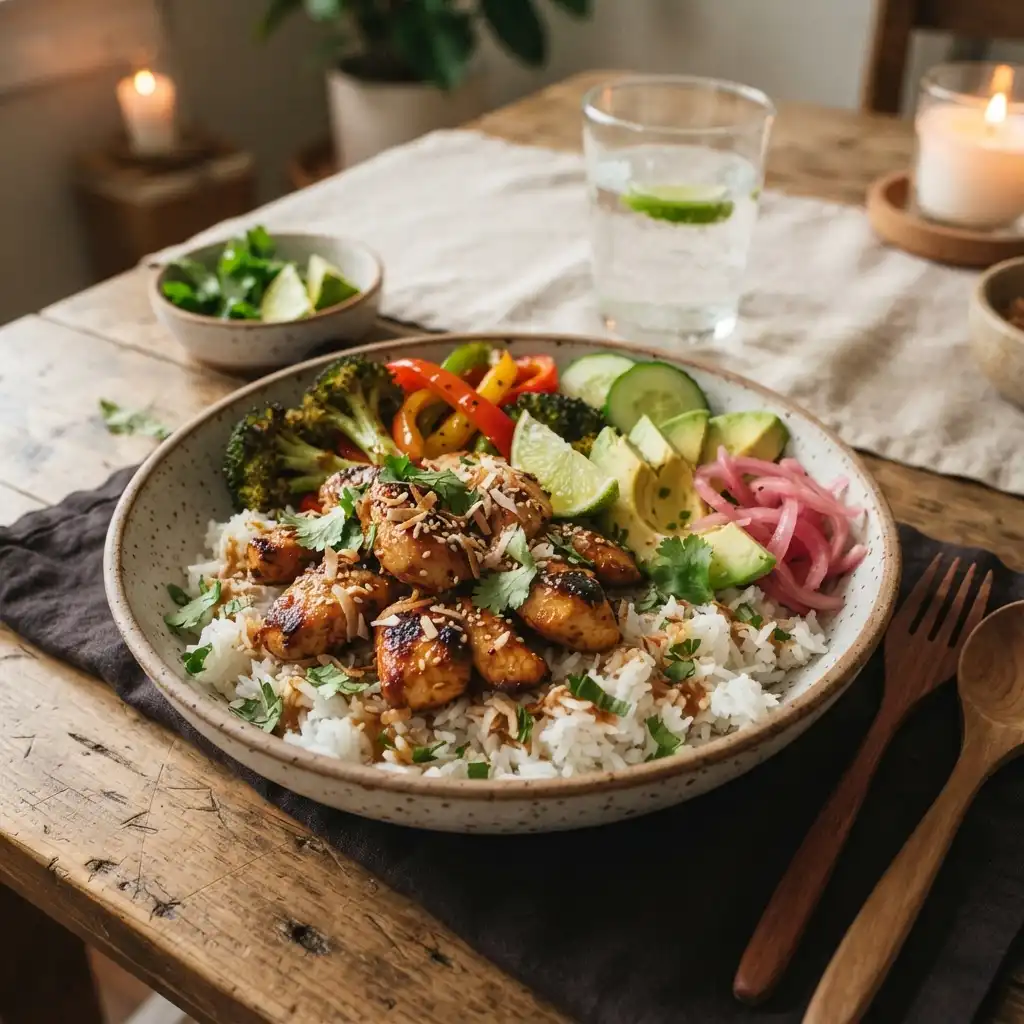
Return the chicken to the pan and reduce the heat to low. Let the mixture simmer gently. High heat can cause coconut milk to separate or curdle, so a gentle bubble is all you need. Add the vegetables during the last few minutes of cooking so they retain their crunch. Finally, stir in the lime juice and fresh herbs just before serving to maintain their bright flavors.
Tips
To elevate this recipe from good to exceptional, consider these professional kitchen tips:
- Prevent Curdling: Coconut milk can separate if boiled too vigorously. Keep the simmer low and gentle once the milk is added.
- Toast the Spices: If you are adding curry powder or red pepper flakes, toast them in the oil for 30 seconds before adding liquids. This wakes up the essential oils in the spices.
- Rest the Rice: After cooking the rice, let it sit off the heat with the lid on for 10 minutes. This allows the steam to redistribute, making the grains fluffy.
- Acid at the End: Always add acidic components like lime juice or vinegar at the very end of cooking. Heat diminishes the brightness of acid over time.
- Garnish Generously: Fresh cilantro, sliced green onions, or crushed peanuts add a final layer of texture and freshness that completes the dish.
Variations and Customizations
This recipe is highly adaptable to suit various dietary needs and flavor preferences:
- Spicy Version: Add fresh Thai chilies, red pepper flakes, or a splash of Sriracha to the sauce for a significant heat kick.
- Vegan Adaptation: Substitute the chicken with firm tofu or chickpeas. Ensure the tofu is pressed to remove moisture before searing for the best texture.
- Low-Carb Option: Replace the jasmine rice with cauliflower rice. Sauté the cauliflower rice briefly rather than boiling it to maintain texture.
- Vegetable Swaps: Feel free to use whatever vegetables are in season. Spinach, zucchini, carrots, or green beans all work well in this sauce.
- Nut-Free: If using peanuts as a garnish, swap them for toasted sesame seeds or pumpkin seeds for those with allergies.
Health Considerations and Nutritional Value
While this dish is indulgent, it can fit into a balanced diet when portioned correctly. Coconut milk is high in saturated fats, but these are primarily Medium-Chain Triglycerides (MCTs), which are metabolized differently than other saturated fats and can provide a quick source of energy. Chicken provides high-quality lean protein essential for muscle repair and satiety. The vegetables contribute fiber, vitamins, and minerals. To make the dish healthier, you can increase the ratio of vegetables to chicken, use brown rice for added fiber, or control the portion size of the sauce. Be mindful of sodium levels if using regular soy sauce; low-sodium soy sauce or coconut aminos are excellent alternatives for those watching their salt intake.
Ingredients
- 1 cup jasmine rice, uncooked
- 1.5 cups water or chicken broth
- 1.5 lbs boneless, skinless chicken thighs, cut into bite-sized pieces
- 1 can (13.5 oz) full-fat coconut milk
- 3 cloves garlic, minced
- 1 tablespoon fresh ginger, grated
- 3 tablespoons soy sauce (or coconut aminos)
- 1 tablespoon lime juice, fresh
- 1 teaspoon brown sugar or honey
- 2 cups mixed vegetables (bell peppers, snap peas, broccoli)
- 2 tablespoons cooking oil (vegetable or avocado)
- Salt and black pepper to taste
- Fresh cilantro and green onions for garnish
- Red pepper flakes (optional for heat)
Directions
- Cook the Rice: Rinse the jasmine rice under cold water. Combine rice and water/broth in a pot. Bring to a boil, reduce heat to low, cover, and simmer for 15-18 minutes until water is absorbed. Remove from heat and let stand covered for 10 minutes.
- Prep the Chicken: While rice cooks, pat the chicken pieces dry with paper towels. Season generously with salt and black pepper.
- Sear the Chicken: Heat oil in a large skillet or wok over medium-high heat. Add chicken in a single layer. Cook for 5-7 minutes, turning occasionally, until golden brown and cooked through. Remove chicken from pan and set aside.
- Sauté Aromatics: In the same pan, add a bit more oil if needed. Add minced garlic and grated ginger. Sauté for 1 minute until fragrant, being careful not to burn.
- Make the Sauce: Pour in the coconut milk, soy sauce, and brown sugar. Stir well to combine and scrape up any browned bits from the bottom of the pan. Bring to a gentle simmer.
- Combine and Simmer: Return the chicken to the skillet. Add the mixed vegetables. Simmer for 5-7 minutes until the vegetables are tender-crisp and the sauce has thickened slightly.
- Finish: Remove from heat. Stir in the fresh lime juice. Taste and adjust seasoning if necessary.
- Serve: Spoon the rice into bowls. Top with the coconut chicken and vegetable mixture. Garnish with fresh cilantro, green onions, and red pepper flakes if desired.
FAQ
Can I make this recipe ahead of time?
Yes, this dish stores well. Keep the rice and the chicken mixture in separate containers in the refrigerator for up to 3 days. Reheat gently on the stove, adding a splash of water if the sauce has thickened too much.
Why did my coconut sauce separate?
This usually happens if the heat is too high or if the coconut milk was stirred too vigorously. To fix it, try whisking vigorously or blending briefly with an immersion blender to emulsify it again.
Can I freeze this meal?
You can freeze the chicken and sauce mixture for up to 2 months. However, coconut milk can sometimes change texture upon thawing. It is best to freeze without the vegetables for optimal quality.
What is the best substitute for coconut milk?
For a similar creaminess without coconut flavor, cashew cream works well. For a lighter option, you can use heavy cream, though the flavor profile will shift away from tropical.
Is this dish gluten-free?
It can be! Ensure you use tamari or certified gluten-free soy sauce instead of regular soy sauce, and verify that your chicken broth is gluten-free.
Summary
This Easy Coconut Chicken Rice Bowl combines tender seared chicken, creamy coconut sauce, and fluffy jasmine rice for a perfect weeknight dinner.
Customizable with your favorite vegetables and spices, it offers a balanced mix of protein, healthy fats, and vibrant flavors ready in under 40 minutes.