Can You Make Sloppy Joes Like Gordon Ramsay?
Let’s cut the nonsense — yes, you can make Sloppy Joes like Gordon Ramsay. But before you reach for that jar of generic “Sloppy Joe Mix” or settle for a lukewarm, mushy, overly sweet, and vaguely meaty slurry masquerading as dinner — pause. Because what Gordon Ramsay would actually do (if he *deigned* to cook a humble American diner classic) isn’t just “make Sloppy Joes.” It’s reclaiming, refining, and elevating them — transforming a nostalgic, often-overlooked weeknight staple into something deeply flavorful, texturally dynamic, and unapologetically chef-driven. This isn’t about gimmicks or smoke-and-mirrors; it’s about respecting ingredients, mastering technique, and refusing to accept mediocrity — even in a sandwich.
The History: From Depression-Era Ingenuity to Culinary Redemption
Sloppy Joes trace their roots not to a Michelin-starred kitchen, but to resourceful American kitchens of the early 20th century — specifically, the Great Depression era, when stretching ground beef with onions, tomatoes, and pantry staples was both economical and practical. While contested, the most widely accepted origin points to Sioux City, Iowa, where café owner Floyd Angell allegedly served a loose meat sandwich dubbed the “Sloppy Joe” in the 1930s. By the 1950s and ’60s, the dish exploded in popularity across the U.S., thanks to convenience foods — canned tomato sauce, pre-made seasoning packets, and mass-produced buns — turning it into a ubiquitous school lunch and potluck mainstay. But somewhere along the way, authenticity got lost in translation: sweetness overrode savoriness, texture dissolved into homogeneity, and the dish became synonymous with “filler food,” not flavor-forward fare. Enter Gordon Ramsay — a chef who built his reputation on calling out lazy cooking, demanding precision, and insisting that every ingredient must earn its place. Making Sloppy Joes “like Gordon Ramsay” isn’t about replicating a specific televised moment (he’s never done a dedicated Sloppy Joe episode — yet). It’s about adopting his philosophy: treat humble ingredients with reverence, build layers of umami and acidity, control moisture rigorously, and never, ever let a sauce become sloppy in the wrong way.
Ingredients Breakdown: The Ramsay-Approved Pantry Manifesto
Gordon wouldn’t tolerate vague terms like “1 packet of mix” — so neither will we. Every component is selected, measured, and justified:
- Ground Beef (80/20 blend): Not lean — never lean. Ramsay insists on fat for flavor, juiciness, and proper fond development. The 20% fat renders beautifully, creating a rich base and allowing caramelization without drying out.
- Yellow Onion & Garlic (fresh, finely minced): No dried flakes. Fresh aromatics are non-negotiable. Onions provide sweetness and body; garlic adds pungent depth — both must be cooked low and slow until translucent and fragrant, never burnt.
- Tomato Paste (double-concentrated, Italian or San Marzano-based): The secret weapon. Not ketchup, not passata — tomato paste. Cooked until brick-red and nutty (“fond”), it delivers intense umami, concentrated acidity, and thickening power without added sugar or vinegar.
- Dry Red Wine (e.g., Cabernet Sauvignon or Zinfandel): A Ramsay hallmark — deglazing with wine adds complexity, brightness, and tannic structure that cuts through richness. Avoid “cooking wine” — use something drinkable.
- Beef Stock (low-sodium, preferably homemade or high-quality boxed): Adds savory depth and collagen-rich mouthfeel. Ramsay would scoff at bouillon cubes unless they’re artisanal and salt-controlled.
- Worcestershire Sauce (Lea & Perrins original): For fermented tang, anchovy umami, and subtle spice. Not soy sauce — this is the irreplaceable backbone of depth.
- Smoked Paprika (sweet + a pinch of hot): Not chili powder. Smoked paprika adds earthy warmth and aroma — a nod to wood-fired tradition, even if you’re using a stove.
- Grainy Dijon Mustard (not yellow): Adds sharpness, emulsifying power, and a bright counterpoint to sweetness — used late to preserve its volatile oils.
- Apple Cider Vinegar (raw, unfiltered): A final acid lift — not for sourness, but for balance and vibrancy. Added off-heat to preserve brightness.
- Soft Brioche Buns (toasted, buttered, and griddled): Never plain white. Brioche offers richness, tenderness, and structural integrity. Toasting creates a barrier against sogginess — a Ramsay non-negotiable.
- Fresh Toppings (not optional garnishes): Thinly sliced red onion (quick-pickled in vinegar), crisp iceberg lettuce ribbons, and a handful of fresh cilantro or parsley. Texture and freshness are critical — no limp, pre-shredded cheese here.
Note on Sweetness: Ramsay avoids corn syrup, brown sugar, or ketchup-as-a-base. Any sweetness comes only from slowly caramelized onions and a whisper of tomato paste — never dominant. If you crave sweetness, use a small amount of grated Fuji apple (added with onions) for natural, nuanced fruit sugar — not cloying syrup.
Step-by-Step Recipe: The Ramsay Method (No Shortcuts, No Compromises)
- Prep Like a Pro (Mise en Place is Sacred): Finely dice 1 large yellow onion (¼-inch); mince 4 garlic cloves; measure all liquids and spices. Toast brioche buns lightly, then butter and griddle in a skillet until golden and crisp — set aside covered with a clean towel. Chop fresh herbs and slice red onion for pickling (1 tbsp ACV + ½ tsp sugar + pinch salt — rest 10 min).
- Sear, Don’t Steam (The Foundation of Flavor): Heat a heavy-bottomed Dutch oven or wide stainless skillet over medium-high heat. Add 1 tbsp high-smoke-point oil (avocado or grapeseed). When shimmering, add 1.5 lbs ground beef in an even layer. Press gently — do not stir. Let sear undisturbed for 2–3 minutes until deep brown crust forms. Flip in sections and sear second side. Break into coarse chunks — resist over-stirring. Remove beef, leaving all fond and rendered fat behind.
- Sweat, Then Sizzle (Aromatics Done Right): Reduce heat to medium. Add diced onion to the same pan. Cook 5–6 minutes until soft and translucent — no color yet. Add garlic and cook 45 seconds until fragrant. Push mixture to edges. In center, add 3 tbsp double-concentrated tomato paste. Cook, stirring constantly, for 3–4 minutes until it darkens to brick-red and smells nutty — this is your umami engine.
- Deglaze with Purpose (Wine Is Not Optional): Pour in ½ cup dry red wine, scraping vigorously with a wooden spoon to lift every bit of fond. Simmer 2 minutes until alcohol evaporates and liquid reduces by half. Do not rush this — raw alcohol ruins balance.
- Build the Sauce, Not the Slurry (Stock, Spice, Patience): Return seared beef to pan. Add ¾ cup low-sodium beef stock, 1 tbsp Worcestershire, 1 tsp smoked paprika (sweet), ¼ tsp hot smoked paprika, ½ tsp black pepper, and ½ tsp fine sea salt (adjust later). Stir well. Bring to a gentle simmer — then reduce heat to low. Partially cover and cook for 35–45 minutes, stirring every 8–10 minutes. The goal? Evaporation — not boiling. You want a thick, glossy, clingy sauce — not soup. If too wet, uncover and simmer longer. If too dry, add 1 tbsp stock.
- Finish with Finesse (Acid, Fat, Brightness): Remove from heat. Stir in 1 tbsp grainy Dijon mustard and 1 tsp raw apple cider vinegar. Taste — adjust salt, pepper, or a single drop of vinegar for lift. Let rest 5 minutes. The flavors will marry, and residual heat will mellow sharp edges.
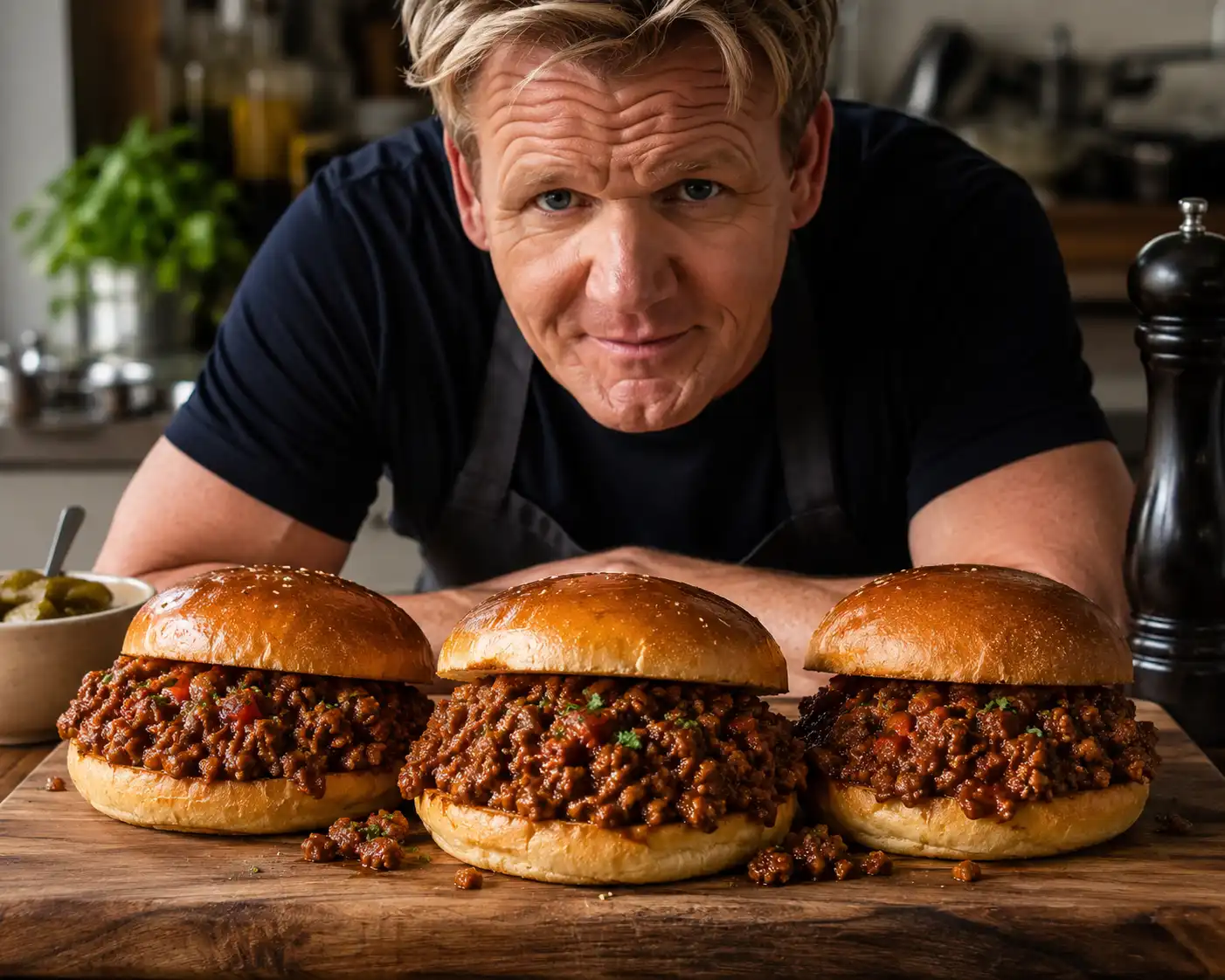
- Assemble with Intention (Not Just Assembly): Spoon generous portions onto toasted brioche buns. Top immediately with quick-pickled red onion, crisp iceberg ribbons, and fresh cilantro or parsley. Serve open-faced or folded — but never wrapped in foil. Eat within 5 minutes.
Tips That Would Earn a Nod (Not a “RUBBISH!”)
- Never boil the sauce. Simmering = tender, cohesive texture. Boiling = broken fat, grainy separation, and evaporated flavor.
- Underseason early, overseason late. Salt draws out moisture — wait until the end to fine-tune. Use flaky sea salt for finishing if desired.
- Toast the buns twice. Light toast → butter → griddle until deeply golden and crisp. This creates a moisture-resistant crust and adds nutty depth.
- Rest the meat before serving. Letting the finished mixture sit off-heat for 5 minutes allows juices to reabsorb and temperature to equalize — no more scalding-hot, runny bites.
- Use a spoon, not a spatula, to serve. A large, shallow spoon gives control over portion size and ensures each bite includes meat, sauce, and texture — no clumping.
- Cold toppings are non-negotiable. Warm onion or wilted lettuce defeats the contrast Ramsay demands. Keep them chilled until the last second.
- If doubling the batch, freeze before adding mustard/vinegar. Acid breaks down proteins over time — finish each portion individually for peak brightness.
Variations and Customizations: Ramsay-Style Flexibility (Not Compromise)
Ramsay champions creativity — within discipline. Here’s how to adapt without abandoning standards:
- Beef Alternatives: Ground lamb (add mint and lemon zest), grass-fed bison (richer, leaner — add 1 tbsp olive oil when searing), or a 50/50 blend of pork shoulder and beef (for collagen-rich succulence). Never turkey or chicken breast — too dry and bland unless bolstered with pork fat or duck confit.
- Veggie-Powered (Not “Vegan”): Replace ⅓ of beef with finely chopped cremini mushrooms + 1 tbsp soy sauce + 1 tsp miso paste (for glutamate depth). Sear mushrooms separately until deeply browned — their moisture must fully evaporate before combining.
- Global Twists (Done Right):
- Mexican-Inspired: Swap Worcestershire for 1 tbsp ancho chile purée + ½ tsp cumin + lime zest. Top with crumbled queso fresco and avocado crema.
- Asian-Inflected: Replace wine with dry sherry; use tamari instead of Worcestershire; add 1 tsp grated ginger and 1 scallion (green part only). Top with quick-pickled daikon and sesame seeds.
- Mediterranean: Use lamb, add oregano and lemon juice, top with feta and chopped Kalamata olives.
- Bun Alternatives (Texture First): Brioche remains gold standard — but acceptable alternatives include seeded rye (toasted and buttered), ciabatta rolls (halved and grilled), or even warm, griddled corn tortillas for a deconstructed taco-Sloppy Joe hybrid. Never use Wonder Bread or pre-sliced sandwich loaves — they disintegrate.
- Make-Ahead Mastery: Cook sauce up to Step 5 (before mustard/vinegar). Cool completely, refrigerate up to 4 days or freeze up to 3 months. Reheat gently, then finish with acid and mustard — always.
Health Considerations and Nutritional Value: Flavor Without Fraud
Gordon Ramsay doesn’t preach diets — he preaches quality control. That said, making Sloppy Joes “Ramsay-style” inherently improves nutritional integrity:
- Lower in Added Sugar: Eliminating ketchup and brown sugar slashes 10–15g of unnecessary sucrose per serving. Natural sweetness comes from onions and tomato paste — metabolized slower, with fiber and antioxidants.
- Higher in Protein & Bioavailable Iron: 80/20 beef provides ~28g high-quality protein and heme iron — enhanced by vitamin C from tomatoes and onions for optimal absorption.
- No Artificial Preservatives or MSG: All ingredients are whole-food based — no hidden sodium bombs or synthetic flavor enhancers.
- Controlled Sodium: Using low-sodium stock and finishing salt allows precise control — average sodium drops from ~900mg (jarred mix) to ~520mg per serving.
- Heart-Healthy Fats: Grass-fed beef offers higher CLA and omega-3s; avocado oil adds monounsaturated fats.
- Probiotic Boost (Optional): Quick-pickled onions offer live cultures — a gut-friendly bonus Ramsay might grudgingly approve.
Nutrition Per Serving (1 generous bun, ~¾ cup filling):
Calories: 540 | Protein: 28g | Total Fat: 32g (12g saturated) | Carbs: 32g (6g fiber, 8g natural sugars) | Sodium: 520mg | Vitamin A: 45% DV | Vitamin C: 35% DV | Iron: 25% DV
Ingredients (Print-Ready, Exact Measurements)
- 1.5 lbs (680g) ground beef (80% lean / 20% fat)
- 1 large yellow onion (200g), finely diced (¼-inch)
- 4 large garlic cloves (15g), minced
- 3 tbsp (45g) double-concentrated tomato paste
- ½ cup (120ml) dry red wine (Cabernet Sauvignon or Zinfandel)
- ¾ cup (180ml) low-sodium beef stock
- 1 tbsp (18g) Worcestershire sauce (Lea & Perrins)
- 1 tsp (2g) sweet smoked paprika
- ¼ tsp (0.5g) hot smoked paprika
- ½ tsp (1g) freshly ground black pepper
- ½ tsp (3g) fine sea salt (plus more to finish)
- 1 tbsp (15g) grainy Dijon mustard
- 1 tsp (5ml) raw apple cider vinegar
- 1 tbsp (15ml) avocado or grapeseed oil
- 4 brioche buns (100g each), split and toasted
- 2 tbsp (30g) unsalted butter, for buns
- ¼ red onion (50g), very thinly sliced, for quick pickle
- 1 tbsp (15ml) apple cider vinegar (for pickle)
- ½ tsp (2g) cane sugar (for pickle)
- Pinch of flaky sea salt (for pickle)
- 1 cup (40g) crisp iceberg lettuce, thinly shredded
- 2 tbsp (8g) fresh cilantro or flat-leaf parsley, roughly chopped
Directions (Concise, Action-Oriented)
- Prep: Dice onion, mince garlic, measure all ingredients. Toast buns lightly, butter generously, then griddle in skillet until golden-crisp. Set aside covered. Make quick pickle: combine red onion, 1 tbsp ACV, ½ tsp sugar, pinch salt. Rest 10 min.
- Sear Beef: Heat oil in heavy Dutch oven over medium-high. Add beef in even layer. Press gently. Sear 2–3 min undisturbed. Flip in sections; sear second side. Break into coarse chunks. Remove beef, leaving fond and fat.
- Sweat Aromatics: Reduce heat to medium. Add onion; cook 5–6 min until soft. Add garlic; cook 45 sec. Push to edges. Add tomato paste to center; cook 3–4 min, stirring constantly, until brick-red and nutty.
- Deglaze: Pour in wine. Scrape fond vigorously. Simmer 2 min until reduced by half.
- Simmer Sauce: Return beef. Add stock, Worcestershire, paprikas, pepper, and ½ tsp salt. Stir. Bring to gentle simmer, then reduce to low. Partially cover. Simmer 35–45 min, stirring every 8–10 min, until thick and glossy (not watery). Adjust heat to prevent boiling.
- Finish: Off heat, stir in Dijon and 1 tsp ACV. Taste. Adjust salt/pepper/vinegar. Rest 5 min.
- Assemble: Spoon onto toasted brioche. Top with pickled onion, iceberg, and herbs. Serve immediately.
FAQ: Addressing the “But What If…?” Questions Ramsay Would Anticipate
- Can I make this in a slow cooker?
- Technically yes — but Ramsay would call it “a betrayal of texture.” Slow cookers steam rather than sear, yielding gray, mushy meat and diluted flavor. If essential: sear meat and aromatics first in a skillet, then transfer to slow cooker with all liquids and spices. Cook on LOW 4 hours — then reduce uncovered on stove for 20 min to concentrate. Finish with mustard/vinegar off-heat.
- What if I don’t have wine?
- Substitute with ½ cup unsalted beef stock + 1 tsp red wine vinegar. It won’t replicate complexity, but adds necessary acidity. Never use white wine vinegar or apple juice — they lack depth and introduce off-notes.
- Why not use ketchup?
- Ketchup contains high-fructose corn syrup, vinegar, onion/garlic powder, and spices — all competing with your carefully balanced layers. It overwhelms umami with sweetness and artificial tang. Tomato paste is pure, controllable, and foundational.
- Can I freeze leftovers?
- Absolutely — but only before adding mustard and vinegar. Freeze cooled sauce in portioned containers up to 3 months. Thaw overnight in fridge, reheat gently, then finish with acid elements. Freezing post-finish dulls brightness and can separate fats.
- My sauce is too thick/thin — help!
- Too thick? Whisk in 1 tbsp warm stock at a time until desired consistency. Too thin? Simmer uncovered, stirring frequently, until reduced. Never add flour or cornstarch — Ramsay forbids “pantry crutches” that mute flavor and create gluey texture.
- Can I make it spicy?
- Yes — but intelligently. Add ¼ tsp cayenne with paprika, or 1 finely minced chipotle in adobo (not just the sauce) for smoky heat. Avoid generic “hot sauce” stirred in at the end — it disrupts balance. Heat should be felt, not shouted.
- What’s the best side dish?
- Ramsay would demand contrast: something crunchy, cool, and acidic. Try crispy shoestring fries tossed in rosemary and sea salt, or a simple arugula salad with lemon vinaigrette and shaved Parmesan. Never coleslaw made with mayo-heavy dressing — too heavy and cloying.
Summary
Making Sloppy Joes “like Gordon Ramsay” means rejecting convenience in favor of craft — building deep umami with seared meat and caramelized tomato paste, balancing richness with purposeful acidity, and honoring texture at every stage, from griddled brioche to crisp, cold toppings.
It’s not about celebrity imitation — it’s about adopting a mindset where every ingredient is interrogated, every step is intentional, and “sloppy” refers only to the joyful, unpretentious spirit of the dish — never to compromised flavor, lazy technique, or forgotten fundamentals.