Introduction
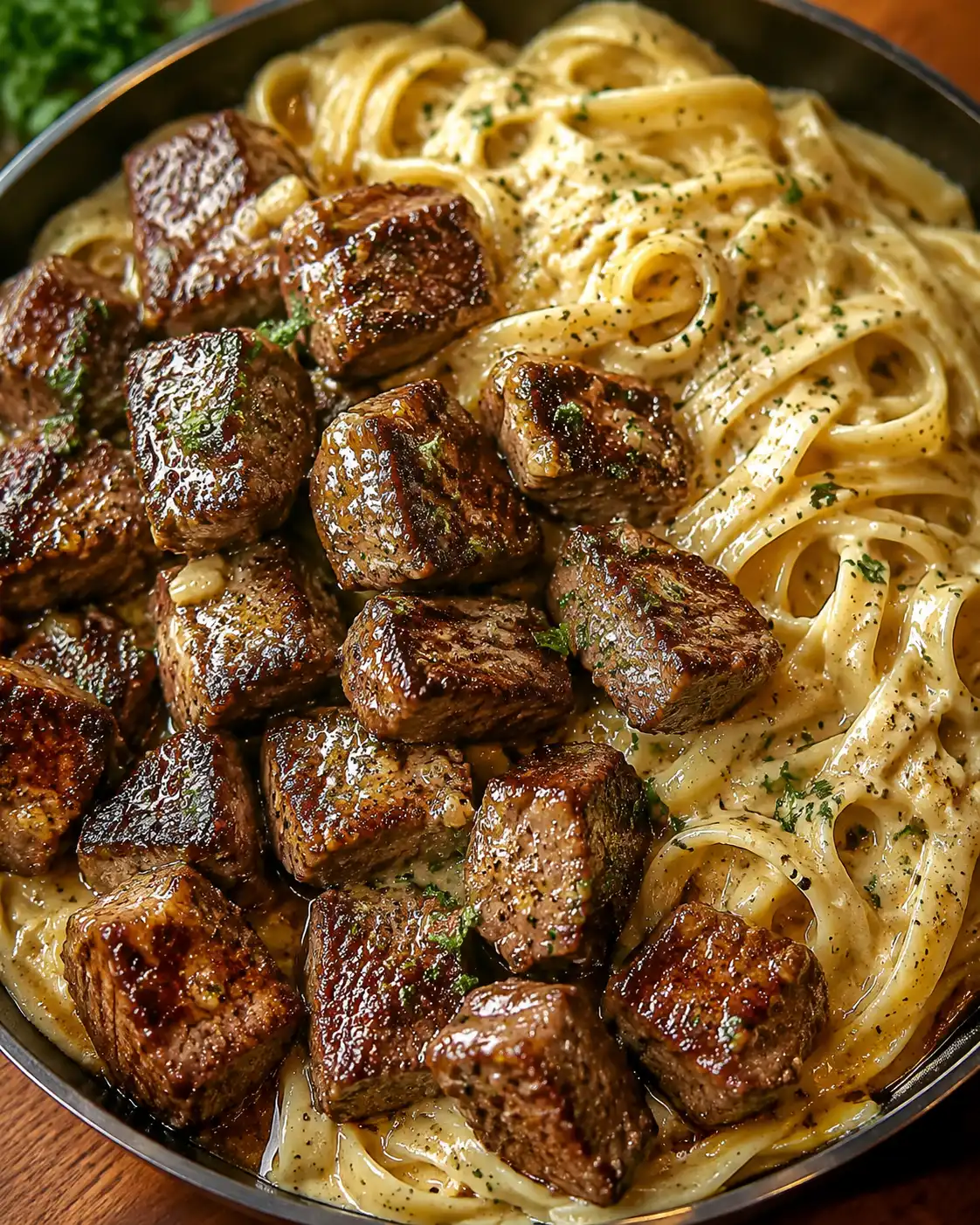
Welcome to what many home cooks and food enthusiasts now consider the ultimate weeknight indulgence: The Best Creamy Garlic Butter Steak Bites with Pasta. This isn’t just another pasta dish—it’s a symphony of seared, tender steak morsels enveloped in a luxuriously rich, velvety sauce that clings to every strand of perfectly cooked pasta. With bold garlic aroma, deep umami from high-quality beef, and a luscious finish of herb-flecked butter and cream, this recipe delivers restaurant-quality elegance without requiring chef-level expertise. Whether you’re cooking for a cozy date night, impressing guests at a casual dinner party, or simply treating yourself after a long day, this dish satisfies on every level—savory, creamy, aromatic, and deeply comforting. It balances speed and sophistication, transforming humble pantry staples and premium cuts into something extraordinary in under 30 minutes.
The History
The origins of creamy garlic butter steak bites with pasta are rooted in the beautiful culinary cross-pollination between classic French technique, American comfort food sensibilities, and Italian pasta traditions. While no single “inventor” claims this exact dish, its evolution can be traced through several influential movements. In mid-20th century France, steak au poivre and bifteck à la minute emphasized quick-searing steaks with pan sauces built from deglazed fond, butter, and aromatics—a foundation directly echoed here. Simultaneously, post-war American kitchens embraced convenience and richness, leading to the rise of cream-based “fettuccine alfredo–adjacent” preparations, albeit more robust and savory than their cheese-heavy cousins. By the early 2010s, food bloggers and viral TikTok chefs began reimagining these ideas—swapping heavy cream for a lighter yet still sumptuous emulsion of butter, garlic, stock, and a touch of dairy—and pairing them with bite-sized, ultra-tender cuts like sirloin or ribeye. The addition of fresh herbs (especially parsley and chives), lemon zest for brightness, and careful pasta-to-sauce ratio refinement elevated it from trend to timeless staple. Today, this dish stands as a modern classic: globally beloved, endlessly adaptable, and deeply grounded in time-honored principles of balance, texture, and flavor layering.
Ingredients Breakdown
Every element in this recipe has been meticulously chosen—not just for taste, but for function, synergy, and texture. Here’s why each ingredient matters:
- Steak (1¼ lbs top sirloin, ribeye, or flat iron): Lean yet well-marbled cuts ensure tenderness without excessive grease. Sirloin offers great value and clean beefiness; ribeye delivers unparalleled richness; flat iron provides exceptional tenderness and deep flavor. Always slice against the grain into 1–1½ inch cubes *after* resting—this preserves juiciness and guarantees melt-in-your-mouth texture.
- Unsalted butter (¾ cup, divided): High-fat European-style butter (82%+ fat) is ideal—it browns beautifully, carries flavor, and emulsifies seamlessly into the sauce. We use half for searing (to maximize fond) and half for finishing (to enrich and gloss).
- Fresh garlic (6–7 large cloves, finely minced): Freshly minced—not jarred or powdered—is non-negotiable. It releases allicin when heated, offering pungent depth that mellows into sweet, nutty complexity during sautéing. Pressing or grating yields too much juice and burns easily; fine mincing ensures even distribution and controlled caramelization.
- Dry white wine (½ cup Sauvignon Blanc or Pinot Grigio): Adds bright acidity and fruit notes that cut through richness. It deglazes the pan with precision, lifting concentrated meat juices and roasted garlic bits while contributing subtle herbal nuance. Substitute with dry vermouth or unsalted beef broth if avoiding alcohol—but never skip the acid component.
- Low-sodium beef stock (¾ cup, warm): Provides deep savory backbone (umami) without overwhelming salt. Warming it before adding prevents thermal shock to the sauce and encourages smooth emulsification. Homemade stock is ideal; high-quality store-bought (like Better Than Bouillon Roasted Beef Base) works beautifully.
- Heavy cream (⅓ cup): Adds luxurious body and mouthfeel—not heaviness. Its high fat content stabilizes the emulsion and prevents splitting. Avoid half-and-half or milk—they lack the necessary fat and will curdle or yield a thin, watery sauce.
- Fresh herbs (¼ cup chopped flat-leaf parsley + 1 tbsp chives): Added at the very end, they deliver vibrant color, grassy freshness, and aromatic lift—balancing the decadence. Parsley’s mild bitterness and chives’ delicate onion note create an elegant herbal counterpoint.
- Lemon zest (from ½ lemon): A secret weapon. Just the colorful outer peel—not the bitter pith—adds citrus perfume and a subtle, sun-kissed brightness that makes the whole dish sing. Never skip this.
- Pasta (12 oz linguine, tagliatelle, or pappardelle): Long, ribbon-like shapes hold sauce beautifully. Linguine offers perfect surface area and bite; tagliatelle adds rustic elegance; pappardelle lends dramatic presence. Reserve 1 cup of starchy pasta water before draining—it’s essential for adjusting consistency and binding the sauce to the noodles.
- Finishing touches (flaky sea salt, freshly cracked black pepper, optional grated Parmigiano-Reggiano): Salt enhances all flavors; coarse black pepper adds warmth and spice; Parmigiano adds salty-nutty depth (use sparingly—this dish shines on its own, but a light dusting won’t hurt).
Step-by-Step Recipe
- Prep & Pat Dry: Place steak cubes on a triple-layer paper towel. Gently press to remove all surface moisture—this is critical for achieving a golden sear instead of steaming. Season generously with 1 tsp kosher salt and ½ tsp black pepper. Let sit at room temperature for 15 minutes.
- Cook Pasta Al Dente: Bring 5 quarts well-salted water (2 Tbsp Diamond Crystal or 1 Tbsp Morton) to a rolling boil. Add pasta and cook 1 minute less than package directions. Reserve 1 cup starchy water, then drain—do not rinse.
- Sear the Steak: Heat 2 Tbsp butter in a heavy-bottomed 12-inch skillet (stainless steel or cast iron preferred) over medium-high heat until shimmering but not smoking (~3 min). Add steak in a single layer—do not crowd. Sear undisturbed for 2 minutes per side until deeply browned. Work in batches if needed. Transfer to a clean plate and tent loosely with foil.
- Build the Aromatic Base: Reduce heat to medium. Add remaining 6 Tbsp butter. Once melted and foaming subsides (~1 min), add minced garlic. Cook, stirring constantly, for 45–60 seconds until fragrant and pale gold—do not let it brown or burn. Immediately add shallots (2 Tbsp, finely diced) and cook 1 minute until translucent.
- Deglaze with Precision: Pour in white wine, scraping vigorously with a wooden spoon to release all browned bits (fond) from the pan bottom. Simmer 2–3 minutes until reduced by half and alcohol evaporates (you should no longer smell raw alcohol).
- Enrich with Stock & Cream: Whisk in warm beef stock and heavy cream. Bring to a gentle simmer. Reduce heat to low and simmer uncovered for 4–5 minutes, stirring occasionally, until slightly thickened (it should coat the back of a spoon).
- Emulsify & Finish: Return steak and any accumulated juices to the pan. Stir gently to coat. Simmer 1 minute to warm through. Remove from heat. Off heat, stir in lemon zest, parsley, and chives. Taste and adjust seasoning—add flaky salt only now, as needed.
- Combine with Pasta: Add drained pasta to the skillet. Toss vigorously over low heat for 60–90 seconds, adding reserved pasta water 1–2 Tbsp at a time until sauce is glossy, cohesive, and clings evenly—not pooled or dry. Serve immediately.
Tips
- Chill Your Steak Before Slicing: For cleaner, more uniform cubes with minimal fiber shredding, pop the whole steak in the freezer for 15–20 minutes before cutting. It firms up just enough for precise dicing.
- Use a Thermometer for Perfect Doneness: Pull steak bites off heat at 125°F (rare) to 130°F (medium-rare)—they’ll carryover to 135°F while resting. Overcooking is the #1 cause of toughness.
- Don’t Skip the Rest: Let seared steak rest 5–7 minutes before returning to sauce. This allows juices to redistribute, ensuring each bite stays succulent—not weeping into the sauce.
- Control the Garlic Like a Pro: If your kitchen runs hot or your stove heats aggressively, reduce garlic heat to medium-low and stir constantly. Burnt garlic turns bitter instantly—when in doubt, err on the side of under-toasted.
- Warm Your Serving Bowls: Especially in colder months, pre-warm large shallow bowls in a low oven (200°F for 10 min) or with hot water. This keeps the dish piping hot longer and prevents the butter from hardening prematurely.
- Make It Ahead-Friendly: Prep steak, chop aromatics, measure liquids, and even cook pasta up to 2 hours ahead. Store components separately; reheat sauce base gently before combining.
- Reserve That Water—Then Reserve More: Starchy pasta water is liquid gold. If you accidentally pour it out, save some from your next batch! Its starch and salt are irreplaceable for silky emulsions.
- Skillet Choice Matters: Nonstick pans prevent sticking but inhibit fond development. Stainless or cast iron give superior browning—but require proper preheating and fat control. If using cast iron, ensure it’s well-seasoned to avoid metallic aftertaste.
- Taste Before Final Seasoning: Between the salty steak, salty butter, and salty stock, final salting must be done thoughtfully. Dip a fork, cool slightly, and taste the *combined* sauce—then decide.
- Garnish Generously—But Thoughtfully: Extra parsley, a twist of lemon, a whisper of cracked pepper, or a few flakes of Maldon salt make visual and textural impact. Don’t over-garnish—let the dish breathe.
Variations and Customizations
This recipe is brilliantly versatile—adaptable to dietary needs, seasonal ingredients, global flavors, and pantry constraints—without sacrificing its soul. Explore these inspired twists:
- Vegetarian Version: Replace steak with extra-firm marinated tofu cubes (pressed, baked until golden) or king oyster mushroom “scallops” (sliced thick, seared until caramelized). Boost umami with 1 tsp tamari and ½ tsp smoked paprika in the sauce.
- Low-Carb/Keto Adaptation: Swap pasta for spiralized zucchini (zoodles), shirataki noodles, or roasted spaghetti squash. Sauté zoodles 1–2 minutes just before serving to retain texture. Increase butter to 1 cup for added fat.
- Spicy Arrabbiata-Inspired: Add ¼–½ tsp red pepper flakes with the garlic, plus 1 Tbsp tomato paste sautéed for 1 minute before wine. Finish with fresh basil instead of parsley.
- Mediterranean Twist: Add ¼ cup kalamata olives (pitted & halved), 2 Tbsp crumbled feta, and 1 tsp dried oregano with the herbs. Use lemon juice (½ tsp) in place of zest for brighter tang.
- Umami Bomb Upgrade: Stir in 1 Tbsp white miso paste (dissolved in 1 Tbsp warm stock) with the cream—or add 2 rehydrated dried shiitake mushrooms (finely chopped) to the fond-building step.
- Herb Garden Edition: Swap parsley/chives for 2 Tbsp each fresh tarragon and chervil—delicate, anise-tinged, and incredibly sophisticated. Add 1 tsp Dijon mustard with the cream for subtle sharpness.
- Wine-Free & Kid-Friendly: Replace wine with ¼ cup apple cider vinegar + ¼ cup unsalted veggie broth. Simmer 1 minute longer to mellow acidity. Omit lemon zest; add 1 tsp honey for rounded sweetness.
- Meal-Prep Powerhouse: Double the recipe and portion into glass containers. Sauce thickens slightly when chilled—revive with 1 tsp butter and splash of broth per serving, warmed gently on stove or in microwave.
- Brunch Reinvention: Serve over toasted sourdough “steak toast,” top with a soft-poached egg, and finish with microgreens and everything bagel seasoning.
- Grill-Smoke Fusion: Sear steak bites on a ripping-hot charcoal or wood-fired grill for unmistakable smoky char. Deglaze with smoked salt-infused stock and finish with chipotle powder (¼ tsp).
Health Considerations and Nutritional Value
This dish strikes a thoughtful balance between indulgence and mindful nutrition—when prepared intentionally. A standard serving (1⅓ cups pasta + 4 oz steak + ¼ cup sauce) contains approximately:
- Calories: ~680–740 kcal (varies by cut and butter amount)
- Protein: 38–42g (excellent complete protein from beef and pasta)
- Fat: 32–38g (mostly unsaturated from butter and beef fat; rich in vitamins A, D, E, K)
- Carbs: 52–58g (primarily complex carbs from pasta; fiber boosted if using whole-grain or legume-based pasta)
- Sodium: ~620–780mg (well within daily limits when using low-sodium stock and controlling added salt)
- Key Micronutrients: Iron (heme iron from beef—highly bioavailable), Zinc, Vitamin B12, Selenium, Choline, and antioxidants from garlic (allicin) and parsley (vitamin C, flavonoids).
Smart Swaps for Specific Goals:
- Lower Saturated Fat? Use leaner cuts (top round), reduce butter to ½ cup total, substitute half the cream with full-fat coconut milk (for dairy-free richness), and increase garlic/shallots for flavor density.
- Higher Fiber? Choose 100% whole-wheat, lentil, or chickpea pasta—adds 4–8g extra fiber per serving and improves glycemic response.
- Dairy-Free? Use vegan butter (Miyoko’s or Earth Balance), full-fat canned coconut milk (shake well), and nutritional yeast (1 Tbsp) for cheesy depth. Ensure wine is vegan-certified.
- Gluten-Free? Opt for certified GF pasta (brown rice, quinoa, or corn-based). Verify all stocks and sauces are GF—many bouillons contain hidden gluten.
- Blood Sugar Friendly? Prioritize low-glycemic pasta (barley, spelt, or konjac), pair with a side salad dressed in vinegar-based vinaigrette, and emphasize portion control—focus on steak and sauce first, pasta second.
Note: Garlic offers proven cardiovascular benefits—including antiplatelet, antihypertensive, and cholesterol-modulating effects—especially when consumed raw or lightly cooked. Lemon zest contributes limonene, a potent antioxidant linked to reduced inflammation. Enjoy regularly as part of a varied, whole-foods-based diet.
Ingredients
- 1¼ lbs top sirloin steak (or ribeye or flat iron), trimmed and cut into 1–1½ inch cubes
- ¾ cup unsalted butter, divided (2 Tbsp + 6 Tbsp)
- 6–7 large garlic cloves, finely minced (about 2 Tbsp)
- 2 Tbsp shallot, finely diced
- ½ cup dry white wine (Sauvignon Blanc or Pinot Grigio)
- ¾ cup low-sodium beef stock, warmed
- ⅓ cup heavy cream (36–40% fat)
- 12 oz linguine, tagliatelle, or pappardelle pasta
- 2 Tbsp Diamond Crystal kosher salt (or 1 Tbsp Morton), plus more for finishing
- 1 tsp freshly ground black pepper, plus more for finishing
- ¼ cup fresh flat-leaf parsley, finely chopped
- 1 Tbsp fresh chives, finely snipped
- Zest of ½ lemon (just the yellow part—no white pith)
- Flaky sea salt (like Maldon), for garnish
- Optional: freshly grated Parmigiano-Reggiano for serving
Directions
- Pat steak cubes extremely dry with paper towels. Season evenly with 1 tsp kosher salt and ½ tsp black pepper. Let sit at room temperature 15 minutes.
- Bring 5 quarts water to a vigorous boil. Add 2 Tbsp kosher salt. Add pasta and cook 1 minute shy of package’s al dente time. Reserve 1 cup starchy water, then drain pasta—do not rinse.
- Heat 2 Tbsp butter in a 12-inch heavy skillet over medium-high heat until shimmering (~3 min). Add steak in a single layer (work in batches if needed). Sear 2 minutes per side until deeply browned. Transfer to a plate; tent with foil.
- Reduce heat to medium. Add remaining 6 Tbsp butter. Once melted and foaming subsides (~1 min), add garlic. Cook 45–60 seconds, stirring constantly, until fragrant and pale gold.
- Add shallots; cook 1 minute until soft. Pour in wine, scraping pan vigorously to lift fond. Simmer 2–3 minutes until reduced by half.
- Whisk in warm beef stock and heavy cream. Bring to gentle simmer. Reduce heat to low; simmer uncovered 4–5 minutes until slightly thickened.
- Return steak and juices to pan. Stir gently; simmer 1 minute to warm through. Remove from heat.
- Off heat, stir in lemon zest, parsley, and chives. Taste and adjust seasoning.
- Add drained pasta. Toss over low heat 60–90 seconds, adding reserved pasta water 1–2 Tbsp at a time until sauce is glossy and clings perfectly.
- Divide among warm bowls. Garnish with flaky salt, extra herbs, and optional Parmigiano. Serve immediately.
FAQ
- Can I use frozen steak?
- Yes—but thaw completely in the refrigerator overnight, then pat *extremely* dry. Frozen-thawed steak may be slightly less tender, so opt for ribeye or flat iron for best results.
- Why does my sauce break or look greasy?
- Most often caused by overheating the cream or adding cold stock/cream to a hot pan. Always warm stock beforehand, add cream off direct heat if possible, and keep sauce at a gentle simmer—not a rolling boil. An immersion blender pulse fixes minor splits.
- What’s the best pasta shape—and can I use gluten-free?
- Linguine is ideal for surface area and twirl-factor. Yes—gluten-free options like Barilla GF linguine or Jovial brown rice pasta work beautifully. Cook according to package, but test 1 minute early—GF pasta overcooks faster.
- Can I make this in advance?
- The sauce base (through step 6) holds well refrigerated for 3 days. Reheat gently, add steak to warm through, then toss with freshly cooked pasta. Do not fully assemble and reheat—the pasta becomes gummy.
- Is there a shortcut for garlic prep?
- A microplane grater yields perfect, even garlic paste—just grate peeled cloves and scrape off. Avoid garlic presses (they add excess moisture) and pre-minced jars (oxidized, weak flavor).
- My steak came out chewy—what went wrong?
- Three culprits: 1) Not slicing against the grain (always identify muscle fibers first), 2) Overcrowding the pan (causes steaming, not searing), or 3) Overcooking—pull at 125–130°F internal temp. Resting is mandatory.
- Can I air fry the steak bites?
- Absolutely! Toss with 1 Tbsp oil and season. Air fry at 400°F for 6–8 minutes, shaking basket halfway, until browned and 130°F internally. Proceed with sauce steps normally.
- What wine should I use if I don’t cook with alcohol?
- Dry vermouth is the closest non-alcoholic substitute—same herbal complexity, zero ethanol. Or combine ¼ cup apple cider vinegar + ¼ cup low-sodium broth + 1 tsp sugar to mimic balance.
- How do I store leftovers—and how long do they last?
- Store in an airtight container in the fridge up to 3 days. Reheat gently in a skillet with a splash of broth or water to revive creaminess. Microwave reheating often causes separation—skillet is strongly preferred.
- Can kids eat this? Is it safe for pregnancy?
- Yes—fully cooked steak and pasteurized dairy make it safe. For pregnancy, ensure steak reaches 145°F (medium) if preferred, and use pasteurized butter/cream. The garlic and lemon also support immune health.
Summary
This Creamy Garlic Butter Steak Bites with Pasta is a masterclass in balance—seared-to-perfection beef, a luxuriously emulsified sauce infused with aromatic garlic and bright lemon, and perfectly textured pasta bound together by starchy, silken magic.
It’s fast enough for busy weeknights, elegant enough for special occasions, endlessly customizable, nutritionally thoughtful, and guaranteed to become your most-requested recipe—the kind that earns “best ever” status after the very first bite.