Introduction
There are few dishes in the culinary world that command the same level of universal comfort and satisfaction as Creamy Garlic Parmesan Chicken. This exquisite meal represents the perfect harmony of rich, velvety textures and robust, savory flavors that have made it a staple in households and restaurants alike. Imagine biting into a tender, golden-seared chicken breast that is generously smothered in a luxurious sauce infused with the pungent aroma of roasted garlic and the nutty, salty depth of aged Parmesan cheese. It is a dish that transcends seasons, perfect for a quick weeknight dinner when time is scarce, yet elegant enough to serve to guests during a special occasion. The appeal lies not just in its taste, but in its simplicity; it requires no obscure techniques or hard-to-find ingredients, yet the result tastes like it came from a high-end Italian bistro. Whether you are a seasoned home cook or a beginner looking to expand your repertoire, this recipe promises to deliver a meal that warms the soul and delights the palate. The interplay between the creamy dairy base and the sharp cheese creates a coating that clings beautifully to the meat, ensuring every bite is packed with flavor. Furthermore, the versatility of this dish allows it to be paired with a myriad of sides, from fluffy mashed potatoes to al dente pasta or crisp steamed vegetables, making it a customizable centerpiece for any dining table.
The History
To truly appreciate Creamy Garlic Parmesan Chicken, one must delve into the historical roots of its key components, which trace back centuries across European culinary traditions. Parmesan cheese, specifically Parmigiano-Reggiano, has its origins in the Emilia-Romagna region of Italy, dating back to the Middle Ages around the 13th century. Monks in the region sought a cheese that could be stored for long periods, resulting in the hard, granular masterpiece we know today. Its usage in cooking evolved from a simple table cheese to a fundamental ingredient in sauces, where its umami properties could enhance the depth of any dish. Garlic, on the other hand, has been cultivated for over 5,000 years, with evidence of its use found in ancient Egypt, China, and India. In Mediterranean cooking, garlic became the aromatic backbone of countless savory preparations, believed to possess both medicinal and flavor-enhancing qualities. The concept of combining chicken with cream and cheese is largely attributed to Italian-American cuisine that developed in the United States during the late 19th and early 20th centuries. Immigrants adapted traditional Italian recipes to incorporate available ingredients, leading to richer, creamier sauces than those typically found in Italy. This fusion gave birth to dishes like Chicken Parmesan and various creamy skillet chickens. The specific iteration of Creamy Garlic Parmesan Chicken gained massive popularity in the modern era with the rise of food blogging and social media, where visual appeal and comfort food trends converged. It stands today as a testament to culinary evolution, blending ancient ingredients with modern convenience to create a timeless classic.
Ingredients Breakdown
Understanding the role of each ingredient is crucial to mastering this recipe, as the quality and type of components used will directly influence the final texture and taste profile. Chicken Breasts: We recommend using boneless, skinless chicken breasts for their lean profile and ease of eating, though thighs can be used for a juicier result. The chicken should be pounded to an even thickness to ensure uniform cooking. Heavy Cream: This is the foundation of the sauce. Heavy cream contains a high fat content that prevents curdling when heated and provides the signature velvety mouthfeel that milk or half-and-half simply cannot achieve. Parmesan Cheese: Authenticity matters here. Freshly grated Parmigiano-Reggiano melts smoother and tastes sharper than pre-packaged grated cheese, which often contains anti-caking agents that can make the sauce grainy. Garlic: Fresh garlic cloves are non-negotiable. Garlic powder lacks the aromatic oils released when fresh garlic is sautéed, which are essential for infusing the cream base. Butter and Olive Oil: Using a combination allows for the rich flavor of butter without the risk of it burning at high searing temperatures, as the olive oil raises the smoke point. Chicken Broth: A small amount of broth helps deglaze the pan, lifting the flavorful browned bits (fond) from the bottom and thinning the sauce slightly to a pourable consistency. Herbs and Seasonings: Fresh parsley adds a pop of color and freshness to cut through the richness, while Italian seasoning, salt, and black pepper build the foundational savory notes.
Step-by-Step Recipe
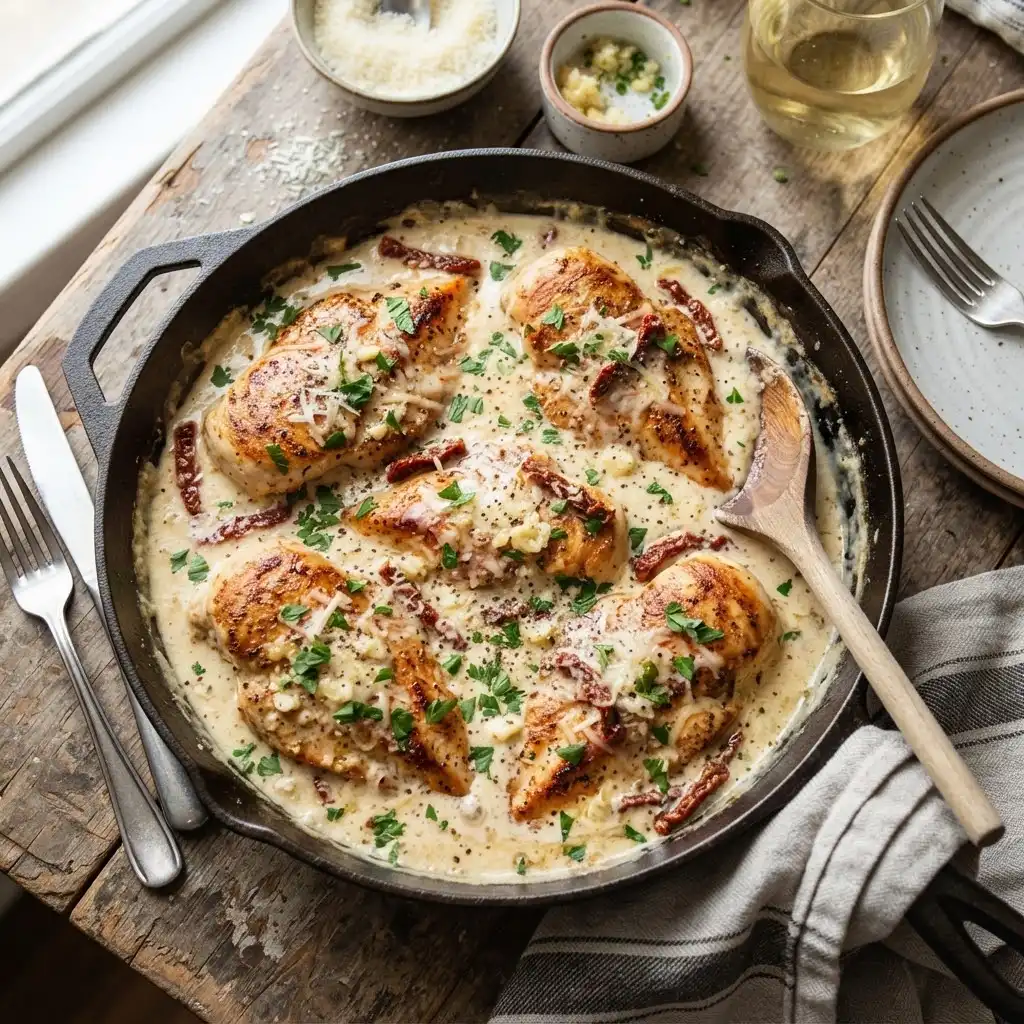
Preparing this dish is a journey through heat management and timing. Step 1: Preparation. Begin by patting your chicken breasts completely dry with paper towels. Moisture is the enemy of a good sear, so ensuring the surface is dry will help you achieve a golden-brown crust. Season both sides generously with salt, pepper, and Italian seasoning. Step 2: Searing the Chicken. Heat your butter and olive oil in a large skillet over medium-high heat. Once the butter foams, carefully place the chicken into the pan. Do not overcrowd the pan; cook in batches if necessary to maintain heat. Sear for 5-7 minutes per side until the internal temperature reaches 165°F. Remove the chicken and let it rest on a plate; this allows the juices to redistribute. Step 3: Building the Aromatic Base. In the same pan, do not wipe out the browned bits. Add a bit more butter if needed and toss in the minced garlic. Sauté for about one minute until fragrant. Be vigilant here; burnt garlic tastes bitter and can ruin the sauce. Step 4: Creating the Sauce. Pour in the chicken broth to deglaze, scraping the bottom of the pan with a wooden spoon. Once reduced slightly, lower the heat to medium-low and pour in the heavy cream. Let it simmer gently, not boil vigorously, to thicken. Step 5: Cheesing It. Gradually whisk in the Parmesan cheese until melted and smooth. Taste the sauce and adjust seasoning. Step 6: Combining. Return the chicken to the skillet, spooning the sauce over the top. Let it simmer for another two minutes to allow the flavors to marry. Garnish with fresh parsley before serving.
Tips
- Avoid Curdling: Never boil the sauce once the cream and cheese have been added. High heat can cause the dairy to separate. Keep the heat low and gentle.
- Grate Your Own Cheese: Pre-grated cheese is coated in cellulose to prevent clumping in the bag, but this prevents it from melting smoothly into a sauce. Invest in a microplane grater for the best results.
- Room Temperature Ingredients: Let your cream and cheese sit out for 15 minutes before cooking. Adding cold dairy to a hot pan can shock the emulsion and lead to separation.
- Deglazing is Key: Do not skip the step of scraping the bottom of the pan after searing the chicken. Those browned bits are pure flavor that will infuse the sauce.
- Rest the Meat: Allowing the chicken to rest for five minutes after cooking ensures that when you cut into it, the juices stay inside the meat rather than running out onto the plate.
- Sauce Consistency: If the sauce is too thick, add a splash of broth or pasta water. If it is too thin, let it simmer longer or add a slurry of cornstarch and water.
Variations and Customizations
This recipe serves as a robust canvas for culinary creativity, allowing you to adapt it to various dietary preferences and flavor profiles. Spicy Kick: For those who enjoy heat, add red pepper flakes to the garlic sauté or stir in a teaspoon of cayenne pepper into the sauce. Mushroom Lover’s: Sliced cremini or button mushrooms can be sautéed alongside the garlic to add an earthy umami depth and meaty texture. Spinach Addition: Stir in a few handfuls of fresh baby spinach at the very end of the cooking process; it will wilt instantly and add nutrients and color. Keto Friendly: This dish is naturally low-carb, but ensure you serve it over cauliflower rice or zucchini noodles instead of pasta to maintain ketosis. Gluten-Free: The recipe is naturally gluten-free, but double-check your chicken broth and seasoning blends to ensure no hidden wheat derivatives are present. Protein Swap: While chicken is standard, this sauce works beautifully with shrimp, pork chops, or even firm white fish like cod. Adjust cooking times accordingly as seafood cooks much faster. Herb Infusion: Swap parsley for fresh basil or thyme to change the aromatic profile. Sun-dried tomatoes can also be added for a tangy sweetness that complements the salty Parmesan.
Health Considerations and Nutritional Value
While undeniably delicious, Creamy Garlic Parmesan Chicken is a rich dish that should be enjoyed with an understanding of its nutritional profile. The primary source of protein is the chicken breast, which is lean and packed with essential amino acids necessary for muscle repair and growth. However, the sauce contributes significant calories primarily from fats found in the heavy cream, butter, and cheese. These fats are satiating and help in the absorption of fat-soluble vitamins, but they should be consumed in moderation within a balanced diet. Parmesan cheese is a good source of calcium and phosphorus, which are vital for bone health, but it is also high in sodium. Individuals monitoring their salt intake should use low-sodium broth and be mindful of additional seasoning. To make the dish healthier, you can substitute half-and-half for heavy cream to reduce the fat content, though the sauce will be less thick. Increasing the vegetable content by serving a large side salad or steamed broccoli can help balance the meal with fiber and vitamins. Portion control is also key; enjoying a moderate serving of the chicken and sauce over a large volume of vegetables can make the meal feel substantial without excessive calorie intake. For those with lactose intolerance, lactose-free cream and aged Parmesan (which is naturally low in lactose) can be used to prevent digestive discomfort.
Ingredients
- 4 boneless, skinless chicken breasts (pounded to even thickness)
- 1 teaspoon salt (or to taste)
- 1/2 teaspoon black pepper (freshly ground)
- 1 teaspoon Italian seasoning
- 2 tablespoons unsalted butter
- 2 tablespoons olive oil
- 6 cloves garlic (minced)
- 1 cup chicken broth (low sodium preferred)
- 1 cup heavy cream
- 1 cup Parmesan cheese (freshly grated)
- 1/4 cup fresh parsley (chopped, for garnish)
- Optional: 1/2 teaspoon red pepper flakes for heat
Directions
- Season the chicken breasts on both sides with salt, pepper, and Italian seasoning.
- Heat butter and olive oil in a large skillet over medium-high heat.
- Add chicken to the skillet and cook for 5-7 minutes per side until golden brown and cooked through (165°F internal temperature).
- Remove chicken from the pan and set aside on a plate to rest.
- In the same skillet, add minced garlic and sauté for 1 minute until fragrant, being careful not to burn.
- Pour in chicken broth and scrape the bottom of the pan to release browned bits.
- Reduce heat to medium-low and stir in the heavy cream. Simmer for 3-5 minutes until slightly thickened.
- Gradually whisk in the Parmesan cheese until fully melted and the sauce is smooth.
- Return the chicken to the skillet and spoon the sauce over the top. Simmer for 2 more minutes.
- Garnish with fresh parsley and serve immediately with your choice of sides.
FAQ
Can I make this dish ahead of time?
Yes, you can prepare the sauce ahead of time and store it in the refrigerator for up to 3 days. Reheat gently on the stove, adding a splash of milk to loosen the consistency. However, chicken is best cooked fresh to maintain texture.
What can I use instead of heavy cream?
Half-and-half or whole milk can be used, but the sauce will be thinner. You may need to simmer it longer or add a cornstarch slurry to achieve the desired thickness.
Why is my sauce grainy?
This usually happens if the heat is too high when adding the cheese or if pre-grated cheese with anti-caking agents was used. Always use low heat and freshly grated Parmesan.
Can I freeze this recipe?
Cream-based sauces do not freeze well as they tend to separate upon thawing. It is recommended to enjoy this dish fresh or store it in the refrigerator for short-term use.
What sides pair best with this chicken?
This dish pairs wonderfully with fettuccine pasta, mashed potatoes, roasted asparagus, or a crisp Caesar salad to balance the richness.
Summary
Indulge in tender chicken smothered in a rich, velvety garlic Parmesan sauce for the ultimate comfort meal.
Perfectly balanced flavors and simple steps make this dish a reliable favorite for any home cook.