Introduction
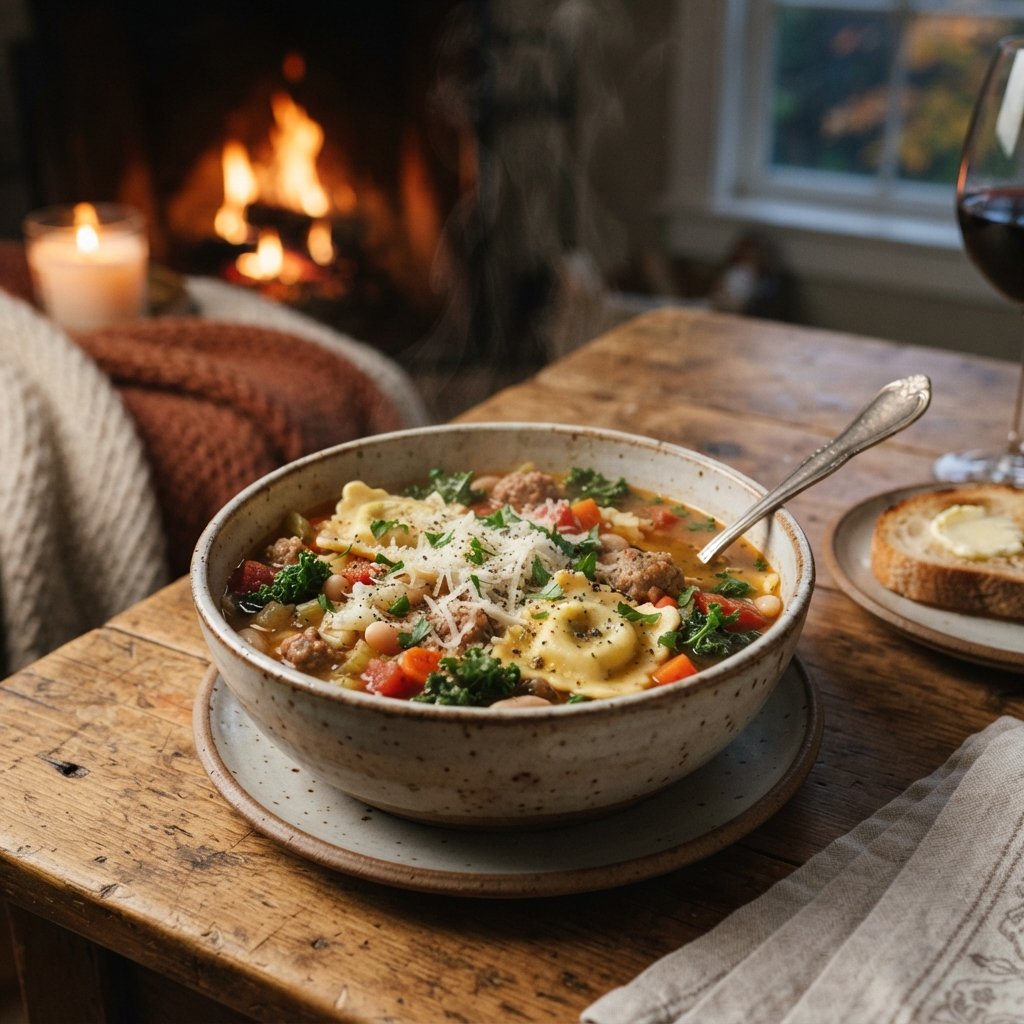
There is a distinct magic that happens when the air turns crisp and the leaves begin to fall—a collective human desire to seek warmth, comfort, and nourishment in a bowl. Tuscan Ravioli Soup is the quintessential embodiment of this seasonal craving. It is not merely a meal; it is a hug from the inside out. Imagine a rich, velvety broth infused with the earthy aromas of garlic, onions, and fresh herbs, teeming with pillowy cheese-filled pasta and vibrant spinach. This dish bridges the gap between the rustic simplicity of Italian countryside cooking and the modern need for a quick, satisfying weeknight dinner.
Perfect for those chilly autumn evenings or snowy winter afternoons, this soup balances heartiness with elegance. The creaminess of the base contrasts beautifully with the acidity of the tomatoes, while the ravioli provides a delightful textural surprise in every spoonful. Whether you are hosting a dinner party or curling up with a good book, this soup promises to deliver a culinary experience that feels both luxurious and deeply comforting.
The History
To understand Tuscan Ravioli Soup, one must look back to the rolling hills of Tuscany, Italy, a region renowned for its “cucina povera” or “peasant cooking.” Historically, Tuscan cuisine was built on the philosophy of using high-quality, locally sourced ingredients to create simple yet profound flavors. While the specific combination of ravioli in a tomato-cream broth is a modern adaptation often found in Italian-American households, its roots are deeply planted in traditional Italian soup culture.
Traditional Tuscan soups, such as Ribollita (a bread and vegetable soup) or Pappa al Pomodoro, relied heavily on stale bread, beans, and seasonal vegetables. Pasta in soup, known generally as minestra in brodo, has been a staple for centuries. The addition of ravioli—a stuffed pasta that dates back to the Middle Ages—elevates the soup from a simple sustenance meal to a celebration. In Tuscany, ravioli was often reserved for special occasions, filled with ricotta and spinach or meat. By combining these stuffed pastas with a creamy tomato broth, we honor the region’s love for fresh pasta and robust sauces, creating a dish that feels timeless yet contemporary.
Ingredients Breakdown
The beauty of this soup lies in the quality of its components. Because the dish is relatively simple, every ingredient plays a starring role.
- The Ravioli: The star of the show. While you can use dried ravioli, fresh refrigerated cheese ravioli offers a superior texture. The dough is more tender, and the filling is often creamier. Look for varieties filled with ricotta and spinach, or four-cheese blends for maximum indulgence.
- The Broth Base: A combination of chicken or vegetable broth provides the liquid foundation. Using a high-quality, low-sodium broth allows you to control the salt levels and ensures the natural flavors of the vegetables shine through.
- Tomatoes: Crushed San Marzano tomatoes are preferred for their sweet flavor and low acidity. They provide the necessary body and color to the soup without overpowering the delicate cheese filling.
- The Cream: Heavy cream is what transforms this from a standard tomato soup into a Tuscan masterpiece. It adds a luxurious mouthfeel and mellows out the acidity of the tomatoes. For a lighter version, half-and-half can be used, though the result will be less velvety.
- Aromatics: Onions, garlic, and carrots form the soffritto, the flavor base of Italian cooking. Fresh basil and dried oregano add the signature herbal notes that instantly transport you to Italy.
- Greens: Fresh baby spinach is stirred in at the very end. It wilts quickly, adding a pop of color, iron, and a slight earthiness that cuts through the richness of the cream.
Step-by-Step Recipe
Creating this soup is a straightforward process that rewards patience during the sautéing phase. Here is how to build layers of flavor.
Phase 1: Building the Flavor Base
Begin by heating olive oil in a large, heavy-bottomed pot or Dutch oven over medium heat. Add your diced onions and carrots. The goal here is not just to soften them, but to caramelize them slightly. This process, which takes about 5-7 minutes, releases natural sugars that balance the acidity of the tomatoes later. Once the onions are translucent, add the minced garlic. Be careful not to burn the garlic, as it can turn bitter quickly; sauté for just one minute until fragrant.
Phase 2: Creating the Broth
Add the dried oregano and red pepper flakes (if using) to the pot, stirring constantly for 30 seconds to “bloom” the spices. This wakes up their essential oils. Next, pour in the crushed tomatoes and the broth. Stir well to combine, scraping up any browned bits from the bottom of the pot (this is flavor gold). Bring the mixture to a gentle simmer. Allow it to cook for about 10 minutes to let the flavors meld together.
Phase 3: The Cream and Pasta
Reduce the heat to low and stir in the heavy cream. Watch as the soup transforms into a beautiful, creamy orange-pink hue. Bring the soup back to a gentle simmer—do not let it boil vigorously once the cream is added, as it may separate. Gently drop in the ravioli. If using fresh ravioli, they will cook quickly (usually 3-4 minutes); if using dried, follow the package instructions. The soup is ready when the pasta is tender and floating.
Phase 4: The Finish
Turn off the heat. Stir in the fresh baby spinach and allow the residual heat to wilt the leaves. This preserves their bright green color and nutrients. Finally, stir in half of the grated Parmesan cheese. Taste the soup and adjust seasoning with salt and black pepper. Serve immediately, garnished with the remaining cheese and fresh basil.
Tips
- Don’t Overcook the Ravioli: Ravioli continues to cook slightly even after you turn off the heat. If you plan on having leftovers, consider undercooking the pasta slightly in the soup, or cook the pasta separately and add it to individual bowls. This prevents the pasta from becoming mushy upon reheating.
- Bloom Your Spices: Adding dried herbs like oregano to the hot oil before adding liquids intensifies their flavor significantly compared to just dumping them into the liquid.
- Cheese Rind Hack: If you have a rind from a wedge of Parmesan cheese, toss it into the soup while it simmers. It acts as a natural flavor enhancer, adding a deep, savory umami quality to the broth. Remove it before serving.
- Acidity Balance: If your tomatoes are too acidic, add a pinch of sugar or a splash of balsamic vinegar to balance the flavor profile.
Variations and Customizations
One of the greatest strengths of this soup is its versatility. It serves as a blank canvas for your dietary needs and pantry staples.
- Protein Boost: To make this a more substantial meal, add cooked Italian sausage, shredded rotisserie chicken, or white beans (cannellini beans) during the simmering phase.
- Vegetarian & Vegan: Use vegetable broth instead of chicken broth. For a vegan version, substitute the heavy cream with full-fat coconut milk or cashew cream, and use vegan ravioli filled with tofu or nut-based cheeses.
- Gluten-Free: Simply swap the wheat-based ravioli for a high-quality gluten-free alternative. Many brands now offer brown rice or quinoa-based stuffed pastas that hold up well in soup.
- Spicy Kick: For those who love heat, increase the red pepper flakes or add a drizzle of chili oil before serving. You can also sauté some diced jalapeños with the onions.
- Extra Veggies: Feel free to bulk up the nutrition by adding diced zucchini, kale, or mushrooms along with the carrots and onions.
Health Considerations and Nutritional Value
While this soup is indulgent, it can be part of a balanced diet when portioned correctly. The tomatoes provide a good source of lycopene, an antioxidant linked to heart health, while the spinach adds iron and Vitamin K. However, the heavy cream and cheese contribute to a higher saturated fat and calorie count.
Approximate Nutritional Profile (per serving):
- Calories: 450-550 kcal (depending on the amount of cream and cheese)
- Protein: 18g (from cheese, pasta, and broth)
- Carbohydrates: 45g (primarily from the ravioli)
- Fat: 25g
To make it healthier, you can substitute the heavy cream with evaporated skim milk or a blend of milk and a little cornstarch for thickness. Increasing the ratio of spinach and vegetables to pasta also boosts the nutrient density while lowering the glycemic load.
Ingredients
- 2 tablespoons olive oil
- 1 medium yellow onion, diced
- 2 carrots, peeled and diced small
- 4 cloves garlic, minced
- 1 teaspoon dried oregano
- 1/2 teaspoon red pepper flakes (optional)
- 1 can (28 oz) crushed tomatoes (San Marzano preferred)
- 4 cups chicken or vegetable broth
- 1 cup heavy cream
- 1 package (9-10 oz) fresh cheese ravioli
- 3 cups fresh baby spinach, packed
- 1/2 cup grated Parmesan cheese, plus more for serving
- Salt and black pepper to taste
- Fresh basil, chopped, for garnish
Directions
- Sauté Vegetables: Heat olive oil in a large pot over medium heat. Add onion and carrots; cook for 5-7 minutes until softened. Add garlic, oregano, and red pepper flakes; cook for 1 minute until fragrant.
- Simmer Base: Stir in crushed tomatoes and broth. Bring to a boil, then reduce heat and simmer uncovered for 10 minutes.
- Add Cream: Stir in the heavy cream and return to a gentle simmer.
- Cook Ravioli: Add the ravioli to the pot. Cook according to package directions (usually 3-5 minutes for fresh pasta) until tender.
- Finish: Remove from heat. Stir in spinach and Parmesan cheese until spinach is wilted and cheese is melted. Season with salt and pepper.
- Serve: Ladle into bowls and garnish with extra Parmesan and fresh basil.
FAQ
Can I make this soup ahead of time?
Yes, you can prepare the broth base (up to the cream addition) a day in advance. However, it is best to cook the ravioli fresh before serving. If you must store it with the pasta, be aware that the ravioli will absorb the liquid and become very soft.
How do I store leftovers?
Store leftovers in an airtight container in the refrigerator for up to 3 days. When reheating, add a splash of broth or water to loosen the soup, as the pasta will have thickened the mixture.
Can I freeze this soup?
Freezing is not recommended for soups containing cream and fresh pasta, as the cream may separate and the pasta texture will degrade upon thawing. It is best enjoyed fresh.
What kind of ravioli works best?
Fresh, refrigerated ravioli yields the best texture. Dried ravioli works well too but requires a longer cooking time. Avoid frozen ravioli unless you thaw it first, as it can lower the temperature of the soup too drastically.
Summary
Tuscan Ravioli Soup is a creamy, tomato-based comfort dish featuring tender cheese pasta and fresh spinach, perfect for cold weather. It combines rustic Italian flavors with a rich, velvety broth for a meal that is both elegant and deeply satisfying.