Irresistible Crispy Chicken Caesar Sandwich Sliders on Parmesan Rolls
Introduction
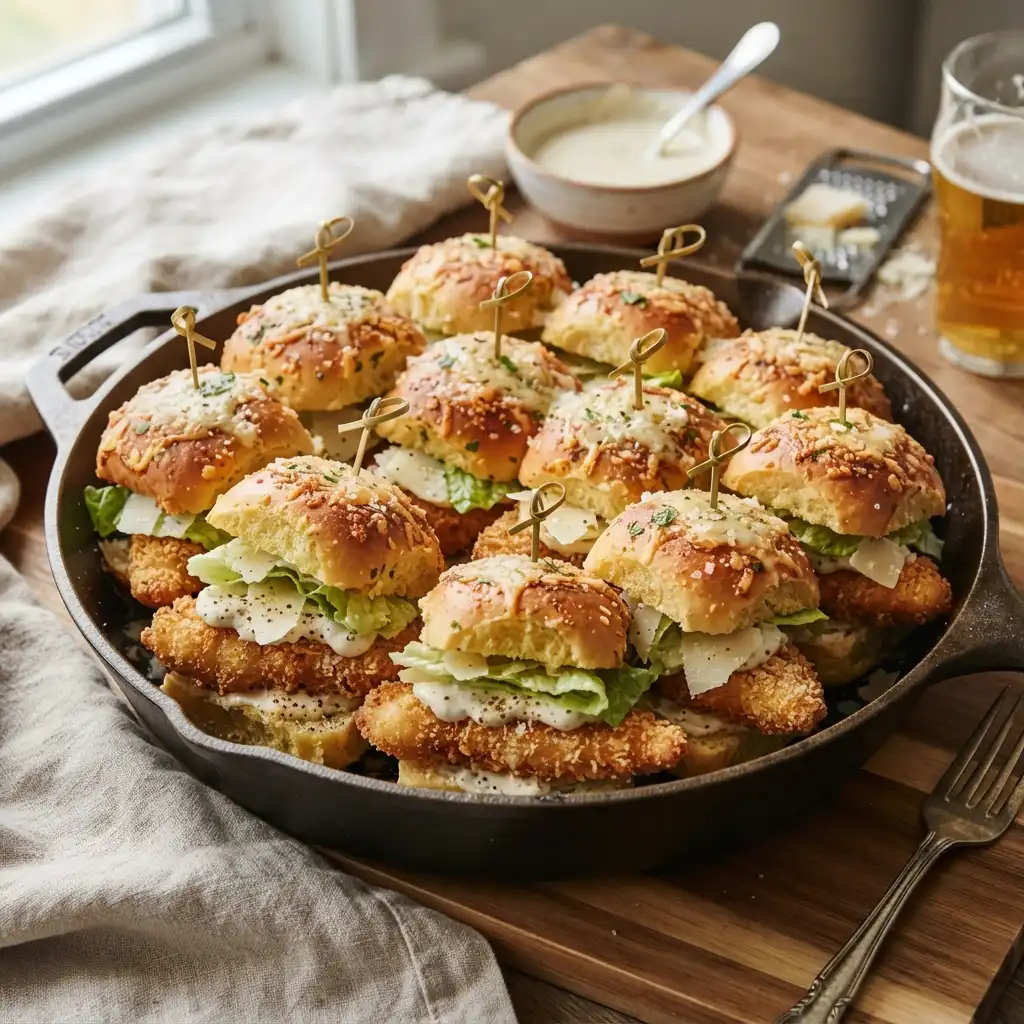
There are few culinary experiences that rival the perfect harmony of textures and flavors found in a well-crafted slider, and when you elevate that concept with the classic profiles of a Chicken Caesar Salad, the result is nothing short of extraordinary. These Irresistible Crispy Chicken Caesar Sandwich Sliders on Parmesan Rolls represent the pinnacle of comfort food innovation, merging the crunchy, savory delight of fried chicken with the creamy, tangy zest of Caesar dressing, all nestled within a warm, cheese-infused bread vessel. Imagine biting into a golden, breaded chicken cutlet that shatters delicately under pressure, revealing juicy, tender meat inside, while cool, crisp romaine lettuce provides a refreshing contrast against the richness of shaved Parmesan and a robust garlic aioli.
This recipe is designed for those who appreciate the finer details of sandwich construction. It is not merely about throwing ingredients together; it is about understanding how the acidity of the dressing cuts through the fat of the fried chicken, how the nuttiness of the Parmesan roll complements the shaved cheese on top, and how the size of a slider allows for a perfect ratio of bread to filling in every single bite. Whether you are hosting a game-day gathering, planning a sophisticated yet casual dinner party, or simply seeking a weeknight meal that feels like a celebration, these sliders promise to deliver satisfaction in every mouthful. The aroma alone, featuring notes of toasted garlic, frying oil, and baking cheese, is enough to gather everyone in the kitchen before the plate even hits the table.
The History
To truly appreciate this modern masterpiece, one must delve into the rich historical tapestry from which its components are woven. The story begins with the Caesar Salad, a dish shrouded in legend and debate, most commonly attributed to Caesar Cardini, an Italian immigrant restaurateur operating in Tijuana, Mexico, during the 1920s. As the story goes, during a busy Fourth of July weekend in 1924, Cardini’s kitchen was running low on supplies. Improvising with what he had left, he created a dramatic table-side salad featuring romaine lettuce, garlic, croutons, Parmesan cheese, boiled eggs, olive oil, and Worcestershire sauce. This invention quickly crossed the border into the United States, becoming a staple of American dining culture and evolving over decades to include protein additions like grilled or fried chicken.
Parallel to the rise of the Caesar salad was the evolution of the sandwich slider. The term “slider” originally gained popularity in the 1960s, often associated with the small, steamed hamburgers served by White Castle. However, the concept of miniature sandwiches has existed in various forms throughout culinary history, from French tea sandwiches to American party subs. In the modern gastronomic landscape, sliders have undergone a gourmet transformation. No longer just cheap fast food, they are now canvases for high-end ingredients, allowing chefs and home cooks to experiment with complex flavor profiles in a manageable, bite-sized format. The fusion of the Caesar salad into a slider format is a contemporary innovation, reflecting the modern diner’s desire for familiar flavors presented in novel, convenient, and shareable ways. This recipe honors those histories by respecting the traditional elements of the Caesar while embracing the fun and versatility of the slider concept.
Ingredients Breakdown
Understanding the role of each component is crucial to achieving the best possible result. This is not just a list of items; it is an explanation of why quality matters for each element in this construction.
The Chicken
The star of the show must be treated with respect. We recommend using chicken thighs for sliders rather than breasts. While breasts are leaner, thighs possess a higher fat content which ensures the meat remains juicy and flavorful even after the high-heat cooking process required to achieve a crispy crust. The thickness of the chicken should be uniform to ensure even cooking, preventing scenarios where the outside burns before the inside is safe to eat.
The Breading
Achieving the ultimate crunch requires a strategic approach to breading. A combination of all-purpose flour and cornstarch in the initial dredge helps create a dry surface for the egg wash to adhere to. For the outer layer, Panko breadcrumbs are superior to standard breadcrumbs. Panko is made from bread without crusts, processed into large flakes using an electrical current, which results in a lighter, airier, and crunchier texture that absorbs less oil during frying. Adding grated Parmesan directly into the breadcrumb mixture infuses cheese flavor into the crust itself, not just on top.
The Rolls
The foundation of any great sandwich is the bread. For this recipe, Parmesan rolls are non-negotiable. These rolls are typically enriched with cheese and herbs, providing a savory depth that standard hamburger buns lack. They need to be sturdy enough to hold the juicy chicken and dressing without disintegrating, yet soft enough to yield easily when bitten. Toasting them is essential to create a barrier against moisture, preventing the dreaded soggy bottom.
The Dressing and Greens
A Caesar dressing brings the necessary acidity and creaminess. While store-bought options exist, a homemade emulsion of egg yolk, garlic, anchovies, lemon juice, and olive oil provides a brightness that cuts through the fried elements. The romaine lettuce must be shredded finely rather than left in large leaves; this ensures that the lettuce distributes evenly throughout the slider and doesn’t slide out when you take a bite. The cheese should be freshly shaved from a block of Parmigiano-Reggiano rather than pre-grated, as the anti-caking agents in pre-grated cheese can affect the melt and texture.
Step-by-Step Recipe
Creating these sliders is a journey of preparation, cooking, and assembly. Follow this narrative guide to ensure every step is executed with precision.
Phase One: Preparation and Marination
Begin by preparing your chicken. If using whole thighs, trim any excess fat or sinew. Place the chicken between two sheets of plastic wrap and gently pound them until they are an even thickness, roughly half an inch. This step is vital for even cooking. In a shallow bowl, whisk together buttermilk, hot sauce, salt, and pepper. Submerge the chicken pieces in this mixture and let them marinate in the refrigerator for at least one hour, though overnight is preferable. The acidity in the buttermilk tenderizes the meat while infusing it with flavor.
Phase Two: The Breading Station
Set up a standard breading station with three separate shallow dishes. The first should contain seasoned flour mixed with garlic powder and onion powder. The second should contain beaten eggs mixed with a splash of water to loosen them. The third should contain the Panko breadcrumb and Parmesan cheese mixture. Remove the chicken from the buttermilk, allowing excess to drip off, then dredge in the flour, dip in the egg, and finally press firmly into the breadcrumb mixture. Ensure every surface is coated generously, pressing the crumbs into the meat to ensure they stick during frying.
Phase Three: Frying to Perfection
Heat a neutral oil with a high smoke point, such as canola or vegetable oil, in a heavy-bottomed skillet or Dutch oven. The temperature should be maintained at 350 degrees Fahrenheit. Use a thermometer to monitor this closely; if the oil is too cool, the chicken will absorb grease and become soggy. If it is too hot, the outside will burn before the inside cooks. Fry the chicken in batches to avoid overcrowding, which lowers the oil temperature. Cook for approximately 4-5 minutes per side until golden brown and the internal temperature reaches 165 degrees Fahrenheit. Transfer to a wire rack to drain, not paper towels, which can trap steam and soften the crust.
Phase Four: Assembly
While the chicken rests, prepare your rolls. Slice them in half horizontally and brush the cut sides with melted butter mixed with minced garlic. Toast them in a skillet or under the broiler until golden. Spread a generous layer of Caesar dressing on the bottom bun. Place a piece of crispy chicken on top, followed by a mound of shredded romaine lettuce tossed lightly in extra dressing. Finish with a generous shaving of Parmesan cheese and the top bun. Serve immediately while the chicken is still warm and crispy.
Tips
To elevate your slider game from good to unforgettable, consider these professional insights and technical tips.
- Oil Temperature Management: Invest in a deep-fry thermometer. Consistent oil temperature is the single most important factor in achieving a crispy coating. If you do not have a thermometer, test the oil by dropping a single breadcrumb in; it should sizzle vigorously and brown within 60 seconds.
- The Wire Rack Rule: Never place fried chicken directly on paper towels after cooking. The steam gets trapped between the chicken and the towel, creating condensation that makes the bottom of the breading soggy. A wire rack allows air to circulate around the entire piece of chicken.
- Toasting is Mandatory: Do not skip the toasting step for the rolls. The Caesar dressing and the juices from the chicken will inevitably moisten the bread. A toasted surface creates a hydrophobic barrier that keeps the bun structural integrity intact for longer.
- Lettuce Logic: Dry your romaine lettuce thoroughly after washing. Any water clinging to the leaves will dilute the dressing and make the slider watery. Use a salad spinner to ensure the greens are crisp and dry.
- Make Ahead Strategy: You can bread the chicken hours in advance and keep it on a rack in the refrigerator. This actually helps the breading adhere better during frying. However, fry the chicken just before serving for the best texture.
- Cheese Quality: Buy a block of Parmigiano-Reggiano and shave it yourself using a vegetable peeler. Pre-grated cheese contains cellulose to prevent clumping, which prevents it from melting or adhering properly to the sandwich.
Variations and Customizations
While the classic recipe is sublime, cooking is an art that invites personal expression. Here are several ways to customize these sliders to fit different palates and dietary needs.
Spicy Kick
For those who enjoy heat, add cayenne pepper or crushed red pepper flakes to the flour dredge. You can also mix a tablespoon of sriracha or chipotle paste into the Caesar dressing. Another option is to use Pepper Jack cheese instead of Parmesan for a melty, spicy variation.
Gluten-Free Adaptation
To make this recipe gluten-free, substitute the all-purpose flour with a 1:1 gluten-free baking flour blend. Ensure your Panko breadcrumbs are replaced with gluten-free crushed cornflakes or certified gluten-free breadcrumbs. Verify that your Worcestershire sauce and soy sauce (if used) are gluten-free varieties.
Air Fryer Method
If you wish to reduce the oil usage, these sliders can be adapted for an air fryer. Spray the breaded chicken generously with olive oil spray and cook at 375 degrees Fahrenheit for 12-15 minutes, flipping halfway through. While the texture will be slightly different than deep-fried, it is still delicious and significantly lighter.
Vegetarian Option
Replace the chicken with breaded and fried portobello mushroom caps or cauliflower florets. The earthy flavor of mushrooms pairs exceptionally well with Caesar dressing and Parmesan. Ensure you squeeze excess moisture out of the vegetables before breading to prevent sogginess.
Breakfast Slider
Transform this into a breakfast item by adding a fried egg and a slice of crispy bacon to the stack. The runny yolk adds an extra layer of richness that complements the Caesar flavors beautifully.
Health Considerations and Nutritional Value
It is important to approach this recipe with a balanced perspective regarding nutrition. As a dish featuring fried chicken, cheese, and creamy dressing, it is energy-dense and should be enjoyed in moderation as part of a varied diet.
Caloric Content: Each slider contains a significant amount of calories, primarily derived from the carbohydrates in the breading and roll, the fats in the frying oil and cheese, and the protein in the chicken. A single slider can range from 350 to 450 calories depending on the size of the chicken portion and the amount of dressing used.
Protein Power: On the positive side, chicken is an excellent source of lean protein, which is essential for muscle repair and satiety. Using chicken thighs provides a bit more fat, but also more flavor and tenderness, which can help you feel satisfied with fewer sliders.
Sodium Awareness: Parmesan cheese, Caesar dressing, and processed breadcrumbs can be high in sodium. To mitigate this, look for low-sodium breadcrumbs, make your own dressing to control the salt content, and use less cheese if you are monitoring your sodium intake.
Healthier Swaps: To reduce the caloric load, consider baking the chicken instead of frying, using whole wheat rolls for added fiber, and increasing the ratio of lettuce to chicken. You can also use a yogurt-based Caesar dressing to reduce the fat content while maintaining creaminess.
Ingredients
Below is the precise shopping list required to construct approximately 12 sliders. Ensure all ingredients are fresh for the best outcome.
- 1.5 lbs boneless, skinless chicken thighs, trimmed and pounded to even thickness
- 1 cup buttermilk
- 1 tablespoon hot sauce (such as Frank’s RedHot)
- 1 cup all-purpose flour
- 1 teaspoon garlic powder
- 1 teaspoon onion powder
- 1 teaspoon salt, plus more for seasoning
- 1/2 teaspoon black pepper
- 2 large eggs, beaten
- 2 cups Panko breadcrumbs
- 1/2 cup finely grated Parmesan cheese (for the breading)
- Vegetable or canola oil, for frying
- 12 Parmesan dinner rolls or slider buns
- 4 tablespoons unsalted butter, melted
- 2 cloves garlic, minced (for the butter)
- 1 cup Caesar dressing (homemade or high-quality store-bought)
- 1 head romaine lettuce, finely shredded
- 1/2 cup shaved Parmigiano-Reggiano cheese (for topping)
- Fresh parsley, chopped (for garnish, optional)
Directions
Follow these concise instructions to execute the recipe efficiently.
- Marinate: In a bowl, combine buttermilk and hot sauce. Add chicken thighs, cover, and refrigerate for at least 1 hour.
- Prep Station: Set up three bowls. Bowl 1: Flour, garlic powder, onion powder, salt, and pepper. Bowl 2: Beaten eggs. Bowl 3: Panko mixed with 1/2 cup grated Parmesan.
- Bread: Remove chicken from buttermilk. Dredge in flour, dip in egg, then press into Panko mixture. Place on a wire rack.
- Heat Oil: Fill a heavy skillet with 1 inch of oil. Heat to 350°F (175°C).
- Fry: Fry chicken in batches for 4-5 minutes per side until golden and internal temperature reaches 165°F. Drain on a wire rack.
- Prep Rolls: Mix melted butter with minced garlic. Brush on cut sides of rolls. Toast in a skillet or oven until golden.
- Prep Greens: Toss shredded romaine with a small amount of Caesar dressing.
- Assemble: Spread dressing on bottom bun. Add chicken, topped with dressed lettuce and shaved Parmesan. Cover with top bun.
- Serve: Garnish with parsley if desired and serve immediately while warm.
FAQ
Here are answers to some of the most common questions regarding this recipe.
Can I bake the chicken instead of frying it?
Yes, you can bake the breaded chicken at 400°F (200°C) for about 20-25 minutes, flipping halfway through. Spray the chicken with oil before baking to help it brown. The texture will be slightly less crunchy than fried but still delicious.
How do I keep the sliders from getting soggy?
The key is toasting the buns thoroughly and assembling the sliders just before serving. If you need to prep ahead, keep the components separate and assemble them right before your guests arrive.
Can I freeze the leftover chicken?
Yes, fried chicken freezes well. Let it cool completely, then store in an airtight container or freezer bag for up to 3 months. Reheat in an oven or air fryer to restore crispiness; avoid microwaving as it will make the breading chewy.
What can I use if I can’t find Parmesan rolls?
Hawaiian rolls, brioche buns, or standard potato rolls work well as substitutes. You can brush them with extra Parmesan butter before toasting to mimic the flavor profile.
Is there a way to make the dressing lighter?
Yes, you can mix half Caesar dressing with half Greek yogurt. This maintains the tangy flavor profile while reducing the overall fat and calorie content.
Summary
These Crispy Chicken Caesar Sliders combine golden fried chicken, creamy dressing, and fresh romaine on toasted Parmesan rolls for the ultimate savory bite.
Perfect for parties or quick dinners, they offer a gourmet twist on classic comfort food that is sure to impress every guest at your table.