Introduction
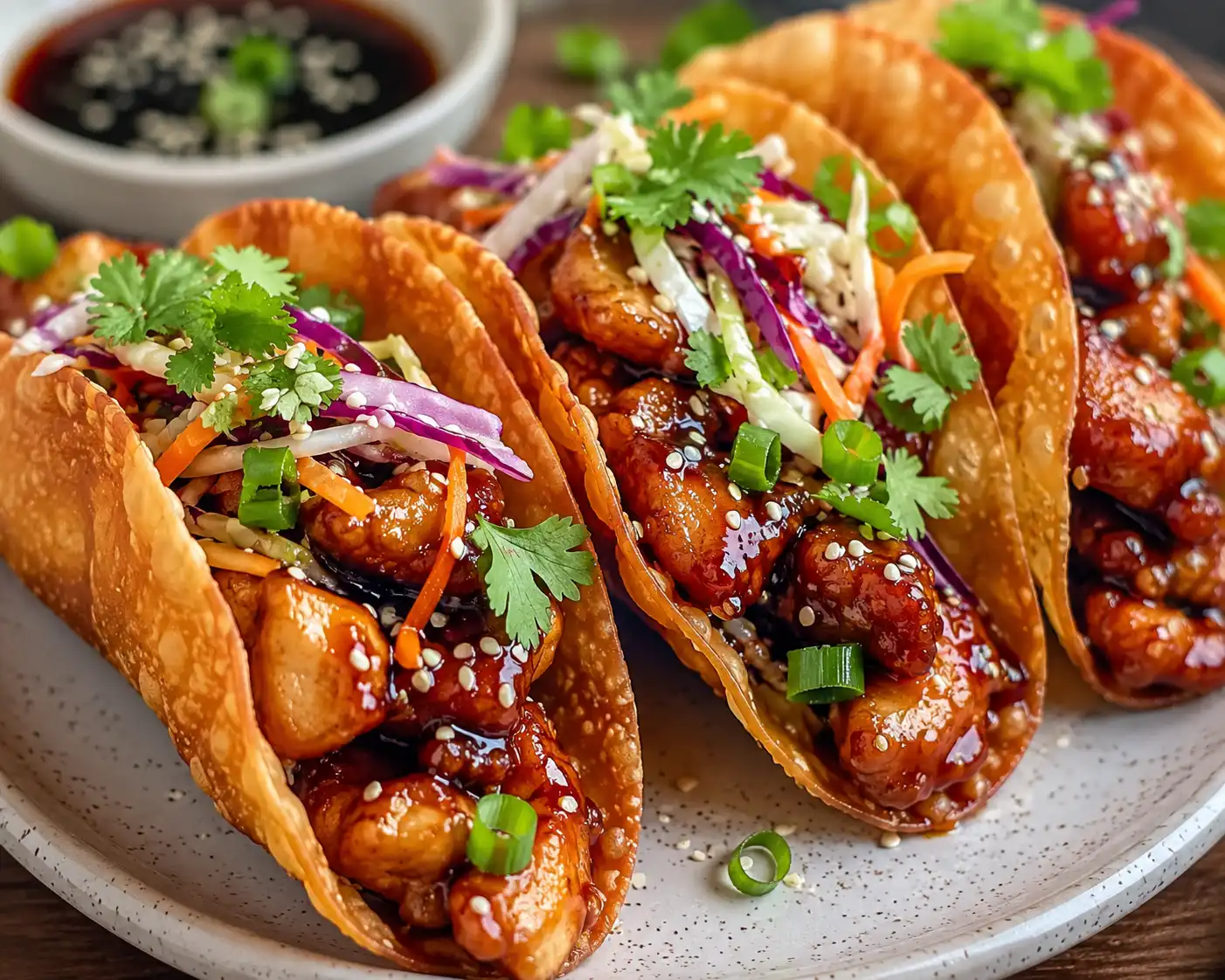
Imagine the bold, savory-sweet umami punch of authentic teriyaki glaze meeting the irresistible crunch of golden-crisp wonton wrappers—then wrapped around tender, perfectly seasoned grilled chicken and fresh, vibrant toppings. Crispy Teriyaki Chicken Wonton Tacos are a revolutionary fusion dish that bridges East Asian flavor traditions with the casual, handheld joy of Mexican street food. Far more than just a trendy mashup, this recipe is a masterclass in texture contrast, balanced seasoning, and culinary creativity—delivering restaurant-quality excitement right from your home kitchen. Whether served as an elevated appetizer, a showstopping main course, or a crowd-pleasing party centerpiece, these tacos redefine what “fusion” means: not just combining cuisines, but harmonizing them with intention, respect for ingredients, and playful innovation.
The History
The origins of Crispy Teriyaki Chicken Wonton Tacos lie at the dynamic intersection of global migration, culinary curiosity, and social media–driven food evolution. Teriyaki itself traces back to 17th-century Japan, where the word “teri” (gloss or luster) and “yaki” (grill or broil) described the glossy, caramelized finish achieved by simmering proteins in soy-based marinades. Wonton wrappers, meanwhile, originated in Northern China over 1,800 years ago as delicate parcels for dumplings—and later became pantry staples across Asia and the West due to their versatility, neutral flavor, and ideal crispability when baked or fried. The taco format, rooted in pre-Columbian Mesoamerican traditions using hand-patted corn tortillas, was transformed in 20th-century Texas and California into the flour-and-lettuce-lined vessel we know today. The modern fusion emerged organically in the early 2010s within urban food trucks—from Los Angeles’ Koreatown taco stands to Portland’s Asian-Latin pop-ups—where chefs began substituting traditional tortillas with flash-fried wonton skins to add dramatic crunch and visual flair. Social platforms like Instagram accelerated adoption, with viral videos showcasing the satisfying “shatter” of the wrapper and slow-motion drizzle of glossy teriyaki. Today, this dish reflects a broader cultural shift toward boundary-free cooking: honoring technique and tradition while fearlessly reimagining form, function, and flavor architecture.
Ingredients Breakdown
Every element in Crispy Teriyaki Chicken Wonton Tacos serves a precise sensory and structural purpose—no ingredient is arbitrary. Let’s deconstruct the layers:
- Chicken Breast or Thigh: Boneless, skinless chicken breast offers lean tenderness and clean protein absorption, while thigh meat delivers richer flavor, higher fat content for moisture retention, and superior resistance to overcooking—ideal for high-heat searing or grilling. Both benefit from strategic brining or velveting (a quick cornstarch-egg white marinade) to lock in juiciness.
- Authentic Teriyaki Base: Not just bottled sauce! Real teriyaki begins with Japanese koikuchi shoyu (full-bodied, naturally brewed soy sauce), low-sodium varieties preferred to control salt balance. Mirin (rice wine with 10–14% alcohol and subtle sweetness) provides depth and sheen; sake adds aromatic complexity and helps tenderize. Freshly grated ginger and minced garlic deliver pungent, warming top notes—never powdered substitutes, which lack volatile oils and enzymatic brightness.
- Sweetener & Thickener: Light brown sugar contributes molasses-kissed warmth and caramelization potential; honey adds floral viscosity and natural enzymes that enhance browning. A touch of toasted sesame oil (added *off-heat*) imparts nutty aroma without bitterness. Cornstarch slurry (mixed cold before adding) ensures glossy, clingy consistency—not gloppy or gluey.
- Wonton Wrappers: Square or round, thin-yet-durable wrappers made from wheat flour, water, and egg. Look for brands with minimal preservatives and no added alkaline agents (like kansui), which can impart off-flavors when crisped. Their ultra-thin profile allows rapid dehydration at high heat, yielding shatter-crisp results unmatched by tortillas or lettuce cups.
- Crisping Agents: Neutral high-smoke-point oil (avocado, grapeseed, or refined peanut) for even frying; or baking spray + parchment for oven-baked versions. Optional rice bran oil for ultra-clean fry flavor.
- Signature Toppings: Shredded purple cabbage adds peppery crunch and anthocyanin-rich color; thinly sliced scallions bring sharp freshness; pickled red onions contribute bright acidity and textural counterpoint; crushed roasted peanuts or sesame seeds offer earthy, oily richness; and micro cilantro or shiso leaves lend herbaceous lift and visual sophistication.
- Optional Umami Boosters: Furikake (Japanese seaweed-sesame blend), toasted nori strips, or a whisper of yuzu kosho (citrus-chili paste) for layered complexity.
Step-by-Step Recipe
- Prepare the Teriyaki Marinade & Glaze: In a non-reactive saucepan, combine ½ cup low-sodium soy sauce, ¼ cup mirin, ¼ cup sake, 3 tbsp light brown sugar, 2 tbsp honey, 1 tbsp freshly grated ginger, 2 cloves finely minced garlic, and 1 tsp toasted sesame oil. Whisk over medium-low heat until sugar dissolves. Simmer gently for 5 minutes to mellow raw alcohol and meld flavors. Remove ⅓ cup for marinating; reserve remainder. Mix 1 tsp cornstarch with 1 tbsp cold water; whisk into remaining sauce and simmer 2–3 minutes until thickened to coat the back of a spoon. Cool completely. (Note: Do not reduce too aggressively—over-reduction yields bitterness.)
- Marinate the Chicken: Slice 1.5 lbs boneless, skinless chicken breast or thigh into uniform ½-inch thick strips (against the grain for tenderness). Place in a non-reactive bowl or zip-top bag. Add reserved ⅓ cup marinade. Gently massage to coat. Refrigerate 30 minutes minimum (up to 2 hours)—longer marination risks mushiness due to mirin’s enzymes.
- Prep Wonton Wrappers for Crisping: Line two baking sheets with parchment. Lightly brush one side of each wrapper with neutral oil or use baking spray. For oven method: Arrange oiled-side-up in a single layer. For fry method: Heat 1 inch oil to 350°F (175°C) in a heavy pot. Have paper towels and wire rack ready.
- Crisp the Wrappers: Oven Method: Bake at 375°F (190°C) for 6–9 minutes, rotating pans halfway, until uniformly golden and rigid. Cool 2 minutes on sheet—wrappers firm further as they cool. Fry Method: Fry 4–5 wrappers at a time for 20–30 seconds per side until puffed and golden. Drain immediately on rack. Cool completely before handling—they’re fragile when hot.
- Cook the Chicken: Heat 1 tbsp oil in a large stainless steel or cast-iron skillet over medium-high heat until shimmering. Pat chicken strips *very dry*. Sear 2–3 minutes per side until deeply caramelized and internal temp reaches 165°F (74°C). Transfer to a plate; tent loosely with foil.
- Glaze & Finish: Pour reserved teriyaki glaze into same hot skillet. Bring to a vigorous simmer; cook 1 minute to reduce slightly and intensify gloss. Return chicken to pan; toss gently to coat evenly. Cook 30 seconds more—just to warm through and adhere glaze. Remove from heat.
- Assemble Tacos: Working with one cooled wonton shell at a time, place 2–3 glazed chicken strips diagonally across center. Top generously with shredded purple cabbage, pickled red onions, scallion ribbons, crushed peanuts, and a final drizzle of extra glaze or toasted sesame oil. Garnish with micro herbs. Serve immediately—the crunch fades within minutes!
Tips
- Texture is Non-Negotiable: Never assemble tacos until *seconds* before serving. Wonton shells absorb ambient moisture rapidly—even from steamy chicken. Keep components separate until plating.
- Chicken Dryness = Crisp Success: Pat chicken *thoroughly* before marinating and again before searing. Surface water causes steaming instead of caramelization—and invites splatter.
- Glaze Consistency Mastery: If glaze thickens too much upon cooling, whisk in ½ tsp warm water. If too thin, simmer 30 seconds longer. Ideal texture should ribbon slowly off a spoon.
- Wonton Wrapper Hack: For ultra-consistent crispness, use a small biscuit cutter to trim wrappers into perfect circles before baking/frying—eliminates uneven edges that burn.
- Smoke Point Awareness: Never reuse frying oil more than once for wontons—it degrades quickly and imparts off-flavors. Discard after use.
- Batch Efficiency: Crisp wrappers up to 2 days ahead. Store in an airtight container with parchment between layers at room temperature. Re-crisp 2 minutes in 350°F oven if needed.
- Heat Control: Sear chicken on medium-high—not maximum—to develop fond without burning ginger/garlic. Deglaze pan with 1 tbsp water or sake to lift flavorful browned bits into the glaze.
- Serving Temperature Contrast: Serve tacos with chilled sides—think cucumber-miso salad or yuzu-splashed watermelon—to balance richness and heat.
Variations and Customizations
This recipe is a canvas—not a constraint. Adapt with confidence:
- Protein Swaps: Grilled shrimp (marinate 15 min max), crispy tofu (extra-firm, pressed & cornstarch-dusted), Korean-style bulgogi beef (swap gochujang for 1 tsp in glaze), or pulled jackfruit for vegan integrity.
- Gluten-Free Transformation: Use tamari instead of soy sauce; verify mirin is gluten-free (some contain barley); substitute rice paper wrappers (lightly brushed & baked) or certified GF wontons. Note: Texture shifts—rice paper yields chewier crispness.
- Spice Amplification: Stir 1 tsp gochugaru (Korean chili flakes) or ½ tsp yuzu kosho into glaze. Add pickled jalapeños or Thai bird chilies as topping.
- Umami Layering: Sprinkle with bonito flakes (katsuobushi) just before serving for oceanic depth; or mix 1 tsp miso paste into glaze for fermented savoriness.
- Herb & Citrus Twists: Swap scallions for lemongrass-infused oil drizzle; add lime zest to glaze; top with chopped mint or Thai basil instead of cilantro.
- Deconstructed Presentation: Serve components family-style: warm glazed chicken, crispy wonton shards in a bowl, toppings in ramekins, and glaze in a pitcher—let guests build their own.
- Dessert Fusion: Repurpose leftover wonton wrappers: brush with maple syrup & cinnamon, bake until crisp, then fill with matcha-whipped cream and blackberry compote.
- Meal-Prep Friendly: Marinate chicken, crisp wrappers, and make glaze ahead. Store separately. Assemble in under 5 minutes.
Health Considerations and Nutritional Value
A single serving (2 tacos) delivers approximately 380–420 calories, with thoughtful nutritional balance when prepared mindfully:
- Protein Powerhouse: 32–36g high-quality, complete protein from chicken supports muscle maintenance and satiety. Thigh meat adds bioavailable iron and B12.
- Sodium Awareness: Traditional teriyaki is sodium-dense. Using low-sodium soy sauce cuts ~400mg per serving. Rinsing pickled onions briefly reduces additional sodium without sacrificing tang.
- Smart Sweetening: Brown sugar and honey provide rapid energy—but their inclusion is intentional and measured (vs. sugary bottled sauces with HFCS). Natural sugars also aid Maillard browning for flavor without excess calories.
- Healthy Fats: Toasted sesame oil contributes monounsaturated fats and sesamin (an antioxidant). Peanuts add heart-healthy oleic acid and vitamin E.
- Fiber & Phytonutrients: Purple cabbage is rich in glucosinolates (cancer-protective compounds) and anthocyanins (anti-inflammatory pigments). Scallions offer allicin precursors; pickled onions retain quercetin.
- Lower-Carb Advantage: Wonton wrappers contain ~6g net carbs per taco—far less than flour tortillas (~20g) or rice bowls. Gluten-free options further broaden accessibility.
- Considerations: Frying increases calorie density; baking reduces fat by ~60%. Those monitoring blood sugar should note glycemic load—moderate portion size recommended. For low-FODMAP diets, omit garlic/ginger in marinade and use garlic-infused oil instead.
Nutritionally, this dish exemplifies the “Mediterranean-Asian” principle: abundant plant-based crunch, lean protein, functional fats, and minimally processed sweeteners—all supporting metabolic health, gut diversity, and sustained energy.
Ingredients
- 1.5 lbs boneless, skinless chicken breast or thigh, sliced into ½-inch strips
- ½ cup low-sodium Japanese soy sauce (koikuchi shoyu)
- ¼ cup hon mirin (real rice wine, not “mirin-style”)
- ¼ cup Japanese sake
- 3 tbsp light brown sugar, packed
- 2 tbsp raw honey
- 1 tbsp freshly grated ginger (about 1-inch knob)
- 2 cloves garlic, finely minced
- 1 tsp toasted sesame oil (added off-heat)
- 1 tsp cornstarch + 1 tbsp cold water (slurry)
- 24 square or round wonton wrappers (standard 3.5-inch size)
- ¼ cup neutral high-heat oil (avocado, grapeseed, or refined peanut), plus more for brushing
- 4 cups shredded purple cabbage
- ½ cup quick-pickled red onions (see note)
- 4 green onions, thinly sliced (reserve dark green for garnish)
- ⅓ cup roasted unsalted peanuts, roughly crushed
- Toasted white or black sesame seeds, for garnish
- Micro cilantro, shiso, or Thai basil, for finishing
- Lime wedges, for serving
Note: Quick-pickle onions: Thinly slice 1 red onion. Submerge in ½ cup rice vinegar + 1 tbsp sugar + ½ tsp salt. Refrigerate 30+ minutes.
Directions
- In a medium saucepan, combine soy sauce, mirin, sake, brown sugar, honey, ginger, and garlic. Bring to a gentle simmer over medium-low heat, stirring until sugar dissolves. Simmer uncovered for 5 minutes. Remove ⅓ cup for marinating; set aside. Whisk cornstarch slurry into remaining mixture. Return to gentle simmer, stirring constantly, until thickened to a glossy, coating consistency (2–3 minutes). Remove from heat; stir in toasted sesame oil. Cool completely. Reserve glaze.
- Place chicken strips in a bowl or bag. Add reserved ⅓ cup marinade. Massage well. Refrigerate 30 minutes–2 hours.
- Preheat oven to 375°F (190°C). Line two baking sheets with parchment. Lightly brush one side of each wonton wrapper with oil. Arrange oiled-side-up in a single layer. Bake 6–9 minutes, rotating pans halfway, until golden and rigid. Cool 2 minutes on sheet.
- Heat 1 tbsp neutral oil in a large skillet over medium-high heat until shimmering. Pat chicken *very dry*. Sear 2–3 minutes per side until deeply browned and cooked through (165°F). Transfer to plate; tent.
- Pour reserved teriyaki glaze into hot skillet. Simmer 1 minute. Return chicken; toss to coat. Cook 30 seconds. Remove from heat.
- Assemble immediately: Place 2–3 glazed chicken strips diagonally across center of each cooled wonton shell. Top with cabbage, pickled onions, scallions, peanuts, sesame seeds, and herbs. Drizzle lightly with extra glaze or sesame oil. Serve with lime.
FAQ
- Can I air-fry the wonton wrappers?
- Yes! Lightly spray both sides with oil. Arrange in a single layer in air fryer basket (work in batches). Air fry at 375°F (190°C) for 3–4 minutes, flipping halfway, until puffed and golden. Watch closely—air fryers vary significantly in intensity.
- Why does my teriyaki glaze turn bitter?
- Bitterness arises from overheating mirin/sake (alcohol burns off harshly) or over-reducing the sauce. Always simmer gently—not boil—and stop cooking once it coats the spoon. If bitterness occurs, whisk in ½ tsp honey and 1 tsp water; strain out solids.
- Can I make these vegetarian or vegan?
- Absolutely. Substitute extra-firm tofu (pressed, cubed, and pan-seared) or tempeh (steamed then marinated). Use tamari and ensure mirin is vegan (some contain honey). Replace honey with maple syrup or agave. Skip fish-derived bonito if using umami boosters.
- How do I prevent soggy wonton shells?
- Three keys: 1) Ensure chicken is *blotting-dry* before glazing and assembled only when cool, 2) Use *cold* pickled onions (not room-temp), 3) Assemble *immediately* before serving—no advance prep. Even 5 minutes on a warm plate degrades crispness.
- What’s the best soy sauce brand for authentic teriyaki?
- Look for Japanese-brewed, naturally fermented options: Yamasa Koikuchi, Kikkoman Naturally Brewed, or San-J Tamari (for GF). Avoid “teriyaki marinade” products—they contain corn syrup, MSG, and artificial colors.
- Can I freeze components?
- Yes—glaze freezes beautifully for 3 months. Cooked, glazed chicken freezes well for 2 months (thaw overnight in fridge). Wonton wrappers *should not be frozen after crisping* (they’ll absorb moisture and stale), but uncooked wrappers freeze fine for 3 months—thaw in fridge before crisping.
- Are there nut-free alternatives to peanuts?
- Yes. Try roasted sunflower seeds, pepitas (pumpkin seeds), or toasted coconut flakes. All add crunch and healthy fats without allergens.
- Why use both mirin AND sake?
- Mirin provides sweetness and viscosity; sake adds complex esters and subtle umami without cloying sugar. Together, they create multidimensional depth—neither replicates the other. Substitute only if necessary: use all mirin (reduce sugar by 1 tsp) or all sake (add 1 tsp extra sugar).
Summary
Crispy Teriyaki Chicken Wonton Tacos are a triumph of cross-cultural ingenuity—melding Japanese umami mastery, Chinese textural artistry, and Mexican communal joy into a visually stunning, audibly crunchy, and deeply flavorful handheld experience.
With meticulous attention to ingredient authenticity, temperature precision, and assembly timing, this dish delivers restaurant-caliber excitement, customizable nutrition, and endless creative expression—all achievable in under 45 minutes using accessible pantry staples.