Introduction
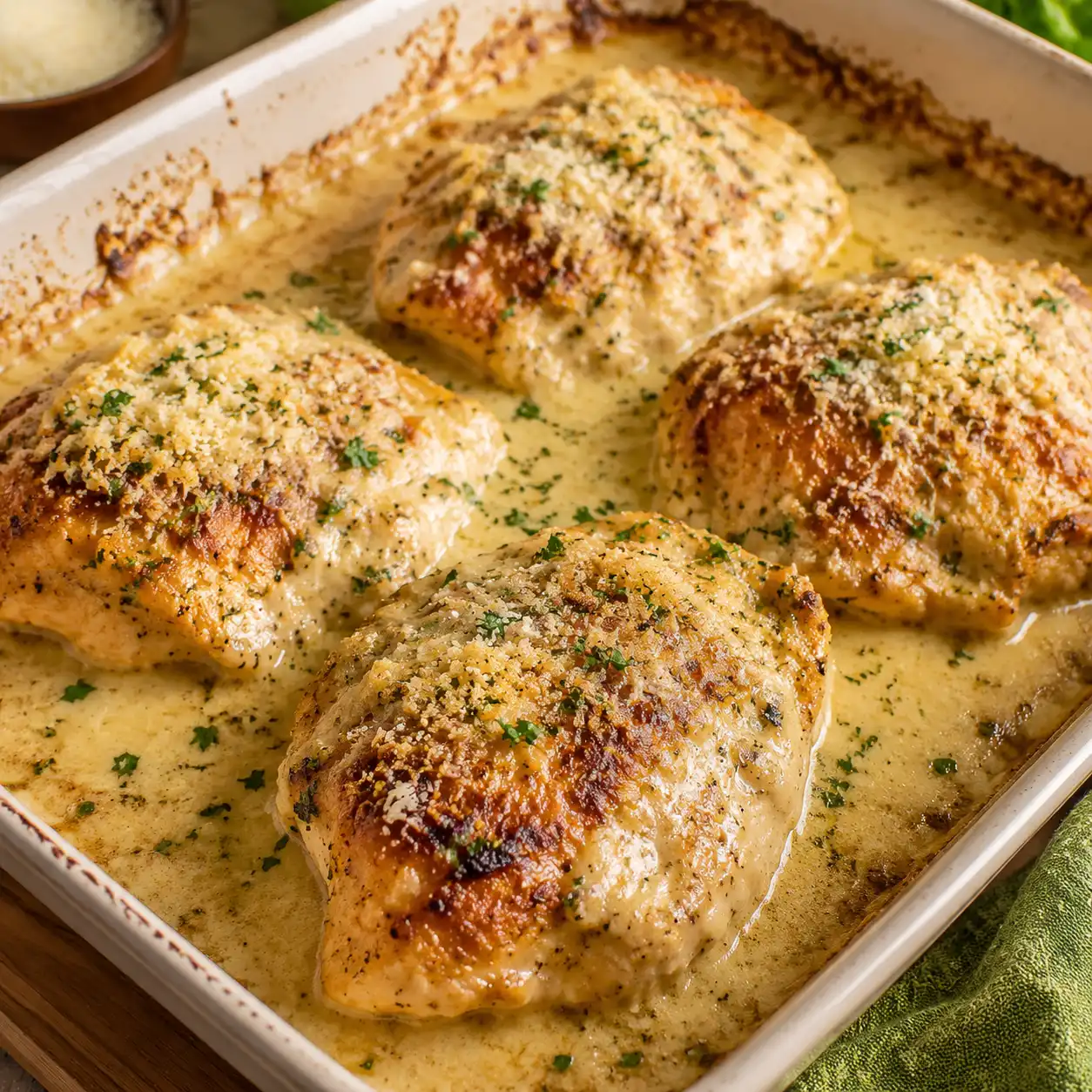
Creamy Parmesan Baked Caesar Chicken is a restaurant-worthy, weeknight-elevating dish that masterfully bridges the bold, tangy punch of classic Caesar salad with the comforting richness of oven-baked chicken. Far more than just a protein topped with dressing, this recipe transforms the essence of Caesar—garlic, anchovy, lemon, Dijon, and umami-packed Parmesan—into a luxuriously thick, velvety, golden-brown crust that clings to tender, juicy chicken breasts. It’s an elegant yet approachable fusion: no grilling required, no complicated emulsions to whisk by hand, and no need for raw egg or unstable mayonnaise-based sauces. Instead, it leverages the magic of baked creaminess—using real dairy, slow-melting cheese, and gentle oven heat—to deliver consistent, crowd-pleasing results every time. Whether you’re meal prepping for busy professionals, cooking for picky eaters (the creamy, cheesy exterior often wins over even the most skeptical), or hosting a casual dinner party, this dish delivers sophistication without stress—and pairs effortlessly with roasted vegetables, garlic mashed potatoes, or a simple side salad dressed in the same Caesar spirit.
The History
The origins of Creamy Parmesan Baked Caesar Chicken are not rooted in ancient Roman kitchens—or even mid-century American steakhouse menus—but rather in the fertile, iterative soil of modern home cooking blogs, food network test kitchens, and social media-driven recipe evolution. The Caesar salad itself was invented in 1924 by Italian-American restaurateur Caesar Cardini in Tijuana, Mexico—a spontaneous creation born from pantry staples during a Fourth of July rush. Its iconic elements—romaine lettuce, croutons, Parmigiano-Reggiano, coddled eggs, lemon juice, Worcestershire, garlic, and anchovies—became foundational flavor architecture. Fast-forward to the 2000s and 2010s: as home cooks sought healthier, protein-forward alternatives to heavy pasta bakes and fried cutlets, the “Caesar chicken” concept began appearing in cookbooks and magazines—often as grilled or pan-seared breasts brushed with bottled dressing and finished under the broiler. However, those early versions suffered from separation, burning, or blandness. The true breakthrough came with the integration of *cream-based binders*: sour cream, Greek yogurt, and heavy cream were introduced not just for moisture, but as stabilizing agents that allowed the sharp, salty, pungent Caesar profile to coat evenly and caramelize beautifully. Simultaneously, the rise of high-quality grated Parmigiano-Reggiano (not just “Parmesan-style” blends) and artisanal crouton-inspired topping techniques elevated texture. By the late 2010s, viral Pinterest pins and TikTok recipe videos cemented the “baked” variation—emphasizing low-and-slow oven roasting (rather than aggressive broiling) to ensure succulent interiors and deeply golden, crackling crusts. Today, Creamy Parmesan Baked Caesar Chicken stands as a delicious testament to culinary adaptation: honoring tradition while embracing convenience, nutrition awareness, and the universal desire for deeply flavorful, fuss-free comfort food.
Ingredients Breakdown
Every element in this recipe serves a precise functional and flavor purpose—no filler, no afterthoughts. Understanding the “why” behind each ingredient empowers confident customization and troubleshooting:
- Chicken Breasts (Boneless, Skinless): Opt for uniform, center-cut breasts (6–8 oz each) or tenders for even cooking. Pounding to ½-inch thickness prevents dryness and ensures the creamy coating adheres fully. Organic, air-chilled, or pasture-raised options offer superior moisture retention and richer flavor.
- Extra-Virgin Olive Oil: Used both for initial searing (to build fond and depth) and drizzling over the top before baking (for browning and sheen). A mild, fruity oil prevents bitterness at higher temps.
- Fresh Garlic (Minced): Raw garlic would burn; sautéing it gently in olive oil unlocks sweetness and mellows its bite—forming the aromatic base of the entire sauce.
- Anchovy Paste (or Minced Fillets): The secret umami engine. It doesn’t taste “fishy”—it adds profound savoriness and complexity, rounding out acidity and enhancing cheese notes. Substitute with ¼ tsp soy sauce or tamari only in emergencies (but you’ll miss the depth).
- Dijon Mustard: Provides sharp, tangy lift and acts as an emulsifier—helping oil, acid, and dairy bind seamlessly into a cohesive sauce. Grainy Dijon adds subtle texture; smooth yields silkier results.
- Fresh Lemon Juice & Zest: Juice delivers bright acidity to balance fat and salt; zest contributes volatile citrus oils—intensifying aroma and cutting through richness without adding liquid.
- Worcestershire Sauce: A fermented condiment rich in tamarind, molasses, vinegar, and anchovies—reinforcing umami and adding subtle smokiness and sweetness. Low-sodium versions work well if monitoring salt intake.
- Full-Fat Sour Cream: The creamy backbone. Its lactic tang mirrors Caesar’s traditional dressing acidity, while its fat content ensures lush mouthfeel and prevents curdling when baked. Avoid low-fat or “light” versions—they separate and yield grainy, watery results.
- Mayonnaise (Full-Fat, Real Egg-Based): Adds richness, stability, and binding power. Its emulsified oil helps suspend cheese and herbs evenly. Homemade or high-quality brands (like Duke’s or Hellmann’s) contain no gums or fillers that could interfere with browning.
- Grated Parmigiano-Reggiano (Freshly Grated): Non-negotiable. Pre-grated “Parmesan” contains anti-caking agents (cellulose) that inhibit melting and create a dusty, greasy texture. Freshly grated cheese melts smoothly, browns beautifully, and delivers intense nutty-salty complexity. Use a microplane for finest texture.
- Panko Breadcrumbs: Japanese-style breadcrumbs provide exceptional crunch and lightness. Their larger, flakier structure absorbs less moisture than regular crumbs, yielding a crisp, shattery, golden-brown crown—not a soggy, dense crust.
- Freshly Cracked Black Pepper: Added in layers—sautéed with garlic for aromatic infusion, folded into the sauce for warmth, and sprinkled on top pre-bake for visual appeal and peppery finish.
- Optional Garnishes: Chopped fresh parsley (for herbaceous freshness and color contrast), extra lemon wedges (for brightness at service), and shaved Parmigiano-Reggiano (for textural contrast and intensified cheese notes).
Step-by-Step Recipe
- Prep & Preheat: Position oven rack in the upper third. Preheat oven to 375°F (190°C). Line a large rimmed baking sheet with parchment paper or foil (for effortless cleanup) and lightly grease with olive oil or non-stick spray.
- Prepare Chicken: Pat chicken breasts *very* dry with paper towels—moisture is the enemy of browning. Place between two sheets of plastic wrap and gently pound with a meat mallet or rolling pin to an even ½-inch thickness. Season both sides generously with kosher salt and freshly cracked black pepper.
- Sear for Flavor Foundation: Heat 1 tbsp olive oil in a large oven-safe skillet (cast iron or stainless steel preferred) over medium-high heat until shimmering. Add chicken and cook undisturbed for 3–4 minutes per side, until deeply golden brown and just beginning to release from the pan. Transfer to a plate; tent loosely with foil. Discard excess fat, leaving ~1 tsp in the pan.
- Build the Creamy Caesar Base: Reduce heat to medium-low. Add remaining 1 tbsp olive oil, then minced garlic and anchovy paste. Sauté gently for 60–90 seconds—just until fragrant and softened (do *not* let garlic brown). Stir in Dijon mustard, lemon zest, lemon juice, Worcestershire sauce, and ¼ tsp black pepper. Cook 30 seconds to meld flavors.
- Emulsify the Cream Mixture: Remove pan from heat. Whisk in sour cream and mayonnaise until completely smooth and homogenous—no streaks or lumps. Fold in ¾ cup freshly grated Parmigiano-Reggiano. Taste and adjust: add a pinch more salt if needed, or a squeeze more lemon for brightness.
- Coat & Top: Return seared chicken to the skillet (or arrange on prepared baking sheet if skillet isn’t oven-safe). Spoon generous amounts of the creamy mixture over each breast, spreading evenly to cover completely—including edges. Sprinkle uniformly with panko breadcrumbs, then the remaining ¼ cup Parmigiano-Reggiano. Drizzle very lightly (½ tsp total) with olive oil over the top for optimal browning.
- Bake to Perfection: Transfer skillet or baking sheet to preheated oven. Bake for 22–28 minutes—timing depends on thickness. Chicken is done when internal temperature reaches 160°F (71°C) at the thickest part (it will carry over to 165°F/74°C while resting). The topping should be deeply golden, bubbling at the edges, and crisped—not pale or soggy.
- Rest & Serve: Remove from oven and let rest for 5 minutes—critical for juices to redistribute and sauce to settle. Garnish with chopped parsley and lemon wedges. Serve immediately while hot and creamy.
Tips
- Temperature Control is Key: Never skip the sear—it builds Maillard reaction depth that the bake alone cannot replicate. But avoid overheating the garlic sauce: high heat causes sour cream to separate. Gentle sautéing off-heat is essential.
- The “Dry Chicken” Rule: Moisture on the surface = steam, not sear. Patting thoroughly ensures caramelization and helps the creamy layer adhere instead of sliding off.
- Grate Your Own Cheese: This cannot be overstated. Pre-grated cheese contains cellulose and preservatives that prevent proper melting and browning, resulting in a greasy, sandy, unappetizing crust.
- Don’t Overcrowd the Pan: If using a skillet, ensure space between breasts. Crowding steams instead of roasts, leading to soggy toppings and uneven cooking.
- Use an Instant-Read Thermometer: Visual cues (like clear juices) are unreliable. Target 160°F internally—this guarantees safety *and* peak juiciness. Pulling at 160°F prevents overcooking during the 5-minute rest.
- Resting is Non-Negotiable: Cutting too soon releases precious juices into the pan, leaving chicken dry and the sauce thin. Resting allows proteins to relax and reabsorb moisture.
- Broil for Extra Crispness (Optional): If the topping isn’t golden enough after baking, switch oven to BROIL (high) for 1–2 minutes—watch constantly! This adds dramatic color and crunch without drying the chicken.
- Make-Ahead Friendly: Assemble up to the “top with panko” step, cover tightly, and refrigerate for up to 24 hours. Add panko and bake straight from fridge (add 3–5 minutes to bake time).
- Leftover Sauce? Don’t Waste It! Thin with 1–2 tsp lemon juice or water and use as a dip for roasted veggies, a spread for sandwiches, or a drizzle over grain bowls.
Variations and Customizations
This recipe is a brilliant canvas—adaptable to dietary needs, seasonal ingredients, global flavors, and pantry constraints:
- Gluten-Free: Swap panko for certified GF gluten-free panko or crushed gluten-free crackers (like Schar Table Crackers). Ensure Worcestershire is GF (Lea & Perrins US version contains barley; Annie’s or The Wizard’s are safe alternatives).
- Dairy-Free/Vegan: Replace sour cream with unsweetened plain coconut yogurt (full-fat, well-drained) and mayonnaise with vegan mayo. Use nutritional yeast (¼ cup + 1 tbsp lemon juice) instead of Parmesan for cheesy flavor—plus 2 tbsp toasted almond slivers for crunch.
- Lower-Carb/Keto: Omit panko entirely. Increase Parmigiano-Reggiano to 1¼ cups and add 2 tbsp finely ground almonds or pork rinds for texture. Boost herbs (dill, chives) for volume and freshness.
- Spicy Caesar: Add ¼–½ tsp red pepper flakes to the garlic sauté, or stir in 1 tsp harissa paste or chipotle in adobo (minced) into the creamy mixture.
- Herb-Forward: Fold 1 tbsp each finely chopped fresh dill, chives, and tarragon into the sauce. Garnish with edible flowers for elegance.
- Smoky Depth: Add ½ tsp smoked paprika or 1 tsp liquid smoke (use sparingly!) to the sauce base. Or finish with a sprinkle of smoked sea salt.
- Protein Swaps: Works beautifully with boneless, skinless turkey cutlets (reduce bake time by 3–5 mins) or firm white fish fillets like cod or halibut (bake 12–15 mins at 400°F for delicate texture).
- “Deconstructed” Salad Version: Bake chicken as directed, then serve atop a bed of crisp romaine, homemade croutons, cherry tomatoes, and a light drizzle of extra lemon juice and olive oil—transforming it into a hearty, warm Caesar bowl.
- Meal Prep Powerhouse: Double the recipe and bake in individual ramekins or foil packets for grab-and-go lunches. Reheat gently at 325°F for 12–15 minutes covered with foil to retain moisture.
Health Considerations and Nutritional Value
Creamy Parmesan Baked Caesar Chicken offers notable nutritional benefits when prepared mindfully—balancing indulgence with smart choices:
- High-Quality Protein: A single 6-oz chicken breast provides ~45g of complete, lean protein—supporting muscle maintenance, satiety, and metabolic health. Choosing organic or pasture-raised boosts omega-3s and vitamin E.
- Calcium & Bone Health: Parmigiano-Reggiano is exceptionally rich in bioavailable calcium (≈330mg per ¼ cup), along with phosphorus and vitamin K2—nutrients critical for bone mineralization and cardiovascular health.
- Probiotic Potential: Full-fat sour cream (if unpasteurized or cultured) contains beneficial lactic acid bacteria. Even pasteurized versions support gut microbiome diversity when consumed regularly as part of a fiber-rich diet.
- Heart-Healthy Fats: Olive oil contributes monounsaturated fats (oleic acid) linked to reduced LDL cholesterol and improved endothelial function. Lemon juice and garlic offer antioxidant flavonoids and allicin, supporting vascular health.
- Low in Added Sugars: Unlike many bottled dressings (which can contain 3–5g sugar per tbsp), this homemade version relies on natural sweetness from garlic and lemon—keeping added sugars near zero.
- Considerations for Specific Diets:
- Sodium: Naturally high due to cheese, anchovies, and Worcestershire. Reduce salt by 50%, use low-sodium Worcestershire, and rinse anchovies briefly. Ideal for most, but consult a healthcare provider if managing hypertension.
- Saturated Fat: Primarily from dairy and cheese. Using 2% sour cream instead of full-fat cuts saturated fat by ~30% with minimal impact on texture. Portion control (1 breast per serving) keeps intake balanced.
- Cholesterol: Moderate (~120mg per serving), well within daily guidelines (<300mg) for most healthy adults. Dietary cholesterol has minimal impact on blood cholesterol for the majority of people.
- Per Serving (1 standard 6-oz breast, with full sauce & topping): Approx. 520 kcal | 45g protein | 32g fat (14g sat) | 6g carbs (1g fiber, 2g sugar) | 980mg sodium | 330mg calcium | 28mcg vitamin K | 1.2mg zinc.
Ingredients
- 2 (6–8 oz) boneless, skinless chicken breasts, pounded to ½-inch thickness
- 2 tbsp extra-virgin olive oil, divided
- 3 cloves garlic, finely minced
- 1 tsp anchovy paste (or 2 minced anchovy fillets)
- 1 tbsp Dijon mustard
- 1 tsp finely grated lemon zest
- 2 tbsp fresh lemon juice
- 1 tsp Worcestershire sauce
- ½ tsp freshly cracked black pepper, plus more for seasoning
- 1 tsp kosher salt, plus more for seasoning
- ½ cup full-fat sour cream
- ¼ cup full-fat mayonnaise
- 1 cup freshly grated Parmigiano-Reggiano cheese, divided (¾ cup + ¼ cup)
- ⅓ cup plain panko breadcrumbs
- 2 tbsp chopped fresh flat-leaf parsley (for garnish)
- Lemon wedges (for serving)
Directions
- Preheat oven to 375°F (190°C). Line a rimmed baking sheet with parchment paper or foil; lightly grease.
- Pat chicken breasts extremely dry with paper towels. Season both sides with 1 tsp kosher salt and ½ tsp black pepper.
- Heat 1 tbsp olive oil in a large oven-safe skillet over medium-high heat. Add chicken and sear 3–4 minutes per side until deeply golden. Transfer to a plate; tent with foil.
- Reduce heat to medium-low. Add remaining 1 tbsp olive oil to skillet. Add garlic and anchovy paste; sauté 60–90 seconds until fragrant. Stir in Dijon, lemon zest, lemon juice, Worcestershire, and ½ tsp black pepper. Cook 30 seconds.
- Remove skillet from heat. Whisk in sour cream and mayonnaise until smooth. Fold in ¾ cup Parmigiano-Reggiano. Taste and adjust seasoning.
- Return chicken to skillet (or place on prepared baking sheet). Spread creamy mixture evenly over each breast. Top with panko, then remaining ¼ cup Parmigiano-Reggiano. Drizzle very lightly with olive oil.
- Bake 22–28 minutes, until chicken reaches 160°F internally and topping is golden and crisp.
- Let rest 5 minutes. Garnish with parsley and lemon wedges. Serve immediately.
FAQ
- Can I make this without anchovies?
- Yes—but you’ll lose authentic umami depth. Substitute with ½ tsp soy sauce + ¼ tsp miso paste, or omit entirely and boost garlic and lemon zest by 50%. The dish remains delicious, just less complex.
- Why does my topping get soggy?
- Sogginess usually stems from: 1) Not searing chicken first (moisture remains), 2) Using pre-grated cheese (anti-caking agents trap water), 3) Overloading sauce (use just enough to coat), or 4) Skipping the final broil (if desired). Ensure chicken is dry and cheese is freshly grated.
- Can I use frozen chicken?
- Thaw completely in the refrigerator overnight. Never bake from frozen—the exterior burns before the interior cooks, and sauce separates. Pat thawed chicken *extremely* dry.
- Is there a way to make it crispy without breadcrumbs?
- Absolutely. For keto or GF, increase Parmigiano-Reggiano to 1¼ cups and add 2 tbsp toasted sesame seeds or crushed pork rinds. Broil 1–2 minutes at the end for maximum crispness.
- How do I store and reheat leftovers?
- Cool completely, then store in an airtight container for up to 4 days. Reheat covered with foil at 325°F for 15 minutes, then uncover for 3–5 minutes to revive crispness. Avoid microwaving—it makes the topping rubbery.
- Can I double the recipe?
- Yes! Use two skillets or a large baking sheet. Ensure space between breasts for airflow. Bake time remains the same—check temp at multiple spots.
- What sides pair best?
- Roasted asparagus or broccoli (tossed in olive oil, lemon, and garlic), garlic-herb mashed potatoes, farro or quinoa salad with lemon vinaigrette, or a simple mixed green salad with extra Caesar dressing.
- My sauce looks curdled—can I save it?
- If separated during mixing, whisk vigorously off-heat. If it splits while baking, it’s likely from overheating the sour cream base. Next time, ensure garlic mixture cools slightly before adding dairy, and don’t boil the sauce—just warm and emulsify.
Summary
Creamy Parmesan Baked Caesar Chicken is a masterclass in layered flavor and foolproof technique—transforming humble pantry staples into a golden-crusted, irresistibly savory, restaurant-caliber main dish with minimal hands-on time and maximum crowd appeal.
By honoring the bold umami, bright acidity, and nutty richness of classic Caesar while leveraging the luxurious texture of baked dairy and cheese, it delivers deep satisfaction, impressive presentation, and remarkable versatility—making it a timeless, adaptable staple for any home cook’s repertoire.