Introduction
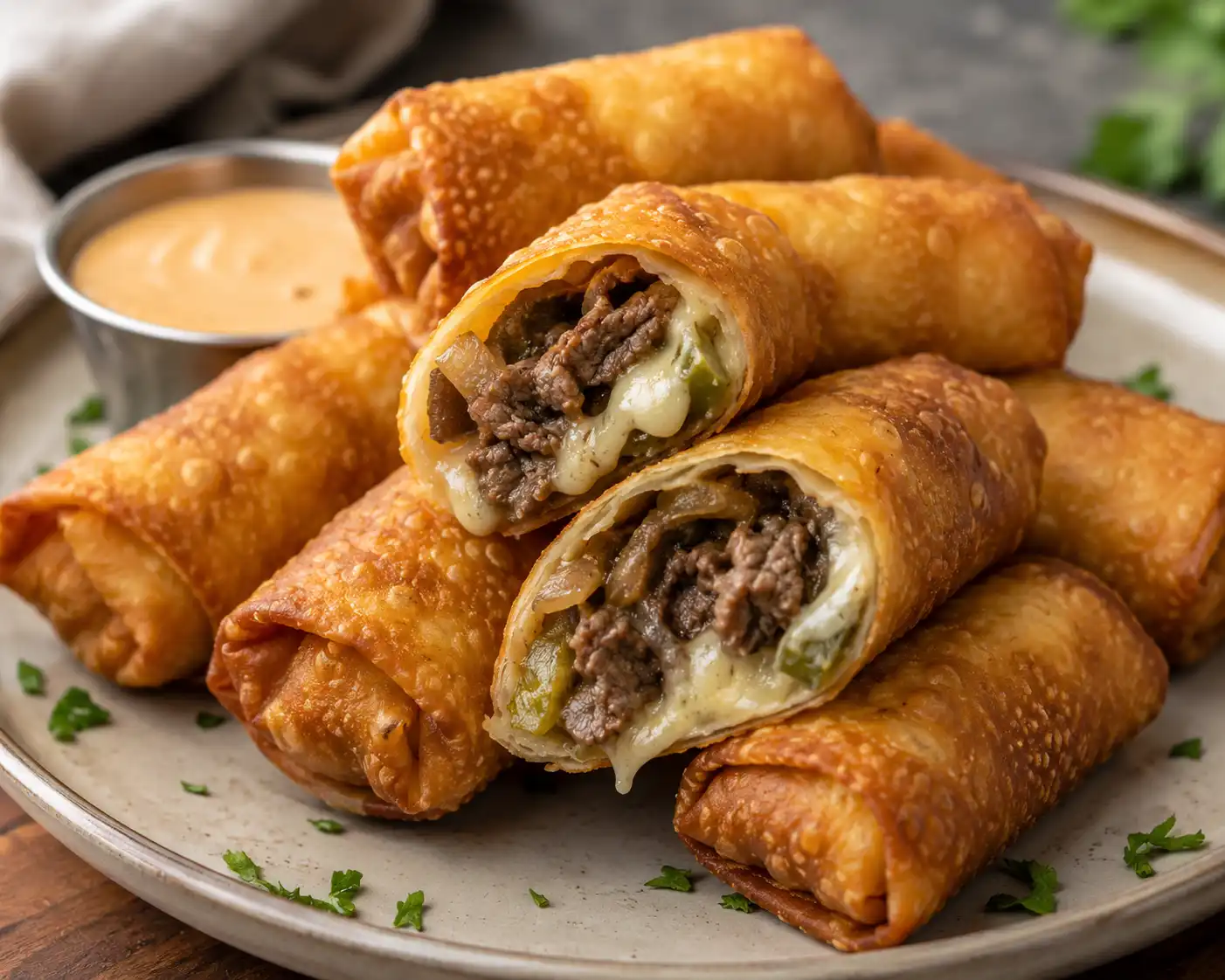
The Philly Cheesesteak Egg Roll is a bold, modern fusion dish that marries the iconic flavors of Philadelphia’s legendary street food with the crispy, handheld convenience of a classic egg roll. Imagine tender strips of ribeye steak, melted provolone or Cheez Whiz, caramelized onions, and sautéed green peppers—all wrapped in a delicate egg roll wrapper and deep-fried to golden, crackling perfection. This inventive appetizer (or even main course!) has surged in popularity across food trucks, gastropubs, and home kitchens alike, offering a playful yet deeply satisfying twist on two American classics. Whether you’re hosting a game-day party, seeking a crowd-pleasing potluck star, or simply craving rich, savory comfort with a crunch, the Philly Cheesesteak Egg Roll delivers big flavor in every bite—and it’s surprisingly approachable to make from scratch.
The History
While the original Philly cheesesteak was born in the 1930s at Pat’s King of Steaks in South Philadelphia—credited to hot dog vendor Pat Olivieri who swapped his frankfurter for grilled beef on an Italian roll—the egg roll traces its roots to early 20th-century Chinese-American culinary adaptation, evolving from spring rolls into the wheat-flour-wrapped, cabbage-and-pork-stuffed favorite we know today. The fusion of these two distinctly American regional dishes didn’t emerge until the early 2000s, gaining traction through food blogs, viral YouTube cooking videos, and adventurous chefs experimenting with “deconstructed” street food. By the mid-2010s, Philly Cheesesteak Egg Rolls began appearing on menus in cities like Chicago, Austin, and Brooklyn—often billed as “East Coast meets East Asia.” Notably, they were embraced by culinary educators and home cooks for their adaptability: unlike traditional cheesesteaks requiring griddle space and precise roll-toasting technique, egg rolls offer portion control, make-ahead flexibility, and built-in portability—making them ideal for meal prep, tailgating, and freezer-friendly batch cooking. Though not officially sanctioned by Philly purists (who fiercely guard their hoagie rolls and Cheez Whiz heritage), the egg roll version has earned its own loyal following as a legitimate, delicious evolution of sandwich culture.
Ingredients Breakdown
Every exceptional Philly Cheesesteak Egg Roll hinges on balance: rich protein, creamy cheese, aromatic vegetables, umami depth, and textural contrast. Below is a detailed breakdown of why each component matters—and how to choose wisely:
- Ribeye Steak (1 lb, thinly sliced against the grain): Ribeye is non-negotiable for authenticity—its marbling renders fat during high-heat cooking, basting the meat in its own juices and delivering unparalleled tenderness and beefy depth. Avoid lean cuts like sirloin or round; they’ll dry out and lack flavor. For best results, partially freeze the steak for 20–30 minutes before slicing—it firms up the meat and allows for paper-thin, uniform strips (~1/8-inch thick).
- Egg Roll Wrappers (20–24 sheets): Use standard square wheat-based wrappers—not spring roll skins (too thin) or wonton wrappers (too small). Look for brands labeled “egg roll” or “jumbo spring roll” wrappers (approx. 7″ x 7″). They must be pliable enough to wrap tightly without tearing but sturdy enough to hold steam and withstand frying. Keep unused wrappers covered with a damp kitchen towel to prevent drying and cracking.
- Provolone Cheese (6 oz, finely grated): Mild, melty, and slightly tangy, provolone complements the beef without overpowering it. Low-moisture provolone melts smoothly and browns beautifully. For extra authenticity, blend ¾ cup grated provolone with 2 tbsp Cheez Whiz (added just before wrapping) to replicate the signature Philly goo. Avoid pre-shredded cheese—it contains anti-caking agents that hinder meltability.
- Yellow Onions (2 large, julienned): Yellow onions provide essential sweetness and structure. Slice them lengthwise into thin matchsticks (not dice)—this ensures even caramelization and prevents mushiness inside the roll. Sauté slowly over medium-low heat with butter until deep amber and jammy (15–20 mins); rushing this step sacrifices complexity.
- Green Bell Peppers (2 medium, julienned): Adds vegetal brightness and subtle bitterness to cut through richness. Roast or sauté separately until just softened but still vibrant—overcooking leads to water release and soggy wrappers.
- Garlic (3 cloves, minced): Added in the final 30 seconds of veggie sautéing to infuse aroma without burning. Raw garlic would turn acrid; powdered garlic lacks nuance.
- Worcestershire Sauce (2 tbsp): A cornerstone umami booster—its fermented anchovy, tamarind, and molasses base deepens beef flavor and adds subtle acidity. Do not substitute soy sauce (too salty) or balsamic (too sweet).
- Beef Base or Better Than Bouillon (1 tsp): Concentrated beef essence that amplifies savoriness without adding liquid. Essential for depth when using leaner cuts or when time is short.
- Salt, Black Pepper, and Smoked Paprika (¼ tsp each): Salt enhances all flavors; freshly cracked black pepper adds warmth; smoked paprika lends a whisper of campfire nuance—nodding to grilled steak tradition.
- Frying Oil (Peanut, canola, or vegetable oil, 4–6 cups): High smoke point (≥450°F) is critical for crisp, non-greasy results. Peanut oil is ideal for neutral flavor and stability; avoid olive or sesame oil (low smoke point, strong taste).
- Optional Garnishes & Dipping Sauces: Pickled jalapeños (for brightness), banana pepper rings (tangy crunch), horseradish aioli (cool heat), or a simple mix of ketchup + yellow mustard + dash of hot sauce (“Philly-style” condiment).
Step-by-Step Recipe
This meticulous, chef-tested method ensures restaurant-quality results—crisp exteriors, juicy interiors, and zero leakage. Plan for ~2 hours total (including prep and chilling).
- Prep the Steak: Place ribeye in freezer for 25 minutes. Remove and slice thinly *against the grain* into 2-inch-long strips. Pat *extremely* dry with paper towels—moisture is the #1 cause of soggy, bursting egg rolls.
- Caramelize the Onions: In a wide stainless steel or cast-iron skillet, melt 2 tbsp unsalted butter over medium-low heat. Add julienned onions, ¼ tsp salt, and stir. Reduce heat to low, cover, and cook 10 minutes. Uncover, stir, and continue cooking uncovered for 12–15 more minutes, stirring every 2–3 minutes, until onions are deeply golden brown, soft, and reduced by half. Transfer to a bowl; cool completely.
- Sauté the Peppers & Garlic: In same skillet (no need to wash), heat 1 tbsp oil over medium. Add bell peppers; cook 4–5 minutes until bright green and slightly softened. Push peppers to edges, add minced garlic and ½ tsp smoked paprika to center; stir 30 seconds until fragrant. Remove from heat; cool completely.
- Cook the Steak: Heat 2 tbsp oil in clean skillet over high heat until shimmering. Add steak in *single layer* (work in batches if needed). Season with remaining salt, pepper, and paprika. Sear 60–90 seconds per side—just until edges brown but center remains rosy (it will finish cooking during frying). Overcooking now = dry filling. Transfer to cutting board; let rest 3 minutes, then chop into ½-inch pieces. Combine with cooled onions, peppers, Worcestershire, beef base, and 1 tbsp cold water. Mix gently. Refrigerate 30 minutes—this firms the mixture and prevents oil separation.
- Prepare Cheese Blend: In a small bowl, combine grated provolone and Cheez Whiz (if using). Chill 15 minutes to thicken slightly.
- Wrap Like a Pro: Lay wrapper diagonally (like a diamond) on clean surface. Place 2 heaping tbsp chilled filling horizontally across center. Top with 1 tbsp cheese blend. Fold bottom corner over filling, tuck tightly, then fold in left and right corners. Roll upward firmly, sealing edge with cornstarch slurry (1 tsp cornstarch + 1 tsp water, brushed on). Ensure no air pockets—press out gaps as you roll. Place seam-side down on parchment-lined tray. Cover loosely with plastic wrap; refrigerate 20 minutes (critical for structural integrity).
- Deep-Fry to Perfection: Heat oil in heavy-bottomed Dutch oven or wok to 350°F (use thermometer—guesswork fails). Fry 3–4 egg rolls at a time, seam-side down first, for 2 minutes. Flip and fry 2–2.5 more minutes until deep golden brown and blistered. Drain vertically in wire rack over paper towels. Rest 2 minutes before serving—this sets the crust and prevents burns.
Tips
- Chill Everything: Cold filling + cold cheese + chilled wrapped rolls = tighter seals and less oil absorption. Never skip the 20-minute fridge rest before frying.
- Knife Skills Matter: Use a sharp, long-bladed chef’s knife for thin, even steak slices. Dull blades crush fibers, releasing juice and causing toughness.
- No Water in Filling: Excess moisture is the enemy. If onions seem wet after cooling, squeeze gently in a clean towel. Pat chopped steak again before mixing.
- Fry Temperature is Sacred: Too cool (≤325°F): rolls absorb oil and become greasy. Too hot (≥375°F): exterior burns before interior heats. Maintain 350°F ±5°—adjust burner as needed between batches.
- Double-Fry for Ultimate Crispness (Optional Pro Move): After first fry, cool completely, then refry at 365°F for 45 seconds. Creates an ethereally shatter-crisp shell.
- Air Fryer Alternative: Spray chilled rolls generously with avocado oil. Air fry at 375°F for 12–14 minutes, flipping halfway, until deeply golden and internal temp reaches 165°F. Less crispy than deep-fried, but significantly lighter.
- Make-Ahead Magic: Assemble unfried rolls up to 2 days ahead; freeze flat on parchment, then bag. Fry straight from frozen—add 1–1.5 minutes to fry time. Never thaw—they’ll sweat and soften.
- Batch Consistency: Weigh filling per roll (45–50g) for uniform size and cook time. Use a small ice cream scoop for speed and accuracy.
- Drain Smart: Always use a wire rack—not paper towels alone—to prevent steaming the bottom crust. Elevate rack over baking sheet lined with towels for maximum airflow.
- Taste Before Wrapping: Adjust seasoning of filling *before* assembling. Once wrapped, correction is impossible.
Variations and Customizations
Embrace creativity while honoring the spirit of the dish—with thoughtful swaps that enhance, never distract:
- Protein Swaps: Substitute thinly sliced top sirloin (leaner, budget-friendly) or grass-fed flank steak (bold flavor, slice *very* thin). For pescatarians: seared scallops + lemon zest + dill-infused cream cheese. Vegetarian? Marinated portobello strips + roasted eggplant + cashew “ricotta” + nutritional yeast “cheese.”
- Cheese Reinventions: Try smoked gouda for campfire notes, pepper jack for kick, or a three-cheese blend (provolone + mozzarella + asiago). Vegan option: Miyoko’s Liquid Mozzarella + nutritional yeast + white miso paste for umami.
- Veggie Twists: Add roasted mushrooms for meaty texture, shredded purple cabbage for color/crunch, or fire-roasted tomatoes (drained and patted dry) for acidity. Swap bell peppers for poblano for mild heat.
- Global Infusions: Korean-inspired: gochujang + sesame oil + scallions + kimchi (well-drained). Greek-style: feta + kalamata olives + oregano + lemon zest. Tex-Mex: chipotle adobo + cotija + pickled red onions.
- Wrapper Alternatives: Gluten-free? Use rice paper (blanched 3 sec in warm water, fill immediately). Low-carb? Large collard green leaves or nori sheets. For crunch-lovers: double-wrap with one standard + one tempura-style wrapper.
- Shape & Size Variations: Mini “sliders”: use 4″ square wrappers for bite-sized versions (perfect for parties). Jumbo “steak bombs”: use 9″ wrappers, double filling, and serve with toothpicks. Spiral-cut rolls: slice filled wrapper into 1″ rounds before frying for “cheesesteak pinwheels.”
- Serving Styles: Serve stacked on a wooden board with dipping sauces in ramekins. Skewer with rosemary sprigs for rustic flair. Nestle in cast-iron skillet with melted cheese drizzle for dramatic presentation.
Health Considerations and Nutritional Value
A single, traditionally prepared Philly Cheesesteak Egg Roll (approx. 5.5 oz, fried in peanut oil) contains ~420–480 calories, 28–32g protein, 22–26g fat (6–8g saturated), 28–34g carbohydrates, and 650–850mg sodium. While undeniably indulgent, mindful adjustments can significantly improve its nutritional profile without sacrificing satisfaction:
- Heart-Healthy Swaps: Replace half the ribeye with finely diced portobello mushrooms (adds fiber, B vitamins, and reduces saturated fat by ~30%). Use avocado oil for frying (rich in monounsaturated fats) and limit cheese to 1 tbsp per roll.
- Sodium Reduction: Skip beef base; boost savoriness with tomato paste (1 tsp, cooked 1 min) and dried porcini powder (½ tsp). Use low-sodium Worcestershire or make your own (apple cider vinegar, molasses, tamarind paste, garlic powder).
- Fiber & Micronutrient Boost: Incorporate finely shredded spinach or kale (wilted and squeezed dry) into filling. Add 1 tbsp ground flaxseed or chia seeds to cheese blend for omega-3s and binding.
- Dietary Accommodations: Gluten-free: certified GF egg roll wrappers (check labels—many contain wheat starch). Keto: omit wrapper entirely—form mixture into “cheesesteak tots” (bake at 425°F for 20 mins) or use lettuce cups. Dairy-free: nutritional yeast “cheese,” coconut milk-based sauce, and vegan butter for onions.
- Portion Control Strategy: Serve 2–3 rolls per person alongside a large, vinegar-dressed kale and white bean salad—adds volume, fiber, and balances richness.
- Food Safety Notes: Always cook beef to minimum internal temperature of 145°F (per USDA). When reheating leftovers, ensure internal temp reaches 165°F. Store unfried rolls ≤2 days refrigerated or ≤3 months frozen. Discard if wrappers show signs of freezer burn or ice crystals.
Ingredients
- 1 pound ribeye steak, partially frozen and sliced paper-thin against the grain
- 20–24 standard square egg roll wrappers (7-inch)
- 6 ounces low-moisture provolone cheese, finely grated (about 1 ½ cups)
- 2 large yellow onions, julienned (about 3 cups)
- 2 medium green bell peppers, julienned (about 1 ½ cups)
- 3 cloves garlic, finely minced
- 2 tablespoons Worcestershire sauce
- 1 teaspoon beef base or Better Than Bouillon (beef flavor)
- 1 tablespoon unsalted butter
- 3 tablespoons neutral high-smoke-point oil (peanut, canola, or vegetable), divided
- ½ teaspoon kosher salt, plus more to taste
- ½ teaspoon freshly ground black pepper
- ¼ teaspoon smoked paprika
- 1 tablespoon cold water
- For sealing: 1 teaspoon cornstarch + 1 teaspoon water (slurry)
- Peanut or canola oil for deep-frying (4–6 cups)
- Optional: 2 tablespoons Cheez Whiz, for authentic Philly creaminess
Directions
- Place ribeye steak in freezer for 25 minutes. Remove and slice thinly against the grain into 2-inch strips. Pat *very* dry with paper towels. Set aside.
- In a large skillet over medium-low heat, melt butter. Add julienned onions and ¼ tsp salt. Cover and cook 10 minutes. Uncover, reduce heat to low, and cook 12–15 more minutes, stirring every 2–3 minutes, until onions are deep golden brown and jammy. Transfer to a bowl; cool completely.
- In same skillet (wipe clean if needed), heat 1 tbsp oil over medium. Add bell peppers; cook 4–5 minutes until bright and slightly softened. Push to edges, add garlic and smoked paprika to center; stir 30 seconds until fragrant. Remove from heat; cool completely.
- Heat 2 tbsp oil in clean skillet over high heat until shimmering. Add steak in single layer (work in batches). Season with remaining salt, pepper, and paprika. Sear 60–90 seconds per side—just until edges brown. Transfer to cutting board; rest 3 minutes, then chop into ½-inch pieces.
- In a bowl, combine chopped steak, cooled onions, cooled peppers, Worcestershire, beef base, and 1 tbsp cold water. Mix gently. Refrigerate 30 minutes.
- In small bowl, combine grated provolone and Cheez Whiz (if using). Chill 15 minutes.
- Lay wrapper diagonally. Place 2 heaping tbsp chilled filling horizontally across center. Top with 1 tbsp cheese blend. Fold bottom corner over filling, tuck tightly, fold in left/right corners, then roll upward firmly. Seal edge with cornstarch slurry. Place seam-side down on parchment-lined tray. Cover loosely; refrigerate 20 minutes.
- Heat oil in Dutch oven to 350°F. Fry 3–4 rolls at a time, seam-side down first, for 2 minutes. Flip; fry 2–2.5 more minutes until deep golden and blistered. Drain on wire rack. Rest 2 minutes before serving.
FAQ
- Can I bake these instead of frying?
- Yes—but texture differs significantly. Brush rolls generously with oil, place on wire rack over baking sheet, and bake at 425°F for 20–24 minutes, flipping halfway, until golden and crisp. Expect less shatter and more “toasted” crunch. For better browning, broil 1–2 minutes at end (watch closely!).
- Why do my egg rolls burst open while frying?
- Most commonly: filling too wet, insufficient chilling, overfilling, or inadequate sealing. Ensure all components are fully cooled and patted dry. Use exact filling measurements. Seal with cornstarch slurry—not water—and press out air pockets. Chill 20+ minutes before frying.
- Can I make these vegetarian or vegan?
- Absolutely. Replace steak with 12 oz marinated, grilled portobello caps (sliced thin) + 1 cup roasted eggplant (diced small, patted dry). Use cashew-based “cheese” (soaked cashews, lemon, nutritional yeast, miso) instead of dairy. Bind with flax “egg” (1 tbsp ground flax + 2.5 tbsp water). Wrap and fry as directed.
- What’s the best cheese for authenticity?
- Traditional Philly uses Cheez Whiz—but provolone offers superior melt and flavor balance. For true homage, combine both: ¾ cup grated provolone + 2 tbsp Cheez Whiz. Avoid American cheese—it lacks complexity and can become stringy or greasy.
- How do I reheat leftovers without losing crispness?
- Air fryer is best: 375°F for 5–6 minutes, flipping once. Oven works second-best: 400°F on wire rack for 8–10 minutes. Never microwave—they’ll turn rubbery and soggy. If frozen, air fry from frozen (add 2–3 minutes).
- Can I prepare the filling ahead and freeze it?
- Yes! Cooked filling freezes well for up to 3 months. Thaw overnight in fridge, drain any accumulated liquid, and proceed with wrapping. Do not freeze *unfried* wrapped rolls unless fully sealed and flash-frozen—moisture causes wrapper degradation.
- Are egg roll wrappers gluten-free?
- Standard wrappers contain wheat flour and are not GF. However, certified gluten-free rice paper or tapioca-based wrappers are available online and in Asian markets. Always verify labeling—some “GF” brands use wheat starch.
- What dipping sauces pair best?
- Classic: horseradish aioli (½ cup mayo + 1 tbsp prepared horseradish + 1 tsp lemon juice + pinch cayenne). Unexpected winner: roasted garlic & white wine reduction (simmer ¼ cup white wine + 2 smashed garlic cloves + 1 tbsp shallots until syrupy, whisk in 2 tbsp cold butter). Also excellent: spicy brown mustard or creamy chipotle crema.
- My rolls aren’t crispy enough—even when fried correctly. Why?
- Oil temperature dropped during frying (add fewer rolls per batch), wrappers weren’t cold enough, or oil wasn’t fresh (reused oil breaks down and creates gumminess). Use a thermometer religiously and change oil after 2–3 batches.
- Can I use a different cut of beef?
- You can—but ribeye is strongly recommended. Sirloin works if sliced *very* thin and not overcooked. Flank or skirt steak require marinating (soy, ginger, brown sugar) and quick high-heat sear to retain tenderness. Avoid chuck or round—they’re too tough and lean for this application.
Summary
The Philly Cheesesteak Egg Roll is a masterclass in American culinary innovation—transforming two beloved comfort foods into a shareable, crispy, deeply savory handheld experience that honors tradition while embracing creative reinvention.
With meticulous attention to ingredient quality, temperature control, and structural technique, this recipe delivers restaurant-worthy results at home: juicy ribeye, sweet-caramelized onions, vibrant peppers, and perfectly melted cheese encased in a shatter-crisp, golden-brown shell that’s as impressive to serve as it is irresistible to eat.