Introduction
Welcome to the ultimate culinary comfort experience with this Easy Coconut Chicken Rice Bowl Recipe for Dinner. In a world where weeknight meals often feel rushed and lacking in flavor, this dish stands out as a beacon of creamy richness, aromatic spices, and satisfying textures that come together in under forty-five minutes. Whether you are a busy parent looking for a family-friendly meal, a solo diner seeking something nourishing yet indulgent, or a home cook wanting to explore Southeast Asian-inspired flavors without the intimidation factor, this recipe delivers on every front. The harmonious blend of savory chicken, velvety coconut milk, and fluffy rice creates a bowl that feels like a warm hug on a plate. Beyond just taste, this meal is designed for simplicity, utilizing accessible ingredients found in most standard grocery stores while producing results that rival your favorite takeout spots. Prepare to transform your dinner routine with a dish that balances convenience with gourmet appeal.
The History
The concept of combining chicken, coconut, and rice is not tied to a single nation but rather represents a beautiful fusion of culinary traditions that have evolved over centuries. Coconut milk has been a staple ingredient in tropical regions across Southeast Asia, the Caribbean, and parts of South America for thousands of years, valued for its ability to add richness and depth to savory dishes without the need for dairy. In Thai cuisine, coconut milk is the backbone of famous curries like Green Curry and Massaman, where it balances heat and spice. Meanwhile, in Caribbean cooking, coconut rice is a cherished side dish often paired with jerk chicken or stewed meats.
This specific recipe draws inspiration from the modern fusion movement that gained popularity in the early 2000s, where home cooks began blending the aromatic profiles of Thai galangal and lemongrass with the heartier comfort elements of Western rice bowls. The “rice bowl” format itself has exploded in popularity recently, driven by the desire for balanced, portion-controlled meals that are easy to assemble. By marrying the ancient tradition of coconut braising with the contemporary convenience of the one-bowl meal, this recipe honors a global history of flavor while catering to the modern lifestyle. It represents a culinary bridge between the exotic spice markets of Bangkok and the busy kitchens of suburban homes worldwide.
Ingredients Breakdown
Understanding the role of each component in this recipe is key to mastering the flavor profile. Here is a detailed look at why we choose specific ingredients:
Chicken Thighs vs. Breast
We recommend boneless, skinless chicken thighs for this recipe. While chicken breast is leaner, thighs contain more fat and connective tissue, which means they remain juicy and tender even when simmered in hot sauce. They absorb the coconut marinade more effectively and provide a richer mouthfeel that complements the creamy sauce.
Full-Fat Coconut Milk
The choice of coconut milk is critical. Light coconut milk often contains more water and stabilizers, resulting in a thin sauce. Full-fat coconut milk provides the necessary lipids to carry the fat-soluble flavors of the spices and creates that luxurious, velvety texture that coats every grain of rice. Ensure you shake the can well before opening, as the cream often separates from the water naturally.
Jasmine Rice
Jasmine rice is preferred over long-grain white rice because of its natural floral aroma and slightly sticky texture when cooked. This stickiness helps the rice cling to the sauce slightly, ensuring every bite is flavorful. However, basmati or brown rice can be used for different textural experiences.
Aromatics (Garlic, Ginger, Shallots)
These form the flavor foundation. Fresh ginger adds a spicy warmth that cuts through the richness of the coconut. Garlic provides savory depth, while shallots offer a sweeter, more nuanced onion flavor than standard yellow onions. Do not substitute these with powders if possible, as fresh aromatics release essential oils during sautéing that powders cannot replicate.
Soy Sauce and Lime
Soy sauce introduces umami and saltiness, balancing the sweetness of the coconut. Fresh lime juice added at the end provides acidity, which is crucial for brightening the dish and preventing it from tasting too heavy or cloying.
Step-by-Step Recipe
Follow this detailed guide to ensure perfect execution every time. Patience during the searing and simmering phases will yield the best results.
- Prep the Rice: Rinse your jasmine rice under cold water until the water runs clear. This removes excess starch and prevents the rice from becoming gummy. Cook the rice according to package instructions using chicken broth instead of water for added flavor. Keep warm.
- Prepare the Chicken: Pat the chicken thighs completely dry with paper towels. Moisture is the enemy of a good sear. Season generously with salt and black pepper on both sides. Cut into bite-sized cubes if preferred, or leave whole for a more rustic presentation.
- Sear the Protein: Heat a large skillet or wok over medium-high heat with a tablespoon of coconut oil. Once shimmering, add the chicken in a single layer. Do not overcrowd the pan, or the chicken will steam instead of brown. Cook for 4-5 minutes per side until a golden crust forms. Remove chicken and set aside.
- Sauté Aromatics: In the same pan, add a bit more oil if needed. Toss in minced garlic, grated ginger, and sliced shallots. Sauté for 2 minutes until fragrant but not browned. Burnt garlic will taste bitter, so keep the heat moderate.
- Build the Sauce: Pour in the coconut milk, soy sauce, and a splash of fish sauce if using. Scrape the bottom of the pan with a wooden spoon to release any browned bits (fond) left from the chicken. This adds immense flavor to the sauce.
- Simmer: Return the chicken to the pan. Reduce heat to low and let it simmer gently for 15-20 minutes. Avoid a rolling boil, as high heat can cause the coconut milk to curdle or separate. The sauce should thicken slightly.
- Final Seasoning: Taste the sauce. Adjust salt with more soy sauce or add a pinch of sugar if needed. Stir in fresh lime juice and half of the chopped cilantro.
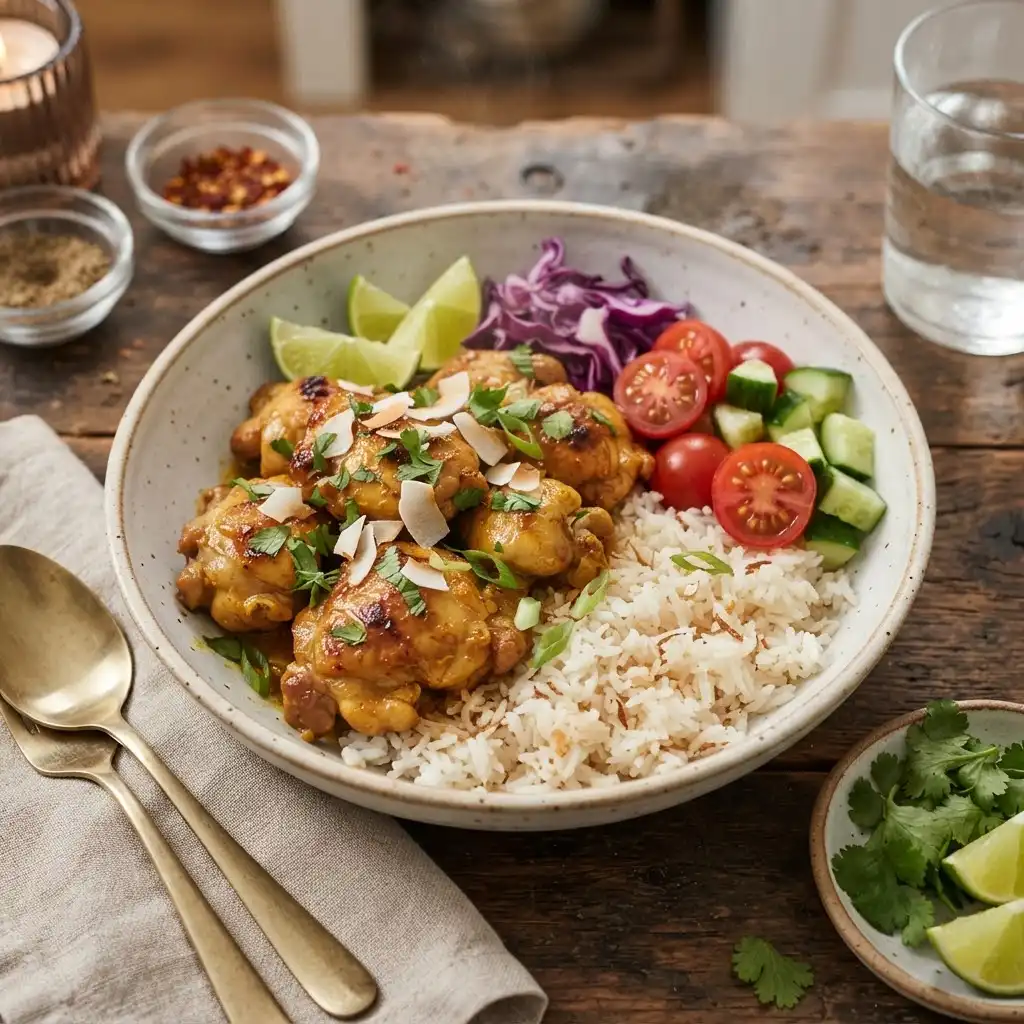
- Assembly: Divide the cooked rice into bowls. Ladle the coconut chicken and sauce generously over the top. Garnish with remaining cilantro, sliced green onions, and toasted coconut flakes.
Tips
- Prevent Curdling: Coconut milk can separate if boiled too vigorously. Always maintain a gentle simmer once the milk is added.
- Meal Prep Friendly: This dish reheats beautifully. Store the rice and chicken separately if possible to maintain the texture of the rice.
- Boost the Veggies: Add spinach, bell peppers, or snap peas during the last 5 minutes of simmering to incorporate more nutrients without overcooking them.
- Toast Your Spices: If you are adding curry powder or red pepper flakes, toast them in the oil for 30 seconds before adding liquids to unlock their full aromatic potential.
- Acidity is Key: Never skip the lime juice. The acid cuts through the fat of the coconut milk and balances the palate.
- Use a Wide Pan: A wider surface area allows for better evaporation, leading to a thicker, more concentrated sauce.
Variations and Customizations
This recipe is highly adaptable to suit various dietary needs and flavor preferences.
Spicy Version
For heat lovers, add 1-2 tablespoons of red curry paste during the aromatic stage or sprinkle fresh sliced Thai chilies on top before serving. You can also infuse the oil with chili flakes before cooking the chicken.
Vegan Adaptation
Swap the chicken for firm tofu or chickpeas. Ensure you press the tofu to remove excess water before searing to achieve a crispy exterior. Use coconut aminos instead of soy sauce for a gluten-free and soy-free option.
Low-Carb Option
Replace the jasmine rice with cauliflower rice. Sauté the cauliflower rice separately and add it at the end to avoid it becoming mushy. This significantly reduces the carbohydrate count while keeping the volume high.
Tropical Twist
Add chunks of fresh pineapple or mango during the last 5 minutes of cooking. The fruit caramelizes slightly and adds a sweet contrast to the savory sauce, reminiscent of Hawaiian-inspired flavors.
Herb Infusion
Experiment with different herbs. Thai basil offers a licorice-like sweetness, while cilantro provides a fresh, citrusy note. Mint can also be used as a garnish for a cooling effect.
Health Considerations and Nutritional Value
While this dish is indulgent, it offers several nutritional benefits when consumed in moderation. Chicken is an excellent source of lean protein, essential for muscle repair and satiety. Coconut milk contains medium-chain triglycerides (MCTs), which are fats that the body can easily convert into energy. However, coconut milk is also high in calories and saturated fat, so portion control is advised for those monitoring calorie intake.
Using brown rice instead of white rice increases the fiber content, aiding in digestion and providing a slower release of energy. The aromatics, such as garlic and ginger, have anti-inflammatory properties and can support immune health. By loading the bowl with additional vegetables like broccoli, carrots, or bok choy, you increase the vitamin and mineral density of the meal without significantly altering the calorie count. This meal is naturally gluten-free if you use tamari instead of regular soy sauce, making it suitable for those with celiac disease or gluten sensitivity.
Ingredients
- 1.5 lbs boneless, skinless chicken thighs, cut into bite-sized pieces
- 1 cup jasmine rice, uncooked
- 1 can (13.5 oz) full-fat coconut milk
- 1/2 cup chicken broth or vegetable broth
- 3 cloves garlic, minced
- 1 tablespoon fresh ginger, grated
- 1 shallot, finely chopped
- 2 tablespoons soy sauce or tamari
- 1 tablespoon lime juice, fresh
- 1 tablespoon coconut oil or vegetable oil
- 1/2 teaspoon red pepper flakes (optional)
- Salt and black pepper to taste
- Fresh cilantro, chopped (for garnish)
- Green onions, sliced (for garnish)
- Toasted coconut flakes (optional for garnish)
Directions
- Rinse the jasmine rice thoroughly and cook according to package directions using broth for added flavor. Set aside and keep warm.
- Season the chicken pieces generously with salt and black pepper on all sides.
- Heat coconut oil in a large skillet over medium-high heat. Add chicken in a single layer and sear until golden brown, about 4-5 minutes per side. Remove chicken from pan.
- In the same skillet, add shallots, garlic, and ginger. Sauté for 2 minutes until fragrant.
- Pour in coconut milk, broth, soy sauce, and red pepper flakes. Stir to combine, scraping up any browned bits from the bottom of the pan.
- Return the chicken to the skillet. Reduce heat to low and simmer for 15-20 minutes until the chicken is cooked through and the sauce has thickened slightly.
- Remove from heat and stir in fresh lime juice.
- Serve the coconut chicken over the cooked rice. Garnish with fresh cilantro, green onions, and toasted coconut flakes.
FAQ
Can I freeze this coconut chicken?
Yes, you can freeze the coconut chicken mixture for up to 3 months. However, coconut milk can sometimes separate upon thawing. To fix this, reheat gently and whisk vigorously to re-emulsify the sauce. It is best to freeze the sauce and chicken without the rice.
Why did my coconut milk curdle?
Curdling usually happens due to high heat or high acidity added too early. Ensure you simmer gently and add the lime juice at the very end of the cooking process.
Can I use chicken breast instead of thighs?
Yes, but reduce the cooking time. Chicken breast cooks faster and can become dry if simmered for 20 minutes. Check for doneness after 10-12 minutes.
How do I make this dairy-free?
This recipe is naturally dairy-free as it uses coconut milk instead of cream. Just ensure your soy sauce and broth are also certified dairy-free.
What sides go well with this?
This bowl is quite complete, but a side of cucumber salad, steamed broccoli, or spring rolls complements the creamy texture nicely.
How long do leftovers last?
Stored in an airtight container in the refrigerator, leftovers will stay fresh for up to 4 days. The flavors often deepen and improve the next day.
Summary
Creamy coconut chicken simmered with aromatic spices served over fluffy jasmine rice for a quick dinner.
A globally inspired, easy-to-make bowl that balances rich flavors with wholesome ingredients for any night.