Introduction
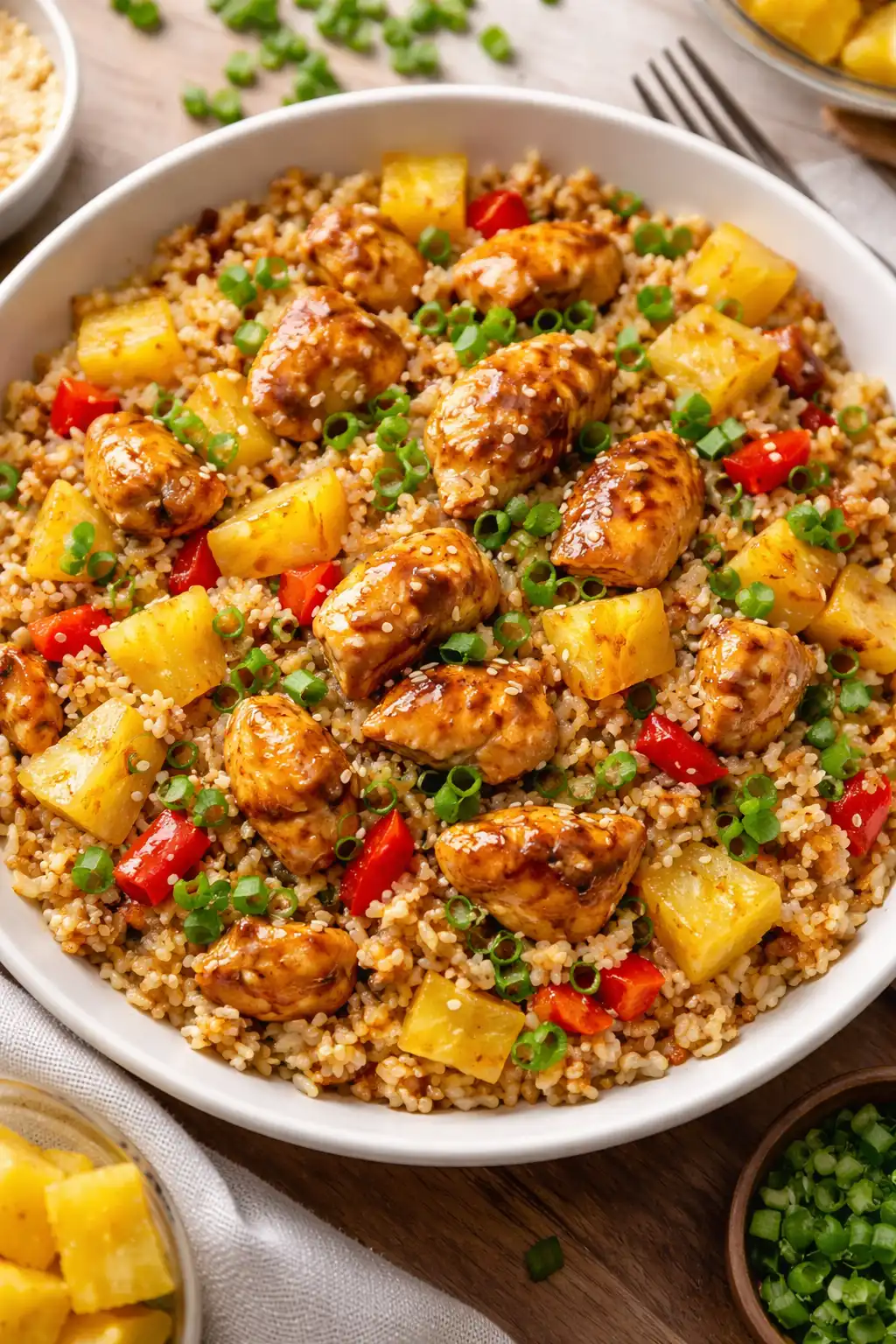
Pineapple Chicken and Rice is a vibrant, globally beloved dish that marries sweet, tangy, savory, and umami flavors into one harmonious, family-friendly meal. With its golden-brown chicken pieces glazed in a glossy pineapple-infused sauce, tender-crisp bell peppers and onions, and fluffy jasmine or basmati rice soaking up every drop of flavor, this dish delivers restaurant-quality satisfaction with home-kitchen simplicity. Whether served as a weeknight dinner, weekend comfort food, or a crowd-pleasing centerpiece for potlucks and gatherings, Pineapple Chicken and Rice bridges culinary traditions—drawing inspiration from Chinese-American takeout classics, Southeast Asian stir-fry sensibilities, and tropical island freshness—while remaining endlessly adaptable to dietary preferences, pantry availability, and personal taste.
The History
The origins of Pineapple Chicken and Rice are deeply rooted in the evolution of Chinese diasporic cuisine, particularly in North America during the mid-to-late 20th century. While traditional Cantonese and Hakka cooking rarely featured pineapple in savory poultry preparations, early Chinese immigrants adapted their techniques to local ingredients and palates—introducing canned pineapple (a shelf-stable, affordable tropical import popularized post-WWII) to create milder, sweeter, and more approachable dishes. The iconic “Sweet and Sour Chicken” found across American Chinatowns laid the groundwork; pineapple soon became its star ingredient—not only for its bright acidity that cuts through richness but also for its natural bromelain enzyme, which subtly tenderizes meat. Over time, home cooks and regional restaurants began pairing the saucy chicken with steamed rice rather than fried rice or noodles, solidifying the “Pineapple Chicken and Rice” identity. In parallel, Filipino *afritada*-inspired stews, Hawaiian plate lunch culture (where grilled pineapple often accompanies teriyaki chicken), and Thai pineapple fried rice (*khao pad sapparot*) further enriched the dish’s cross-cultural resonance—making it less a single-origin recipe and more a delicious testament to culinary fusion, adaptation, and joyful improvisation.
Ingredients Breakdown
Every exceptional Pineapple Chicken and Rice begins with thoughtfully selected, high-quality components—each playing a distinct functional and flavor role. Below is a detailed, chef-level breakdown of each core ingredient:
- Chicken Breast or Thighs: Boneless, skinless chicken breast offers lean tenderness and quick cooking, while thighs provide richer flavor, superior moisture retention, and forgiving texture—especially important when stir-frying at high heat. For best results, cut into uniform 1–1.5-inch cubes and pat thoroughly dry before marinating.
- Fresh Pineapple: Far superior to canned in terms of brightness and enzymatic activity, fresh pineapple adds zesty acidity, floral sweetness, and subtle tropical perfume. Core and dice into ¾-inch chunks—reserve juice for the sauce. Bromelain in fresh pineapple also helps gently break down muscle fibers for enhanced tenderness (though avoid marinating raw chicken in fresh pineapple juice longer than 30 minutes, as over-tenderizing can cause mushiness).
- Canned Pineapple (in Juice, Not Syrup): A pragmatic and flavorful pantry staple—opt for 100% pineapple juice-packed varieties with no added sugar or preservatives. Its consistent sweetness, gentle acidity, and convenient juice base make it ideal for building the foundational glaze. Drain carefully, reserving ½ cup juice for the sauce; lightly pat chunks dry to prevent splattering.
- Low-Sodium Soy Sauce: Provides essential umami depth, salt balance, and rich color without overwhelming sodium. Tamari or coconut aminos serve as excellent gluten-free or soy-free alternatives.
- Rice Vinegar or Apple Cider Vinegar: Adds clean, bright acidity to lift the sauce and balance sweetness. Avoid distilled white vinegar—it’s too harsh. Rice vinegar contributes delicate sweetness and mild tang; apple cider vinegar offers fruity nuance and gentle sharpness.
- Honey or Brown Sugar: Natural sweeteners that caramelize beautifully during reduction. Honey lends floral notes and viscosity; brown sugar contributes molasses depth and helps build a glossy sheen. Maple syrup or coconut sugar work well for refined-sugar-free versions.
- Fresh Garlic & Ginger: Non-negotiable aromatic foundations. Minced garlic delivers pungent warmth; freshly grated ginger (not powdered) imparts spicy-citrusy brightness and anti-inflammatory compounds. Use a microplane for ultra-fine, evenly distributed ginger pulp.
- Bell Peppers (Red, Yellow, Orange): Provide crunch, vivid color contrast, and subtle vegetal sweetness. Red peppers offer the highest lycopene content and mildest flavor; yellow and orange add complexity and visual appeal. Slice uniformly into 1-inch diamond-shaped pieces for even cooking.
- Yellow or White Onion: Adds savory-sweet backbone and aromatic depth when sautéed until translucent. Red onion can be used raw as a garnish for peppery bite and crunch.
- Vegetable Oil or Peanut Oil: High smoke point oils are essential for stir-frying without burning. Peanut oil contributes nutty undertones; avocado or refined coconut oil are neutral, heart-healthy alternatives.
- Cornstarch: The critical thickening agent—mixed with cold liquid (slurry) and added at the end to create a velvety, clingy sauce that coats each piece of chicken and rice without becoming gluey. Always mix cornstarch with cold water—never hot—to prevent clumping.
- Green Onions & Fresh Cilantro: Added at the very end for aromatic freshness, visual pop, and phytonutrient boost. Green onions contribute mild allium sharpness; cilantro adds citrusy, herbal lift (omit if genetically sensitive to its soapy taste).
- Optional Umami Boosters: A teaspoon of oyster sauce (vegetarian version available), a splash of fish sauce (for depth, not fishiness), or a pinch of white miso paste amplifies savoriness without compromising the dish’s sweet-tangy profile.
Step-by-Step Recipe
- Prep & Marinate Chicken (15–20 minutes): Cube 1.5 lbs boneless, skinless chicken thighs or breasts. In a bowl, combine chicken with 1 tbsp low-sodium soy sauce, 1 tsp grated ginger, 1 minced garlic clove, 1 tsp cornstarch, and 1 tsp neutral oil. Toss thoroughly, cover, and refrigerate for 15–20 minutes (no longer if using fresh pineapple juice due to bromelain).
- Prepare Aromatics & Vegetables (10 minutes): Mince 3 garlic cloves and grate 1 tbsp fresh ginger. Slice 1 large yellow onion into thin half-moons. Cut 1 red and 1 yellow bell pepper into 1-inch diamond pieces. Dice 1½ cups fresh pineapple (or drain and lightly pat dry 1 can pineapple chunks). Chop ¼ cup green onions (separate whites from greens) and roughly chop ¼ cup fresh cilantro.
- Cook the Rice (25–30 minutes, start first): Rinse 1½ cups jasmine rice under cold water until water runs clear. Combine with 2¼ cups water and ½ tsp salt in a rice cooker or saucepan. Bring to boil, reduce to low, cover tightly, and simmer 15 minutes. Remove from heat and let steam, covered, for 10 minutes. Fluff with fork before serving.
- Make the Sauce (5 minutes): In a small bowl, whisk together: ½ cup reserved pineapple juice (or unsweetened pineapple juice), 3 tbsp low-sodium soy sauce, 3 tbsp honey (or brown sugar), 1 tbsp rice vinegar, 1 tsp sesame oil, ½ tsp white pepper, and 2 tsp cornstarch. Set aside.
- Stir-Fry Chicken (6–8 minutes): Heat 1.5 tbsp oil in a large wok or heavy-bottomed skillet over medium-high heat until shimmering. Add marinated chicken in a single layer (work in batches if needed). Cook undisturbed for 2 minutes until golden on one side, then stir-fry 4–5 more minutes until fully cooked (165°F internal temp) and lightly caramelized. Transfer to a clean plate.
- Sauté Aromatics & Vegetables (3–4 minutes): In same wok, add 1 tsp oil if needed. Add reserved green onion whites, minced garlic, and grated ginger. Stir-fry 30 seconds until fragrant. Add onions and bell peppers; stir-fry 2–3 minutes until crisp-tender and slightly blistered at edges.
- Combine & Glaze (3 minutes): Return chicken to wok. Pour sauce mixture over everything. Stir constantly as mixture comes to a gentle simmer. Cook 1.5–2 minutes until sauce thickens, bubbles become viscous, and coats chicken evenly. Gently fold in pineapple chunks—heat just until warmed through (do not overcook, or pineapple will turn mushy).
- Finish & Serve (1 minute): Remove from heat. Stir in 1 tsp toasted sesame seeds and reserved green onion greens. Taste and adjust: add a splash of vinegar for brightness, honey for sweetness, or soy for saltiness. Spoon generously over warm jasmine rice. Garnish with extra cilantro, sesame seeds, and optional lime wedges.
Tips
- Dry Chicken Is Key: Pat chicken cubes completely dry with paper towels before marinating—moisture is the enemy of browning and leads to steaming instead of searing.
- High Heat, Fast Movement: Stir-frying relies on intense, consistent heat. Preheat your wok until a drop of water dances and evaporates instantly. Keep ingredients moving constantly to prevent burning and ensure even cooking.
- Prep Everything Before You Start: Stir-frying is fast-paced—measure sauces, chop vegetables, and organize ingredients in small bowls (mise en place) so you’re never scrambling mid-cook.
- Don’t Crowd the Pan: Overloading lowers pan temperature drastically. Cook chicken in batches if necessary—and wipe the pan between batches to remove excess moisture or residue.
- Control Pineapple Texture: Add pineapple at the very end—just long enough to warm. Overcooking breaks down its structure and dulls its vibrant flavor.
- Rice Must Be Properly Rinsed & Rested: Excess starch causes gummy rice. Rinsing removes surface starch; resting after cooking allows steam to redistribute, yielding separate, fluffy grains.
- Sauce Thickening Timing: Add cornstarch slurry only after liquids are hot and bubbling. Stir continuously for full activation—too little heat = thin sauce; too much heat too fast = clumping or breaking.
- Acid Last, Acid Always: A final tiny splash of vinegar or lime juice just before serving lifts the entire dish—cutting richness and enhancing perception of freshness.
- Toast Your Sesame Seeds: Lightly toast in a dry pan over medium-low heat for 1–2 minutes until golden and fragrant—this unlocks deep, nutty aroma impossible to achieve with raw seeds.
- Rest Before Serving: Let the finished dish sit off-heat for 2 minutes before plating. This allows sauce to settle, flavors to meld, and prevents scalding bites.
Variations and Customizations
Pineapple Chicken and Rice thrives on creativity—here are dozens of tested, chef-approved adaptations across dietary needs, global inspirations, and seasonal availability:
Dietary Adaptations
- Gluten-Free: Substitute tamari or certified GF soy sauce; verify cornstarch and pineapple juice are GF-certified; use rice noodles or quinoa instead of rice for grain-free variation.
- Keto/Low-Carb: Replace rice with cauliflower rice (sautéed separately with garlic and sesame oil), increase healthy fats (add avocado slices or cashews), and use erythritol or monk fruit sweetener instead of honey.
- Vegan/Vegetarian: Swap chicken for extra-firm tofu (pressed, cubed, baked or pan-seared), tempeh, or seitan. Use vegan oyster sauce and coconut aminos. Add shiitake mushrooms for meaty umami.
- Whole30/Paleo: Omit honey—use 1 mashed ripe banana + 1 tsp lemon juice for natural sweetness and binding; replace soy sauce with coconut aminos; serve over roasted sweet potato hash or spiralized zucchini.
- Low-Sodium: Use no-salt-added pineapple juice, low-sodium soy/tamari, omit added salt, and boost flavor with citrus zest, smoked paprika, or nutritional yeast.
Global Twists
- Thai-Inspired: Add 1 tbsp red curry paste, 1 kaffir lime leaf (torn), and 1 tbsp lime juice; garnish with Thai basil and crushed peanuts.
- Hawaiian Plate Lunch Style: Grill chicken skewers marinated in pineapple juice, soy, ginger, and brown sugar; serve over white rice with mac salad and a grilled pineapple slice.
- Philippine Afritada Fusion: Simmer chicken in tomato sauce with carrots, potatoes, and peas before adding pineapple at the end; use annatto oil for color and earthiness.
- Caribbean Jerk-Pineapple: Rub chicken with jerk seasoning before cooking; finish with grilled pineapple and mango salsa.
- Japanese Yakitori-Inspired: Skewer chicken and pineapple, brush with tare sauce (soy, mirin, sake, sugar), and grill over charcoal.
Seasonal & Ingredient Swaps
- Winter: Add roasted butternut squash, caramelized shallots, and toasted pecans; finish with orange zest.
- Spring: Incorporate asparagus tips, sugar snap peas, and fresh mint; use white wine vinegar instead of rice vinegar.
- Summer: Add heirloom cherry tomatoes, grilled zucchini ribbons, and basil oil drizzle.
- Fall: Include sautéed apples, toasted walnuts, and a dash of cinnamon or star anise in the sauce.
Protein Alternatives
- Shrimp: Sear 8–10 oz large peeled, deveined shrimp for 1.5–2 minutes per side; add at the very end to avoid overcooking.
- Pork Tenderloin: Thinly sliced and marinated similarly—cooks faster than chicken; pairs beautifully with star anise in the sauce.
- Beef Strips (Flank or Sirloin): Quick-sear for medium-rare; slice against the grain; add 1 tsp hoisin for richness.
- Plant-Based “Chicken”: Use store-bought or homemade seitan, soy curls, or lentil-walnut “chicken” crumbles—marinate aggressively and pan-fry until crisp-edged.
Health Considerations and Nutritional Value
A well-prepared Pineapple Chicken and Rice is not only delicious but nutritionally balanced—offering high-quality protein, complex carbohydrates, antioxidant-rich produce, and beneficial plant compounds. Below is a comprehensive analysis based on a standard serving (1 cup cooked rice + 1¼ cups chicken/veggie/sauce mixture), using whole ingredients and mindful preparation:
Macronutrient Profile (Approximate per Serving)
- Calories: 420–480 kcal (varies by oil use, sweetener, and rice portion)
- Protein: 28–32g — supports muscle maintenance, satiety, and metabolic health. Chicken provides all nine essential amino acids; plant-based versions require complementary proteins (e.g., rice + beans).
- Carbohydrates: 52–60g — primarily from complex carbs (jasmine rice) and natural fruit sugars (pineapple). Fiber ranges from 3–5g (enhanced with brown rice, added veggies, or edamame).
- Fats: 7–10g — predominantly heart-healthy monounsaturated and polyunsaturated fats from cooking oil and sesame oil. Saturated fat remains low (<2g) when lean chicken and minimal oil are used.
Vitamin & Mineral Highlights
- Vitamin C: Pineapple and bell peppers deliver >100% DV per serving—critical for immune function, collagen synthesis, and iron absorption.
- Manganese: Pineapple is one of the richest dietary sources—supports bone health, metabolism, and antioxidant enzyme systems (SOD).
- Vitamin B6 & Niacin: Abundant in chicken—essential for energy production, neurotransmitter synthesis, and cellular repair.
- Antioxidants: Ginger (gingerols), garlic (allicin), bell peppers (capsanthin, vitamin E), and pineapple (bromelain, flavonoids) collectively combat oxidative stress and inflammation.
- Dietary Fiber: Enhances gut microbiome diversity and glycemic control. Boost with brown rice (+3g/serving), added broccoli or spinach, or chia seeds stirred into rice.
Functional Health Benefits
- Bromelain Support: Fresh pineapple contains bromelain—an anti-inflammatory proteolytic enzyme studied for reducing swelling, improving digestion, and supporting post-exercise recovery. To preserve activity, add fresh pineapple at the end and avoid prolonged high-heat exposure.
- Glycemic Considerations: Despite natural sugars, the combination of protein, fiber, healthy fat, and vinegar helps moderate blood sugar response. Opt for brown rice or cauliflower rice for lower glycemic index.
- Sodium Awareness: Traditional versions can exceed 700mg sodium/serving. Using low-sodium soy, omitting added salt, and relying on herbs/spices keeps sodium under 400mg—ideal for heart health.
- Anti-Inflammatory Potential: Ginger, garlic, turmeric (optional addition), and colorful vegetables create a synergistic anti-inflammatory matrix backed by clinical evidence.
- Digestive Harmony: The gentle acidity of vinegar and pineapple juice stimulates gastric secretions, while fiber and prebiotics (from onions, garlic, pineapple) feed beneficial gut bacteria.
Who Should Modify or Limit?
- Individuals with GERD or Acid Reflux: Reduce vinegar quantity, omit citrus garnishes, and serve at warm—not hot—temperature.
- Those on Blood Thinners (e.g., Warfarin): Pineapple is low in vitamin K, making it safer than leafy greens—but consult your provider before major dietary shifts.
- Kidney Disease (CKD): Monitor potassium (pineapple, tomatoes, spinach) and phosphorus (processed sauces); opt for fresh ingredients and avoid commercial stir-fry sauces.
- FODMAP Sensitivity: Garlic and onion contain fructans—use garlic-infused oil and green onion tops (low-FODMAP part) instead of bulb.
- Allergies: Check labels on soy sauce, oyster sauce, and pre-made broths for hidden allergens (wheat, shellfish, tree nuts).
Ingredients
- 1½ lbs boneless, skinless chicken thighs or breasts, cut into 1–1.5-inch cubes
- 1½ cups fresh pineapple, cored and diced (or one 20-oz can pineapple chunks in 100% juice, drained and patted dry)
- 1½ cups uncooked jasmine rice (or brown rice, quinoa, or cauliflower rice for variation)
- 3 tbsp neutral high-smoke-point oil (peanut, avocado, or vegetable), divided
- ¼ cup low-sodium soy sauce (or tamari for GF)
- 3 tbsp honey or pure maple syrup
- 3 tbsp unsweetened pineapple juice (reserved from can or freshly squeezed)
- 1 tbsp rice vinegar or apple cider vinegar
- 1 tbsp toasted sesame oil
- 2 tsp cornstarch, plus 1 tsp for marinade
- 1 tbsp fresh grated ginger (about 1-inch knob)
- 4 garlic cloves, minced (2 for marinade, 2 for stir-fry)
- 1 large yellow or white onion, thinly sliced
- 1 red bell pepper, seeded and cut into 1-inch diamonds
- 1 yellow or orange bell pepper, seeded and cut into 1-inch diamonds
- ¼ cup chopped green onions (whites and greens separated)
- ¼ cup fresh cilantro leaves, roughly chopped
- 1 tsp white pepper or black pepper
- ½ tsp fine sea salt (optional—taste before adding)
- 1 tbsp toasted sesame seeds (for garnish)
- Lime wedges (for serving, optional)
Directions
- Marinate the Chicken: In a medium bowl, combine chicken cubes with 1 tbsp soy sauce, 1 tsp grated ginger, 1 minced garlic clove, 1 tsp cornstarch, and 1 tsp neutral oil. Toss to coat evenly. Cover and refrigerate 15–20 minutes.
- Prepare Rice: Rinse jasmine rice under cold water until water runs clear. Combine with 2¼ cups water and ½ tsp salt in a rice cooker or heavy-bottomed pot. Cook according to appliance instructions or bring to boil, reduce heat to low, cover tightly, and simmer 15 minutes. Turn off heat and let steam, covered, for 10 minutes. Fluff with fork and set aside, covered with a clean towel.
- Make Sauce: In a small bowl, whisk together pineapple juice, remaining 3 tbsp soy sauce, honey, rice vinegar, toasted sesame oil, white pepper, and 2 tsp cornstarch until completely smooth. Set aside.
- Prep Vegetables: Mince remaining 3 garlic cloves and grate remaining 1 tbsp ginger. Slice onion and bell peppers. Chop green onions (keep whites and greens separate). Dice pineapple if using fresh.
- Stir-Fry Chicken: Heat 1.5 tbsp oil in a 14-inch wok or large nonstick skillet over medium-high heat until shimmering. Add marinated chicken in a single layer (cook in two batches if needed). Cook undisturbed for 2 minutes until golden, then stir-fry 4–5 minutes until cooked through and lightly caramelized. Transfer to a clean plate.
- Sauté Aromatics & Veggies: Add remaining 1 tsp oil to same wok. Add green onion whites, minced garlic, and grated ginger; stir-fry 30 seconds until fragrant. Add onion and bell peppers; stir-fry 2–3 minutes until crisp-tender and slightly blistered.
- Combine and Simmer: Return chicken to wok. Give sauce a final whisk and pour over everything. Stir constantly as mixture heats. Once bubbling, reduce heat slightly and simmer 1.5–2 minutes until sauce thickens to a glossy, clingy consistency.
- Add Pineapple: Gently fold in pineapple chunks. Cook just 30–60 seconds—until warmed through but still vibrant and firm. Do not overcook.
- Finish and Serve: Remove from heat. Stir in green onion greens and cilantro. Taste and adjust seasoning—add a splash of vinegar for brightness, honey for sweetness, or soy for umami. Spoon generously over warm rice. Garnish with toasted sesame seeds and lime wedges.
FAQ
- Can I use frozen chicken?
- Yes—but thaw completely in the refrigerator overnight and pat *extremely* dry before marinating. Frozen-thawed chicken releases more moisture and may steam rather than sear. Never stir-fry partially frozen chicken—it lowers pan temperature drastically and creates uneven doneness.
- Why does my sauce break or become grainy?
- Most commonly due to incorrect cornstarch slurry technique: always mix cornstarch with *cold* liquid (not hot sauce), and add it only after the sauce is already hot and bubbling. Stir constantly for at least 60 seconds to fully activate. Also, avoid boiling vigorously after thickening—it can cause separation. If it breaks, remove from heat, whisk in 1 tsp cold water, and gently reheat.
- Can I make this ahead and reheat?
- Absolutely. Store chicken mixture and rice separately in airtight containers for up to 4 days refrigerated or 3 months frozen. Reheat chicken in a skillet with 1 tsp water or pineapple juice to restore moisture and gloss. Microwave rice with a damp paper towel to prevent drying. Note: Pineapple softens upon reheating—texture will be more tender, but flavor remains excellent.
- What’s the best rice to use?
- Jasmine rice is ideal—fragrant, slightly sticky, and perfectly absorbent. Basmati works well for drier, fluffier results. Brown rice adds fiber and nuttiness (extend cooking time +10 mins). Cauliflower rice is excellent for low-carb; sauté separately with garlic and sesame oil for best texture.
- Is canned pineapple really okay—or should I always use fresh?
- Both are excellent—just serve different purposes. Fresh pineapple brings brighter acidity, enzymatic benefits (bromelain), and nuanced sweetness. Canned (in juice, not