Introduction
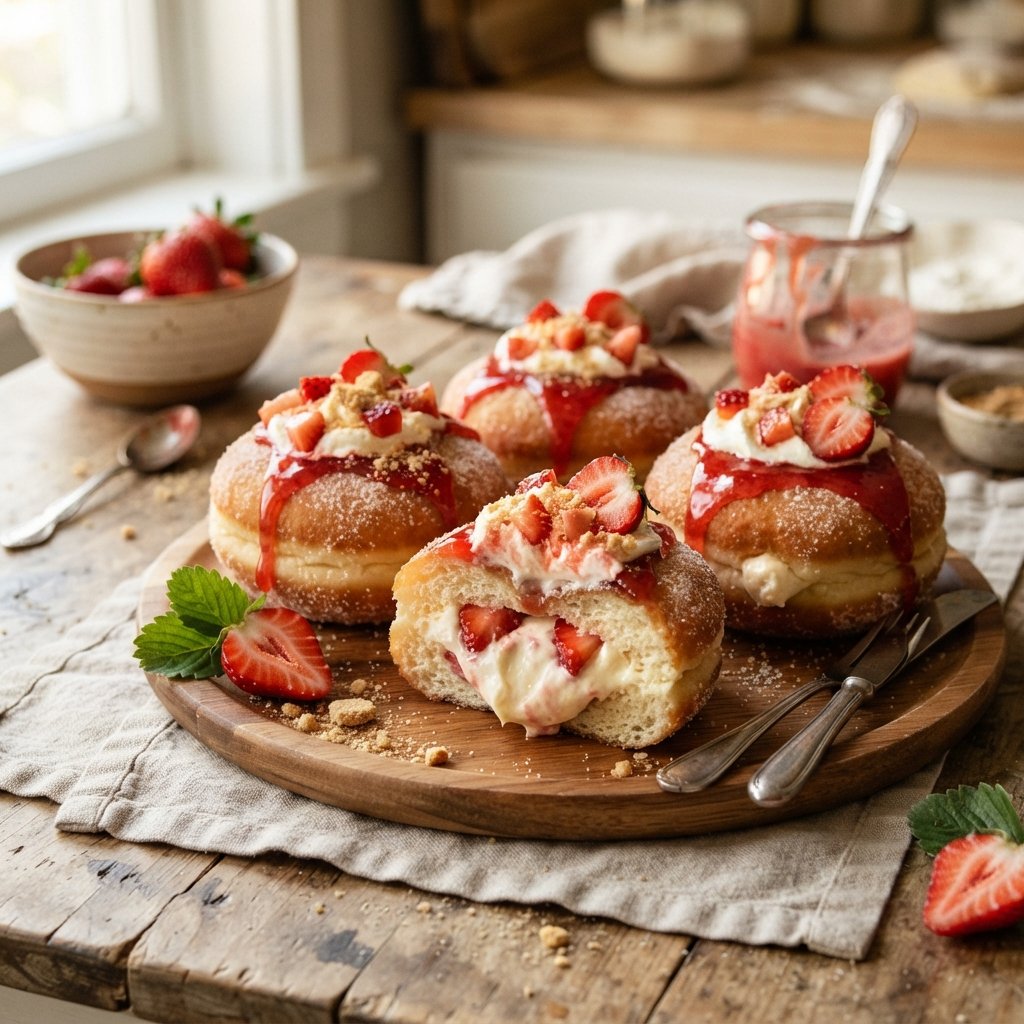
There are few culinary experiences that rival the sheer indulgence of biting into a warm, freshly fried donut that harbors a secret, creamy surprise within. The Strawberry Cheesecake Stuffed Donut represents the pinnacle of dessert hybridization, marrying the nostalgic comfort of classic yeast-raised dough with the sophisticated tang of New York-style cheesecake and the bright, juicy sweetness of ripe strawberries. This isn’t just a pastry; it is a textural symphony. The exterior offers a slight crispness giving way to an airy, cloud-like interior, which is then interrupted by the dense, velvety richness of the cheesecake filling, all tied together with a strawberry glaze that hints at summer fields regardless of the season.
For home bakers and pastry enthusiasts, mastering this recipe is about more than just following instructions; it is about understanding the balance of flavors and the science of fermentation and frying. Whether you are preparing these for a special weekend brunch, a holiday gathering, or simply to elevate your morning coffee routine, these donuts promise to deliver a memorable experience. The contrast between the warm dough and the cool, creamy filling creates a dynamic eating experience that keeps customers and family members coming back for more. In this comprehensive guide, we will explore every facet of creating the perfect Strawberry Cheesecake Stuffed Donut, from the historical roots of fried dough to the nutritional nuances of enjoying such a treat.
The History
To appreciate the Strawberry Cheesecake Stuffed Donut, one must first understand the lineage of its components. The concept of frying dough dates back thousands of years, with ancient Romans and Greeks known to fry strips of dough and cover them in honey or cheese. However, the modern donut as we know it has its roots in the Dutch olykoeks (“oily cakes”) brought to New Amsterdam (now New York) in the mid-17th century. These were simple balls of sweetened dough fried in pork fat until golden.
The evolution of the stuffed donut is particularly fascinating. The German Berliner, a jelly-filled donut without a hole, gained widespread popularity in Europe during the 19th century. It was said that even Paul Revere enjoyed a version of these during his travels. The innovation of injecting fillings rather than rolling dough around them came later, facilitated by the invention of the piping bag and specialized nozzles in the professional baking industry. This allowed for precise injection of jams, custards, and creams without compromising the structural integrity of the fried dough.
The addition of cheesecake flavoring is a distinctly modern American innovation, emerging from the “dessert fusion” trend of the early 2000s. As bakeries sought to differentiate themselves in a crowded market, hybrid desserts became the norm. The cronut may have grabbed headlines, but the cheesecake-stuffed donut became a staple of gourmet donut shops across the United States. Combining this with strawberry flavoring taps into the classic pairing of strawberries and cream, a combination beloved since the days of Victorian tea parties. Today, this specific combination represents the democratization of high-end pastry techniques, allowing home cooks to recreate bakery-quality luxuries in their own kitchens.
Ingredients Breakdown
Understanding the role of each component in your kitchen is vital for troubleshooting and achieving consistent results. Here is a deep dive into the chemistry and functionality of the ingredients used in this recipe.
- All-Purpose Flour: While bread flour offers higher protein for more chew, all-purpose flour provides a tender crumb that is ideal for donuts. It strikes a balance between structure and softness. The gluten formed during kneading traps the carbon dioxide produced by the yeast, allowing the donut to rise.
- Active Dry Yeast: This is the engine of your dough. Yeast is a living organism that consumes sugars and releases carbon dioxide and alcohol. Ensuring your yeast is fresh and activated in warm liquid (not hot, which kills it) is crucial for a light, airy texture.
- Granulated Sugar: Sugar serves multiple purposes. It feeds the yeast, promotes browning during frying through the Maillard reaction, and tenderizes the gluten strands. Without enough sugar, the donuts will be pale and tough.
- Whole Milk: The fat content in whole milk enriches the dough, contributing to a softer crumb and a richer flavor profile compared to water or skim milk. The proteins in milk also aid in crust coloration.
- Unsalted Butter: Fat coats the flour proteins, inhibiting excessive gluten formation which ensures the donut remains tender rather than bread-like. Unsalted is preferred so you can control the sodium levels exactly.
- Cream Cheese: The star of the filling. Full-fat brick-style cream cheese is essential. Low-fat or spreadable versions contain stabilizers and extra water that can make the filling runny and unstable when injected into the warm donut.
- Fresh Strawberries: Fresh berries provide a vibrant color and a natural acidity that cuts through the sweetness. Using freeze-dried strawberry powder is an alternative for a more intense flavor without adding moisture to the glaze.
- Vegetable Oil: For frying, you need an oil with a high smoke point. Canola, peanut, or vegetable oil works best. Olive oil should be avoided as it has a low smoke point and a strong flavor that clashes with the sweet dough.
Step-by-Step Recipe
This section outlines the workflow required to produce bakery-quality donuts. Patience is key, particularly during the rising phases.
Phase 1: Dough Preparation
Begin by warming your milk to approximately 110°F (43°C). It should feel warm to the touch but not hot. Dissolve the yeast and a pinch of sugar in the milk and let it sit for five minutes until it becomes foamy. This proves the yeast is active. In a large mixing bowl, combine the flour, remaining sugar, salt, and any dry flavorings. Create a well in the center and pour in the yeast mixture, beaten eggs, and melted butter. Mix until a shaggy dough forms.
Phase 2: Kneading and First Rise
Turn the dough out onto a lightly floured surface. Knead vigorously for about 8 to 10 minutes. The dough is ready when it is smooth, elastic, and springs back when poked. Place the dough in a greased bowl, cover it with a damp cloth or plastic wrap, and let it rise in a warm, draft-free area for 1 to 2 hours, or until it has doubled in size. This fermentation period develops the flavor complexity of the dough.
Phase 3: Shaping and Second Rise
Punch down the risen dough to release air bubbles. Roll the dough out to about half an inch thickness. Use a round cutter to cut out your donut shapes. Place the rounds on a baking sheet lined with parchment paper. Cover them loosely and allow them to rise again for about 30 to 45 minutes. This second rise is critical for achieving the light texture; skipping it will result in dense, oil-logged donuts.
Phase 4: Frying
While the donuts proof, heat your oil in a heavy-bottomed pot or deep fryer to 350°F (175°C). Use a thermometer to monitor the temperature closely. Fry the donuts in batches, being careful not to overcrowd the pot, which lowers the oil temperature. Fry for about 2 minutes per side until golden brown. Remove with a slotted spoon and drain on a wire rack over paper towels.
Phase 5: Filling and Glazing
While the donuts cool slightly, prepare the cheesecake filling by beating the cream cheese, sugar, and vanilla until smooth. Fold in diced strawberries. Once the donuts are cool enough to handle but still warm, use a piping bag with a long nozzle to inject the filling into the side of each donut. Finally, dip the tops into your strawberry glaze and allow them to set.
Tips
Perfecting donuts takes practice. Here are expert tips to ensure your first batch is a success.
- Oil Temperature Control: The most common mistake is frying at the wrong temperature. If the oil is too cool, the donuts will absorb excess grease and become soggy. If it is too hot, the outside will burn before the inside is cooked. Invest in a clip-on candy thermometer.
- The Piping Technique: When filling the donuts, insert the piping tip about halfway through the side. Squeeze gently until you feel the donut expand slightly in your hand. Stop immediately once you feel resistance to avoid bursting the dough.
- Preventing Soggy Bottoms: Always drain fried donuts on a wire rack rather than just paper towels. Paper towels trap steam underneath the donut, which softens the bottom crust. A rack allows air circulation.
- Make Ahead Strategy: You can prepare the dough and let it do its first rise in the refrigerator overnight. This slow fermentation enhances the flavor. Just let the dough come to room temperature before shaping and frying.
- Glaze Consistency: If your glaze is too thin, it will run off the donut. If it is too thick, it will clump. Add milk or powdered sugar in teaspoon increments to achieve a ribbon-like consistency that coats the back of a spoon.
Variations and Customizations
While the classic Strawberry Cheesecake profile is divine, there are numerous ways to customize this recipe to suit different tastes or dietary needs.
- Baked Version: For a lighter option, you can bake these donuts at 375°F (190°C) for about 10 minutes. While the texture will be more cake-like than fluffy, it significantly reduces the fat content. Use a donut pan for uniform shapes.
- Chocolate Drizzle: Enhance the visual appeal and flavor by drizzling melted white or dark chocolate over the strawberry glaze once it has set. This adds a slight crunch and a bitter contrast to the sweet fruit.
- Gluten-Free Adaptation: Substitute the all-purpose flour with a high-quality 1-to-1 gluten-free baking blend that contains xanthan gum. Note that gluten-free dough is stickier and may require chilling before cutting.
- Vegan Option: Replace the dairy milk with almond or oat milk, use a flax egg instead of chicken eggs, and utilize vegan cream cheese and butter substitutes. The yeast will still work effectively with plant-based liquids.
- Seasonal Twists: Swap strawberries for raspberries in the summer or spiced apples in the fall. You can also add a hint of lemon zest to the cheesecake filling to brighten the flavor profile.
Health Considerations and Nutritional Value
It is important to approach this recipe with a balanced perspective on nutrition. Strawberry Cheesecake Stuffed Donuts are a indulgent treat, classified as a high-calorie, high-sugar dessert. A single donut can contain upwards of 300 to 400 calories, depending on the size and the amount of filling used. The primary sources of energy come from carbohydrates in the flour and sugar, and fats from the frying oil and cream cheese.
For those monitoring their intake, portion control is essential. Enjoying one donut as a occasional treat rather than a daily habit is recommended. The cream cheese does provide some calcium and protein, which offers slight nutritional benefit compared to a jelly-filled donut, but the frying process adds significant fat content. To make them slightly healthier, consider baking instead of frying, reducing the sugar in the glaze, or using a sugar substitute suitable for baking. Always pair such treats with a balanced diet rich in vegetables, lean proteins, and whole grains throughout the rest of the day.
Ingredients
For the Donut Dough:
- 2 ¼ teaspoons active dry yeast (1 packet)
- ½ cup whole milk, warmed to 110°F
- ¼ cup granulated sugar
- 1 large egg, room temperature
- 2 tablespoons unsalted butter, melted
- 2 ½ cups all-purpose flour, plus more for dusting
- ½ teaspoon salt
- ¼ teaspoon nutmeg (optional, for depth)
- Vegetable oil, for frying
For the Cheesecake Filling:
- 8 ounces full-fat cream cheese, softened
- ½ cup powdered sugar
- 1 teaspoon vanilla extract
- ½ cup fresh strawberries, finely diced
For the Strawberry Glaze:
- 1 cup powdered sugar
- 2 tablespoons strawberry puree (fresh or frozen)
- 1 tablespoon milk or cream
- Pink food coloring (optional)
Directions
- Activate Yeast: In a small bowl, combine warm milk, yeast, and a pinch of sugar. Let stand for 5-10 minutes until foamy.
- Make Dough: In a large bowl, whisk together flour, remaining sugar, salt, and nutmeg. Add the yeast mixture, egg, and melted butter. Mix until a dough forms.
- Knead: Turn dough onto a floured surface. Knead for 8-10 minutes until smooth and elastic. Place in a greased bowl, cover, and let rise for 1 hour or until doubled.
- Shape: Punch down dough. Roll out to ½-inch thickness. Cut into circles using a 3-inch cutter. Place on parchment-lined trays.
- Second Rise: Cover shaped donuts and let rise for 30-45 minutes until puffy.
- Fry: Heat oil to 350°F. Fry donuts in batches for 2 minutes per side until golden brown. Drain on a wire rack.
- Prepare Filling: Beat cream cheese, powdered sugar, and vanilla until smooth. Fold in diced strawberries. Transfer to a piping bag with a long tip.
- Prepare Glaze: Whisk together powdered sugar, strawberry puree, and milk until smooth. Adjust consistency with more milk or sugar as needed.
- Assemble: Poke a hole in the side of each cooled donut. Pipe in the cheesecake filling until slightly heavy. Dip the top into the glaze.
- Serve: Let glaze set for 10 minutes. Serve immediately or store in an airtight container.
FAQ
Q: Can I make these donuts ahead of time?
A: Yes, the dough can be prepared the night before and left in the refrigerator for the first rise. Fry and fill them on the day of serving for the best texture.
Q: Why are my donuts tough?
A: Tough donuts are usually the result of over-kneading the dough or frying at too low a temperature. Ensure you stop kneading once the dough is smooth and elastic.
Q: How do I keep the filling from leaking out?
A: Ensure the cream cheese filling is thick enough. If it is too runny, chill it before piping. Also, do not overfill the donut; stop piping as soon as you feel the dough expand.
Q: Can I use frozen strawberries?
A: Yes, but thaw them first and drain excess liquid. Too much water from frozen berries can ruin the consistency of both the filling and the glaze.
Q: How long do these stay fresh?
A: They are best eaten within 24 hours. Store them in the refrigerator due to the cream cheese filling, but let them come to room temperature before eating for the best flavor.
Summary (in two lines)
Indulge in the perfect blend of fluffy fried dough, tangy cream cheese, and sweet strawberries with this ultimate homemade donut recipe.
Follow our detailed guide to master the art of filling and glazing for a bakery-quality treat right in your own kitchen.