Introduction
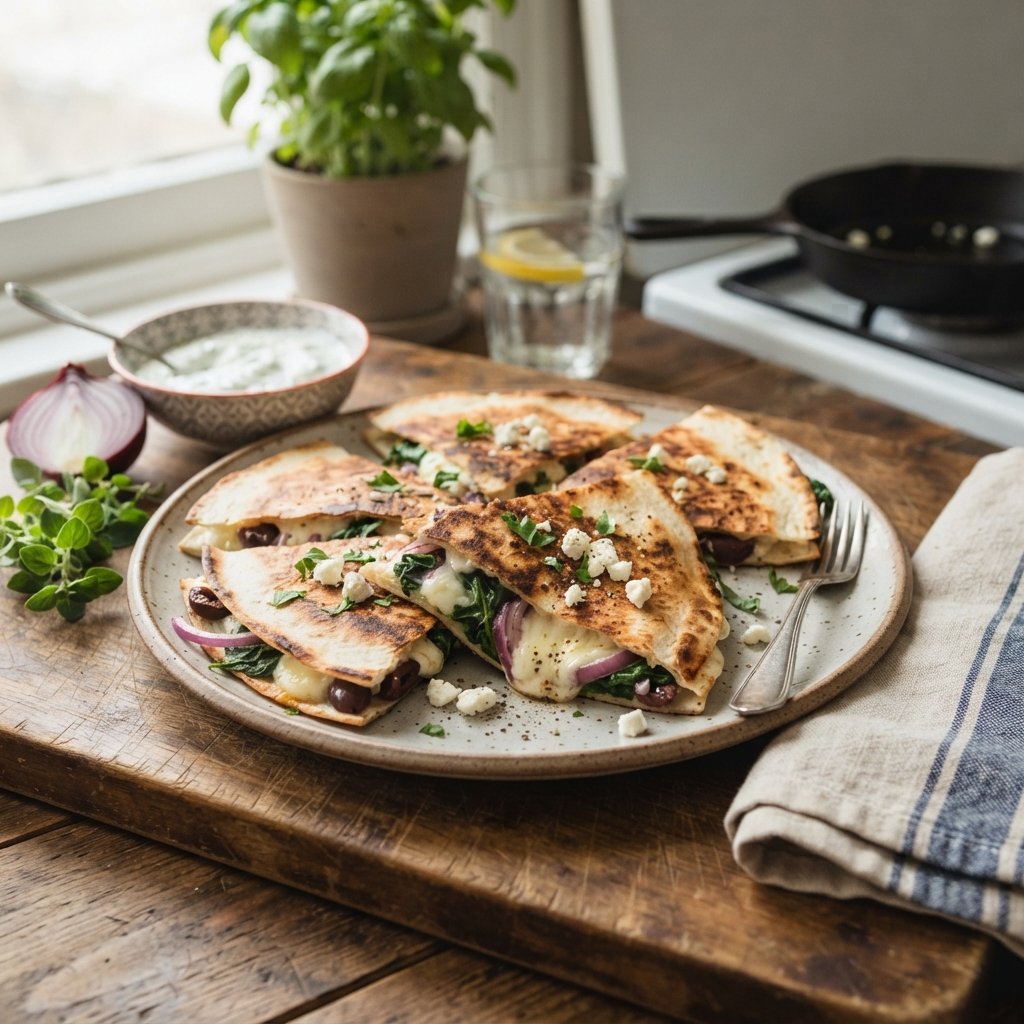
In the vast and vibrant world of culinary fusion, few combinations are as delightful and unexpected as the marriage of Mexican street food traditions with the sun-drenched flavors of the Mediterranean. Enter the Mediterranean Quesadilla—a dish that transcends borders to offer a symphony of textures and tastes on a single plate. While the traditional quesadilla is a staple of Mexican cuisine, known for its simplicity and comforting cheese pull, this variation elevates the concept by introducing the sharp, salty tang of feta, the creamy stretch of mozzarella, the earthy depth of fresh spinach, and the crisp, sweet bite of red onion.
This dish is not merely a quick dinner solution; it is a celebration of cross-cultural gastronomy. It represents the modern home cook’s desire to break free from rigid recipe boundaries and experiment with ingredients that speak to both comfort and sophistication. Imagine the aroma of toasted flour tortillas mingling with the scent of sautéed greens and caramelizing onions. It is a meal that feels rustic yet refined, hearty yet fresh. Whether you are hosting a casual dinner party, looking for a meat-free Monday option that satisfies even the most dedicated carnivores, or simply craving something that feels like a warm hug, these Mediterranean Quesadillas are the ultimate answer. They offer a perfect balance of savory, salty, and fresh notes, all encased in a golden, crispy shell that shatters satisfyingly with every bite.
The History
To truly appreciate this dish, one must look back at the lineage of its two primary components. The quesadilla traces its roots back to the Aztec civilization in Mexico, dating as far back as the 16th century. Originally, it was a simple corn tortilla filled with squash blossoms and other local ingredients, cooked on a comal. Over centuries, as dairy was introduced to the region by Spanish colonizers, cheese became the star filling, evolving into the flour-tortilla-based comfort food we recognize today in Tex-Mex and Northern Mexican cuisine.
Conversely, the flavor profile of this specific recipe draws heavily from the Mediterranean Basin, a region encompassing Southern Europe, North Africa, and the Middle East. The “Mediterranean Diet” is historically renowned for its emphasis on plant-based foods, olive oil, and fresh cheeses like feta (originating from Greece) and mozzarella (a staple of Italian cuisine). The fusion of these two distinct culinary histories is a relatively modern phenomenon, born out of the globalization of food culture in the late 20th and early 21st centuries. As chefs and home cooks began to experiment with “fusion cuisine,” the sturdy structure of the quesadilla proved to be the perfect vessel for Mediterranean ingredients. It allowed for the portability of a sandwich with the textural experience of a flatbread, creating a hybrid dish that honors the heritage of both traditions while creating something entirely new.
Ingredients Breakdown
Understanding the role of each ingredient is crucial to mastering this recipe. This is not just a list of items; it is a blueprint for flavor balance.
The Cheese Duo: Feta and Mozzarella
The magic of this recipe lies in the cheese blend. Using only feta can result in a dry, overly salty filling, while using only mozzarella might lack character. Feta cheese provides the “punch.” It is briny, crumbly, and acidic, cutting through the richness of the other ingredients. Mozzarella cheese, specifically low-moisture mozzarella, acts as the “glue.” It provides the essential melt and stretch that defines a good quesadilla. The combination ensures that every bite has both a creamy texture and a sharp flavor profile.
The Greens: Fresh Spinach
Spinach is chosen for its mild flavor and high nutrient density. Unlike heartier greens like kale, spinach wilts quickly and integrates seamlessly into the cheese mixture without overpowering it. It adds a pop of vibrant green color that contrasts beautifully with the white cheeses and golden tortilla. Using fresh baby spinach is preferred over frozen, as frozen spinach retains too much water, which can make the quesadilla soggy.
The Crunch: Red Onion
Red onion is superior to white or yellow onion in this context for two reasons: color and sweetness. When sautéed, red onions retain a slight purple hue that looks stunning against the cheese. Furthermore, they have a higher sugar content than other onions, meaning they caramelize beautifully, adding a subtle sweetness that balances the saltiness of the feta.
The Vessel: Flour Tortillas
While corn tortillas are traditional for authentic Mexican quesadillas, flour tortillas are the standard for this fusion style. They are more pliable, less likely to crack when folded, and provide a neutral, slightly chewy canvas that allows the Mediterranean fillings to shine. Large burrito-size tortillas (10-12 inches) are ideal for creating a substantial meal.
Step-by-Step Recipe Narrative
Creating the perfect Mediterranean Quesadilla is a process of layering and heat management. It begins with the preparation of the filling. You do not simply throw raw ingredients into the tortilla; you must build the flavor base first. Start by heating a skillet over medium heat with a drizzle of high-quality extra virgin olive oil. Add your sliced red onions and a pinch of salt. The salt draws out the moisture, allowing the onions to soften and turn translucent without burning. Cook them until they are just beginning to brown at the edges; this indicates the sugars are caramelizing.
Next, introduce the spinach. Add a generous handful to the pan with the onions. It will look like too much, but spinach reduces significantly. Toss it constantly until it is just wilted—do not overcook it into a mush. Remove this mixture from the heat and let it cool slightly. If you mix hot vegetables directly with the cheese, the cheese may begin to melt prematurely before the quesadilla hits the pan.
Now, assemble the quesadilla. Lay a tortilla flat on a cutting board. Sprinkle a layer of mozzarella on one half of the circle. This acts as the base layer to stick the tortilla to the filling. Top this with your spinach and onion mixture, followed by crumbles of feta, and finish with another light dusting of mozzarella on top. This “cheese sandwich” technique ensures the filling stays inside. Fold the empty half of the tortilla over the filling, pressing down gently to seal the edges.
The cooking phase requires patience. Heat a clean skillet or griddle over medium-low heat. You want a slow, even toast. Place the quesadilla in the pan. Cook for about 3 to 4 minutes per side. You are looking for a golden-brown color with dark brown spots (the Maillard reaction). Flip carefully using a wide spatula to ensure the filling doesn’t spill. Once both sides are crisp and the cheese inside is fully melted (you can check by peeking under the edge), remove it from the pan. Let it rest for two minutes before slicing; this allows the cheese to set slightly so it doesn’t gush out immediately upon cutting.
Tips for the Perfect Melt and Crunch
- Manage Moisture: The enemy of a crispy quesadilla is steam. Ensure your spinach is thoroughly dried after washing, and do not skip the step of sautéing the onions and spinach to release their water before assembling.
- The Cheese Ratio: Stick to a 2:1 ratio of Mozzarella to Feta. Too much feta can make the quesadilla dry and overly salty, while too little won’t give you that signature Mediterranean tang.
- Heat Control: Resist the urge to cook on high heat. High heat burns the tortilla before the thick layer of cheese in the center has a chance to melt. Medium-low is the sweet spot for a golden exterior and a molten interior.
- Press it Down: While cooking, use your spatula to gently press down on the quesadilla. This increases contact between the tortilla and the pan, ensuring an even, crispy sear across the entire surface.
- Oil vs. Butter: For a true Mediterranean flavor, brush the outside of the tortilla with olive oil rather than butter. However, if you prefer a richer, nuttier taste, a 50/50 blend of olive oil and melted butter works wonderfully.
Variations and Customizations
This recipe is a fantastic template that welcomes experimentation. Here are several ways to customize your Mediterranean Quesadillas:
Add Protein
Transform this vegetarian dish into a hearty main course by adding grilled chicken breast seasoned with lemon and oregano, or perhaps some spiced ground lamb. Shredded rotisserie chicken is a quick and effective shortcut for busy weeknights.
Veggie Boost
Expand the vegetable profile by adding sun-dried tomatoes (packed in oil) for a burst of umami, or artichoke hearts for a tender texture. Sliced Kalamata olives would also add a briny depth that complements the feta perfectly.
Spice It Up
If you enjoy heat, sprinkle red pepper flakes or a dash of cayenne pepper into the spinach mixture. Alternatively, serve the quesadilla with a spicy harissa yogurt dip on the side.
Herbal Infusions
Fresh herbs can elevate the dish significantly. Stir chopped fresh dill, parsley, or oregano into the cheese mixture before cooking. Fresh basil added right after taking the quesadilla off the heat adds a wonderful aromatic finish.
Health Considerations and Nutritional Value
While quesadillas are often viewed as indulgent comfort food, this Mediterranean variation offers a surprisingly balanced nutritional profile, provided portion sizes are managed.
Calcium and Protein: The combination of feta and mozzarella provides a significant amount of calcium, essential for bone health, and high-quality protein which aids in muscle repair and satiety.
Antioxidants and Iron: Spinach is a powerhouse of nutrients, rich in iron, vitamin K, and antioxidants like lutein and zeaxanthin, which are beneficial for eye health. The red onions add quercetin, a flavonoid with anti-inflammatory properties.
Healthy Fats: By using olive oil for cooking, you are incorporating monounsaturated fats, which are heart-healthy and a cornerstone of the Mediterranean diet. However, cheese is also high in saturated fat, so moderation is key.
Carbohydrates: The flour tortilla provides the energy source. To make this dish lower in carbohydrates or higher in fiber, consider using whole wheat tortillas or low-carb wraps. Be mindful that large flour tortillas can be calorie-dense, so pairing one quesadilla with a large side salad is often a better strategy than eating two or three.
Ingredients
- Tortillas: 4 large (10-12 inch) flour tortillas
- Cheese (Melt): 1 ½ cups shredded low-moisture mozzarella cheese
- Cheese (Flavor): ¾ cup crumbled feta cheese (preferably in brine, not pre-crumbled dry blocks)
- Greens: 3 cups fresh baby spinach, washed and thoroughly dried
- Aromatics: 1 medium red onion, thinly sliced
- Fat: 2 tablespoons extra virgin olive oil (divided)
- Seasoning: ½ teaspoon dried oregano
- Seasoning: ¼ teaspoon black pepper
- Seasoning: Pinch of salt (go easy, feta is salty)
- Optional Garnish: Fresh parsley or lemon wedges
Directions
- Prep the Vegetables: Wash the spinach and dry it completely using a salad spinner or paper towels. Slice the red onion into thin half-moons.
- Sauté the Base: Heat 1 tablespoon of olive oil in a large skillet over medium heat. Add the sliced red onions and a pinch of salt. Cook for 5-7 minutes, stirring occasionally, until the onions are soft and slightly caramelized.
- Wilt the Spinach: Add the fresh spinach to the skillet with the onions. Toss continuously for 1-2 minutes until the spinach has wilted down significantly. Remove the pan from heat. Stir in the dried oregano and black pepper. Let the mixture cool for 5 minutes.
- Assemble the Quesadillas: Lay the tortillas flat on a clean surface. On one half of each tortilla, sprinkle a layer of mozzarella. Top evenly with the spinach and onion mixture, followed by the crumbled feta. Finish with the remaining mozzarella on top of the fillings. Fold the tortilla over to create a half-moon shape, pressing down gently.
- Cook: Wipe the skillet clean and return it to medium-low heat. Add the remaining 1 tablespoon of olive oil. Place the quesadillas in the pan (cook in batches if necessary to avoid overcrowding). Cook for 3-4 minutes until the bottom is golden brown and crispy.
- Flip and Finish: Carefully flip the quesadillas using a wide spatula. Cook for another 3-4 minutes on the second side until golden and the cheese is fully melted.
- Serve: Transfer to a cutting board and let rest for 2 minutes. Slice into wedges using a sharp knife or pizza cutter. Serve immediately with lemon wedges or your favorite dip.
FAQ
Can I make these ahead of time?
Quesadillas are best served fresh and hot. However, you can prepare the spinach and onion filling up to 2 days in advance and store it in the fridge. Assemble and cook the quesadillas just before serving for the best texture.
Can I freeze Mediterranean Quesadillas?
Yes, you can freeze them after cooking. Let them cool completely, wrap them individually in plastic wrap or foil, and freeze for up to 2 months. Reheat in an oven or toaster oven at 350°F (175°C) until warmed through to maintain crispiness (microwaving will make them soggy).
What can I use instead of flour tortillas?
For a gluten-free option, use corn tortillas (though they are smaller, so you may need to make two per person) or gluten-free flour wraps. For a low-carb option, large lettuce wraps can be used, though they won’t be crispy.
My cheese is leaking out! What did I do wrong?
This usually happens if the quesadilla is overfilled or flipped too aggressively. Ensure you leave a small border around the edge of the tortilla without filling, and use a wide spatula to support the entire quesadilla when flipping.
Is this recipe vegetarian?
Yes, this recipe is vegetarian. To make it vegan, substitute the dairy cheeses with high-quality vegan melting mozzarella and a vegan feta alternative (often made from tofu or almonds).
Summary
This Mediterranean Quesadilla fuses the crispy comfort of Mexican street food with the fresh, tangy flavors of spinach, feta, and red onion for a perfect weeknight meal. Master the art of the melt and the crunch with this simple, customizable recipe that balances savory cheese with healthy greens.