Introduction
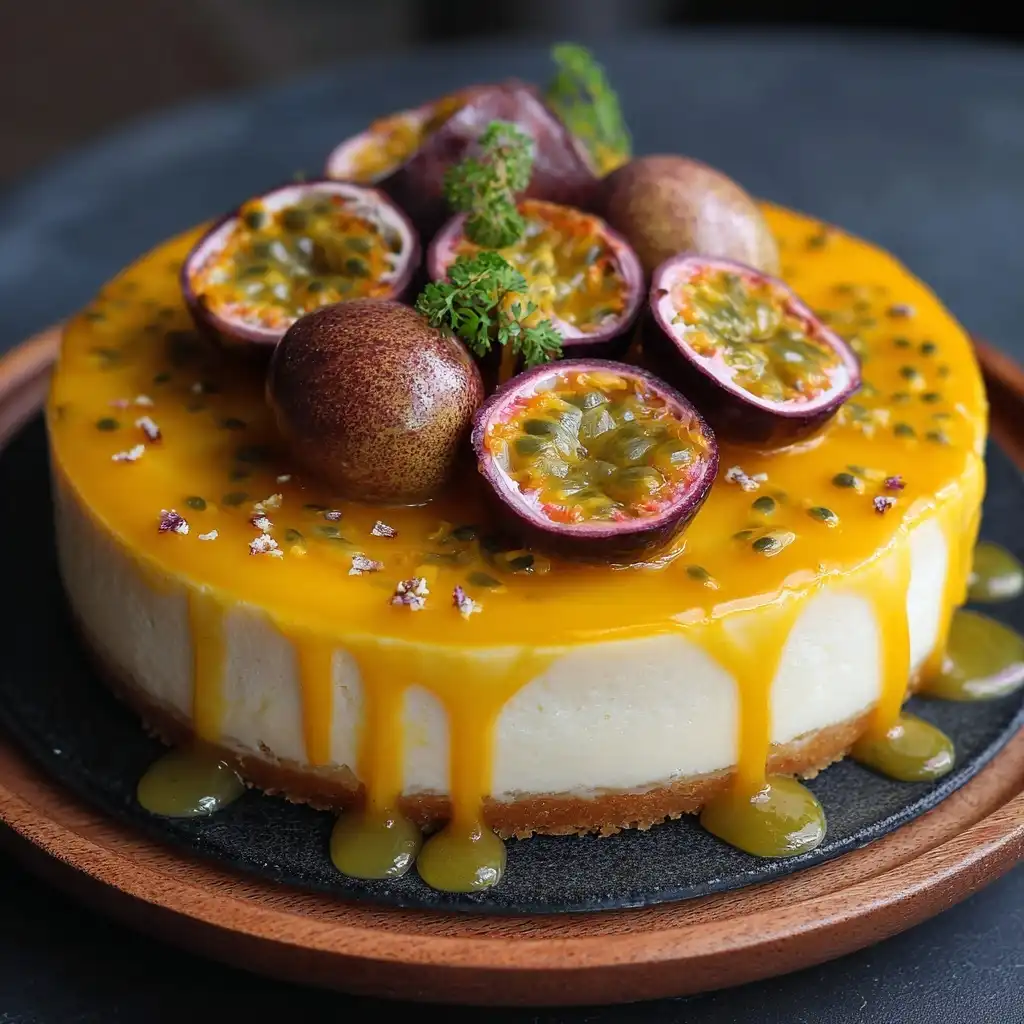
Indulge in the tropical symphony of creamy richness and vibrant acidity with the Mango Passionfruit Cheesecake—a luxurious fusion dessert that transports your palate straight to sun-drenched orchards and coastal breezes. This isn’t just another cheesecake; it’s a masterclass in balance—where the velvety, tangy-sweet depth of New York–style cream cheese meets the luminous, floral-tart intensity of fresh passionfruit pulp and the lush, honeyed sweetness of ripe mango. Whether served at a summer garden party, a festive holiday gathering, or as a self-care treat on a quiet Sunday evening, this dessert delivers elegance without pretension and flavor without compromise. Its stunning golden-orange marbled swirls, glossy glaze finish, and delicate crumb crust make it as visually arresting as it is unforgettable on the tongue.
The History
The Mango Passionfruit Cheesecake is a relatively modern confection born from the global cross-pollination of culinary traditions in the late 20th and early 21st centuries. While cheesecake itself traces its origins to ancient Greece (where it was served to athletes at the first Olympic Games in 776 BCE) and later evolved through Roman, European, and American iterations—including the iconic baked New York style and no-bake Philadelphia version—the tropical twist emerged alongside increased global access to exotic fruits and artisanal ingredients. In the 1980s and ’90s, chefs in Australia, South Africa, and Hawaii began experimenting with local tropical produce in classic desserts, capitalizing on the natural acidity of passionfruit to cut through the density of cream cheese. Mango—long revered in Indian, Southeast Asian, and Latin American cuisines for its versatility and nutritional power—was a natural partner. By the early 2000s, food magazines like Bon Appétit and Saveur, along with influential pastry blogs and TV shows such as Top Chef Desserts, helped popularize the combination, especially in no-bake and semi-baked formats ideal for warm climates. Today, it stands as a hallmark of contemporary “global comfort food”—a dessert that honors tradition while celebrating biodiversity, seasonality, and the joy of unexpected harmony.
Ingredients Breakdown
Every element of this Mango Passionfruit Cheesecake has been meticulously selected not only for flavor but for functional integrity—each ingredient plays a precise role in texture, stability, acidity balance, and visual appeal:
- Graham Cracker Crust Base: Whole-grain graham crackers provide structure and a subtle molasses-tinged sweetness; unsalted butter binds and enriches; light brown sugar adds caramel notes and moisture retention; a pinch of flaky sea salt heightens all other flavors and counters sweetness.
- Cream Cheese Filling Core: Full-fat, brick-style cream cheese (at true room temperature) ensures smooth emulsification and prevents lumps; sour cream contributes tang and tender crumb; heavy cream adds fluidity and silkiness; granulated sugar is carefully measured to sweeten without masking fruit acidity; pure Madagascar bourbon vanilla extract lends aromatic complexity; fresh lemon juice and zest brighten and stabilize proteins; unflavored gelatin (bloomed and dissolved) provides gentle set and jiggle-free sliceability—especially vital in tropical climates.
- Mango Component: Ripe Ataulfo (Champagne) or Keitt mangoes are preferred for their low-fiber flesh, high brix (sugar) content, and floral aroma; puréed and strained to eliminate stringiness; lightly warmed and cooled before folding to preserve enzymatic integrity and prevent curdling.
- Passionfruit Component: Fresh passionfruit pulp—seeds included for textural intrigue and polyphenol richness—is strained only to remove skin fragments; the seeds add a delightful pop and visual contrast; frozen concentrate may be used *only* if fresh is unavailable, but must be reconstituted with filtered water and acid-adjusted with extra lime juice to restore brightness.
- Swirl & Finish: A delicate layer of reduced mango-passionfruit coulis (simmered gently with a touch of honey and agar-agar for gloss and hold) creates the signature marbled effect; brushed-on neutral apricot glaze (strained and warmed) seals in moisture and adds radiant sheen; optional edible flowers (e.g., pansies or violets), toasted coconut flakes, and micro mint garnish elevate presentation without compromising taste.
Step-by-Step Recipe
- Prepare the Crust (Day Before Recommended): Pulse 1 ½ cups graham cracker crumbs, ¼ cup light brown sugar, 6 tbsp melted unsalted butter, and ¼ tsp flaky sea salt in a food processor until uniformly moist. Press firmly into a 9-inch springform pan—up the sides ½ inch and across the base—with the bottom of a measuring cup or flat glass. Chill uncovered for at least 2 hours (or freeze for 30 minutes) to set. Preheat oven to 325°F (163°C) if baking; otherwise, keep refrigerated for no-bake version.
- Bloom Gelatin (Critical Step): Sprinkle 1 ½ tsp unflavored gelatin over 3 tbsp cold filtered water in a small heatproof bowl. Let sit 5–7 minutes until spongy. Meanwhile, gently warm 2 tbsp heavy cream in a saucepan until steaming—not boiling—then pour over bloomed gelatin. Whisk vigorously until fully dissolved and clear. Set aside to cool slightly (but remain liquid).
- Beat Cream Cheese Base: In a stand mixer fitted with paddle attachment, beat 24 oz (3 standard blocks) full-fat cream cheese on medium-low for 2 minutes until completely smooth and lump-free. Scrape bowl thoroughly. Add ¾ cup granulated sugar and beat 2 more minutes until pale and airy. Add 1 tsp pure vanilla, 1 tbsp fresh lemon juice, and 1 tsp finely grated lemon zest; mix 30 seconds. Reduce speed to low and add 1 cup full-fat sour cream and ½ cup heavy cream in two additions, scraping bowl each time. Finally, slowly drizzle in cooled gelatin mixture while mixing on low—do not overmix. Batter should be silky, homogenous, and slightly thickened.
- Prepare Fruit Components: Purée 2 large ripe mangoes (peeled, pitted, ~1 ¼ cups flesh) until ultra-smooth; press through a fine-mesh sieve to remove fiber. Separately, scoop pulp from 12–15 fresh passionfruits (≈¾ cup strained pulp with seeds). In a small saucepan, combine ½ cup mango purée and ⅓ cup passionfruit pulp; warm over low heat with 1 tbsp raw honey and a pinch of salt until just steaming (~110°F). Remove from heat, stir in ¼ tsp agar-agar powder, and let cool to room temperature—do not refrigerate yet.
- Swirl Technique (Artistry Required): Pour chilled cream cheese batter into prepared crust. Using a ¼-cup measure, drop alternating spoonfuls of remaining mango purée and passionfruit pulp onto surface. With a thin skewer or toothpick, begin at center and drag outward in slow, overlapping figure-eights—never over-swirling. For dramatic marbling, use a small offset spatula to gently lift and fold edges toward center once. Refrigerate immediately for 15 minutes to set surface before final glaze.
- Chill & Set (Non-Negotiable): Cover springform pan loosely with parchment-lined plastic wrap (to avoid condensation). Refrigerate for minimum 12 hours—ideally 24–36 hours—for complete structural integrity, flavor melding, and clean slicing. Do not freeze unless absolutely necessary (wrap tightly in double layers of plastic + foil); thaw overnight in fridge before serving.
- Glaze & Garnish: Warm ¼ cup seedless apricot jam with 1 tsp water and ½ tsp fresh lime juice until fluid. Strain. Brush evenly over chilled cheesecake surface using a soft silicone brush. Chill uncovered 15 minutes to set glaze. Unmold: run thin knife around edge, release springform collar, then slide offset spatula beneath crust to lift onto cake stand. Decorate with reserved passionfruit seeds, mango ribbons, toasted coconut, and edible flowers just before serving.
Tips
- Temperature Is Everything: All dairy ingredients—cream cheese, sour cream, heavy cream—must be truly at room temperature (68–72°F), not just “softened.” Cold ingredients cause splitting, graininess, and poor emulsion. Leave cream cheese unwrapped on counter for 2–3 hours ahead of time.
- No Overmixing: Once eggs (if using a baked variation) or gelatin are added, mix only until incorporated. Over-beating introduces excess air, leading to cracks during baking or collapse upon chilling.
- Fruit Acidity Calibration: Passionfruit acidity varies wildly by ripeness and variety. Always taste pulp before adding—add a squeeze of lime or lemon if it lacks brightness; reduce lemon juice in base accordingly to maintain pH balance.
- Straining Strategy: For ultra-luxurious texture, strain mango purée *twice*: first through a coarse sieve, then again through a chinois lined with cheesecloth. The extra effort yields cloudless, satin-smooth swirls.
- Crust Crispness Hack: For a shatteringly crisp base that stays firm under creamy filling, blind-bake the crust at 350°F for 10 minutes before chilling—especially recommended for humid environments or multi-day events.
- Slicing Perfection: Use a long, thin-bladed knife dipped in hot water and wiped dry between every single cut. For cleanest results, chill knife in freezer for 5 minutes beforehand.
- Make-Ahead Wisdom: Crust can be made 5 days ahead and stored airtight at room temp. Fruit purées freeze beautifully for up to 3 months—thaw overnight in fridge, then re-strain before use. Fully assembled, unfrosted cheesecake keeps flawlessly for 4 days refrigerated.
Variations and Customizations
This recipe is a canvas—not a cage. Here are inspired, chef-tested adaptations for every palate, occasion, and dietary need:
- Vegan Mango Passionfruit Cheesecake: Replace cream cheese with blended raw cashews (soaked 6+ hours), coconut cream, lemon juice, and apple cider vinegar for tang; use coconut oil–based graham crust; set with agar-agar instead of gelatin; sweeten with date paste or maple syrup; swirl with aquafaba-whipped passionfruit foam.
- Gluten-Free Version: Substitute gluten-free graham crackers (like Schar or Kinnikinnick) or almond flour–coconut shortbread crust; verify all extracts and gelatin are GF-certified (most are, but always check labels).
- Baked Classic: Omit gelatin. Add 3 large eggs (room temp) one at a time after creaming; bake in a water bath at 300°F for 1 hour 15 minutes until edges are set but center jiggles slightly. Cool gradually in turned-off oven with door ajar for 1 hour before refrigerating overnight.
- Mini Mason Jar Edition: Layer crust, filling, and swirl in 8-oz wide-mouth mason jars. Chill 8 hours. Top with coconut whip and fresh fruit. Ideal for picnics, bridal showers, or portion-controlled servings.
- Spiced Tropical Variation: Infuse heavy cream with 1 star anise pod and 3 black peppercorns (steep 20 min, strain); fold in ½ tsp ground cardamom and a pinch of saffron threads to batter for aromatic intrigue.
- Boozy Twist: Add 2 tbsp premium mango rum or passionfruit liqueur (like Passoa) to the fruit swirl—or spike the glaze with 1 tsp dark rum and orange blossom water.
- Protein-Powered: Blend 2 scoops unflavored hydrolyzed collagen peptides into cooled gelatin mixture; add ¼ cup roasted pepitas to crust for crunch and zinc boost.
- Deconstructed Plated Dessert: Serve components separately: mango-passionfruit panna cotta cubes, crumbled crust tuile, coconut crème anglaise, pickled mango ribbons, and candied passionfruit seeds.
Health Considerations and Nutritional Value
While undeniably decadent, this Mango Passionfruit Cheesecake offers surprising functional nutrition when prepared mindfully—far exceeding typical desserts in phytonutrient density and digestive support:
- Vitamin C Powerhouse: One serving (1/12th cake) delivers ~45 mg vitamin C (50% DV) from mango and passionfruit—supporting collagen synthesis, iron absorption, and immune resilience. Passionfruit also contains unique antioxidants like piceatannol and scirpusin B, studied for anti-inflammatory effects.
- Fiber & Gut Health: Whole passionfruit seeds contribute insoluble fiber and prebiotic mucilage; mango provides pectin and polyphenols shown to nourish beneficial Bifidobacteria. Combined, they support microbiome diversity and regular digestion.
- Healthy Fats & Satiety: Full-fat dairy supplies conjugated linoleic acid (CLA) and vitamin K2 (especially if using grass-fed butter/cream cheese), linked to metabolic health and bone integrity. The fat content slows gastric emptying, promoting sustained energy and appetite regulation.
- Lower Glycemic Impact: Unlike many fruit desserts, the high fiber and fat content significantly lowers glycemic load. With careful sweetener adjustment (e.g., reducing sugar by 25% and using raw honey), it scores ~18 on the glycemic index—comparable to steel-cut oats.
- Considerations: Naturally high in calories (~380 per slice) and saturated fat (~18g)—best enjoyed in mindful portions. Those with lactose intolerance may tolerate it well due to fermentation-derived lactic acid in sour cream and aging of cream cheese, but vegan alternatives are recommended for strict avoidance. Contains histamine (from fermented dairy and aged fruits); sensitive individuals may prefer freshly made, minimally aged versions.
- Nutrition Facts (Per 1/12 Slice, Approximate): Calories: 378 • Total Fat: 24g (15g sat) • Cholesterol: 82mg • Sodium: 210mg • Total Carbs: 36g (2g fiber, 29g sugars) • Protein: 6g • Vitamin A: 12% DV • Calcium: 8% DV • Potassium: 210mg • Folate: 18mcg • Magnesium: 22mg.
Ingredients
For the Crust:
- 1 ½ cups (150g) graham cracker crumbs (about 12 full sheets)
- ¼ cup (50g) light brown sugar, packed
- 6 tablespoons (85g) unsalted butter, melted
- ¼ teaspoon flaky sea salt
For the Cream Cheese Filling:
- 24 ounces (680g) full-fat brick-style cream cheese, room temperature
- ¾ cup (150g) granulated sugar
- 1 teaspoon pure Madagascar bourbon vanilla extract
- 1 tablespoon fresh lemon juice
- 1 teaspoon finely grated lemon zest
- 1 cup (240g) full-fat sour cream
- ½ cup (120ml) heavy cream (36% fat)
- 1 ½ teaspoons unflavored gelatin
- 3 tablespoons cold filtered water
- 2 tablespoons heavy cream (for dissolving gelatin)
For the Mango-Passionfruit Swirl:
- 2 large ripe Ataulfo or Keitt mangoes (peeled, pitted, ~1 ¼ cups flesh)
- 12–15 fresh passionfruits (yields ~¾ cup pulp with seeds)
- 1 tablespoon raw honey
- ¼ teaspoon agar-agar powder (optional, for gloss and hold)
- Pinch of sea salt
For the Glaze & Garnish:
- ¼ cup (85g) seedless apricot jam
- 1 teaspoon fresh lime juice
- 1 teaspoon water
- Reserved passionfruit seeds
- Thin mango ribbons (cut with vegetable peeler)
- 2 tablespoons unsweetened toasted coconut flakes
- Edible flowers (pansies, violets, borage) — optional
- Fresh mint leaves — optional
Directions
- Prepare the Crust: Adjust oven rack to center position and preheat oven to 350°F (177°C) if baking crust. Pulse graham crackers in food processor until fine crumbs form. Add brown sugar, melted butter, and salt; pulse until mixture resembles wet sand. Press firmly into bottom and ½-inch up sides of 9-inch springform pan. Bake 10 minutes until fragrant and set. Cool completely on wire rack, then refrigerate uncovered while preparing filling.
- Bloom Gelatin: In small heatproof bowl, sprinkle gelatin over cold water. Let sit 5–7 minutes until swollen. In small saucepan, heat 2 tbsp heavy cream over medium-low until steaming. Pour over bloomed gelatin; whisk until fully dissolved. Set aside to cool to lukewarm (do not let set).
- Make Mango-Passionfruit Purée: Scoop mango flesh into blender. Purée until smooth. Strain through fine-mesh sieve into bowl, pressing with spatula. Repeat with passionfruit pulp—strain only skins, retaining all seeds for texture and nutrition. Combine ½ cup mango purée and ⅓ cup passionfruit pulp in small saucepan. Stir in honey and salt. Warm over low heat 2–3 minutes until steaming. Remove from heat; stir in agar-agar if using. Cool to room temperature (do not refrigerate).
- Prepare Cream Cheese Batter: In stand mixer with paddle attachment, beat cream cheese on medium-low 2 minutes until perfectly smooth. Add sugar; beat 2 more minutes until pale and fluffy. Add vanilla, lemon juice, and zest; mix 30 seconds. Reduce speed to low; add sour cream and heavy cream in two batches, scraping bowl well each time. Slowly drizzle in lukewarm gelatin mixture while mixing on low. Stop immediately when fully incorporated—do not overmix. Batter should be thick, glossy, and free of streaks.
- Assemble & Swirl: Pour batter into chilled crust. Tap pan sharply on counter 3 times to release air bubbles. Drop alternating 1-tablespoon dollops of remaining mango purée and passionfruit pulp over surface. Using toothpick or skewer, drag gently from center outward in slow, overlapping arcs—no more than 12–15 passes. Refrigerate uncovered 15 minutes to set surface.
- Chill Thoroughly: Loosely cover pan with parchment-lined plastic wrap (prevents condensation). Refrigerate minimum 12 hours—24–36 hours strongly recommended for optimal texture and flavor development.
- Glaze & Serve: Warm apricot jam, lime juice, and water in small saucepan over low heat until fluid. Strain. Brush evenly over chilled cheesecake. Chill uncovered 15 minutes. Run thin knife around edge; release springform collar. Slide thin metal spatula beneath crust to loosen; transfer to serving plate. Garnish with passionfruit seeds, mango ribbons, toasted coconut, and flowers just before slicing. Serve chilled with extra passionfruit pulp on the side.
FAQ
- Can I use frozen mango or passionfruit pulp?
- Yes—but with caveats. Frozen mango works well if thawed completely and drained of excess liquid (pat dry with paper towels). Frozen passionfruit pulp is acceptable *only* if unsweetened and 100% pure—avoid concentrates with added citric acid or preservatives, which dull flavor. Always taste and adjust acidity with fresh lime or lemon juice.
- Why did my cheesecake crack or weep?
- Cracking usually stems from rapid temperature change (oven too hot, cooling too fast) or overmixing. Weeping (beading of liquid) signals over-acidification or insufficient gelatin bloom/dissolution. Ensure lemon juice is measured precisely, gelatin is fully dissolved and cooled before adding, and chilling is gradual and prolonged.
- How do I prevent a soggy crust?
- Blind-baking the crust is the gold standard. If making no-bake, ensure crust is thoroughly chilled before filling—and consider adding 1 tsp almond flour to absorb ambient moisture. Also, avoid over-swirling near the crust edge where fruit liquids pool.
- Can I make this without gelatin?
- Absolutely—but texture shifts. For no-gelatin versions: increase sour cream to 1 ¼ cups, add 2 tbsp Greek yogurt, and chill 48+ hours. It will be softer, more mousse-like, and require extra care when slicing. Agar-agar (1 tsp dissolved in 2 tbsp water) is a reliable vegan alternative.
- What’s the best way to store leftovers?
- Keep covered tightly in refrigerator for up to 5 days. Place toothpicks around perimeter before covering to prevent plastic wrap from sticking. Freeze only if necessary: wrap entire cake (un-glazed) in plastic + foil; thaw overnight in fridge. Glaze and garnish only after thawing.
- Can I substitute Greek yogurt for sour cream?
- You can—but expect a sharper tang and denser texture. Use full-fat, strained Greek yogurt and reduce lemon juice by half to compensate. Stir in 1 tbsp honey to soften acidity.
- My mango isn’t very sweet—what do I do?
- Boost sweetness *and* complexity by simmering mango purée with 1 tbsp coconut sugar and ¼ tsp ground ginger for 3–4 minutes before cooling. Avoid adding sugar directly to batter—it won’t dissolve properly and creates graininess.
- Is this safe for pregnant people?
- Yes—this recipe uses pasteurized dairy and cooked fruit components (the warm swirl step gently pasteurizes surface contact). Always use pasteurized cream cheese and sour cream, and wash all fruit rinds thoroughly before scooping passionfruit.
Summary
A Mango Passionfruit Cheesecake is a masterwork of tropical elegance—where velvety New York–style cream cheese meets the electric brightness of passionfruit and the sumptuous nectar of ripe mango in a flawlessly balanced, gorgeously marbled dessert.
With its make-ahead ease, customizable variations, notable nutritional benefits, and showstopping presentation, it transcends seasonal indulgence to become a timeless centerpiece for celebration, connection, and culinary joy.