Introduction
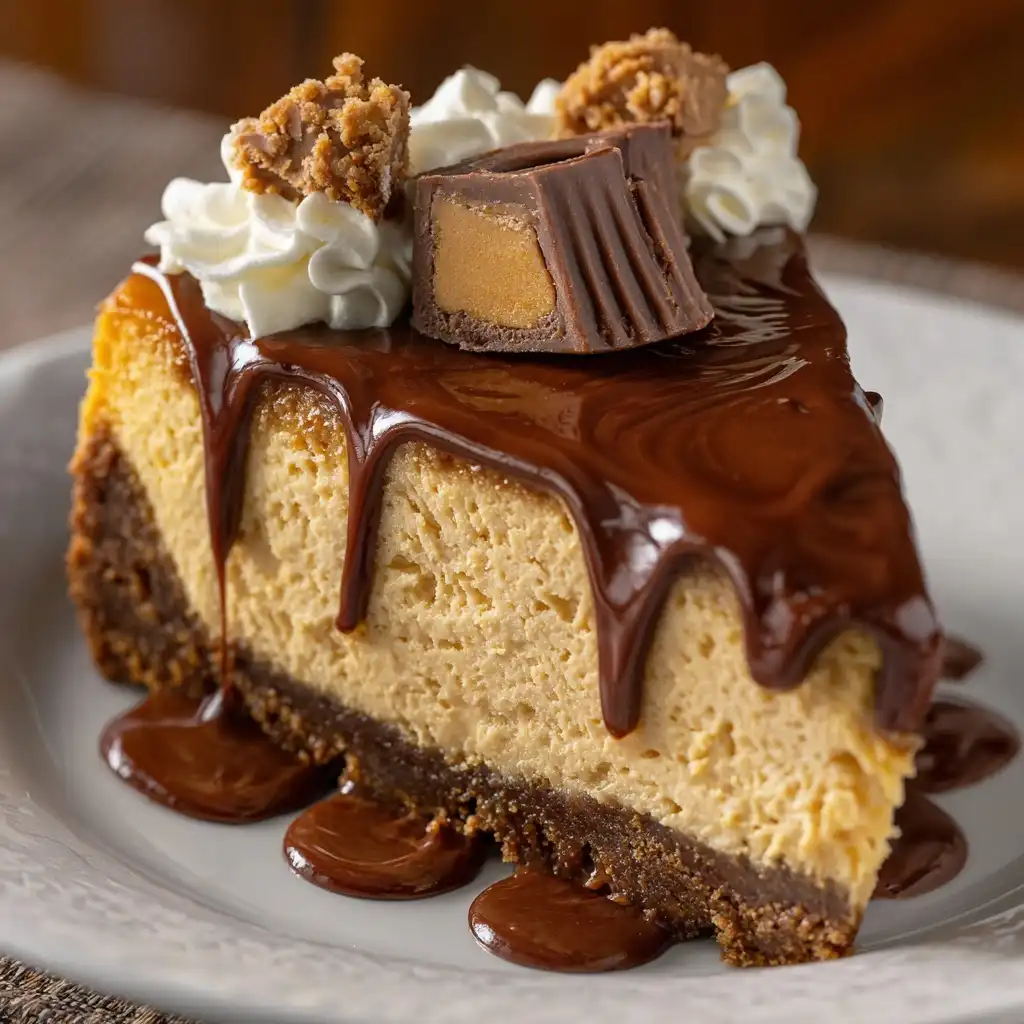
Welcome to the ultimate indulgence: Peanut Butter Cup Cheesecake — a decadent, no-compromise fusion of creamy New York–style cheesecake, rich chocolate ganache, and the nostalgic crunch-sweetness of everyone’s favorite candy bar. This isn’t just dessert; it’s an experience — layers of velvety smoothness, deep cocoa notes, salty-sweet peanut butter swirls, and that unmistakable snap of tempered chocolate coating. Whether you’re celebrating a milestone, hosting a holiday gathering, or simply treating yourself after a long week, this showstopping dessert delivers maximum flavor, texture contrast, and visual drama — all while remaining surprisingly approachable for home bakers willing to embrace a few pro techniques.
The History
The Peanut Butter Cup Cheesecake is a brilliant example of American dessert evolution — a modern hybrid born from the convergence of two iconic mid-century treats. The peanut butter cup itself was invented in 1922 by Harry Burnett Reese, a former dairy employee of Milton S. Hershey, who launched his own confectionery company using Hershey chocolate. By the 1950s, Reese’s Peanut Butter Cups had become a cultural staple — beloved for their perfect balance of roasted peanut butter filling enrobed in milk chocolate.
Meanwhile, cheesecake traces its roots back over 2,000 years to ancient Greece, but the dense, creamy, baked version we know today was perfected in New York City during the early 20th century — notably by Arnold Reuben at his deli and later refined by chefs like Leo Stettner at Lindy’s. The marriage of these two legends didn’t happen overnight. It began tentatively in the 1980s with peanut butter swirl cheesecakes, gained momentum in the 1990s with the rise of “gourmet candy-bar desserts,” and exploded online in the 2000s as food bloggers experimented with layering, ganache injections, and embedded candy pieces. Today’s Peanut Butter Cup Cheesecake represents the apex of this lineage — not merely a topping or swirl, but a fully integrated, multi-textural composition where each component (crust, filling, ripple, garnish, and glaze) is intentionally engineered to elevate and complement the others.
Ingredients Breakdown
Understanding *why* each ingredient matters — beyond just listing quantities — is key to mastering this recipe. Here’s a deep-dive analysis:
- Graham Cracker Crust Base: Standard graham crackers provide structure and subtle honeyed sweetness, but for enhanced depth, consider substituting up to 25% with crushed chocolate graham crackers or even Oreo wafers (minus the cream filling). The brown sugar adds caramelized complexity and improves binding; melted unsalted butter ensures richness without overpowering saltiness.
- Cream Cheese: Full-fat, brick-style Philadelphia or Kraft cream cheese is non-negotiable. Low-fat or spreadable varieties contain stabilizers and excess moisture that cause cracking, graininess, and poor set. Always use cream cheese at room temperature — cold blocks won’t incorporate smoothly, leading to lumps no amount of mixing can fix.
- Sour Cream & Heavy Cream: Sour cream contributes tang, moisture, and tenderness — it also helps prevent over-browning on the surface. Heavy cream (not half-and-half or milk) adds luxurious fat content, ensuring silkiness and preventing dryness during the long bake. Its high fat content also improves freeze-thaw stability if you plan to store leftovers.
- Granulated Sugar: Acts not only as sweetener but as a tenderizer — sugar interferes with protein coagulation in eggs and dairy, yielding a more delicate crumb. Too little leads to rubbery texture; too much increases risk of weeping or cracking.
- Eggs: Large, room-temperature eggs are essential for emulsification and leavening. Cold eggs can cool the batter unevenly and cause curdling. Adding them one at a time ensures full incorporation before the next addition — skipping this step risks under-emulsified batter and structural failure.
- Pure Vanilla Extract: Use Madagascar bourbon vanilla for best results. Imitation vanilla lacks nuanced floral and woody undertones critical for balancing chocolate and peanut butter. Alcohol-based extract also aids in moisture distribution.
- Peanut Butter: Opt for natural, stirred peanut butter (just peanuts + salt) for authentic nutty depth and oil separation that creates beautiful marbling. Avoid “no-stir” or hydrogenated brands — they contain palm oil or sugar syrups that inhibit swirling and mute flavor. For safety and consistency, always warm natural peanut butter slightly (10–15 seconds in microwave) and stir thoroughly before swirling.
- Chocolate Layers: High-quality semi-sweet or bittersweet chocolate (60–70% cacao) is ideal for the ganache and cups. Couverture chocolate yields superior shine and snap. Dutch-processed cocoa powder (if used in crust or swirl) offers deeper, smoother chocolate notes than natural cocoa, which is more acidic and can clash with peanut butter’s richness.
- Mini Peanut Butter Cups: Reese’s Miniatures are standard, but for premium results, seek out gourmet versions like Unreal Dark Chocolate Peanut Butter Cups (vegan, lower sugar) or Chocolove Sea Salt Peanut Butter Cups (higher cacao, flaky salt finish). Chop larger cups finely for even distribution — avoid whole cups buried deep, as they may sink or create air pockets.
Step-by-Step Recipe
- Prepare the Crust (Day Before Recommended): Preheat oven to 350°F (175°C). In a food processor, pulse 1 ½ cups graham cracker crumbs (about 10 full sheets), ¼ cup granulated sugar, and 6 tbsp unsalted butter (melted) until moistened and resembling wet sand. Press firmly into bottom and 1 inch up sides of a 9-inch springform pan lined with parchment on the bottom. Bake for 10 minutes until fragrant and lightly golden. Cool completely on a wire rack — refrigerate uncovered for at least 2 hours or overnight for optimal firmness and moisture control.
- Make the Peanut Butter Cup Ganache Swirl (Optional but Highly Recommended): In a small heatproof bowl, combine ½ cup heavy cream and 4 oz chopped semi-sweet chocolate. Heat cream in a saucepan until steaming (do not boil), pour over chocolate, let sit 2 minutes, then whisk until glossy and smooth. Stir in ¼ cup smooth natural peanut butter until fully emulsified. Chill 30–45 minutes, stirring every 10 minutes, until thickened to soft pudding consistency — not solid. This prevents bleeding when swirled.
- Prepare the Cheesecake Batter: Using a stand mixer fitted with paddle attachment (or hand mixer on low speed), beat 24 oz full-fat cream cheese (room temp) on medium-low for 2 minutes until completely smooth and fluffy — scrape bowl thoroughly. Add 1 cup granulated sugar and beat 2 more minutes until lightened. Add 1 cup sour cream, ½ cup heavy cream, and 2 tsp pure vanilla — mix until homogenous. One at a time, add 4 large room-temperature eggs, beating on low just until yolk disappears after each addition. Overmixing introduces air → cracks. Fold in 1 cup finely chopped mini peanut butter cups gently with a spatula — don’t overfold.
- Layer & Swirl: Pour batter over cooled crust. Tap pan sharply on counter 3–4 times to release air bubbles. Spoon chilled ganache-swirl mixture by tablespoonfuls evenly over surface. Use a thin skewer or toothpick to drag through batter in concentric circles and figure-eights — lift gently to create ribbons, not streaks. Avoid over-swirling or touching bottom crust.
- Bake Using a Water Bath (Crucial!): Wrap exterior of springform pan tightly in 2 layers of heavy-duty aluminum foil to prevent water seepage. Place pan inside a larger roasting pan. Carefully pour hot (not boiling) water into outer pan until it reaches halfway up sides of springform. Bake at 325°F (163°C) for 1 hour 15 minutes — edges should be set, center still slightly jiggly (like Jell-O). Turn off oven, crack door open 1 inch with wooden spoon, and let cool inside for 1 hour. Remove from water bath, run thin knife around edge to loosen, then refrigerate uncovered for at least 12 hours — preferably 24–48 hours — for full texture development and clean slicing.
- Finish & Garnish: Before serving, prepare optional dark chocolate drizzle: melt ¼ cup chopped dark chocolate with 1 tsp coconut oil. Drizzle over chilled cake using a piping bag or zip-top bag with corner snipped. Top with additional chopped peanut butter cups, flaky sea salt, and freshly grated chocolate curls made with a vegetable peeler.
Tips
- Temperature is Everything: All dairy and eggs must be truly room temperature (65–70°F / 18–21°C) — cold ingredients cause lumps, poor emulsion, and cracked surfaces. Leave cream cheese out for 3–4 hours; place eggs in warm water for 10 minutes if rushed.
- No Rushing the Chill: Cheesecake needs *minimum* 12 hours refrigeration to fully set and develop flavor. Cutting earlier yields smearing, crumbling, or excessive creaminess. For clean slices, dip knife in hot water, wipe dry, and cut between each slice.
- Water Bath Mastery: Use a tea kettle to pour hot water gently — never pour boiling water directly into roasting pan near electronics or countertops. Line roasting pan with towel first to prevent sliding. If water leaks in, don’t panic — just pat crust dry with paper towels and continue chilling.
- Avoid Cracking Like a Pro: In addition to water bath and slow cooling, add 1 tbsp cornstarch or 2 tsp flour to batter — it reinforces protein network without affecting taste. Also, never open oven door during first 75 minutes of baking.
- Swirl Strategy: For dramatic marbling, chill batter 30 minutes before swirling — colder batter holds swirls better. Use contrasting colors: milk chocolate ganache + dark chocolate batter, or white chocolate-peanut butter swirl against classic batter.
- Springform Pan Prep: Always line the bottom with parchment — it guarantees clean release. Grease the *side* of the pan lightly with butter or nonstick spray *after* lining to prevent sticking without compromising crust integrity.
- Freezing Friendly: Fully chilled cheesecake freezes beautifully for up to 3 months. Wrap tightly in plastic, then foil. Thaw overnight in fridge — never at room temperature — to preserve texture.
Variations and Customizations
This recipe is endlessly adaptable — here are chef-tested, crowd-approved riffs for every palate and occasion:
- Vegan Peanut Butter Cup Cheesecake: Replace cream cheese with blended raw cashews (soaked 6 hrs), coconut cream, lemon juice, maple syrup, and silken tofu. Use date-sweetened peanut butter cups (Unreal brand) and coconut oil–based chocolate ganache. Set with agar-agar instead of gelatin.
- Gluten-Free Version: Swap graham crackers for GF gingersnaps or almond flour crust (1 cup almond flour + ¼ cup coconut sugar + 6 tbsp melted butter). Ensure peanut butter cups are certified GF (many “natural” brands contain barley grass or wheat starch).
- Protein-Packed Fitness Cheesecake: Add 2 scoops unflavored whey or plant-based protein powder to batter (reduce sugar by ¼ cup). Use Greek yogurt instead of sour cream. Top with homemade peanut butter protein balls instead of candy cups.
- Boozy Twist – Salted Caramel Bourbon Swirl: Infuse ganache swirl with 1 tbsp bourbon and 2 tbsp homemade salted caramel sauce. Garnish with candied bacon crumbles and bourbon-spiked whipped cream.
- Mini Individual Cheesecakes: Use a muffin tin lined with foil or silicone liners. Reduce bake time to 22–25 minutes. Perfect for portion control, parties, or gift-giving — top each with a single mini cup and gold leaf for elegance.
- White Chocolate–Peanut Butter Dream: Substitute white chocolate ganache for dark; use white chocolate peanut butter cups (Reese’s White); add 1 tsp almond extract to batter for complementary nuance.
- Spiced Chai Peanut Butter Cup: Infuse heavy cream with chai spices (cinnamon, cardamom, ginger, black pepper) before making ganache. Add 1 tsp ground cinnamon and pinch of cloves to crust. Finish with candied ginger pieces.
- Decadent Upscale Version – Gold-Dusted Espresso: Add 1 tbsp instant espresso powder to batter. Make mocha ganache swirl with dark chocolate + 1 tsp espresso. Garnish with edible 23k gold leaf and espresso-dusted chocolate curls.
Health Considerations and Nutritional Value
While undeniably indulgent, Peanut Butter Cup Cheesecake *can* be enjoyed mindfully — especially when prepared with intentional ingredient swaps and portion awareness. A standard slice (1/12th of 9-inch cake, approx. 220g) contains roughly:
- Calories: 520–580 kcal (varies by peanut butter cup count and crust type)
- Total Fat: 34–39g (18–21g saturated — primarily from chocolate, butter, and peanut butter)
- Carbohydrates: 45–52g (32–38g sugars — mostly added from chocolate, cups, and crust)
- Protein: 9–12g (from cream cheese, eggs, and peanut butter — a meaningful source for a dessert)
- Fiber: ~1.5g (low naturally; boost with fiber-rich crust alternatives like almond or oat flour)
- Sodium: 320–390mg (moderate; watch if using salted peanut butter or extra sea salt garnish)
Nutrient Highlights: Contains calcium (cream cheese, yogurt), vitamin B12 (eggs, dairy), niacin and magnesium (peanut butter), flavonoids (dark chocolate), and healthy monounsaturated fats (peanuts, cocoa butter). While not a “health food,” its nutrient density surpasses many ultra-processed sweets.
Mindful Modifications:
- Reduce sugar by ¼ cup and compensate with 1 tsp monk fruit or erythritol blend (no aftertaste).
- Use ⅓-less-fat cream cheese *only* if paired with extra sour cream and 1 tbsp cornstarch — texture suffers otherwise.
- Swap half the peanut butter cups for roasted, unsalted peanuts — cuts sugar by ~6g/slice while adding crunch and satiety.
- Add 2 tbsp ground flaxseed or chia seeds to crust for omega-3s and fiber — no flavor impact.
- Opt for dark chocolate (>70% cacao) to reduce sugar and increase antioxidants.
Who Should Exercise Caution? Individuals managing diabetes should monitor portions closely and pair with a protein/fat source (e.g., berries + whipped cream). Those with peanut allergies must avoid entirely — cross-contamination risk is high. Lactose-intolerant individuals may tolerate small servings due to fermentation in cream cheese, but dairy-free versions are safer.
Ingredients
- For the Crust: 1 ½ cups graham cracker crumbs (about 10 full sheets), ¼ cup granulated sugar, 6 tbsp unsalted butter, melted
- For the Peanut Butter Ganache Swirl (Optional but Recommended): ½ cup heavy cream, 4 oz semi-sweet chocolate (chopped), ¼ cup smooth natural peanut butter (no added sugar/oil)
- For the Cheesecake Batter: 24 oz full-fat brick-style cream cheese, room temperature, 1 cup granulated sugar, 1 cup full-fat sour cream, ½ cup heavy cream, 2 tsp pure vanilla extract, 4 large eggs, room temperature, 1 cup finely chopped mini peanut butter cups (plus extra for garnish)
- For Garnish (Optional): ¼ cup dark chocolate (chopped), 1 tsp coconut oil, flaky sea salt, chocolate curls, extra chopped peanut butter cups
Directions
- Preheat oven to 350°F (175°C). Prepare springform pan: wrap exterior tightly with 2 layers heavy-duty foil. Line bottom with parchment round.
- In food processor, pulse graham cracker crumbs, sugar, and melted butter until moistened. Press firmly into bottom and 1″ up sides of pan. Bake 10 min. Cool completely on wire rack. Refrigerate uncovered ≥2 hours.
- (Optional) Make ganache swirl: Heat cream until steaming. Pour over chopped chocolate; let sit 2 min. Whisk smooth. Stir in peanut butter until emulsified. Chill 30–45 min until thickened but spreadable.
- Reduce oven to 325°F (163°C). Beat cream cheese on medium-low 2 min until smooth. Add sugar; beat 2 min until light. Add sour cream, heavy cream, and vanilla; mix until combined.
- Add eggs one at a time, beating on low just until incorporated after each. Scrape bowl well. Gently fold in chopped peanut butter cups.
- Pour batter into crust. Tap pan sharply. Drop ganache by spoonfuls over surface. Swirl gently with toothpick in figure-eights.
- Place springform in roasting pan. Pour hot water into roasting pan until halfway up sides. Bake 1 hr 15 min — center should jiggle slightly.
- Turn off oven. Crack door open 1″. Cool inside 1 hr. Remove from water bath. Loosen edges with knife. Refrigerate uncovered ≥12 hrs — ideally 24–48 hrs.
- Before serving: Melt dark chocolate + coconut oil. Drizzle over cake. Garnish with extra cups, sea salt, and curls.
- For clean slices: Dip knife in hot water, wipe dry, cut, and repeat between slices.
FAQ
- Can I make this without a water bath?
- Technically yes — but strongly discouraged. Without it, you’ll likely encounter severe cracking, uneven baking, dry edges, and a rubbery texture. If absolutely necessary, place a shallow pan of boiling water on the lowest oven rack and reduce temperature to 300°F — but expect compromised results.
- Why did my cheesecake crack?
- Most common causes: (1) Overmixing batter after adding eggs, (2) Cooling too quickly (never refrigerate while warm), (3) Opening oven door too soon, (4) Underbaking (center must jiggle like Jell-O), or (5) Skipping the water bath. Minor cracks can be concealed with ganache drizzle!
- Can I use crunchy peanut butter?
- You can — but it changes texture significantly. Crunchy PB adds delightful bits, yet may separate more easily in swirls and can interfere with ultra-smooth mouthfeel. If using, stir well and warm slightly; fold in *after* eggs for best integration.
- How long does it keep? Can I freeze it?
- Refrigerated: Up to 5 days covered tightly. Frozen: Up to 3 months wrapped in plastic + foil. Thaw overnight in fridge — never at room temperature — to prevent condensation and texture degradation.
- My ganache swirl bled into the batter — what went wrong?
- Too warm or too thin. Ganache must be chilled to soft pudding stage — if liquid or runny, it sinks and bleeds. Also, ensure batter is cool before swirling (refrigerate 30 min if needed) and avoid over-swirling.
- Can I substitute Greek yogurt for sour cream?
- Yes — use full-fat plain Greek yogurt. It’s thicker and tangier, so reduce heavy cream by 1 tbsp to compensate for lower moisture. Strain yogurt 15 min in cheesecloth if too watery.
- Is there a way to make it lighter without sacrificing flavor?
- Absolutely: Use Neufchâtel cheese (⅓-less-fat cream cheese) *plus* extra sour cream and 1 tbsp cornstarch. Swap half the sugar for monk fruit, use dark chocolate (>70%), and garnish with fresh raspberries instead of extra cups.
- Can I bake this in a regular cake pan instead of springform?
- Not recommended — removal is nearly impossible without destroying layers. If you must, line a 9-inch round pan with *overhanging* parchment sling (like for brownies), grease well, and expect some crust loss during release.
- What’s the best way to transport this to a party?
- Chill fully, then freeze 2 hours. Transport in insulated cooler with ice packs. Let sit at room temp 15–20 min before slicing. Keep ganache drizzle separate in piping bag and apply onsite for freshness.
- Can I add espresso powder to enhance chocolate flavor?
- Yes! Dissolve 1 tsp instant espresso powder in 1 tsp hot water, then stir into batter with vanilla. It deepens chocolate notes without tasting “coffee-like.”
Summary
Peanut Butter Cup Cheesecake is a masterclass in layered luxury — where a buttery graham cracker crust anchors a cloud-soft, tangy-sweet cheesecake infused with ribbons of peanut butter–chocolate ganache and studded with melty mini cups, all crowned with glossy chocolate drizzle and artisanal garnishes.
Though rich and celebratory, it rewards patience, precision, and respect for technique — especially the water bath, proper tempering, and extended chilling — resulting in a dessert that’s as stunning to behold as it is unforgettable to taste.