Introduction
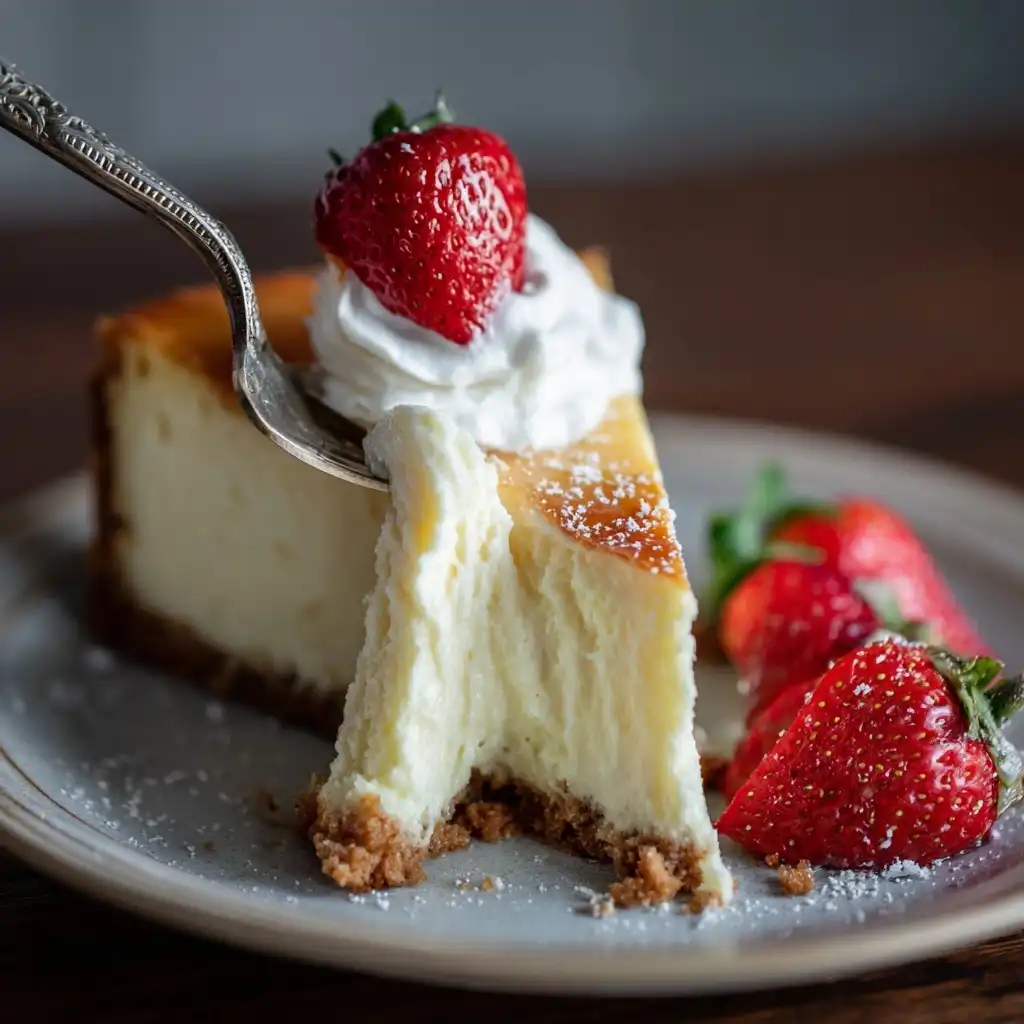
Vanilla Bean Cheesecake is the quintessential expression of elegance, simplicity, and indulgence in the world of desserts. Unlike its more flamboyant cousins—chocolate lava cake or salted caramel tart—this dessert relies on purity of flavor, luxurious texture, and meticulous technique to captivate the palate. At its heart lies the unmistakable, floral-sweet, almost buttery essence of real vanilla beans—those tiny black specks suspended in creamy ivory filling are not mere decoration; they’re aromatic proof of authenticity. This cheesecake celebrates restraint: no overpowering spices, no flashy toppings, just a harmonious interplay between a buttery graham cracker crust, a velvety-smooth, luxuriously dense yet delicately airy filling, and an elegant finish that lingers with warm, custard-like notes. Whether served at a formal dinner party, a quiet Sunday afternoon tea, or as a cherished holiday centerpiece, Vanilla Bean Cheesecake transcends occasion—it’s a timeless ritual of comfort, craftsmanship, and reverence for quality ingredients.
The History
The lineage of cheesecake stretches back over 2,000 years—to ancient Greece, where early versions were made with fresh cheese (often ricotta or goat cheese), honey, and flour, baked on hot stones and served to athletes at the first Olympic Games in 776 BCE as a source of energy and stamina. The Romans later adopted and adapted the recipe, spreading it across their empire and adding eggs and crushed cheese curds. By the Middle Ages, European monasteries preserved and refined cheesecake techniques, often using cottage cheese or quark. However, the modern American-style baked cheesecake—with its rich, cream cheese–based filling and crumb crust—emerged in the late 19th century, catalyzed by the invention of Philadelphia Cream Cheese in 1872 by William Lawrence in Chester, New York. The iconic “New York Cheesecake” was born in the early 1900s, notably popularized by Arnold Reuben and later perfected at places like Lindy’s and Junior’s. Vanilla, long prized since the Totonac people of Mexico first cultivated *Vanilla planifolia* over 1,000 years ago—and later monopolized by Spanish colonizers—became the natural, sophisticated complement to cream cheese’s tang. As gourmet baking evolved in the mid-to-late 20th century, bakers began rejecting artificial vanilla extract in favor of whole Madagascar or Tahitian vanilla beans, elevating the dessert from nostalgic staple to artisanal benchmark. Today, Vanilla Bean Cheesecake stands as both homage and evolution: a bridge between ancient tradition and contemporary culinary precision.
Ingredients Breakdown
Every element of this Vanilla Bean Cheesecake has been selected not only for function but for layered sensory impact:
- Graham Cracker Crust: Whole-grain graham crackers provide subtle molasses depth and structural integrity; finely ground, they create a tender-yet-sturdy base. Granulated sugar adds caramelizable sweetness and aids in binding, while unsalted butter—melted to just the right temperature—acts as the unifying fat, lending richness and enabling crisp, golden edges when pre-baked.
- Cream Cheese: Full-fat, brick-style cream cheese (preferably Philadelphia or another high-quality, domestically produced brand) is non-negotiable. Its pH, fat content (~33%), and moisture level directly affect emulsification, smoothness, and resistance to cracking. It must be truly softened—cool room temperature (65–68°F)—to ensure homogenous blending without over-beating.
- Sour Cream & Heavy Cream: Sour cream contributes gentle acidity to balance sweetness and imparts a slight tang and silkiness; heavy cream (36–40% milkfat) enhances mouthfeel, improves sliceability, and helps prevent graininess by increasing fat dispersion and moisture retention during baking and cooling.
- Granulated Sugar: Not merely sweetener—sugar interferes with protein coagulation, delaying curdling and yielding a more tender crumb. Its fine crystals also aid in aerating the batter when whipped with cream cheese and eggs.
- Eggs: Large, cage-free, room-temperature eggs serve dual roles: yolks add fat, emulsifiers (lecithin), and richness; whites provide structure via coagulation. Adding them one at a time ensures full incorporation and prevents over-aeration, which can cause puffing and collapse.
- Pure Vanilla Beans: Two plump, moist, Grade A Madagascar Bourbon vanilla beans (at minimum 3.5% vanillin content) are essential. Their seeds contain over 250 aromatic compounds—including vanillin, piperonal, heliotropin, and furfural—that deliver nuanced floral, woody, spicy, and caramelized notes impossible to replicate synthetically. The pod itself is infused into warm cream to extract maximum flavor before scraping.
- Sea Salt: Fine, flaky sea salt—not iodized table salt—enhances every other flavor compound, suppresses bitterness, and deepens umami perception. It’s the quiet conductor of the entire ensemble.
- Lemon Zest (optional but recommended): A microplane-grated teaspoon of untreated, organic lemon zest introduces bright, citrusy top notes that lift the vanilla’s warmth without introducing liquid acidity that could destabilize the batter.
Step-by-Step Recipe
- Prepare the Vanilla Infusion: Split two vanilla beans lengthwise with a paring knife; scrape out all seeds into a small saucepan. Add pods + ¼ cup heavy cream. Warm over low heat (do not boil) for 8 minutes, stirring gently. Remove from heat, cover, and steep 20 minutes. Strain cream through a fine-mesh sieve into a heatproof bowl, pressing seeds/pods to extract all liquid. Discard pods or reserve for vanilla sugar. Let infused cream cool to room temperature (≈68°F).
- Make the Crust: Pulse 1 ½ cups graham cracker crumbs (about 10 full sheets), ¼ cup granulated sugar, and ¼ tsp fine sea salt in a food processor until uniform. Add 6 tbsp melted unsalted butter and pulse until mixture resembles wet sand. Press firmly into bottom and 1 inch up sides of a 9-inch springform pan lined with parchment (bottom only). Chill 30 minutes, then bake at 350°F for 10 minutes. Cool completely on a wire rack.
- Preheat & Prep Pan: Position oven rack in center position. Place a large roasting pan on rack. Preheat oven to 325°F. Wrap exterior of springform pan *tightly* with two overlapping layers of heavy-duty aluminum foil (to prevent water seepage). Place pan inside roasting pan.
- Beat Cream Cheese Base: In a stand mixer fitted with paddle attachment, beat 24 oz (3 standard blocks) softened cream cheese on medium-low for 2 minutes until completely smooth and glossy—scrape bowl thoroughly. Add 1 cup granulated sugar and 1 tsp fine sea salt; beat 2 minutes until fluffy and lump-free. Scrape bowl.
- Incorporate Dairy: Add cooled vanilla-infused cream, 1 cup full-fat sour cream, and ¼ cup heavy cream. Beat on low 30 seconds, then medium 1 minute until homogeneous. Scrape bowl.
- Add Eggs Gradually: With mixer on low, add 4 large room-temperature eggs one at a time, beating just until yolk disappears (≈15 seconds each). Scrape bowl after each addition. *Do not overmix.* Optional: Add 1 tsp lemon zest and beat 10 seconds.
- Strain & Pour: Strain batter through a fine-mesh sieve into a large pouring pitcher to eliminate any undissolved sugar or lumps. Gently pour into cooled crust. Tap pitcher on counter twice to release air bubbles, then carefully pour batter into pan. Smooth top with offset spatula.
- Water Bath Baking: Carefully pour hot (not boiling) water into roasting pan until it reaches halfway up springform pan’s sides (≈1.5 inches). Transfer roasting pan to oven. Bake 1 hour 20 minutes—edges should be set with a 3-inch wobble in center. Rotate pan 180° at 45 minutes.
- Residual Cooking & Cooling: Turn off oven. Crack door open 1 inch with wooden spoon. Leave cheesecake in oven for 1 hour. Remove from water bath. Run thin knife around edge to loosen. Cool on wire rack 2 hours at room temperature.
- Chill & Rest: Refrigerate uncovered for *minimum 16 hours* (ideally 24–48 hours). This slow, cold rest allows proteins to fully relax, starches to retrograde, and flavors to meld—resulting in clean cuts and profound depth.
- Unmold & Serve: Run warm knife around perimeter again. Release springform collar. Slide offset spatula under crust to lift onto serving plate. Garnish minimally: edible flowers, a dusting of freeze-dried raspberry powder, or a single vanilla bean pod placed diagonally.
Tips
- Temperature Is Non-Negotiable: All dairy and eggs must be at true room temperature (65–68°F)—cold ingredients cause lumps, overmixing, and uneven baking. Place cream cheese cubes on counter 2.5 hours ahead; eggs in warm water for 10 minutes before use.
- Scraping Is Sacred: Scrape the bowl and paddle *after every step*—especially after sugar, dairy, and egg additions. Unincorporated pockets of sugar or unmixed cream cheese will manifest as gritty spots or cracks.
- Low & Slow Mixing: Use the lowest effective speed. Overbeating incorporates excess air → rise → collapse → cracks. If batter looks slightly “curdled” after adding eggs, don’t panic—it will emulsify during baking.
- Foil-Wrapping Mastery: Use *heavy-duty* foil. Fold corners tightly like wrapping a gift. Test for leaks by placing wrapped pan in sink filled with 2 inches of water for 2 minutes before baking.
- Water Bath Wisdom: Use hot (160–180°F) tap water—not boiling—to avoid thermal shock. If water level drops below halfway during baking, carefully add more hot water with a kettle.
- No Rushing the Chill: Cutting into a warm or insufficiently chilled cheesecake guarantees smearing and loss of structure. The 24-hour chill develops flavor complexity and allows the albumin proteins in eggs to fully stabilize.
- Knife Technique: For clean slices, dip a long, thin knife in hot water, wipe dry, cut, repeat. Wipe *between every slice*—not just at the start.
- Room-Temp Serving: Remove from fridge 25 minutes before serving. Cold cheesecake dulls aroma and stiffens texture—room temperature unlocks floral top notes and creamy melt-in-the-mouth sensation.
Variations and Customizations
- Crust Alternatives: Swap graham crackers for speculoos cookies (spiced, caramelized depth), digestive biscuits (earthy, wheaty), toasted almond shortbread (nutty crunch), or even a brown butter–maple pecan crust for autumnal warmth.
- Vanilla Origin Exploration: Try single-origin beans—Tahitian (floral, cherry-anise), Ugandan (rum-like, raisiny), or Indonesian (smoky, earthy)—each transforming the profile. Blend two origins for complexity (e.g., Madagascar + Tahiti).
- Infused Cream Twists: Steep vanilla pods in warm bourbon, Earl Grey tea, or lavender-infused cream instead of plain heavy cream for subtle background intrigue.
- Texture Enhancements: Fold in ½ cup finely chopped white chocolate (tempered) or toasted macadamia nuts *after* straining batter for delicate contrast. Or swirl in 3 tbsp salted caramel sauce before baking.
- Layered Elegance: After initial bake, cool 30 minutes, then pour a thin layer of passionfruit coulis or blackberry reduction over surface. Return to fridge to set.
- Dairy-Free Adaptation: Substitute cashew cream (soaked, blended, strained) + coconut cream + vegan cream cheese (Tofutti or Kite Hill); use agar-agar (1 tsp dissolved in warm plant milk) instead of eggs. Requires precise temp control.
- Miniature Format: Bake in lined muffin tins (with foil collars) for individual portions—reduce bake time to 22–25 minutes. Perfect for tasting menus or portion control.
- Gluten-Free Integrity: Use certified GF graham-style crackers or almond flour crust (1 cup almond flour + ¼ cup coconut sugar + 5 tbsp melted butter + pinch salt).
Health Considerations and Nutritional Value
While Vanilla Bean Cheesecake is inherently a celebratory dessert—not a health food—it can be understood through a balanced, evidence-informed lens. A standard slice (1/12 of 9-inch cake, ≈185g) contains approximately 420–460 calories, 30–34g total fat (18–20g saturated), 32–36g carbohydrates (26–28g sugars), and 6–7g protein. The primary nutritional considerations stem from its composition: high saturated fat (from full-fat dairy), concentrated added sugars, and moderate sodium. However, context matters deeply. When consumed mindfully—as part of a varied, whole-foods-based diet—its ingredients offer notable benefits: cream cheese provides calcium (≈12% DV per slice), vitamin A (retinol), and conjugated linoleic acid (CLA), a fatty acid studied for potential anti-inflammatory and metabolic support properties. Sour cream contributes live probiotics (if unpasteurized post-culturing) and bioavailable B12. Real vanilla beans contain antioxidant polyphenols, including vanillic acid and vanillin, shown in vitro to scavenge free radicals and modulate oxidative stress pathways. From a psychological wellness perspective, the mindful enjoyment of a truly exceptional, slowly savored slice supports intuitive eating practices, reduces restrictive food guilt, and activates dopamine-driven pleasure responses linked to emotional regulation. For those managing specific conditions: diabetics may benefit from pairing with fiber-rich berries to blunt glycemic response; those watching sodium can reduce crust salt by half without compromising flavor; individuals with lactose sensitivity often tolerate baked, fermented dairy (like sour cream) better than fluid milk due to reduced lactose content. As registered dietitians emphasize, nutrient density isn’t solely about vitamins—it’s also about joy, cultural connection, and the neurochemical rewards of savoring something crafted with care.
Ingredients
- For the Crust: 1 ½ cups (150g) graham cracker crumbs (about 10 full sheets, finely ground), ¼ cup (50g) granulated sugar, ¼ teaspoon fine sea salt, 6 tablespoons (85g) unsalted butter, melted and cooled slightly
- For the Filling: 24 ounces (680g) full-fat brick-style cream cheese, at room temperature (65–68°F), 1 cup (200g) granulated sugar, 1 teaspoon fine sea salt, ¼ cup (60ml) heavy cream (for infusion), 2 plump Madagascar Bourbon vanilla beans, 1 cup (240g) full-fat sour cream, room temperature, ¼ cup (60ml) additional heavy cream, room temperature, 4 large eggs, room temperature, 1 teaspoon finely grated untreated lemon zest (optional but highly recommended)
Directions
- Split vanilla beans lengthwise; scrape seeds into a small saucepan. Add pods + ¼ cup heavy cream. Warm over low heat 8 minutes (do not boil). Cover; steep 20 minutes. Strain into bowl; discard pods. Cool to room temperature.
- Preheat oven to 350°F. Pulse graham crumbs, sugar, and salt; add melted butter; pulse until sandy. Press into 9-inch springform pan. Chill 30 min. Bake 10 min. Cool completely.
- Reduce oven to 325°F. Place large roasting pan on center rack. Wrap springform pan *tightly* with 2 layers heavy-duty foil.
- In stand mixer, beat cream cheese on medium-low 2 min until smooth. Add sugar and salt; beat 2 min until fluffy. Scrape bowl.
- Add cooled vanilla cream, sour cream, and extra heavy cream. Beat low 30 sec, then medium 1 min. Scrape bowl.
- Add eggs one at a time on low, beating just until incorporated (≈15 sec each). Scrape bowl after each. Optional: add lemon zest; beat 10 sec.
- Strain batter through fine-mesh sieve into pitcher. Pour into crust. Tap pitcher; smooth top.
- Place springform pan in roasting pan. Pour hot water into roasting pan to 1.5-inch depth. Bake 1 hr 20 min (center should wobble 3 inches).
- Turn off oven. Crack door 1 inch with spoon. Leave 1 hr. Remove from water bath. Loosen edges with knife. Cool on rack 2 hrs.
- Refrigerate uncovered ≥16 hrs (24–48 hrs ideal). Before serving, run warm knife around edge. Release collar. Slice with hot, wiped knife.
FAQ
- Why do I need a water bath?
- A water bath (bain-marie) creates a gentle, humid, temperature-buffered environment. It prevents rapid surface drying and thermal shock, allowing the cheesecake to bake evenly from edge to center—minimizing cracks, curdling, and doming. Without it, steam escaping too quickly causes structural collapse.
- Can I use vanilla extract instead of beans?
- You *can*, but you’ll sacrifice profound aromatic complexity. Pure extract contains only vanillin and alcohol—missing 250+ synergistic compounds in whole beans. If substituting, use 2 tbsp high-quality pure extract *and* still infuse 1 split bean in the cream for seed flecks and depth—but beans remain superior.
- My cheesecake cracked! What went wrong?
- Most common causes: (1) Overmixing after eggs → excess air → rise/collapse; (2) Rapid cooling → thermal contraction; (3) Underbaking → fragile center sags; (4) Skipping water bath; (5) Forgetting to run knife around edge before chilling → crust pulls away, dragging top. Most cracks are cosmetic—cover with berry compote or crème fraîche.
- Can I freeze it?
- Yes—unfrosted, fully chilled cheesecake freezes beautifully for up to 3 months. Wrap tightly in plastic, then foil. Thaw overnight in fridge, then sit at room temp 30 min before serving. Texture remains near-identical.
- What if my batter looks lumpy after adding eggs?
- Don’t panic. Lumps often resolve during baking. Ensure cream cheese was *truly* softened and you scraped thoroughly. If persistent, strain—this step exists for exactly this reason.
- Can I make it ahead?
- Absolutely—and you should. Flavor peaks at 48 hours. Make crust day before; bake cheesecake 2 days ahead; chill uninterrupted. It holds perfectly for 5 days refrigerated.
- Why does the recipe specify “brick-style” cream cheese?
- Brick-style (e.g., Philadelphia) has standardized moisture and fat content critical for stability. Whipped or spreadable versions contain stabilizers and excess air, leading to weeping, graininess, and poor structure.
- How do I prevent soggy crust?
- Pre-bake thoroughly (10 min at 350°F), ensure crust is compacted firmly, and let cool *completely* before adding batter. The water bath’s humidity won’t penetrate a properly sealed, pre-baked crust.
Summary
Vanilla Bean Cheesecake is a masterclass in minimalist luxury—where patience, precision, and premium ingredients converge to transform humble dairy and spice into an ethereal, deeply aromatic, and texturally transcendent experience. It honors centuries of culinary evolution while demanding nothing less than reverence for the bean, the cream, and the quiet science of slow transformation.
More than dessert, it’s a meditation in balance: the tang of cultured dairy against the floral sweetness of cured orchid pods, the crisp surrender of spiced crumb beneath clouds of silken, slow-set custard—each bite a reminder that true indulgence resides not in excess, but in exquisite, unhurried intention.