Introduction
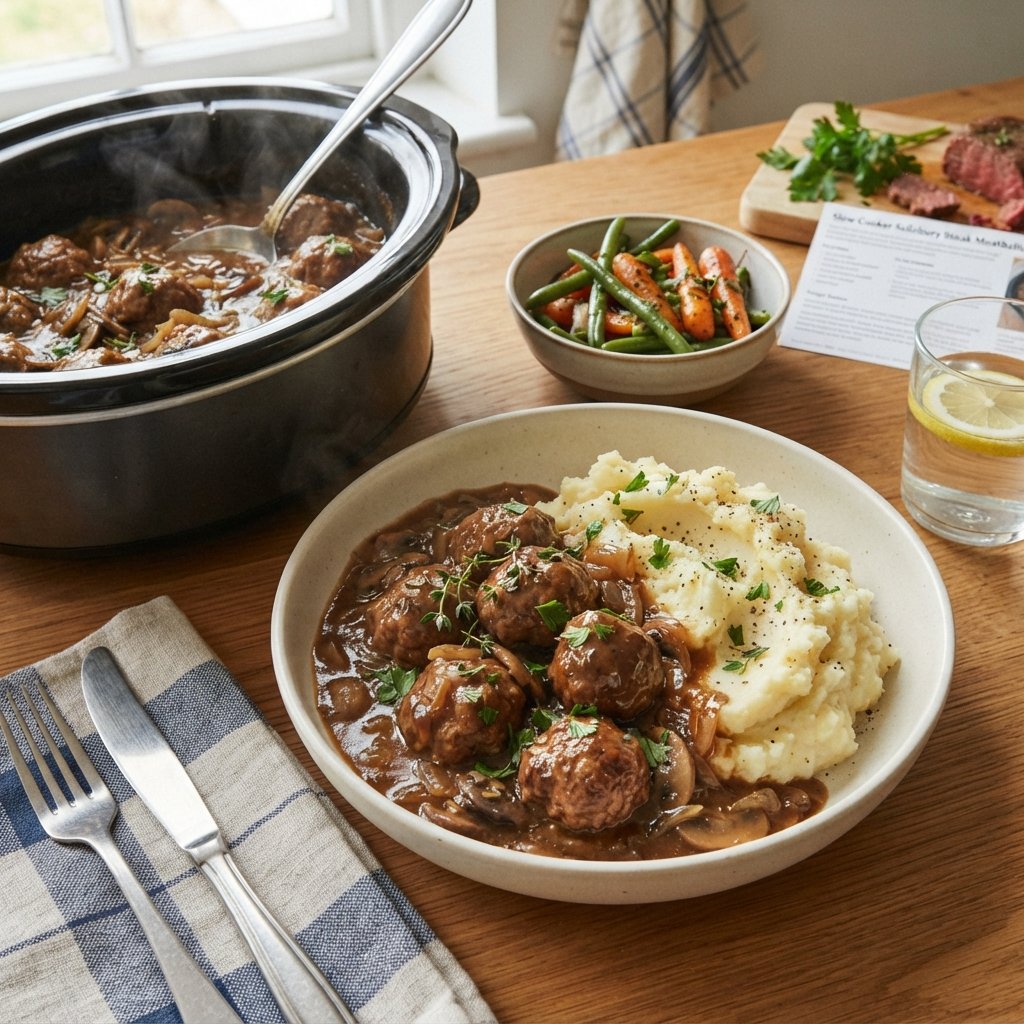
There is something profoundly comforting about coming home to the aroma of a slow-simmered dinner that has been cooking all day while you were away. The Tasty Slow Cooker Salisbury Steak Meatballs Recipe represents the pinnacle of modern comfort food, merging the classic, savory flavors of traditional Salisbury steak with the convenient, bite-sized format of hearty meatballs. This dish is not merely a meal; it is an experience of warmth and satisfaction, perfect for busy weeknights, family gatherings, or those chilly evenings when you need a culinary hug. By utilizing the slow cooker, we unlock a depth of flavor that is difficult to achieve through quick cooking methods, allowing the connective tissues in the meat to break down gently and the gravy to thicken into a rich, velvety coating that clings to every sphere of seasoned beef.
The beauty of this recipe lies in its versatility and ease. Unlike traditional Salisbury steak patties that require careful flipping and monitoring to prevent drying out, meatballs cooked in a slow cooker remain incredibly moist and tender throughout the extended cooking process. The gravy, infused with onions, mushrooms, and a blend of savory spices, permeates the meatballs, ensuring that every bite is bursting with umami richness. Whether you are a seasoned home cook looking to expand your repertoire of slow cooker meals or a beginner seeking a foolproof dinner solution, this recipe delivers consistent, restaurant-quality results with minimal active preparation time. It is a testament to the idea that great food does not require constant attention, but rather the right combination of quality ingredients and patience.
The History
To truly appreciate this dish, one must understand the origins of the Salisbury steak itself. The concept dates back to the 19th century and is attributed to Dr. James Henry Salisbury, an American physician and chemist who was a pioneer in the field of diet and health. Dr. Salisbury believed that many health issues were rooted in digestive problems and advocated for a diet high in lean beef to promote overall wellness. He recommended consuming minced beef patties three times a day, arguing that this form of protein was easier to digest than tougher cuts of meat. Originally, this was not considered a gourmet indulgence but rather a medicinal prescription for vitality and health.
Over the decades, the Salisbury steak evolved from a health food recommendation into a staple of American comfort cuisine, particularly gaining popularity during the World Wars when meat conservation was necessary, and again in the mid-20th century with the rise of frozen TV dinners. The transformation into meatballs is a modern adaptation that speaks to the contemporary desire for convenience and portion control. By shaping the seasoned beef into balls rather than patties, cooks ensure more surface area for the gravy to adhere to, and the slow cooker method modernizes the technique further. This evolution reflects our changing lifestyles, where time is precious, but the desire for hearty, historically rooted meals remains strong. This recipe honors Dr. Salisbury’s original vision of nutritious, beef-centric dining while adapting it for the modern slow cooker kitchen.
Ingredients Breakdown
Understanding the function of each component in this recipe is crucial for achieving the perfect texture and flavor profile. We do not simply throw ingredients together; each element plays a specific role in the chemistry of the dish.
The Meatball Base
Ground Beef: The foundation of the dish. We recommend using an 80/20 blend (80% lean, 20% fat). The fat content is essential for flavor and moisture; leaner blends can result in dry, crumbly meatballs after hours of slow cooking. The fat renders slowly, basting the meat from the inside out.
Breadcrumbs: These act as a binder and a filler. They absorb the juices released during cooking, preventing the meatballs from becoming too dense. Panko breadcrumbs offer a lighter texture, while traditional dried breadcrumbs provide a more compact hold.
Egg: The primary binding agent. The proteins in the egg coagulate during cooking, holding the meat and breadcrumbs together so the meatballs maintain their spherical shape without falling apart in the gravy.
Onion and Garlic: Finely minced or grated, these aromatics provide the foundational savory notes. Cooking them slowly in the gravy sweetens the onion and mellows the garlic, creating a complex background flavor that complements the beef.
The Gravy
Beef Broth: Choose a low-sodium version so you can control the salt levels. This provides the liquid base for the braising process and infuses the meatballs with beefy depth.
Worcestershire Sauce: This is the secret weapon for umami. It contains anchovies, vinegar, and tamarind, adding a tangy, savory complexity that defines the “Salisbury” flavor profile.
Ketchup or Tomato Paste: A small amount adds acidity and sweetness, balancing the richness of the beef and helping to give the gravy a rich, brownish-red hue.
Cornstarch: Used as a slurry at the end of cooking, this thickens the liquid into a proper gravy consistency that coats the back of a spoon.
Mushrooms: Optional but highly recommended. Sliced cremini or button mushrooms add an earthy texture and absorb the gravy, becoming little flavor bombs within the dish.
Step-by-Step Recipe
Preparing this dish is a methodical process that rewards attention to detail. Follow these steps to ensure your meatballs are tender and your gravy is luxurious.
Step 1: Preparation of Aromatics
Begin by finely dicing your onions and slicing your mushrooms. If you prefer a smoother gravy, you can grate the onion instead of dicing it. Sautéing these briefly in a skillet before adding them to the slow cooker can enhance their flavor, though it is not strictly necessary for a slow cooker recipe. This step releases their essential oils and begins the caramelization process.
Step 2: Mixing the Meat
In a large mixing bowl, combine the ground beef, breadcrumbs, egg, minced garlic, salt, pepper, and a portion of the Worcestershire sauce. Use your hands to mix gently; overworking the meat can make the meatballs tough. You want to distribute the ingredients evenly without compacting the protein strands too tightly.
Step 3: Forming the Meatballs
Using a cookie scoop or your hands, form the mixture into uniform balls, approximately 1.5 inches in diameter. Uniformity is key here; if the meatballs are different sizes, they will cook at different rates, leading to some being overcooked while others are underdone. Place them on a plate as you work.
Step 4: The Sear (Optional but Recommended)
For added flavor and texture, quickly sear the meatballs in a hot skillet with a little oil before placing them in the slow cooker. This Maillard reaction creates a browned crust that locks in juices and adds a roasted flavor dimension. However, for true ease, you can skip this and place them directly into the cooker.
Step 5: Assembling the Slow Cooker
Place the meatballs into the slow cooker insert. Pour the beef broth, remaining Worcestershire sauce, ketchup, and any sautéed aromatics over the top. Ensure the liquid nearly covers the meatballs but does not submerge them completely, as they will release their own juices.
Step 6: The Slow Cook
Cover and cook on LOW for 4 to 5 hours or on HIGH for 2 to 3 hours. Avoid lifting the lid frequently, as this releases heat and extends the cooking time. The meatballs are done when they reach an internal temperature of 165°F (74°C).
Step 7: Thickening the Gravy
Once the meat is cooked, mix cornstarch with cold water to create a slurry. Stir this into the slow cooker liquid and switch the setting to HIGH for the final 15 to 20 minutes. This will transform the thin broth into a rich, glossy gravy.
Tips
- Keep Ingredients Cold: When mixing the meatball ingredients, ensure your hands and the meat are cold. Warm hands can melt the fat in the beef before it cooks, leading to a greasy texture.
- Do Not Overmix: Mix the meat just until the ingredients are combined. Overmixing develops the proteins too much, resulting in a rubbery texture rather than a tender bite.
- Use a Liner: Slow cooker liners can make cleanup significantly easier, especially since gravy can bake onto the ceramic insert if left too long.
- Adjust Liquid Levels: Different slow cookers evaporate liquid at different rates. If your gravy looks too thin after cooking, use more cornstarch slurry. If it looks too thick, add a splash of broth.
- Rest Before Serving: Let the dish sit for 10 minutes after turning off the heat. This allows the gravy to settle and the meatballs to reabsorb some of the surface moisture.
- Quality of Beef: If possible, ask your butcher to grind chuck roast fresh for you. Pre-packaged ground beef can sometimes vary in quality and fat content.
- Acidity Balance: If the gravy tastes too heavy or rich, a tiny splash of apple cider vinegar can brighten the flavors and cut through the fat.
Variations and Customizations
This recipe is a canvas for your culinary creativity. Here are several ways to adapt it to different dietary needs or flavor preferences:
Dietary Swaps
Gluten-Free: Substitute regular breadcrumbs with gluten-free breadcrumbs or crushed gluten-free crackers. Ensure your Worcestershire sauce and beef broth are certified gluten-free, as some brands contain wheat.
Keto/Low-Carb: Replace breadcrumbs with almond flour or crushed pork rinds. Serve the meatballs over cauliflower mash or zucchini noodles instead of traditional mashed potatoes or egg noodles to keep the carbohydrate count low.
Dairy-Free: This recipe is naturally dairy-free, but if you add butter to finish the gravy, substitute with olive oil or a plant-based butter alternative.
Flavor Twists
Swedish Style: Add a dollop of sour cream to the gravy at the end of cooking to mimic a Swedish meatball flavor profile. Add a pinch of nutmeg and allspice to the meat mixture.
Spicy Kick: Incorporate red pepper flakes, a dash of cayenne pepper, or use a spicy brown mustard instead of regular mustard to add heat to the gravy.
Cheese Stuffed: For an indulgent variation, stuff a small cube of mozzarella or cheddar cheese into the center of each meatball before forming them. This creates a molten core when cooked.
Serving Suggestions
While traditionally served over egg noodles, this dish pairs beautifully with creamy mashed potatoes, buttered rice, or crusty bread for dipping. For a lighter option, serve over a bed of steamed green beans or broccoli to soak up the extra gravy.
Health Considerations and Nutritional Value
While this is a comfort food dish, there are ways to approach it mindfully. Ground beef is a rich source of protein, iron, zinc, and Vitamin B12, which are essential for energy and immune function. However, it can also be high in saturated fats and sodium depending on the ingredients used.
Caloric Content: A standard serving of 4-5 meatballs with gravy can range from 400 to 600 calories, depending on the fat content of the beef and the thickness of the gravy. Using leaner beef (90/10) can reduce this significantly, though you may sacrifice some tenderness.
Sodium Management: The majority of sodium comes from the broth, Worcestershire sauce, and added salt. To make this heart-healthy, use low-sodium broth and reduce the added salt in the meat mixture, relying more on herbs and spices like thyme, rosemary, and black pepper for flavor.
Vegetable Integration: To increase the nutritional density, consider finely chopping carrots, celery, or bell peppers and mixing them directly into the meatball mixture or the gravy. This adds fiber and vitamins without altering the core flavor profile significantly.
Portion Control: Because meatballs are bite-sized, it is easy to overconsume. Use a scoop to ensure uniform size and limit servings to a reasonable portion accompanied by a large side of vegetables or salad to balance the meal.
Ingredients
- For the Meatballs:
- 1.5 lbs ground beef (80/20 blend recommended)
- 1/2 cup dried breadcrumbs (or panko)
- 1 large egg, beaten
- 1/4 cup onion, finely minced or grated
- 2 cloves garlic, minced
- 1 teaspoon salt
- 1/2 teaspoon black pepper
- 1 tablespoon Worcestershire sauce
- For the Gravy:
- 2 cups beef broth (low sodium preferred)
- 1/2 cup ketchup or 2 tablespoons tomato paste
- 2 tablespoons Worcestershire sauce
- 1 tablespoon brown sugar (optional, for depth)
- 8 oz mushrooms, sliced (optional)
- 1 onion, sliced
- 3 tablespoons cornstarch
- 3 tablespoons cold water (for slurry)
- Fresh parsley, chopped (for garnish)
Directions
- In a large bowl, combine the ground beef, breadcrumbs, egg, minced onion, garlic, salt, pepper, and 1 tablespoon of Worcestershire sauce. Mix gently with hands until just combined.
- Form the mixture into 1.5-inch meatballs and place them into the slow cooker insert.
- In a separate bowl, whisk together the beef broth, ketchup, remaining Worcestershire sauce, and brown sugar. Pour this mixture over the meatballs.
- Add the sliced onions and mushrooms on top of the meatballs and around the sides.
- Cover and cook on LOW for 4-5 hours or on HIGH for 2-3 hours until meatballs are cooked through.
- In a small cup, mix the cornstarch and cold water until smooth. Stir this slurry into the slow cooker liquid.
- Cover and cook on HIGH for an additional 15-20 minutes until the gravy has thickened.
- Garnish with fresh parsley and serve hot over noodles, rice, or mashed potatoes.
FAQ
Can I freeze these meatballs?
Yes, you can freeze the cooked meatballs and gravy together in an airtight container for up to 3 months. Thaw in the refrigerator overnight before reheating gently on the stove or in the microwave.
Can I cook this on high instead of low?
Yes, cooking on HIGH will reduce the time to approximately 2 to 3 hours. However, LOW is recommended for the most tender texture and to prevent the meatballs from breaking apart.
My gravy is too thin, what should I do?
Create another cornstarch slurry (1 tablespoon cornstarch to 1 tablespoon water) and stir it in. Cook on HIGH for another 10 minutes. Alternatively, let the slow cooker cook uncovered for the last 30 minutes to allow evaporation.
Can I use turkey or chicken instead of beef?
Yes, ground turkey or chicken works well. However, since these meats are leaner, you may want to add a tablespoon of olive oil to the mixture to prevent dryness, and reduce the cooking time slightly.
Do I have to brown the meatballs first?
No, browning is optional. It adds flavor and texture, but skipping this step saves time and cleanup. The slow cooker will cook them thoroughly without browning.
How do I prevent the meatballs from falling apart?
Ensure you use enough binder (egg and breadcrumbs) and do not overmix the meat. Also, avoid stirring the meatballs vigorously during the cooking process; gently shake the slow cooker insert instead.
Can I make this gluten-free?
Absolutely. Use gluten-free breadcrumbs and ensure your Worcestershire sauce and beef broth are labeled gluten-free, as some contain wheat derivatives.
Summary
This Slow Cooker Salisbury Steak Meatballs recipe offers a effortless way to enjoy a classic comfort dish with rich gravy and tender beef.
Perfect for busy evenings, it combines historical flavor profiles with modern convenience for a satisfying family meal.