Introduction
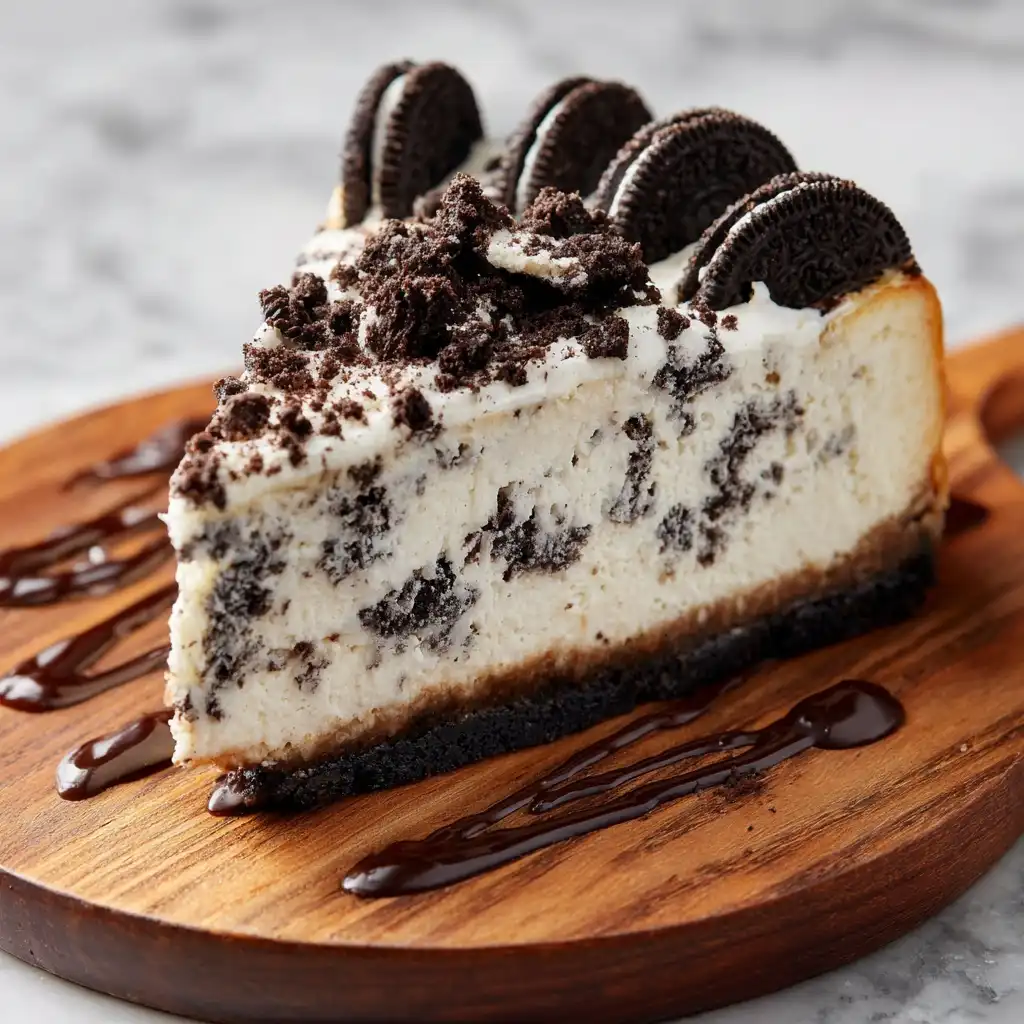
Oreo Cookies and Cream Cheesecake is a decadent, crowd-pleasing dessert that masterfully marries the nostalgic crunch of Oreo cookies with the luxuriously smooth, velvety richness of classic New York–style cheesecake. Unlike traditional baked cheesecakes, this version often features a no-bake or lightly baked preparation—making it accessible for home bakers of all skill levels—while delivering an unmistakable, bold cookies-and-cream flavor profile in every bite. Its signature contrast—crisp, chocolatey graham-Oreo crust; dense, creamy, vanilla-speckled filling studded with finely crushed Oreos; and a glossy, optional Oreo-draped topping—creates a multisensory experience that satisfies both texture and taste cravings. Whether served at birthday parties, holiday gatherings, summer barbecues, or as a comforting weeknight treat, this dessert consistently earns rave reviews for its balance of sweetness, creaminess, and playful nostalgia. It’s more than just a cheesecake—it’s a cultural confectionary icon reimagined with American pantry staples and boundless versatility.
The History
The origins of Oreo Cookies and Cream Cheesecake trace back to the mid-to-late 20th century, emerging alongside the meteoric rise of Nabisco’s Oreo cookie (first introduced in 1912) and the postwar American fascination with convenience-driven, ingredient-forward desserts. While classic cheesecake has ancient roots—dating to ancient Greece—the modern American version gained prominence in the 1940s–50s, particularly through New York delis and Jewish bakeries. The fusion with Oreos began organically: home cooks started crushing leftover cookies into crusts, swirling crumbs into fillings, or using them as garnishes. By the 1970s and ’80s, “cookies and cream” had officially entered the frozen dessert lexicon as the third most popular ice cream flavor (after vanilla and chocolate), thanks to Dreyer’s/Edy’s innovation in 1979—sparking broader culinary adoption. Food magazines like Bon Appétit and Family Circle featured early versions in the 1980s, often calling it “Oreo Cheesecake Delight” or “Black-and-White Dream Cheesecake.” The dessert gained viral momentum in the 2000s with the rise of food blogs and YouTube baking tutorials, evolving from simple no-bake refrigerator cakes to sophisticated hybrid versions—including baked, soufflé-style, mini mason jar iterations, and even vegan/gluten-free adaptations. Today, it stands as a benchmark dessert in recipe archives, bakery menus, and competitive baking shows—a testament to how a humble sandwich cookie can elevate an age-old classic into something wholly contemporary and universally beloved.
Ingredients Breakdown
Understanding each ingredient’s role ensures consistent, restaurant-quality results:
- Graham Cracker Crumbs (or Oreo Cookie Crumbs): Forms the foundational crust. Graham crackers provide subtle honeyed sweetness and structural integrity; substituting with crushed Oreos yields a richer, more intense chocolate base—but increases sweetness, so sugar adjustments may be needed.
- Finely Crushed Oreos (for crust & filling): Regular Original Oreos are essential for authentic flavor and color. Double-Stuf adds extra creaminess but higher fat content, which may affect set time. Avoid seasonal or flavored variants (e.g., Mint, Birthday Cake) unless intentionally customizing—these alter pH and emulsification.
- Cream Cheese (full-fat, brick-style, room temperature): The cornerstone of texture and tang. Never substitute with low-fat, spreadable, or whipped versions—they contain stabilizers and excess moisture that cause cracking, weeping, or graininess. Philadelphia is the gold standard for reliability and smooth melt.
- Heavy Whipping Cream (36–40% fat): Adds lush mouthfeel, aids aeration, and contributes to clean sliceability when chilled. Ultra-pasteurized versions work well; avoid half-and-half or milk—they lack sufficient fat for proper emulsion and stability.
- Sour Cream or Full-Fat Greek Yogurt: Introduces acidity for brightness and tenderness, prevents over-drying during baking (if applicable), and enhances shelf life. Sour cream yields a richer finish; Greek yogurt offers slight tang and added protein.
- Granulated Sugar: Not only sweetens but also tenderizes the cheesecake by interfering with protein coagulation. Confectioners’ sugar is avoided in the filling—it contains cornstarch, which can create grittiness or cloudiness.
- Pure Vanilla Extract (not imitation): Deepens aroma and rounds out the Oreo’s artificial notes. Madagascar Bourbon vanilla is ideal; for enhanced depth, add ½ tsp vanilla bean paste or scraped seeds from 1 pod.
- Large Eggs (room temperature): Act as binders and leavening agents. Cold eggs cause lumps and reduce emulsion stability. Always add one at a time, mixing just until incorporated to prevent excess air incorporation (which leads to cracking).
- Unsalted Butter (melted, for crust): Binds crust crumbs and adds richness and sheen. Salted butter may oversalt the crust—especially when combined with salty-sweet Oreos.
- Pinch of Fine Sea Salt: Critical for balancing sweetness and amplifying all other flavors—even in small amounts, it heightens the cocoa and vanilla notes without tasting salty.
- Optional Additions: A tablespoon of cornstarch or flour (for extra stability in baked versions); a splash of Oreo cookie syrup or crème de cacao (for adult variations); white chocolate ganache drizzle (to offset intensity); edible gold dust or rainbow sprinkles (for celebratory flair).
Step-by-Step Recipe
- Prepare the Crust: In a food processor, pulse 24 Original Oreos (about 2 cups crushed, filling included) until fine crumbs form—no large chunks. Alternatively, seal cookies in a heavy-duty zip-top bag and crush with a rolling pin. Transfer to a medium bowl. Add 6 tbsp unsalted butter, melted and slightly cooled, and 2 tbsp granulated sugar (optional, if reducing overall sweetness). Mix with a fork until evenly moistened and clumping together when pinched. Press firmly and evenly into the bottom and 1½ inches up the sides of a 9-inch springform pan using the flat bottom of a measuring cup or glass. Chill for at least 30 minutes—or freeze for 15 minutes—to fully set before filling.
- Preheat & Prep (for baked version): If making the baked variation, preheat oven to 325°F (163°C). Wrap the *outside* of the springform pan tightly with two overlapping layers of heavy-duty aluminum foil to prevent water seepage. Place pan inside a larger roasting dish.
- Beat Cream Cheese Base: In a large stand mixer fitted with paddle attachment (or hand mixer), beat 24 oz (three 8-oz bricks) full-fat cream cheese on medium speed for 2–3 minutes until completely smooth, creamy, and free of lumps—scraping down bowl and paddle frequently. Add 1 cup granulated sugar and beat 2 more minutes until lightened and fluffy. Scrape bowl thoroughly.
- Incorporate Wet Ingredients: Add 1 cup full-fat sour cream, ½ cup heavy whipping cream, 2 tsp pure vanilla extract, and ½ tsp fine sea salt. Beat on low speed for 30 seconds, then increase to medium for 1 minute until homogenous and silky. Scrape bowl again.
- Add Eggs Gently: With mixer on low, add 4 large room-temperature eggs one at a time, beating just until yolk disappears (about 15–20 seconds per egg). Overmixing introduces air bubbles that expand and collapse during baking, causing cracks. Scrape bowl after each addition.
- Fold in Oreos: Remove bowl from mixer. Using a silicone spatula, gently fold in 1 cup finely crushed Oreos (reserve ¼ cup for topping)—just until streaks disappear. Do not overfold; aim for visible specks and gentle marbling.
- Transfer & Smooth: Pour batter into chilled crust. Tap pan sharply 3–4 times on counter to release air bubbles. Use an offset spatula to smooth top surface evenly. For baked version: carefully pour hot water into roasting dish until it reaches halfway up springform pan sides (a water bath). Carefully slide into preheated oven.
- Bake or Chill:
- Baked Version: Bake at 325°F for 65–75 minutes—until edges are set and center jiggles *slightly* like Jell-O (not liquid). Turn off oven, crack door open 2 inches with a wooden spoon, and let cool inside for 1 hour. Remove from water bath, run thin knife around edge, and cool completely at room temperature (≈1 hour), then refrigerate uncovered for minimum 12 hours—ideally 24–48 hours.
- No-Bake Version: Skip steps 2 & 7b. After folding in Oreos, pour into crust and smooth top. Refrigerate uncovered for at least 8 hours—or preferably overnight (12–16 hrs)—to ensure firm, sliceable texture.
- Chill & Set: Regardless of method, refrigerate for minimum 12 hours before serving. This allows proteins to fully coagulate, fats to solidify, and flavors to harmonize—critical for clean cuts and balanced sweetness.
- Decorate & Serve: Run warm knife under hot water, wipe dry, and slice cleanly. Garnish with reserved Oreo halves, crumbled cookies, whipped cream rosettes, chocolate curls, or a glossy chocolate-Oreo glaze (made with melted white chocolate, heavy cream, and crushed Oreos).
Tips
- Room Temperature Is Non-Negotiable: Cream cheese, sour cream, eggs, and heavy cream must all be truly room temperature (65–70°F). Cold ingredients cause lumps, poor emulsion, and inconsistent texture—even 10 minutes in a warm water bath helps.
- Crush Oreos Strategically: Pulse in short bursts—over-processing creates dusty, greasy crumbs that won’t bind well. For swirl effect, reserve some larger shards (¼-inch pieces) and fold in last.
- Prevent Cracking (Baked Version): Use a water bath, avoid opening oven door during first 60 minutes, cool gradually in oven, and never rush chilling. If cracks appear, hide them with toppings—no one will know!
- Guarantee Clean Slices: Use a long, thin, non-serrated knife dipped in hot water and wiped dry before *every* cut. Wipe and reheat between slices for flawless presentation.
- Crust Adhesion Hack: Lightly spray pan bottom with non-stick cooking spray *before* pressing crust—prevents sticking during release without altering flavor.
- Flavor Depth Boost: Toast ¼ cup Oreo crumbs in a dry skillet over medium-low heat for 2–3 minutes until fragrant—cool before folding in for deeper caramelized notes.
- Freeze for Future Use: Fully chilled, uncut cheesecake freezes beautifully for up to 3 months. Wrap tightly in plastic + foil; thaw overnight in fridge—not at room temp—to preserve texture.
- Fix Common Issues: Grainy filling? Likely cold cream cheese or overbeaten eggs—next time, soften longer and mix minimally. Filling too soft? Chill longer or add 1 tbsp cornstarch to batter next round. Crust too hard? Reduce butter by 1 tsp or add 1 tbsp honey for pliability.
Variations and Customizations
This versatile canvas invites endless creativity—here are 12 tested, chef-approved riffs:
- Mini Mason Jar Cheesecakes: Layer crushed Oreo crust, no-bake filling, and whole mini Oreos in 8-oz jars. Chill 6 hours. Perfect for parties or gifts.
- Double-Chocolate Oreo Cheesecake: Add ¼ cup unsweetened cocoa powder to crust + 2 tbsp melted dark chocolate to batter. Top with chocolate ganache and gold-dusted Oreos.
- Vegan Version: Use dairy-free cream cheese (Kite Hill or Miyoko’s), coconut cream instead of heavy cream, flax eggs (1 tbsp ground flax + 2.5 tbsp water per egg), and vegan Oreos (certified in US/Canada). Set with agar-agar or soaked cashews.
- Gluten-Free: Substitute GF graham crackers or GF Oreos (like Schär or Glutino). Verify all labels—cross-contamination matters for sensitive individuals.
- Boozy Adult Twist: Fold in 2 tbsp crème de cacao or Oreo liqueur (or 1 tbsp bourbon + 1 tsp espresso powder) with wet ingredients. Garnish with chocolate-covered coffee beans.
- Strawberry Swirl: Puree ½ cup fresh strawberries + 1 tbsp sugar; layer over filling before baking/chilling, then marble gently with a toothpick.
- Espresso Oreo: Dissolve 1½ tsp instant espresso powder in 1 tsp hot water; add with vanilla. Pair with dark chocolate shavings.
- Peppermint Crunch (Holiday Edition): Replace ¼ cup Oreo crumbs with crushed candy canes; top with peppermint whipped cream and white chocolate curls.
- Matcha-Oreo Fusion: Whisk 1 tbsp ceremonial-grade matcha into sour cream/cream mixture. Earthy bitterness perfectly balances Oreo sweetness.
- Blueberry-Basil Compote Topping: Simmer 1 cup blueberries, ¼ cup sugar, 1 tbsp lemon juice, and 6 fresh basil leaves until thickened. Cool completely before drizzling.
- Protein-Packed: Blend 2 scoops vanilla whey or plant-based protein powder into dry ingredients; reduce sugar by 2 tbsp. Add 2 tbsp almond butter to crust for richness.
- Deconstructed Parfait: Alternate layers of Oreo crumble, no-bake cheesecake mousse (whipped with extra cream), and fresh raspberries in tall glasses.
Health Considerations and Nutritional Value
While undeniably indulgent, mindful preparation can enhance nutritional balance without sacrificing satisfaction. A standard slice (1/12 of a 9-inch cheesecake, approx. 210g) contains roughly:
- Calories: 480–540 kcal (varies by crust type, cream cheese brand, and added toppings)
- Total Fat: 32–38g (18–22g saturated; primarily from cream cheese, butter, and heavy cream)
- Carbohydrates: 42–48g (34–38g sugars—largely from Oreos, sugar, and cookie filling)
- Protein: 7–9g (from eggs, cream cheese, and sour cream)
- Sodium: 320–410mg (Oreos contribute ~180mg per 3 cookies; butter and cream cheese add remainder)
- Calcium: ~12% DV (from dairy components)
- Fiber: 1–2g (minimal unless GF graham crust or added psyllium husk is used)
Smart Modifications:
- Reduce Added Sugar: Cut granulated sugar by ¼ cup and rely on Oreo’s inherent sweetness—especially effective with Double-Stuf or Mega Stuf varieties.
- Boost Protein & Satiety: Add 2 tbsp powdered collagen peptides (flavorless, dissolves easily) to batter—adds 10g protein per slice with zero impact on texture.
- Improve Fat Profile: Substitute 2 tbsp butter in crust with avocado oil or melted coconut oil (refined for neutral taste); replace 2 tbsp heavy cream with silken tofu purée for creaminess minus saturated fat.
- Dietary Accommodations: Gluten-free and vegan versions (as noted above) significantly broaden accessibility—just verify certifications and allergen statements.
- Portion Control Strategy: Serve in smaller 3-inch mini cheesecakes (≈280 kcal each) or use a 10-inch pan for thinner slices—extends yield while maintaining visual appeal.
- Pairing Wisdom: Serve with fresh berries, a light citrus salad, or herbal tea (peppermint or ginger) to aid digestion and balance richness.
Note: Individuals with lactose intolerance may tolerate small servings due to fermentation in sour cream/cream cheese—but lactase enzyme supplements or dairy-free alternatives are safer options. Those managing diabetes should consult a dietitian before consuming; consider using monk fruit–erythritol blends (like Lakanto) and monitoring carb counts closely.
Ingredients
Makes one 9-inch cheesecake (12–14 servings)
- 24 Original Oreo cookies (about 2 cups crushed, filling included), plus ¼ cup extra for garnish
- 6 tablespoons unsalted butter, melted and slightly cooled
- 2 tablespoons granulated sugar (optional, for crust)
- 24 ounces full-fat brick-style cream cheese (three 8-oz packages), room temperature
- 1 cup granulated sugar
- 1 cup full-fat sour cream, room temperature
- ½ cup heavy whipping cream (36–40% fat), room temperature
- 2 teaspoons pure vanilla extract
- ½ teaspoon fine sea salt
- 4 large eggs, room temperature
Directions
- Position rack in center of oven and preheat to 325°F (163°C) if baking. Wrap outside of 9-inch springform pan with two layers heavy-duty foil.
- In food processor, pulse 24 Oreos until fine crumbs form (~15 seconds). Transfer to bowl; stir in melted butter and optional sugar until uniform. Press firmly into bottom and 1½ inches up sides of pan. Chill 30 minutes.
- In stand mixer with paddle, beat cream cheese on medium 2–3 min until smooth. Add sugar; beat 2 min more until fluffy. Scrape bowl.
- Add sour cream, heavy cream, vanilla, and salt; beat on low 30 sec, then medium 1 min until blended. Scrape bowl.
- Add eggs one at a time on low speed, beating just until incorporated (15–20 sec each). Scrape bowl after each.
- Remove bowl; fold in 1 cup crushed Oreos with spatula until just swirled. Pour into crust. Tap pan to release air. Smooth top.
- For baked: Place pan in roasting dish; pour hot water to halfway up sides. Bake 65–75 min until edges set, center slightly jiggly. Turn off oven; crack door; cool 1 hr inside. Remove from water bath. Cool completely (1 hr), then refrigerate uncovered ≥12 hrs.
- For no-bake: Skip water bath. Refrigerate uncovered ≥12 hrs (preferably 16–24 hrs).
- Run warm knife around edge before releasing springform. Slice with hot, dry knife. Garnish with reserved Oreos and serve chilled.
FAQ
- Can I make this ahead?
- Absolutely—this cheesecake improves with time! It keeps flawlessly refrigerated for up to 5 days, and freezes well for 3 months. In fact, 24–48 hours of chilling yields superior texture and flavor melding.
- Why did my cheesecake crack?
- Most common causes: rapid temperature shifts (opening oven too soon, cooling too fast), overmixing eggs, or skipping the water bath (for baked versions). Fortunately, cracks don’t affect taste—and are easily concealed with toppings, glazes, or a generous dusting of Oreo crumbs.
- Can I use Cool Whip instead of heavy cream?
- No. Cool Whip contains hydrogenated oils, corn syrup, and stabilizers that destabilize the emulsion, resulting in weeping, graininess, or failure to set. Always use real heavy whipping cream for structure and richness.
- Is the Oreo filling included when crushing?
- Yes—always include the creamy filling! It contributes essential fat, sweetness, and iconic flavor. Removing it yields a drier, less cohesive crust and duller filling.
- How do I store leftovers?
- Cover tightly with plastic wrap or transfer to an airtight container. Refrigerate up to 5 days. For longer storage, wrap individual slices in plastic + foil and freeze.
- Can I make this in a regular cake pan?
- Not recommended—springform pans allow effortless release and clean slicing. If necessary, line a 9-inch round pan with parchment (bottom + 2-inch overhang), grease sides well, and chill thoroughly before unmolding.
- What if I don’t have a food processor?
- Use a heavy-duty zip-top bag and rolling pin—place cookies inside, expel air, seal, and crush firmly on counter. Or pulse in a high-powered blender in small batches (avoid overheating).
- Can I omit the sour cream?
- You can substitute with equal parts full-fat Greek yogurt (same tang and thickness), but avoid plain low-fat yogurt—it’s too acidic and watery. Never omit entirely—it’s vital for texture and stability.
- Why does my crust stick to the pan?
- Ensure pan is lightly greased before pressing crust. Also, always chill crust thoroughly before adding filling—and let finished cheesecake cool completely before refrigerating. Run a thin knife around the edge before releasing the springform.
- Can I use reduced-fat cream cheese?
- Strongly discouraged. Neufchâtel or low-fat versions contain added gums, starches, and water that lead to separation, graininess, and poor setting. Full-fat is non-negotiable for authenticity and texture.
Summary
Oreo Cookies and Cream Cheesecake is a rich, nostalgic, and technically forgiving dessert that transforms America’s favorite sandwich cookie into a showstopping centerpiece—boasting a crisp chocolate crust, luxuriously creamy vanilla filling studded with crunchy Oreo bits, and endless customization potential.
Whether baked to golden perfection or chilled to no-bake elegance, its irresistible balance of sweet, tangy, creamy, and crunchy makes it a timeless crowd-pleaser—equally at home in home kitchens, professional bakeries, and holiday tables across generations.