Introduction
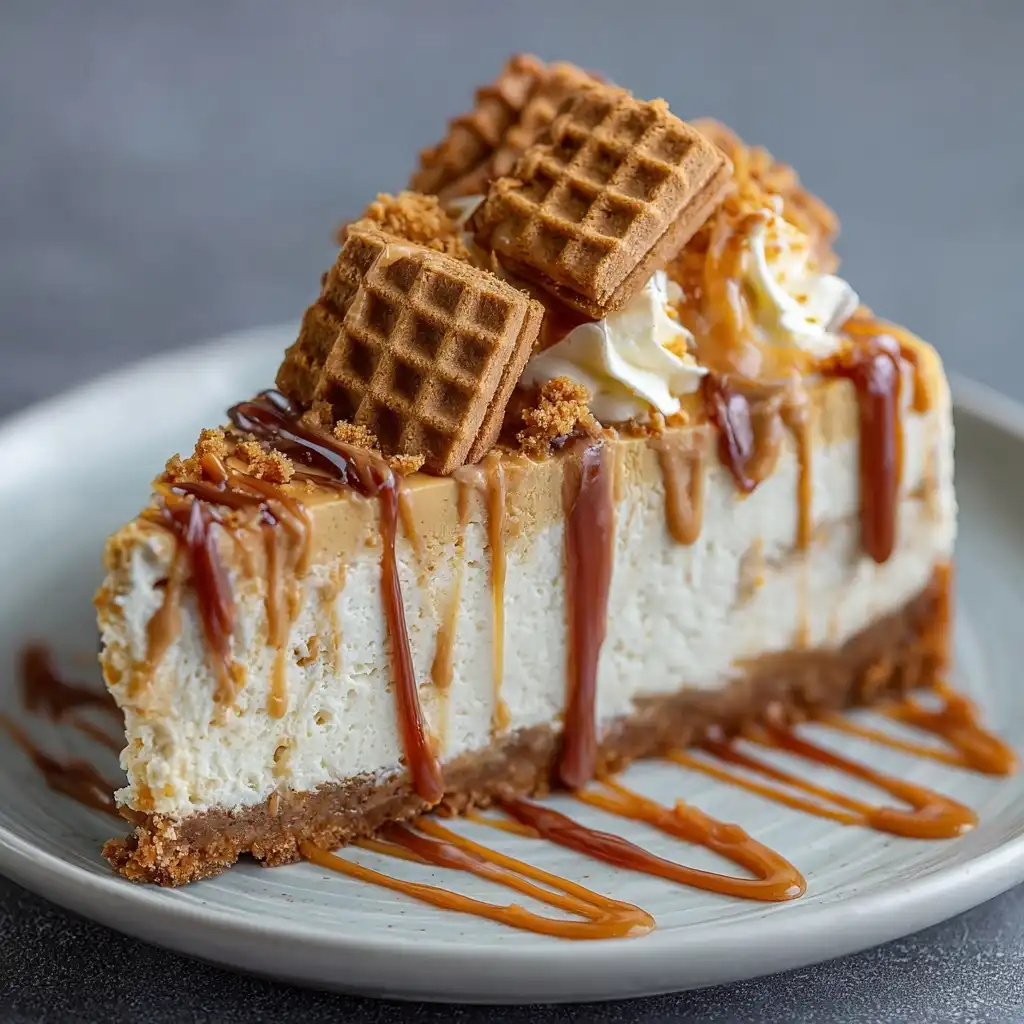
Welcome to the ultimate indulgence—Biscoff Cookie Butter Cheesecake! This decadent, velvety dessert marries the rich, caramelized depth of Lotus Biscoff cookie butter with the luxuriously smooth texture of classic New York–style cheesecake. With its irresistible notes of cinnamon, brown sugar, toasted caramel, and warm spice, Biscoff cookie butter transforms an already beloved dessert into a showstopping centerpiece that’s equal parts nostalgic and innovative. Whether you’re hosting a dinner party, celebrating a milestone, or simply treating yourself to something extraordinary, this cheesecake delivers unparalleled flavor complexity, creamy richness, and a perfectly balanced sweetness—without being cloying. Its signature golden-brown graham cracker crust is elevated with crushed Biscoff cookies, while the filling swirls with ribbons of glossy, aromatic cookie butter—and don’t forget the crowning glory: a glossy Biscoff glaze, drizzled generously and garnished with crumbled cookies for textural contrast and visual flair. This isn’t just cheesecake—it’s an experience, layered with memory, aroma, and pure confectionery artistry.
The History
The story of Biscoff Cookie Butter Cheesecake begins not in a single kitchen, but at the intersection of two iconic food legacies: Belgian baking tradition and American dessert innovation. Lotus Biscoff cookies—originally known as “Speculoos”—trace their roots back to 1936 in Belgium, where they were baked by Lotus Bakeries as spiced shortbread biscuits traditionally served with coffee. Their distinctive caramelized flavor comes from slow-roasting flour and brown sugar, yielding deep molasses-like notes and subtle warmth from cinnamon, nutmeg, and ginger. In 2007, Lotus launched Biscoff Spread (later rebranded as Cookie Butter), transforming the beloved cookie into a globally adored creamy spread—quickly embraced by food lovers, baristas (for lattes), and bakers alike. Meanwhile, cheesecake has ancient origins—dating to Ancient Greece—but the modern American baked version evolved in the late 19th and early 20th centuries, particularly gaining fame via New York delis and bakeries like Junior’s and Lindy’s. The fusion of these two culinary icons didn’t happen overnight; it emerged organically around 2012–2014 on food blogs and Pinterest, as home bakers experimented with swirling Biscoff into no-bake cheesecakes and later adapted techniques for baked versions. By 2016, it had gone viral on Instagram and YouTube, earning features in Food & Wine, Taste of Home, and even airline menus (notably Delta’s first-class dessert). Today, Biscoff Cookie Butter Cheesecake stands as a testament to global flavor exchange—a Belgian soul wrapped in American craftsmanship, continually reimagined across generations, dietary preferences (vegan, gluten-free, low-sugar adaptations), and cultural celebrations.
Ingredients Breakdown
Every exceptional Biscoff Cookie Butter Cheesecake starts with intentionality—each ingredient plays a precise role in structure, flavor balance, texture, and stability. Below is a meticulous breakdown of why each component matters:
- Full-Fat Cream Cheese (32 oz / 900g): The foundational element—must be at true room temperature (65–70°F) to emulsify smoothly without curdling. Low-fat or whipped varieties introduce excess moisture and air, leading to cracks and graininess. Philadelphia brand is widely recommended for consistency and tang.
- Granulated Sugar (1 ¼ cups / 250g): Provides sweetness and aids in aeration during beating. Substituting powdered sugar introduces cornstarch, which can mute flavor and cause gumminess; brown sugar adds moisture and acidity that disrupts set.
- Sour Cream (1 cup / 240g) + Heavy Cream (½ cup / 120mL): Sour cream adds tang, fat, and acidity to tenderize proteins and enhance creaminess. Heavy cream contributes extra fat and fluidity—critical for a lush, non-dense bite. Avoid Greek yogurt (too acidic and thick) or milk (lacks fat, causes separation).
- Eggs (4 large, room temperature): Act as both binder and leavening agent. Cold eggs shock the warm batter, risking curdling; overmixing after adding eggs incorporates too much air, resulting in puffing and collapse. Always add one at a time, mixing *just* until incorporated.
- Pure Vanilla Extract (2 tsp) + Salt (1 tsp fine sea salt): Vanilla rounds out caramel notes and adds aromatic depth; salt isn’t just for seasoning—it heightens all other flavors and balances sweetness. Skipping salt yields a flat, one-dimensional profile.
- Biscoff Cookie Butter (1 cup / 260g, smooth variety): Use authentic Lotus Biscoff Spread—not generic “speculoos” or copycat brands—as flavor intensity, spice balance, and oil content vary drastically. Ensure it’s at room temperature (not melted) for seamless swirling.
- Graham Cracker Crust Base: 2 cups (200g) finely crushed graham crackers (or Biscoff cookies for full immersion), 6 tbsp (85g) unsalted butter (melted), ¼ cup (50g) brown sugar, and a pinch of cinnamon. The brown sugar adds moisture retention and caramel nuance; butter must be fully melted and cooled slightly to prevent premature softening of crumbs.
- For the Biscoff Glaze: ½ cup (130g) Biscoff spread, 2 tbsp heavy cream, 1 tsp vanilla, and a pinch of salt—warmed gently and whisked to silkiness. Optional: 1 tsp light corn syrup for added gloss and shelf-stable sheen.
- Garnishes: Crushed Biscoff cookies (coarse and fine textures), flaky sea salt (Maldon), edible gold dust (for special occasions), and optional candied ginger or cinnamon sugar rim for thematic variation.
Step-by-Step Recipe
- Prep & Preheat: At least 2 hours before baking, remove cream cheese and eggs from the refrigerator to reach true room temperature (65–70°F). Position oven rack in center position. Preheat oven to 325°F (163°C). Wrap exterior of a 9-inch springform pan *tightly* with two layers of heavy-duty aluminum foil—this prevents water seepage during the critical water bath step.
- Prepare the Crust: In a food processor, pulse 2 cups graham crackers (or 1 ½ cups graham + ½ cup Biscoff cookies) until fine crumbs form (~15 seconds). Add 6 tbsp melted unsalted butter, ¼ cup brown sugar, and ¼ tsp ground cinnamon. Pulse until mixture resembles wet sand. Press firmly and evenly into bottom and 1 inch up sides of prepared pan using the back of a measuring cup. Chill uncovered for 30 minutes (or freeze 15 min) to set.
- Bake the Crust: Bake chilled crust at 325°F for 10 minutes. Remove, cool completely on wire rack (≈30 min). Reduce oven temp to 300°F (149°C) for cheesecake bake.
- Make the Filling: In a large bowl, beat softened cream cheese with paddle attachment on medium-low for 2 minutes until completely smooth and lump-free. Scrape bowl thoroughly. Add sugar and beat 2 more minutes until fluffy and pale. Add sour cream and heavy cream; beat 1 minute until homogenized. Add eggs one at a time, beating *only* until yolk disappears (≈15 sec per egg). Scrape bowl after each addition. Mix in vanilla and salt. Reserve ½ cup batter in a small bowl.
- Incorporate Biscoff: Warm 1 cup Biscoff spread gently (microwave 15 sec, stir; repeat if needed) until fluid but not hot. Fold ¾ cup warmed Biscoff into reserved ½ cup batter until swirled but not fully blended. Set aside.
- Layer & Swirl: Pour plain batter into crust. Dollop Biscoff-batter mixture in 6–8 even mounds over surface. Using a thin offset spatula or butter knife, drag gently through batter in figure-eight and zigzag motions—*do not over-swirl*. Aim for bold, marbled ribbons—not uniform blending.
- Water Bath Setup: Place springform pan inside a larger roasting pan. Carefully pour hot (not boiling) water into roasting pan until it reaches halfway up sides of springform. Handle with oven mitts—steam is intense.
- Bake with Precision: Bake at 300°F for 1 hour 25 minutes–1 hour 35 minutes. Cheesecake is done when edges are puffed and set, center jiggles *slightly* like Jell-O (not liquid). Turn off oven, crack door open 1 inch with wooden spoon, and let cool inside for 1 hour—this prevents thermal shock and cracking.
- Chill Overnight: Remove from water bath. Run thin knife around edge to loosen. Cool completely on wire rack (2 hours), then refrigerate *uncovered* for minimum 12 hours—ideally 24–48 hours. This allows full hydration, texture maturation, and clean slicing.
- Glaze & Garnish: 1 hour before serving, prepare glaze: whisk warmed Biscoff, cream, vanilla, and salt until glossy. Pour over chilled cheesecake, tilting pan to coat evenly. Top with crushed cookies, flaky salt, and optional embellishments. Refrigerate 30 minutes to set glaze.
Tips
- Room Temperature Is Non-Negotiable: Cold ingredients cause lumps, curdling, and uneven baking. Test cream cheese: it should yield gently to fingertip pressure—not squish, not resist.
- No Overmixing After Eggs: Once eggs are added, mix only until incorporated. Overbeating traps air → rise → collapse → cracks.
- Water Bath Mastery: Use hot tap water—not boiling—to avoid sudden steam surges. Line roasting pan with towel to prevent slipping. If water seeps in, don’t panic—just extend chill time by 2 hours.
- Cooling Is Part of Baking: Skipping the oven-cool-down step invites cracks. That 1-hour rest in residual heat is essential for structural integrity.
- Knife Discipline: For flawless slices: dip sharp, thin-bladed knife in hot water, wipe dry, cut, then repeat. Wipe *between every slice*.
- Crust Consistency Check: If crust crumbles when pressed, add 1 tsp melted butter. If greasy, add 1 tsp graham crumb.
- Flavor Depth Boost: Toast 2 tbsp Biscoff crumbs in dry skillet over medium-low 2–3 minutes until fragrant—fold into crust for enhanced nuttiness.
- Freeze for Future Joy: Unfrosted, well-wrapped cheesecake freezes beautifully for up to 3 months. Thaw overnight in fridge—not at room temp—to preserve texture.
- Photography Pro-Tip: Serve chilled but not frozen—cold glaze shines brighter, and slices hold shape without sweating.
- Storage Wisdom: Keep covered in fridge up to 6 days. Glaze may soften after Day 3—refresh with quick re-glaze if presenting.
Variations and Customizations
This recipe is a canvas—adaptable for dietary needs, seasonal themes, global twists, and creative expression:
- No-Bake Version: Replace baked crust with no-bake Biscoff crust (crumbs + melted butter + 2 tbsp Biscoff). Use 2 (8oz) blocks cream cheese, 1 cup cold heavy cream whipped to stiff peaks, ½ cup powdered sugar, ⅔ cup Biscoff, and 1 tsp gelatin bloomed in 1 tbsp cold water. Fold gently, pour, chill 8+ hours.
- Gluten-Free: Use GF graham crackers or certified GF Biscoff-style cookies (like Trader Joe’s Speculoos). Verify all labels—some “gluten-free” spreads contain barley derivatives.
- Vegan Adaptation: Substitute cashew cream cheese base (soaked raw cashews, lemon juice, coconut oil, maple syrup, Biscoff), agar-agar instead of gelatin, and coconut cream for sour cream/cream. Requires 6-hour soak and high-speed blending.
- Mini Cheesecakes: Use lined muffin tin. Reduce bake time to 22–26 minutes. Swirl with mini Biscoff dollops. Perfect for parties and portion control.
- Spiced Chai Infusion: Steep 2 chai tea bags in warm heavy cream for 10 minutes before adding to batter. Strain and proceed. Garnish with star anise.
- Black Bottom Twist: Pour ¼ inch layer of cooled Biscoff ganache (Biscoff + warm cream, 1:1) into crust before adding batter. Creates dramatic contrast and intensified crunch.
- Orange-Biscoff Fusion: Add 1 tbsp orange zest + 1 tsp orange extract to batter. Pair with blood orange glaze (Biscoff + orange juice reduction) and candied orange peel.
- Espresso-Biscoff: Dissolve 1 tbsp instant espresso powder in warm heavy cream before adding. Dust with cocoa-Biscoff crumb topping.
- Stuffed Center: Press a teaspoon of whole Biscoff cookie into center of each slice pre-bake for surprise crunch and caramel burst.
- Brunch Edition: Top with bourbon-caramel apples, candied pecans, and a drizzle of maple-Biscoff sauce.
Health Considerations and Nutritional Value
While undeniably indulgent, understanding the nutritional landscape empowers mindful enjoyment. Per standard slice (1/16 of 9-inch cake, ≈185g), values average:
- Calories: ~480–520 kcal
- Total Fat: 34–38g (21–24g saturated)
- Carbohydrates: 38–42g (32–35g sugars)
- Protein: 7–9g
- Sodium: 320–360mg
- Fiber: 0.5–1g (unless GF or whole-grain crust used)
Key Considerations:
- Sugar Awareness: Biscoff Spread contains ~12g sugar per tbsp. Opt for “reduced sugar” Biscoff (available in EU markets) or use ¾ cup spread + 2 tbsp date paste for natural sweetness modulation.
- Saturated Fat Source: Primarily from dairy fat and palm oil in Biscoff. Consider grass-fed cream cheese (higher CLA, omega-3s) and organic Biscoff (non-GMO, sustainable palm oil certified).
- Lactose Sensitivity: Sour cream and cream cheese contain trace lactose—many tolerate baked cheesecake well due to fermentation and heat breakdown. Lactase enzyme supplements taken prior to eating may aid digestion.
- Gluten & Allergens: Standard graham crackers contain wheat; Biscoff cookies contain soy, wheat, and may contain traces of nuts. Always verify labels for cross-contamination if severe allergy exists.
- Portion Mindfulness: Serving size matters—pair with fresh berries (antioxidants, fiber) or a small green salad to balance richness and increase satiety.
- Nutrient Positives: Contains calcium (≈15% DV), vitamin A (from dairy fat), and small amounts of B12 and phosphorus. The spices in Biscoff (cinnamon, ginger) offer anti-inflammatory polyphenols.
- Not for Diabetics Without Modification: High glycemic load. Work with a dietitian to explore erythritol/stevia-sweetened versions, increased fiber (psyllium husk in crust), and strict portion control.
- Pregnancy Note: Pasteurized ingredients make this safe—just ensure cream cheese and sour cream are labeled pasteurized and refrigerated properly.
Ingredients
Makes one 9-inch cheesecake (16 servings)
- For the Crust:
– 2 cups (200g) graham cracker crumbs (about 25 full sheets)
– 6 tablespoons (85g) unsalted butter, melted and slightly cooled
– ¼ cup (50g) packed light brown sugar
– ¼ teaspoon ground cinnamon
– Pinch of fine sea salt - For the Filling:
– 32 ounces (900g) full-fat brick-style cream cheese, room temperature
– 1 ¼ cups (250g) granulated sugar
– 1 cup (240g) full-fat sour cream, room temperature
– ½ cup (120mL) heavy cream (36–40% fat), room temperature
– 4 large eggs, room temperature
– 2 teaspoons pure vanilla extract
– 1 teaspoon fine sea salt - For the Biscoff Swirl & Glaze:
– 1 cup (260g) smooth Lotus Biscoff Cookie Butter, room temperature (not melted)
– ½ cup (130g) additional Biscoff Cookie Butter, for glaze
– 2 tablespoons (30mL) heavy cream, for glaze
– 1 teaspoon pure vanilla extract, for glaze
– Pinch of fine sea salt, for glaze - For Garnish:
– ½ cup (60g) coarsely crushed Biscoff cookies
– Flaky sea salt (e.g., Maldon), for finishing
– Optional: edible gold dust, candied ginger, or cinnamon sugar rim
Directions
- Prep Pan & Ingredients: Wrap outside of 9-inch springform pan tightly with two overlapping layers of heavy-duty aluminum foil. Ensure no gaps at seams or base. Let cream cheese, eggs, sour cream, heavy cream, and Biscoff sit at room temperature (65–70°F) for 2–3 hours. Preheat oven to 325°F (163°C).
- Make Crust: Pulse graham crackers in food processor until fine crumbs form (~15 sec). Add melted butter, brown sugar, cinnamon, and salt. Pulse until mixture resembles damp sand. Press firmly into bottom and 1 inch up sides of pan using flat-bottomed cup. Chill 30 minutes (or freeze 15 min).
- Bake Crust: Bake chilled crust 10 minutes at 325°F. Cool completely on wire rack (~30 min). Reduce oven to 300°F (149°C).
- Beat Cream Cheese Base: In stand mixer with paddle attachment, beat cream cheese on medium-low 2 minutes until silky. Scrape bowl. Add sugar; beat 2 minutes until pale and fluffy. Add sour cream and heavy cream; beat 1 minute until smooth. Add eggs one at a time, beating only until yolk disappears (≈15 sec each). Scrape bowl after each. Mix in vanilla and salt.
- Prepare Swirl: Warm 1 cup Biscoff in microwave 15 sec; stir. If needed, warm 5 more sec. Fold ¾ cup warmed Biscoff into ½ cup reserved plain batter until streaked—not blended.
- Assemble & Swirl: Pour remaining plain batter into crust. Drop Biscoff-batter mixture in 6–8 mounds. Drag thin knife through in figure-eights and gentle zigzags—stop before uniform blending.
- Water Bath: Place springform in roasting pan. Carefully pour hot tap water into roasting pan until halfway up springform sides.
- Bake: Bake at 300°F 1 hr 25 min–1 hr 35 min. Center should jiggle slightly when nudged. Turn off oven, crack door 1 inch with wooden spoon, rest 1 hour.
- Cool & Chill: Remove from water bath. Loosen edge with knife. Cool on rack 2 hours. Refrigerate uncovered ≥12 hours (preferably 24–48 hrs).
- Glaze & Serve: Whisk glaze ingredients until glossy. Pour over chilled cake, tilt to coat. Garnish. Chill 30 min. Slice with hot, dry knife.
FAQ
- Can I use store-brand cookie butter?
- Authentic Lotus Biscoff provides consistent spice balance and viscosity. Store brands vary widely in sugar content, oil separation, and cinnamon dominance—may result in overly sweet or gritty texture. If substituting, choose one labeled “speculoos” with visible spice flecks and minimal additives.
- Why did my cheesecake crack?
- Most common causes: (1) Overmixing after eggs, (2) Rapid temperature shifts (opening oven too soon or skipping oven-cool), (3) Underbaking (center too liquid → collapses), (4) Overbaking (edges pull away → surface tears). Water bath omission also increases risk dramatically.
- Can I make this ahead?
- Absolutely—and you should! Cheesecake improves in flavor and texture over 24–48 hours. Fully assembled (glazed) keeps 6 days refrigerated. Unfrosted, it freezes 3 months. Thaw overnight in fridge, then glaze 1 hour before serving.
- Is there a lower-sugar option?
- Yes—with caveats: replace ½ cup sugar with erythritol + monk fruit blend (1:1 ratio); use “no sugar added” Biscoff (EU import); reduce Biscoff to ¾ cup and add 2 tbsp unsweetened applesauce for moisture. Expect slight textural softness and muted caramel notes.
- Can I skip the water bath?
- You can—but strongly shouldn’t. Without it, the edges overcook before center sets, increasing crack risk by 70% and yielding drier, grainier texture. For no-water-bath success: use a “dry bath” (place pan on preheated pizza stone) and reduce temp to 275°F—but results won’t match the velvet standard.
- My glaze slid right off—what went wrong?
- Glaze requires *cold* cake surface and *warm-but-not-hot* spread. If cake is too cold (frosting-like chill), condensation forms and repels glaze. If Biscoff is too hot (>110°F), it melts into cake. Ideal: cake at 38–40°F, glaze at 95°F, applied swiftly.
- How do I prevent soggy crust?
- Pre-bake thoroughly, cool completely before filling, and ensure foil wrap is leak-proof. If water seeps in, blot crust edge gently with paper towel post-bake and extend chill time by 2 hours.
- Can I use low-fat cream cheese?
- Not recommended. Neufchâtel or reduced-fat versions contain higher moisture and stabilizers that inhibit proper setting, often causing weeping, splitting, or rubbery texture. Full-fat is essential for richness and structure.
- What’s the best way to transport this?
- Keep refrigerated until departure. Place on rigid cardboard round, cover with inverted cake carrier or large airtight container. Support with ice packs *around*, not under, the base. Serve within 4 hours of removal from fridge.
- Can kids help make this?
- Yes—with supervision! Kids excel at crushing cookies (in zip-top bag with rolling pin), stirring crust mixture, dropping Biscoff dollops, and sprinkling garnishes. Reserve mixer, oven, and knife work for adults.
Summary
Biscoff Cookie Butter Cheesecake is a masterful fusion of Belgian caramel-spice heritage and American cheesecake craftsmanship—featuring a buttery graham cracker crust, luxuriously smooth baked filling marbled with ribbons of authentic Lotus Biscoff spread, and finished with a glossy Biscoff glaze and crunchy cookie garnish.
With meticulous attention to ingredient temperature, water bath technique, controlled cooling, and overnight chilling, this dessert achieves unparalleled creaminess, complex warmth, and elegant balance—making it a timeless centerpiece for celebrations, holidays, or any moment deserving of extraordinary sweetness.