Introduction
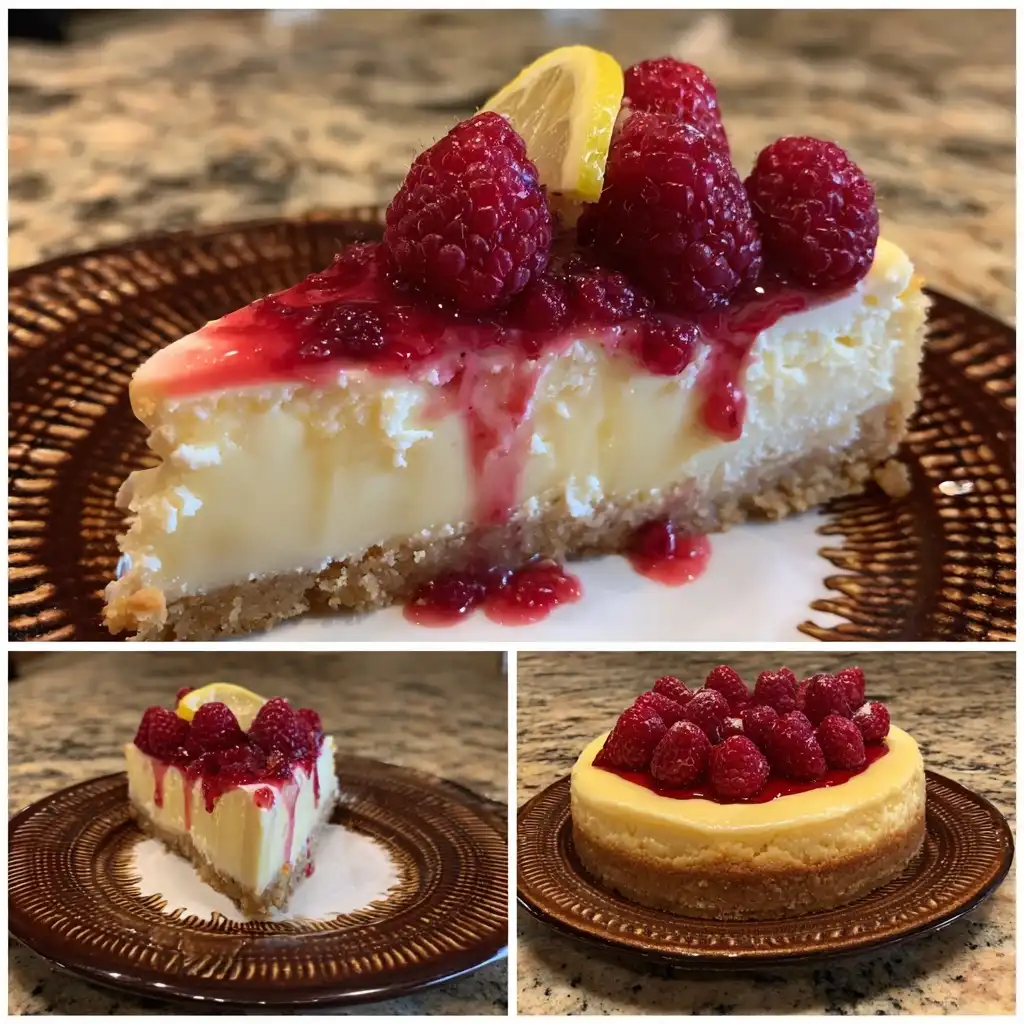
Indulge in the perfect harmony of bright citrus tang and luscious berry sweetness with our Lemon Raspberry Cheesecake — a showstopping dessert that marries the creamy richness of classic New York–style cheesecake with the vibrant, zesty lift of fresh lemon and the jewel-toned elegance of ripe raspberries. Whether served at a spring brunch, summer garden party, or holiday gathering, this dessert captivates with its velvety texture, balanced acidity, and stunning visual appeal. Unlike traditional cheesecakes that rely solely on vanilla or chocolate, this version layers nuanced flavor dimensions: the sharp brightness of lemon zest and juice cuts through the dense, luxurious cream cheese base, while the raspberry component — whether as a glossy swirl, a vibrant compote topping, or an embedded layer — adds fruity depth, natural tartness, and a pop of color that makes every slice Instagram-worthy. It’s not just a dessert — it’s an experience: refreshing yet decadent, sophisticated yet approachable, elegant yet deeply comforting.
The History
The evolution of Lemon Raspberry Cheesecake is a delicious convergence of centuries-old traditions and modern culinary innovation. Cheesecake itself traces its roots to ancient Greece, where early versions made with honey-sweetened cheese and flour were served to athletes during the first Olympic Games in 776 BCE. The Romans later adopted and adapted the dish, spreading cheesecake across their empire. In medieval Europe, cheesecakes evolved with regional variations — from England’s cottage cheese-based “cheese tarts” to Italy’s ricotta-laden ricotta pie. The modern American cheesecake, particularly the dense, baked New York style, emerged in the late 19th and early 20th centuries, popularized by Jewish immigrants using Philadelphia-style cream cheese (invented by William Lawrence in 1872) and perfected by chefs like Arnold Reuben and later, the legendary Lindy’s Restaurant in Manhattan.
Lemon’s role in cheesecake dates back to mid-20th-century American baking, when home cooks began experimenting with citrus to lighten rich desserts — lemon bars, lemon meringue pie, and lemon-infused cheesecakes all rose in popularity post-WWII, aided by the widespread availability of bottled lemon juice and improved refrigeration. Raspberries, long cherished in European pastry (think French clafoutis, British summer trifles, and Scandinavian tarts), gained broader U.S. appeal in the 1980s and ’90s alongside the farm-to-table movement and rising interest in artisanal fruit preserves. The deliberate pairing of lemon and raspberry — a match grounded in complementary organic acids (citric acid in lemon, ellagic and malic acids in raspberries) and shared aromatic esters — became a hallmark of fine-dining dessert menus in the 2000s. Today, Lemon Raspberry Cheesecake stands as a beloved contemporary classic — a testament to how time-honored techniques, seasonal ingredients, and thoughtful flavor science can elevate a humble dessert into something extraordinary.
Ingredients Breakdown
Every exceptional Lemon Raspberry Cheesecake begins with intentionality — understanding not just *what* goes into the recipe, but *why* each ingredient matters, how it functions structurally and sensorially, and how substitutions affect the final outcome. Below is a comprehensive, chef-level breakdown:
Graham Cracker Crust
- Graham crackers (1 ½ cups, finely crushed): Provide structure, subtle caramelized sweetness, and gentle whole-wheat nuttiness. Their low moisture content ensures a crisp, non-soggy base. Whole-grain graham crackers add fiber and earthiness; honey graham variants deepen flavor complexity.
- Unsalted butter (6 tbsp, melted): Acts as a binder and fat source — critical for cohesion and richness. Melted (not browned) butter ensures even distribution without burning the crumbs. Clarified butter may be used for higher smoke point and pure dairy flavor.
- Granulated sugar (2 tbsp): Enhances browning (Maillard reaction), adds sweetness to balance the tart filling, and improves crust tenderness by interfering with gluten formation.
- Pinch of fine sea salt: Elevates all other flavors and counters sweetness — essential for dimensional contrast.
Cheesecake Filling
- Cream cheese (24 oz / 3 standard blocks, full-fat, room temperature): The backbone of texture and body. Must be truly softened (65–70°F) — cold cream cheese causes lumps; overheated or microwaved cheese leads to graininess. Philadelphia-brand is preferred for consistent fat content (~33%) and neutral pH, ensuring smooth emulsification.
- Granulated sugar (1 cup + 2 tbsp): Sweetens, tenderizes (by inhibiting protein coagulation), and contributes to the signature dense-yet-velvety mouthfeel. A portion is reserved for the raspberry swirl to control sweetness balance.
- Sour cream (⅔ cup, full-fat, room temperature): Adds tang, moisture, and fat — crucial for preventing cracking and yielding a softer, more supple crumb than cream cheese alone. Avoid low-fat versions, which contain stabilizers that disrupt texture.
- Heavy cream (¼ cup, cold or room temp): Enhances silkiness and richness without thinning the batter excessively. Cold cream helps stabilize air incorporation during mixing.
- Large eggs (3, room temperature): Act as emulsifiers and structural agents. Room temperature eggs blend seamlessly; cold eggs cause separation and increase mixing time — risking over-aeration and subsequent collapse or cracking. Add one at a time, fully incorporating before the next.
- Fresh lemon zest (from 2 large lemons, ~2 tbsp finely grated): Contains volatile citrus oils (limonene, citral) — the soul of aroma and top-note brightness. Always zest *before* juicing; avoid the bitter white pith.
- Fresh lemon juice (¼ cup, ~2–3 lemons, strained): Provides acidity critical for balancing fat and enhancing flavor perception. Bottled juice lacks enzymatic complexity and often contains preservatives that dull taste.
- Pure vanilla extract (1 tsp, Madagascar Bourbon preferred): Adds warmth and roundness, bridging lemon and raspberry notes. Alcohol-based extracts disperse better than imitation or paste in dairy matrices.
- Unsalted butter (2 tbsp, melted and cooled): Reinforces richness and promotes a smoother, glossier surface. Not optional — it improves shelf life and freeze-thaw stability.
- Sea salt (½ tsp, fine): Critical for flavor modulation — reduces perceived bitterness, enhances sweetness, and deepens umami in dairy proteins.
Raspberry Component Options (Choose One or Combine)
- Fresh or frozen raspberries (1 ¼ cups): For swirls or layers. Frozen berries are often superior — picked at peak ripeness, flash-frozen to preserve anthocyanins (antioxidants) and acidity. Thaw and drain *thoroughly* to prevent waterlogging.
- Raspberry purée (¾ cup, strained): Made by simmering berries with 1 tbsp sugar and 1 tsp lemon juice, then pressing through a fine-mesh sieve to remove seeds. Adds intense, clean fruit flavor and vibrant color without textural interruption.
- Seedless raspberry jam (⅓ cup, high-quality, low-sugar): Provides reliable consistency, shelf-stable tartness, and natural pectin for gentle thickening. Look for jams with >45% fruit content and no high-fructose corn syrup.
- Freeze-dried raspberry powder (3 tbsp): A professional secret — delivers explosive, concentrated flavor and vivid magenta hue without added moisture. Blend into dry ingredients or fold into a portion of batter for marbling.
Optional Garnishes & Finishing Touches
- Fresh raspberries (for topping): Adds freshness, visual contrast, and textural pop.
- Lemon zest curls or microplaned zest: Reinforces citrus aroma and provides elegant garnish.
- Edible flowers (violets, pansies, borage): For special occasions — ensure food-safe and pesticide-free.
- Crème fraîche or lemon crème anglaise drizzle: Offers luxurious counterpoint — cool, tangy, and silky.
- Sparkling sugar or lemon sugar rim: Adds crunch and celebratory shimmer.
Step-by-Step Recipe
This meticulously tested method yields a flawlessly smooth, crack-free, intensely flavorful Lemon Raspberry Cheesecake — every time. Total hands-on time: 45 minutes. Baking time: 1 hour 20 minutes. Cooling & chilling time: minimum 12 hours (ideally 24–48 hours).
Step 1: Prepare the Pan & Preheat Oven
Wrap the *outside* of a 9-inch springform pan tightly with two overlapping layers of heavy-duty aluminum foil — ensure no gaps at the seam or base, as water will pool during the water bath. Position oven rack in the lower third. Preheat oven to 325°F (163°C). Place a large, deep roasting pan (at least 3 inches deep) on the rack — this will hold the water bath.
Step 2: Make the Graham Cracker Crust
In a food processor, pulse graham crackers until fine crumbs form (about 15 seconds). Add sugar and salt; pulse twice to combine. Pour in melted butter and pulse in 1-second bursts until mixture resembles wet sand and holds together when pinched. Transfer to prepared springform pan. Press firmly and evenly into bottom and 1 inch up sides using the bottom of a flat measuring cup or glass. Chill uncovered for 15 minutes to set.
Bake the crust: Place pan in preheated oven (still in roasting pan — no water yet). Bake for 10 minutes until fragrant and lightly golden. Remove and let cool completely on a wire rack — *do not skip cooling*, or hot crust will melt the filling.
Step 3: Prepare Raspberry Element
While crust bakes and cools, prepare your chosen raspberry component:
• For Swirl: In a small bowl, combine 1 cup thawed, well-drained raspberries (or ¾ cup purée/jam) with 2 tbsp granulated sugar. Gently mash with a fork until mostly smooth but with some small pieces remaining. Set aside.
• For Layer: Spread ½ cup raspberry purée evenly over cooled crust. Freeze for 10 minutes to set before adding filling.
• For Powder Swirl: Mix 3 tbsp freeze-dried raspberry powder with 1 tbsp granulated sugar; set aside.
Step 4: Make the Cheesecake Batter
Using a stand mixer fitted with the paddle attachment (or hand mixer with sturdy beaters), beat softened cream cheese on medium-low speed for 2 minutes until completely smooth and lump-free — scrape bowl thoroughly. Add sugar and beat 2 more minutes until fluffy and pale. Scrape bowl again.
Add sour cream and beat 1 minute until fully incorporated and glossy. Add heavy cream and beat 30 seconds. Add eggs one at a time, beating on low speed for 20 seconds after each addition — *never increase speed*. Scrape bowl after each egg. Mixture should be homogenous, slightly thickened, and free of streaks.
Reduce mixer speed to low. Add lemon zest, lemon juice, vanilla, melted butter, and salt. Beat only until just combined — about 15 seconds. Overmixing introduces excess air, leading to puffing and collapse. Batter should be thick, pourable, and satiny — not runny or foamy.
Step 5: Combine & Pour
Reserve 1 ½ cups of batter in a separate bowl. Gently fold raspberry swirl mixture (or powder-sugar blend) into reserved batter until *marbled*, not uniform — 4–5 folds maximum. Pour plain batter into cooled crust, smoothing top with an offset spatula. Carefully spoon raspberry batter over top. Using a toothpick or skewer, drag gently in figure-8 or zigzag patterns to create elegant marbling — avoid over-swirling.
Step 6: Bake in Water Bath
Place springform pan inside the large roasting pan. Carefully pour *just-boiled* water into roasting pan until it reaches halfway up the sides of the springform pan (approx. 1–1.5 inches deep). Use a kettle with a spout for control — never pour directly onto the cheesecake.
Carefully transfer roasting pan to oven. Bake at 325°F for 1 hour 15 minutes to 1 hour 25 minutes. Cheesecake is done when edges are set and puffed slightly, but center (about 3 inches wide) jiggles softly like Jell-O when gently shaken — *not liquid*. An instant-read thermometer inserted 1 inch from edge should read 150–155°F; center should be 145°F.
Step 7: Cool Gradually (Non-Negotiable)
Turn off oven. Crack oven door open 1 inch with a wooden spoon handle. Let cheesecake sit in oven for 1 hour — this prevents thermal shock and drastic surface contraction.
Remove from water bath (carefully lift springform pan out — foil should keep it dry). Run a thin knife around inner edge to loosen. Cool on wire rack at room temperature for 1 hour.
Cover loosely with parchment paper (not plastic wrap — condensation ruins texture) and refrigerate *uncovered* for at least 12 hours — preferably 24–48 hours. This allows full setting, flavor melding, and optimal slice integrity.
Step 8: Unmold & Serve
Run warm knife under hot water, dry thoroughly, and glide around perimeter. Release springform clasp. Lift off outer ring. Slide thin metal spatula under crust to loosen from base. Slide onto serving platter. Decorate as desired. For clean slices, dip knife in hot water and wipe dry between each cut.
Tips
- Room Temperature is Non-Negotiable: All dairy and eggs must be at true room temperature (65–70°F), not just “out of the fridge for 30 minutes.” Place cream cheese cubes on a plate, cover with a clean towel, and leave for 2+ hours. Cold ingredients cause lumps, curdling, and uneven baking.
- Scrape Religiously: Scrape bowl and paddle after *every* addition — especially after cream cheese, sugar, and eggs. Residual batter clinging to sides creates dense pockets and streaks.
- Low Speed Saves Lives: Never exceed medium-low speed after adding eggs. High speed incorporates air bubbles that expand, burst, and cause cracks. Patience = perfection.
- Water Bath Mastery: Use boiling water — cooler water lowers oven temp unpredictably. Foil-wrap *twice*: once snug around pan base, once overlapping the top edge. Test for leaks by filling foil-wrapped pan with water before baking.
- Thermometer Truth: Visual cues are subjective. A digital thermometer is the single most reliable tool — target 150°F at edge, 145°F center. Underbaked = soupy; overbaked = dry, crumbly, cracked.
- Chill Deeply: Do not rush chilling. 12 hours is the absolute minimum. 24 hours yields dramatically firmer texture, cleaner slices, and intensified lemon-raspberry synergy. Overnight chilling also allows residual heat to fully dissipate, preventing “sweating.”
- Freeze for Longevity: Unfrosted, well-wrapped cheesecake freezes beautifully for up to 3 months. Thaw overnight in fridge, then bring to cool room temperature 30 minutes before serving.
- Acid Balance: If your lemons are mild, add ½ tsp extra zest or 1 tsp additional juice. If raspberries are overly sweet, add ¼ tsp citric acid or a few drops of lemon juice to purée.
- No-Bake Option: For a lighter alternative, use a stabilized no-bake filling: whip 2 cups cold heavy cream to soft peaks, fold into 24 oz whipped cream cheese mixed with ½ cup powdered sugar, 2 tbsp lemon juice, 1 tbsp zest, and ¼ tsp salt. Layer with raspberry compote and chill 8 hours.
- Leftover Love: Extra raspberry purée? Swirl into Greek yogurt, mix into oatmeal, or freeze in ice cube trays for lemon-raspberry smoothies.
Variations and Customizations
This Lemon Raspberry Cheesecake is a canvas for creativity — adaptable to dietary needs, seasonal produce, global flavors, and personal preference. Here are inspired, chef-tested variations — each preserving structural integrity and flavor harmony:
Dietary Adaptations
- Gluten-Free: Substitute gluten-free graham crackers (like Schar or Pamela’s) or use a nut-based crust: 1 ½ cups almond flour + ¼ cup coconut sugar + 6 tbsp melted butter + pinch salt. Toast almond flour 5 minutes at 350°F first for depth.
- Vegan: Use soaked raw cashews (2 cups) blended with ⅓ cup coconut cream, ⅓ cup lemon juice, ¼ cup maple syrup, 2 tbsp coconut oil (melted), 2 tbsp nutritional yeast (for umami), 1 tsp apple cider vinegar, and salt. Set with 1 tsp agar-agar boiled in ¼ cup water. Chill 8+ hours.
- Lower-Sugar: Replace granulated sugar with erythritol-monk fruit blend (1:1 ratio). Reduce to ¾ cup total. Use unsweetened raspberry purée and omit sugar in swirl. Add ¼ tsp stevia glycerite for rounded sweetness.
- Protein-Boosted: Fold in 2 scoops unflavored collagen peptides or whey isolate (vanilla pairs best) with dry ingredients. Increases satiety without altering texture.
Flavor & Texture Twists
- Lemon-Raspberry-Lavender: Infuse 1 tsp culinary lavender buds in warm cream for 10 minutes, strain, and use infused cream in batter. Garnish with edible lavender.
- White Chocolate Raspberry: Melt 4 oz high-cocoa white chocolate, cool to 90°F, and fold into 1 cup batter before swirling. Adds creamy sweetness and subtle vanilla notes.
- Blackberry-Lime Variation: Swap raspberries for blackberries and lemon for key lime (zest + juice). Adds deeper, wine-like fruitiness and sharper citrus.
- Earl Grey Infusion: Steep 2 Earl Grey tea bags in ¼ cup hot heavy cream for 5 minutes, cool, then use in batter. Imparts bergamot brightness that complements both lemon and raspberry.
- Coconut Crust & Filling: Use toasted coconut flakes in crust (replace ½ cup graham crumbs). Add 2 tbsp coconut milk powder to batter for tropical nuance.
Format & Presentation Innovations
- Mini Cheesecakes: Bake in lined muffin tin (24 cavities). Reduce bake time to 22–25 minutes. Perfect for parties — no slicing required.
- Cheesecake Bars: Bake in 9×13″ pan. Double crust, same filling. Cut into 24 squares after chilling. Ideal for potlucks.
- Individual Parfaits: Layer crumbled crust, lemon curd, raspberry compote, and no-bake cheesecake mousse in glasses. Refrigerate 4 hours.
- Deconstructed Version: Serve components separately: lemon-ricotta “cloud,” fresh raspberry coulis, graham crumble, candied lemon peel, and mint.
- Grilled Cheesecake: After chilling, cut into wedges and grill 60 seconds per side on oiled, medium-hot grill for smoky caramelization — serve with basil oil.
Health Considerations and Nutritional Value
While Lemon Raspberry Cheesecake is undeniably indulgent, mindful preparation transforms it into a dessert with meaningful nutritional merit — far beyond empty calories. A standard slice (1/12 of 9-inch cake, approx. 220g) provides the following (based on full-fat, homemade ingredients, no substitutions):
Nutritional Profile (Per Slice)
- Calories: ~520 kcal
- Total Fat: 36g (Saturated: 21g)
- Cholesterol: 145mg
- Sodium: 310mg
- Total Carbohydrates: 42g (Dietary Fiber: 2g, Sugars: 31g — ~12g naturally occurring from raspberries/lemons)
- Protein: 10g
- Vitamin C: 28mg (47% DV) — primarily from lemon zest/juice and raspberries
- Manganese: 0.8mg (35% DV) — abundant in raspberries, supporting antioxidant enzymes
- Calcium: 125mg (12% DV) — from dairy and fortified graham crackers
- Antioxidants: Exceptionally high in anthocyanins (raspberries), flavonoids (lemon zest), and ellagic acid — shown to reduce oxidative stress and support vascular health.
Functional Health Highlights
- Lemon Zest Powerhouse: Contains limonene — a bioactive compound studied for anti-inflammatory and potential chemopreventive properties. Zest has 5–10x more phytonutrients than juice alone.
- Raspberry Bioactives: Raspberries rank among the highest ORAC (Oxygen Radical Absorbance Capacity) foods — rich in quercetin, kaempferol, and ellagitannins linked to gut microbiome diversity and metabolic regulation.
- Fermented Dairy Benefits: Sour cream and cream cheese contain probiotic strains (e.g., Lactobacillus) if unpasteurized — though most commercial versions are pasteurized post-fermentation, they still provide bioavailable calcium and vitamin B12.
- Healthy Fats: Full-fat dairy provides conjugated linoleic acid (CLA) and butyrate precursors — associated with reduced inflammation and improved insulin sensitivity in clinical studies.
- Low Glycemic Impact (Relative): Despite sugar content, the high fat and protein content significantly slows gastric emptying and glucose absorption — resulting in a gentler blood sugar curve than many fruit-only desserts.
Mindful Enjoyment Guidelines
- Portion Mindfully: A 2-ounce slice (vs. typical 4–5 oz restaurant portions) delivers robust flavor satisfaction with ~300 kcal — pair with herbal tea or sparkling water.
- Timing Matters: Enjoy as a planned dessert after a balanced meal — protein/fiber from dinner further blunts glycemic response.
- Ingredient Quality Counts: Organic lemons (for zest), wild-picked or sustainably grown raspberries, and grass-fed dairy maximize phytonutrient density and minimize pesticide load.
- Not a “Health Food” — But a Health-Conscious Choice: When compared to highly processed alternatives (cakes with hydrogenated oils, artificial colors, and refined flours), this version offers superior macro/micronutrient density, zero artificial additives, and functional food compounds.
Ingredients
Makes one 9-inch cheesecake (12 servings)
- For the Crust:
• 1 ½ cups (150g) graham cracker crumbs (about 12 full sheets)
• 6 tablespoons (85g) unsalted butter, melted
• 2 tablespoons (25g) granulated sugar
• ¼ teaspoon fine sea salt - For the Filling:
• 24 ounces (680g) full-fat brick-style cream cheese, room temperature
• 1 cup + 2 tablespoons (230g) granulated sugar
• ⅔ cup (160g) full-fat sour cream, room temperature
• ¼ cup (60ml) heavy cream, room temperature or cold
• 3 large eggs, room temperature
• 2 tablespoons (6g) finely grated lemon zest (2–3 large lemons)
• ¼ cup (60ml) fresh lemon