Introduction
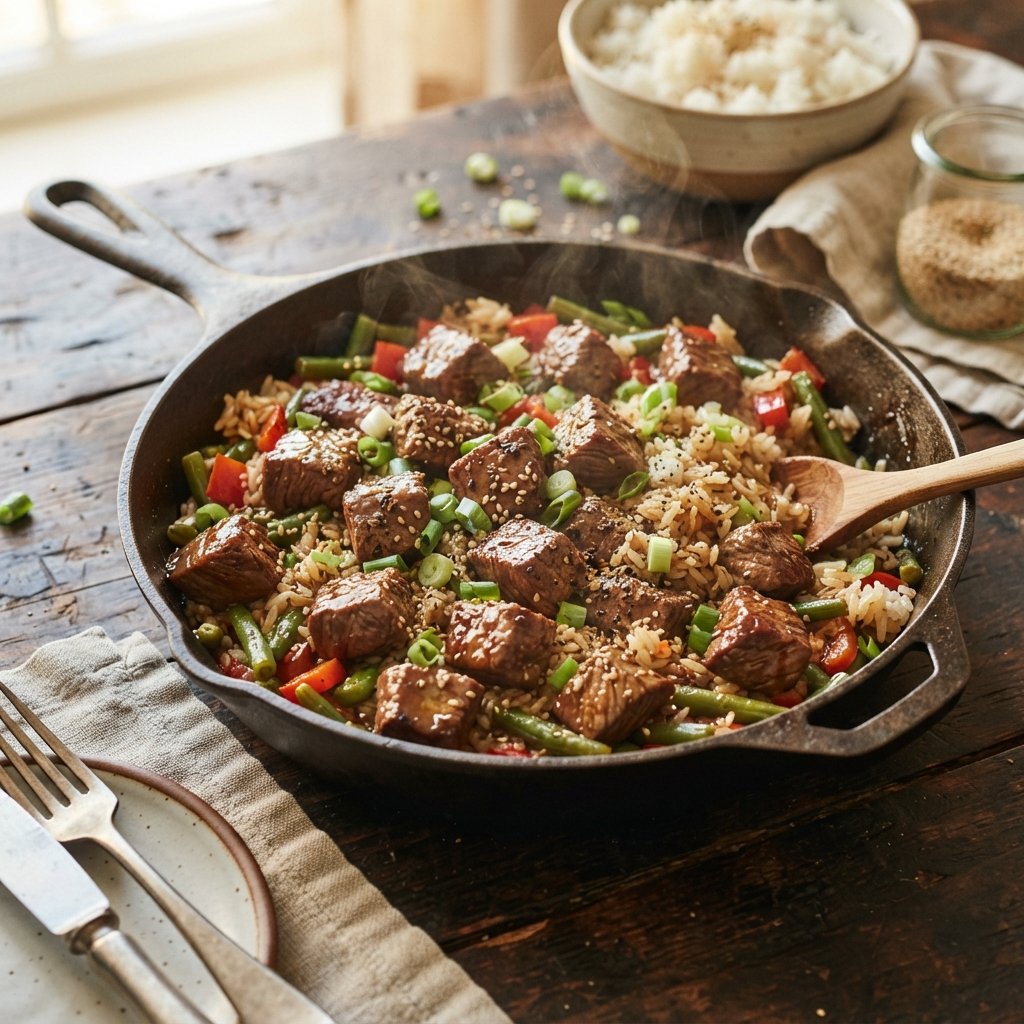
There are few culinary experiences that rival the comfort of a hot, savory meal prepared in a single skillet, especially after a long and demanding day. The Honey Garlic Butter Steak and Rice Skillet represents the pinnacle of weeknight dining convenience without sacrificing the depth of flavor typically reserved for special occasions. This dish is a harmonious blend of textures and tastes: the tender, seared bites of beef, the fluffy and absorbent grains of rice, and a glossy, sticky sauce that marries the sweetness of honey with the pungent kick of fresh garlic and the richness of butter. It is a recipe designed for the modern home cook who seeks efficiency but refuses to compromise on quality.
What makes this recipe particularly compelling is its versatility and the speed at which it comes together. Unlike traditional steak dinners that might require multiple pots, pans, and hours of oven time, this skillet meal consolidates the cooking process into one vessel. This not only minimizes cleanup but also allows the flavors to meld together as the rice absorbs the savory juices from the steak and the aromatic sauce. Whether you are cooking for a family of four or preparing a meal prep for the week ahead, this dish delivers consistent satisfaction. The aroma alone—buttery, garlicky, and slightly caramelized—is enough to gather everyone around the table, turning a simple Tuesday night into a memorable dining experience.
The History
The concept of combining meat, starch, and sauce in a single cooking vessel is as old as cooking itself, yet the specific iteration of a honey garlic butter steak skillet is a fascinating example of modern culinary fusion. Historically, steak was often treated as a centerpiece protein, cooked separately from carbohydrates like potatoes or rice. In Western traditions, the cast-iron skillet was revered for its ability to retain heat and create a superior sear on beef, a technique rooted in the 19th-century expansion of cattle ranching and the availability of affordable iron cookware.
However, the flavor profile of this specific dish draws heavily from Asian-inspired cuisine, particularly the use of honey and garlic glazes popularized in American-Chinese cooking during the late 20th century. The integration of soy sauce and honey creates a umami-sweet balance that complements the natural savory notes of beef. As busy lifestyles became the norm in the 21st century, the “one-pan meal” evolved from a necessity of camping or frontier cooking into a sophisticated strategy for home cooks. This recipe bridges the gap between the classic Western steakhouse experience and the quick, flavor-forward techniques of Asian stir-fries, resulting in a global comfort food that respects tradition while embracing modern convenience.
Ingredients Breakdown
Understanding the role of each component in this recipe is crucial for mastering the final dish. It is not merely about combining items; it is about how each ingredient interacts chemically and physically during the cooking process.
The Steak
The choice of beef is paramount. While filet mignon is tender, it lacks the fat content necessary to stand up to the robust sauce. Conversely, tough cuts require braising. For this skillet, sirloin or ribeye strikes the perfect balance. Sirloin offers a beefy flavor and reasonable tenderness at a good price point, while ribeye provides marbling that melts into the rice, enriching the entire dish. The steak should be cut into bite-sized cubes to ensure quick, even cooking and maximum surface area for the sauce to cling to.
The Rice
Long-grain white rice is typically preferred for its fluffy texture and ability to remain distinct rather than becoming mushy. However, the starch content is vital; as the rice simmers in the broth and steak juices, it releases amylose, which helps thicken the sauce slightly. Using day-old rice can also work well if you are adapting this for a fried rice style, but for this skillet method, fresh rice absorbs the flavors more effectively.
The Sauce Components
Honey provides the sweetness needed to counterbalance the saltiness of the soy sauce and the bitterness that can come from seared garlic. It also aids in caramelization, giving the steak a beautiful glossy finish. Garlic is the aromatic heart of the dish; fresh minced garlic is superior to powder because it releases allicin and essential oils when heated in butter. Butter adds richness and helps emulsify the sauce, creating a velvety texture that coats every grain of rice. Finally, soy sauce introduces salt and umami, deepening the overall flavor profile.
Step-by-Step Recipe
Creating this dish is a journey through heat management and timing. The following narrative guide walks you through the sensory checkpoints you should look for to ensure perfection.
Phase 1: Preparation and Mise en Place
Before you turn on the stove, ensure all ingredients are prepped. This is a quick-cooking recipe, and there will be no time to chop garlic while the steak is searing. Cut the steak into uniform cubes, mince the garlic finely, and measure out the liquids. Pat the steak completely dry with paper towels; this is a critical step often overlooked. Moisture on the surface of the meat creates steam, which prevents the Maillard reaction—the chemical browning that creates complex flavors and a delicious crust.
Phase 2: Searing the Beef
Heat your skillet over medium-high heat. Add a high-smoke-point oil like canola or vegetable oil. Once the oil shimmers, add the steak cubes in a single layer. Do not overcrowd the pan, or the temperature will drop, leading to steaming rather than searing. Let the meat sit undisturbed for a few minutes to develop a brown crust. Flip the pieces to sear all sides. The goal here is not to cook the steak through entirely but to build flavor and color. Remove the steak and set it aside on a plate to rest. This prevents the juices from escaping when the meat is returned to the heat later.
Phase 3: Building the Base
In the same skillet, do not wipe out the browned bits (fond) left by the steak. This is pure flavor. Add a bit more butter and toss in the minced garlic. Sauté briefly until fragrant, being careful not to burn it, as burnt garlic tastes bitter. Add the uncooked rice to the skillet, stirring to coat the grains in the fat and garlic. This toasting step enhances the nutty flavor of the rice. Pour in the beef broth and soy sauce mixture. Scrape the bottom of the pan to release the fond into the liquid.
Phase 4: Simmering and Combining
Bring the liquid to a boil, then reduce the heat to low and cover the skillet. Allow the rice to simmer until it is tender and has absorbed most of the liquid. Once the rice is nearly done, return the steak and any accumulated juices to the pan. Drizzle the honey over the top. Stir gently to combine. The residual heat will warm the steak through without overcooking it, keeping it tender. The honey will melt and blend with the butter and pan juices to create a glaze. Let it sit for a few minutes off the heat to allow the flavors to marry before serving.
Tips
To elevate this recipe from good to exceptional, consider these professional insights and troubleshooting techniques.
- Room Temperature Meat: Always let your steak sit out for 20-30 minutes before cooking. Cold meat seizes up when it hits a hot pan, leading to uneven cooking.
- Garlic Timing: Garlic burns quickly. If you find it browning too fast during the sauté phase, add a splash of broth to cool the pan down slightly.
- Rice Texture: If the rice is too crunchy after the liquid has evaporated, add a small splash of water and continue steaming on low heat. If it is too mushy, uncover the pan and let the excess moisture evaporate.
- Resting the Steak: Even though the steak is cubed, resting it after the initial sear allows the muscle fibers to relax, ensuring a juicier bite in the final dish.
- Salt Control: Soy sauce is very salty. Taste the sauce before adding any additional salt to the steak or the rice water.
- Pan Choice: A cast-iron skillet or a heavy-bottomed stainless steel pan is ideal for heat retention. Non-stick pans work but may not achieve the same level of sear on the beef.
- Acid Balance: If the sauce feels too heavy or sweet, a tiny squeeze of lemon juice or a dash of rice vinegar can cut through the richness and brighten the flavor.
Variations and Customizations
One of the greatest strengths of this skillet meal is its adaptability to dietary needs and personal preferences. You can easily transform this base recipe into something entirely new.
Protein Swaps
While beef is traditional, this sauce pairs beautifully with chicken thighs, which remain juicy during simmering, or shrimp, which cook very quickly and should be added at the very end to prevent toughness. For a vegetarian option, firm tofu or tempeh can be pressed, cubed, and pan-fried until crispy before being added to the sauce.
Vegetable Additions
To increase the nutritional density and add color, consider stirring in frozen peas, corn, or diced carrots during the last five minutes of the rice simmering process. Broccoli florets or sliced bell peppers can be sautéed in the pan before adding the rice for a added crunch. Spinach or kale can be wilted into the dish right before serving for a boost of greens.
Dietary Adjustments
For a Gluten-Free version, simply substitute the soy sauce with tamari or coconut aminos. For a Keto or Low-Carb approach, replace the white rice with cauliflower rice. Note that cauliflower rice cooks much faster, so add it at the end just to heat through rather than simmering it in broth. To reduce sugar, you can substitute the honey with a keto-friendly sweetener like erythritol or monk fruit, though the caramelization properties will be slightly different.
Spice Levels
If you enjoy heat, add red pepper flakes, a dash of cayenne pepper, or a spoonful of sriracha to the sauce mixture. Fresh ginger, grated alongside the garlic, adds a warm, spicy zing that complements the honey beautifully.
Health Considerations and Nutritional Value
While this dish is indulgent, it can be part of a balanced diet when portion sizes are managed and ingredient quality is prioritized. Beef is an excellent source of high-quality protein, providing all essential amino acids necessary for muscle repair and growth. It is also rich in iron, zinc, and vitamin B12, which are vital for energy levels and neurological function.
Garlic is not just a flavor enhancer; it has been linked to immune-boosting properties and cardiovascular health benefits due to its sulfur compounds. However, the sodium content can be high due to the soy sauce and broth. To mitigate this, opt for low-sodium soy sauce and unsalted beef broth. The honey adds simple carbohydrates, so those monitoring blood sugar should be mindful of the quantity used or consider reducing it. The butter contributes saturated fat; while enjoyable, it should be consumed in moderation within the context of a heart-healthy diet. By adding a generous portion of vegetables, you increase the fiber content, which aids digestion and helps regulate the absorption of sugars and fats.
Ingredients
- Beef Sirloin or Ribeye: 1 pound, cut into 1-inch cubes
- Long-Grain White Rice: 1 cup, uncooked
- Beef Broth: 2 cups (low sodium preferred)
- Unsalted Butter: 4 tablespoons, divided
- Garlic: 5 cloves, minced finely
- Honey: 3 tablespoons
- Soy Sauce: 3 tablespoons (or Tamari for gluten-free)
- Vegetable Oil: 1 tablespoon (for searing)
- Black Pepper: 1/2 teaspoon, freshly ground
- Salt: To taste (use sparingly due to soy sauce)
- Optional Garnish: Sliced green onions, sesame seeds, or chopped parsley
Directions
- Prepare the Steak: Pat the beef cubes dry with paper towels. Season lightly with black pepper and a pinch of salt.
- Sear the Beef: Heat vegetable oil in a large skillet over medium-high heat. Add the steak cubes in a single layer. Sear for 2-3 minutes per side until browned. Remove steak from the pan and set aside on a plate.
- Sauté Aromatics: Reduce heat to medium. Add 1 tablespoon of butter to the skillet. Add the minced garlic and sauté for 30-60 seconds until fragrant but not browned.
- Toast the Rice: Add the uncooked rice to the skillet. Stir constantly for 1-2 minutes to coat the grains in butter and garlic oil.
- Simmer: Pour in the beef broth and soy sauce. Stir to combine and scrape up any browned bits from the bottom of the pan. Bring to a boil, then reduce heat to low, cover, and simmer for 15 minutes or until rice is tender and liquid is absorbed.
- Make the Glaze: While the rice cooks, mix the honey with the remaining 3 tablespoons of butter (melted or softened).
- Combine: Once the rice is cooked, return the steak and any resting juices to the skillet. Pour the honey butter mixture over the top.
- Finish: Stir gently to combine everything. Cook for an additional 2 minutes uncovered to allow the sauce to thicken slightly and coat the ingredients.
- Serve: Remove from heat. Garnish with green onions or sesame seeds if desired. Serve immediately while hot.
FAQ
Can I freeze this meal?
Yes, this dish freezes well. Allow it to cool completely before transferring it to an airtight container. It can be stored in the freezer for up to 3 months. Note that the texture of the rice may become slightly softer upon reheating.
What if my rice is still crunchy?
This usually means the heat was too high and the liquid evaporated before the rice cooked. Add a quarter cup of water, cover, and continue cooking on low heat until the liquid is absorbed and the rice is tender.
Can I use brown rice instead?
Yes, but brown rice requires more liquid and a longer cooking time (usually 40-45 minutes). You will need to adjust the broth quantity to about 2.5 cups and ensure the steak is added much later so it doesn’t overcook during the extended simmer.
Is this recipe spicy?
As written, the recipe is not spicy. It focuses on sweet and savory flavors. To add heat, incorporate red pepper flakes or fresh chili peppers during the garlic sauté step.
How do I prevent the steak from becoming tough?
The key is not to overcook it. Sear it quickly to build flavor, remove it, and only return it at the end to warm through. Cubed steak cooks very fast, so prolonged simmering will make it chewy.
Summary
This Honey Garlic Butter Steak and Rice Skillet combines tender beef, fluffy rice, and a sweet-savory glaze for a rapid weeknight meal.
Perfectly balanced flavors and minimal cleanup make it an essential recipe for busy home cooks seeking delicious comfort food.