Heavenly Tiramisu Cold Brew Cheesecake: A Decadent Delight!
Introduction
Welcome to the ultimate fusion of Italian tradition and modern coffee culture, a dessert that transcends the boundaries of conventional baking to deliver an experience that is nothing short of transcendent. The Heavenly Tiramisu Cold Brew Cheecake is not merely a dessert; it is a journey through layers of flavor, texture, and aroma that dance upon the palate with every forkful. Imagine the creamy, lush richness of a classic New York-style cheesecake, intimately intertwined with the sophisticated, mascarpone-laden soul of a traditional Tiramisu, all elevated by the smooth, low-acidity notes of premium cold brew coffee. This creation is designed for the discerning dessert lover who seeks complexity without compromising on comfort, offering a velvety mouthfeel that melts away the stresses of the day.
Whether you are hosting an elegant dinner party, celebrating a milestone occasion, or simply indulging in a moment of self-care during a quiet weekend afternoon, this recipe stands as a testament to the art of culinary fusion. The interplay between the tangy cream cheese, the sweetened mascarpone, the cocoa-dusted surface, and the caffeine-kissed crust creates a symphony of tastes that is both familiar and excitingly new. As you embark on making this masterpiece, prepare yourself for a kitchen filled with the intoxicating scent of espresso and chocolate, promising a result that is visually stunning and gastronomically unforgettable. Let us delve into the rich backstory, the scientific breakdown of ingredients, and the meticulous steps required to craft this decadent delight in your own home.
The History
To truly appreciate the Heavenly Tiramisu Cold Brew Cheesecake, one must understand the lineage of its components, each carrying centuries of cultural significance and culinary evolution. The story begins with Tiramisu, the iconic Italian dessert whose name literally translates to “pick me up” or “cheer me up.” Originating in the Veneto region of Italy, though fiercely claimed by Friuli-Venezia Giulia as well, Tiramisu emerged in the mid-20th century as a combination of ladyfingers soaked in coffee, layered with a whipped mixture of eggs, sugar, and mascarpone cheese, and flavored with cocoa. It was a dessert born of comfort, designed to provide energy and joy, quickly becoming a staple in trattorias across the globe.
Parallel to this Italian heritage is the history of cheesecake, which traces its roots back to ancient Greece, where it was served to athletes during the original Olympic games as a source of sustenance. Over millennia, the recipe evolved through Roman conquests, European medieval adaptations, and finally found its modern identity in New York City, where cream cheese became the star ingredient, creating the dense, rich cake we recognize today. The fusion of these two giants of the dessert world represents a modern culinary trend that respects tradition while embracing innovation.
The addition of Cold Brew coffee is the contemporary twist that anchors this recipe in the present day. Unlike hot brewed espresso, which can sometimes introduce bitter, acidic notes that clash with dairy, cold brew is steeped over time at low temperatures, resulting in a smoother, sweeter, and less acidic coffee concentrate. This innovation in coffee preparation allows the coffee flavor to permeate the cheesecake without curdling the dairy or overpowering the delicate mascarpone, marking this recipe as a true child of the 21st-century gastronomic landscape where cross-cultural experimentation is celebrated.
Ingredients Breakdown
Understanding the role of each component in this recipe is crucial for achieving the perfect texture and balance of flavors. This is not a dish where shortcuts yield quality; each ingredient performs a specific chemical and sensory function.
The Cream Cheese Base
Full-fat cream cheese is the structural backbone of this cheesecake. It provides the necessary tanginess to cut through the sweetness of the sugar and the richness of the mascarpone. Using full-fat varieties is non-negotiable, as low-fat options contain stabilizers and extra water content that can prevent the cake from setting properly, leading to a runny consistency rather than a firm, sliceable dessert. The proteins in the cream cheese coagulate during baking or setting, providing the structure that holds the cake together.
The Mascarpone Layer
Mascarpone is an Italian double-cream cheese that is much softer and richer than cream cheese. It lacks the tanginess of cream cheese but offers a buttery, luxurious mouthfeel that is synonymous with authentic Tiramisu. In this recipe, it lightens the density of the cheesecake, creating a mousse-like texture within the firm structure. It is essential to ensure the mascarpone is fresh and not over-whipped, as it can separate into butter and buttermilk if handled too aggressively.
Cold Brew Coffee Concentrate
The star flavor profile comes from the cold brew. Because it is less acidic than hot espresso, it blends seamlessly into the dairy without risking curdling. The slow extraction process pulls out different flavor compounds from the coffee beans, emphasizing chocolatey and nutty notes while minimizing bitterness. This ensures that the coffee flavor is robust and aromatic without leaving a harsh aftertaste that could dominate the delicate cheese flavors.
Ladyfingers (Savoiardi)
Traditional Italian ladyfingers are dry, sponge-like biscuits that are designed to absorb liquid without disintegrating immediately. They form the crust or the layered middle of this cheesecake, providing a textural contrast to the smooth filling. When soaked in the cold brew mixture, they become soft and cake-like, mimicking the traditional Tiramisu experience while adding structural integrity to the cheesecake base.
Cocoa Powder and Chocolate Shavings
Unsweetened cocoa powder is used for dusting the top, providing a bitter counterpoint to the sweet filling. It adds a visual depth of color and an initial aroma hit before the first bite. Chocolate shavings or curls can be added for extra texture and a burst of pure chocolate flavor that complements the coffee notes perfectly.
Step-by-Step Recipe
Creating this masterpiece requires patience and precision. Follow these detailed instructions to ensure every layer sets perfectly and every flavor is balanced.
Phase 1: Preparation and Crust Construction
Begin by preparing your springform pan. Grease the bottom and sides lightly with butter to ensure easy release later. Line the bottom with parchment paper for added security. If you are using a ladyfinger crust, dip the ladyfingers briefly into the cold brew coffee mixture—do not soak them too long or they will fall apart—and arrange them tightly around the bottom of the pan. If you prefer a cookie crust, crush chocolate biscuits with melted butter and press them firmly into the base. Place this in the refrigerator to set while you prepare the filling.
Phase 2: The Cheese Filling
In a large mixing bowl, combine the room-temperature cream cheese and sugar. Beat this mixture on medium speed until it is completely smooth and free of lumps; this is critical for a silky texture. Scrape down the sides of the bowl frequently. In a separate bowl, whip the mascarpone with a touch of vanilla extract until it is soft and airy. Gently fold the mascarpone into the cream cheese mixture using a spatula, being careful not to deflate the air you have incorporated. Slowly drizzle in the cold brew concentrate while mixing on low speed, ensuring the liquid is fully emulsified into the cheese.
Phase 3: Assembly and Setting
Pour half of the cheese filling over the prepared crust. If you are creating a layered effect, place another layer of coffee-soaked ladyfingers on top of the filling. Pour the remaining filling over the top and smooth it out with an offset spatula. Tap the pan gently on the counter to remove any air bubbles trapped within the mixture. Cover the pan with plastic wrap, ensuring it does not touch the surface of the cheesecake, and refrigerate for at least 8 hours, preferably overnight. This long setting time is essential for the flavors to meld and the structure to firm up.
Phase 4: The Finish
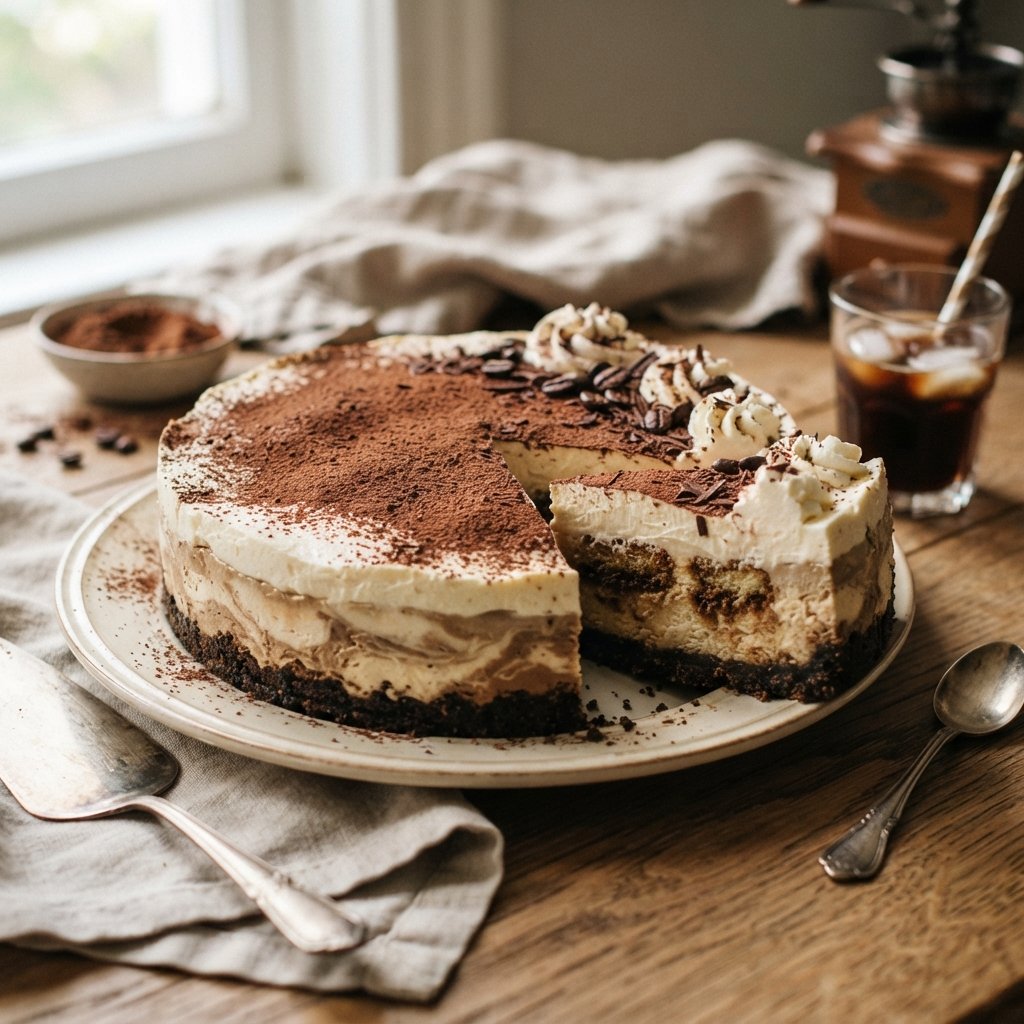
Just before serving, remove the cheesecake from the springform pan. Dust the top generously with unsweetened cocoa powder using a fine-mesh sieve for an even coating. Add chocolate shavings or whole coffee beans for decoration if desired. Slice with a warm knife, wiping the blade clean between each cut to ensure pristine slices.
Tips
- Temperature Control: Ensure all dairy ingredients are at room temperature before mixing. Cold cream cheese will result in a lumpy batter that is difficult to smooth out.
- Coffee Strength: Taste your cold brew concentrate before adding it. If it is too weak, the coffee flavor will get lost against the cheese. If it is too strong, it might bitter the cake. Aim for a balanced robustness.
- Patience is Key: Do not rush the chilling process. Cheesecake continues to set as it chills. Cutting into it too early will result in a soupy mess rather than clean slices.
- Warm Knife Technique: To get professional-looking slices, dip your knife in hot water and wipe it dry before every single cut. This prevents the filling from sticking to the blade.
- Preventing Cracks: If baking any part of the crust or filling, avoid overmixing air into the batter, as expanding air bubbles can cause cracks upon cooling. For this no-bake version, ensure even distribution of liquids.
- Quality Matters: Use high-quality cocoa powder. Dutch-processed cocoa offers a darker color and milder flavor that pairs beautifully with the coffee.
- Storage: Keep the cheesecake covered in the refrigerator. It can absorb odors from other foods easily, which could alter the delicate coffee flavor.
- Ladyfinger Selection: Look for hard, dry ladyfingers rather than soft sponge cakes. The dry ones absorb the coffee better without turning to mush.
- Sweetness Adjustment: Taste your filling before setting. If you prefer a less sweet dessert, reduce the sugar slightly, but remember that sugar also aids in texture.
- Garnish Timing: Only add the cocoa powder right before serving. If added too early, the cocoa will absorb moisture from the filling and become dark and pasty.
Variations and Customizations
- Gluten-Free Option: Substitute traditional ladyfingers with gluten-free sponge fingers or use a crust made from crushed gluten-free chocolate cookies and almond flour.
- Vegan Adaptation: Use cashew-based cream cheese and coconut cream mascarpone alternatives. Ensure the ladyfingers are egg-free, or replace them with a nut-based crust.
- Alcohol Infusion: For an adult version, add a splash of Marsala wine or Kahlúa to the cold brew soaking liquid for the ladyfingers to deepen the complexity.
- White Chocolate Twist: Melt white chocolate into the cheese filling for a sweeter, creamier profile that pairs well with the bitterness of the cocoa dusting.
- Berry Compote: Serve slices with a side of raspberry or strawberry compote. The acidity of the berries cuts through the richness of the cheese and coffee.
- Matcha Fusion: Replace half of the cocoa powder with matcha green tea powder for a unique earthy flavor profile that complements the coffee.
- Nutty Crunch: Add chopped toasted hazelnuts or almonds to the crust for added texture and a nutty aroma that enhances the coffee notes.
- Mini Cheesecakes: Instead of one large cake, prepare this mixture in individual mason jars or cupcake liners for portion-controlled servings.
- Spiced Version: Add a pinch of cinnamon or cardamom to the cheese filling to introduce warm spice notes that evoke a cozy café atmosphere.
- Caramel Drizzle: For the ultimate indulgence, drizzle salted caramel over the top before serving to add a salty-sweet dimension.
Health Considerations and Nutritional Value
While this dessert is undeniably indulgent, understanding its nutritional profile allows for mindful enjoyment. The primary sources of calories in this recipe come from the cream cheese, mascarpone, and sugar. Dairy products provide calcium and protein, which are beneficial for bone health, but they are also high in saturated fats. The cold brew coffee adds antioxidants and a modest amount of caffeine, which can boost metabolism and mental alertness, though the amount per slice is minimal compared to a cup of coffee.
For those monitoring sugar intake, consider using erythritol or stevia blends as sugar substitutes, though this may slightly alter the texture of the filling. The ladyfingers contribute carbohydrates, so gluten-free or almond flour alternatives can lower the glycemic impact. Portion control is the most effective strategy for enjoying this dessert healthily; a thin slice provides the sensory satisfaction without the excessive caloric load of a large wedge. Always consult with a nutritionist if you have specific dietary restrictions regarding dairy, gluten, or caffeine sensitivity.
Ingredients
- 16 ounces (450g) full-fat cream cheese, softened to room temperature
- 8 ounces (225g) mascarpone cheese, softened to room temperature
- 1 cup (200g) granulated sugar, adjusted to taste
- 1 cup (240ml) cold brew coffee concentrate, divided
- 1 teaspoon pure vanilla extract
- 1 package (7 ounces) Italian ladyfingers (Savoiardi)
- 1/4 cup unsweetened cocoa powder, for dusting
- 2 tablespoons chocolate shavings, for garnish
- 1 teaspoon instant espresso powder (optional, for enhanced flavor)
- 1/4 cup heavy cream (optional, for stabilizing the filling)
- Pinch of sea salt to enhance sweetness
Directions
- Prepare a 9-inch springform pan by greasing the sides and lining the bottom with parchment paper.
- In a shallow dish, combine 1/2 cup of the cold brew concentrate with the instant espresso powder if using.
- Quickly dip each ladyfinger into the coffee mixture and arrange them in a tight layer at the bottom of the pan.
- In a large bowl, beat the cream cheese and sugar together until completely smooth and creamy, about 3 minutes.
- In a separate bowl, whip the mascarpone and vanilla extract until soft and airy.
- Gently fold the mascarpone mixture into the cream cheese mixture using a spatula.
- Slowly mix in the remaining 1/2 cup of cold brew concentrate and heavy cream if using, until fully incorporated.
- Pour the filling over the ladyfinger crust and smooth the top with an offset spatula.
- Cover the pan with plastic wrap and refrigerate for at least 8 hours or overnight to set firmly.
- Before serving, run a warm knife around the edge of the pan and release the springform ring.
- Sift the cocoa powder evenly over the top of the cheesecake.
- Garnish with chocolate shavings and serve chilled.
FAQ
Can I make this cheesecake without mascarpone?
While mascarpone provides the authentic Tiramisu texture, you can substitute it with additional cream cheese mixed with a little heavy cream. However, the result will be tangier and less buttery than the original intended recipe.
How long does this cheesecake last in the refrigerator?
When stored properly in an airtight container or tightly wrapped in plastic, this cheesecake will remain fresh for up to 5 days. The flavor often improves after the first day as the coffee infuses further into the filling.
Can I freeze this cheesecake?
Yes, you can freeze the cheesecake before adding the cocoa powder dusting. Wrap it tightly in plastic wrap and then aluminum foil. Thaw it overnight in the refrigerator before adding the cocoa and serving.
Why is my cheesecake too soft?
This usually happens if the dairy ingredients were too warm when mixed or if the chilling time was insufficient. Ensure you wait the full 8 hours, and make sure your cream cheese is not melted, just softened.
Is there alcohol in traditional Tiramisu that I should add?
Traditional recipes often include Marsala wine or rum. You can add a tablespoon to the coffee soaking liquid if you wish, but it is entirely optional for this cold brew fusion version.
Can I use regular hot coffee instead of cold brew?
It is not recommended. Hot coffee can melt the cheese and introduces higher acidity which might affect the setting process. Cold brew is smoother and safer for no-bake dairy desserts.
What if I don’t have a springform pan?
You can use a regular cake pan lined with parchment paper with overhangs to lift the cake out, or serve it directly from a glass dish as a trifle-style dessert.
How do I make the coffee flavor stronger?
Increase the amount of cold brew concentrate slightly or add more instant espresso powder to the soaking liquid. Be careful not to add too much liquid overall, or the filling may not set.
Is this recipe suitable for children?
Yes, provided you omit any alcoholic additions. The caffeine content from the cold brew is minimal per slice, but sensitive children should consume in moderation.
Can I make this gluten-free?
Absolutely. Simply swap the traditional wheat-based ladyfingers for gluten-free sponge fingers or use a crushed nut crust instead.
Summary
A luxurious fusion of Italian Tiramisu and New York Cheesecake infused with smooth cold brew coffee.
Perfectly chilled, cocoa-dusted, and designed for the ultimate decadent dessert experience.