Introduction
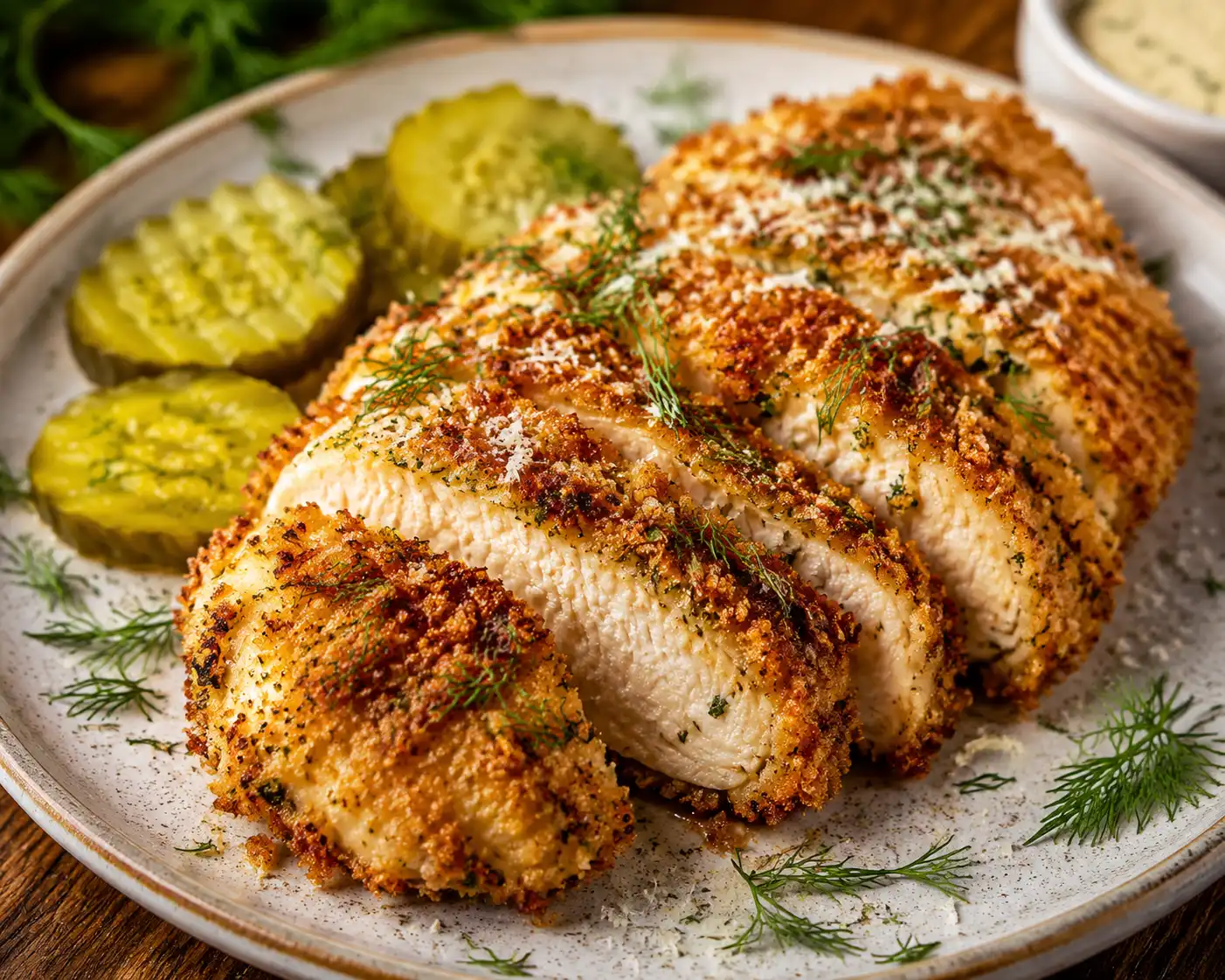
Crispy Dill Pickle Parmesan Chicken is a bold, flavor-forward twist on classic breaded chicken that marries the bright, tangy punch of dill pickles with the rich umami depth of Parmesan cheese and the satisfying crunch of a golden-brown crust. This dish is more than just comfort food—it’s an unforgettable sensory experience where acidity cuts through richness, salt enhances savoriness, and texture delivers irresistible appeal. Whether served as a weeknight dinner, game-day appetizer, or elevated weeknight main, it bridges nostalgia and innovation: think childhood pickle spears reimagined as a gourmet protein centerpiece. Its growing popularity across food blogs, TikTok recipe reels, and gastropubs alike speaks to its universal crowd-pleasing power—equally at home beside creamy mashed potatoes or tucked into a brioche bun as a sandwich.
The History
While fried chicken has roots stretching back centuries—from West African cooking traditions to Scottish frying methods eventually adopted and transformed in the American South—the specific fusion of dill pickle and Parmesan in a chicken preparation is a relatively modern culinary evolution. Its origins can be traced to the late 1990s and early 2000s Midwest U.S., where home cooks began experimenting with “pickle-brined” poultry to add moisture and brightness. The breakthrough came when chefs and home food enthusiasts noticed that finely minced dill pickle relish—or even pulverized dill pickle chips—added not only zing but also subtle moisture and binding properties to breading mixtures. Around the same time, the rise of artisanal, aged Parmigiano-Reggiano availability in mainstream grocery stores (thanks to increased import access and domestic cheesemaking) made Parmesan a go-to for textural and savory enhancement beyond pasta. By the mid-2010s, viral food blogs and YouTube channels began documenting “Pickle-Parm Crusted Chicken,” often crediting Midwestern potluck culture and Wisconsin’s dairy-and-pickle synergy as key influences. Today, it’s a staple on menus from Nashville hot chicken hybrids to upscale farm-to-table bistros—and even appears in competitive cooking shows as a “flavor bomb” challenge ingredient.
Ingredients Breakdown
Every element in Crispy Dill Pickle Parmesan Chicken serves a precise functional and flavor purpose—no filler, no afterthought. Let’s explore each component in depth:
- Chicken Breasts (boneless, skinless): Preferred for their lean, tender texture and large surface area for maximum breading adhesion. Opt for air-chilled, antibiotic-free breasts for superior moisture retention and cleaner taste. Brining (even briefly in buttermilk + pickle juice) significantly improves juiciness and allows the dill notes to permeate deeper.
- Dill Pickles: Not just any pickle—authentic kosher dill spears or chips, preferably cold-packed (not vinegar-pasteurized) for livelier herbaceous notes. Their lactic acid contributes enzymatic tenderness, while their brine adds sodium and volatile aromatic compounds (dill oil, garlic, mustard seed). Finely minced or pulsed in a food processor (with excess liquid squeezed out), they become both flavor agent and natural binder—reducing reliance on eggs.
- Pickle Juice (Brine): A secret weapon. Used in marinades, brines, or even mixed into the egg wash, it amplifies acidity, seasons deeply, and helps break down muscle fibers for tenderness. One tablespoon per cup of buttermilk creates an ideal brine base.
- Grated Parmesan Cheese: Must be freshly grated from a block of authentic Parmigiano-Reggiano (minimum 24-month aged) or high-quality domestic Parmesan. Pre-grated versions contain anti-caking agents (like cellulose) that inhibit browning and create greasiness. Real Parmesan melts slightly under heat, caramelizes at the edges, and imparts nutty, salty, fermented complexity—acting as both seasoning and structural enhancer in the crust.
- Panko Breadcrumbs: Japanese-style coarse breadcrumbs deliver unparalleled lightness and shatteringly crisp texture. Their larger surface area absorbs less oil during frying and crisps faster than fine breadcrumbs. Toasting them lightly in olive oil before use intensifies nuttiness and ensures stability.
- All-Purpose Flour: Serves as the foundational “glue” layer—filling microscopic pores in the chicken surface to create optimal adhesion for the wet and dry components. Enriched flour adds subtle sweetness and structure; gluten-free blends (like rice-tapioca-sorghum) work well for adaptations.
- Eggs & Buttermilk Wash: A double-layer wet mixture (buttermilk for tang and tenderness + eggs for protein binding) creates a viscous, clingy medium that locks in pickle bits and Parmesan. Adding 1 tsp Dijon mustard or a splash of hot sauce boosts emulsification and flavor depth.
- Seasonings: Beyond salt and black pepper, key aromatics include garlic powder (for pungent warmth), onion powder (sweet umami backbone), smoked paprika (for earthy complexity and color), dried dill weed (to echo fresh dill’s floral-anise notes), and a whisper of cayenne (for balanced heat that doesn’t overwhelm).
- Frying Oil: Peanut, avocado, or high-oleic sunflower oil are ideal—high smoke point (450°F+), neutral flavor, and excellent heat stability. Extra virgin olive oil is unsuitable for deep-frying but excellent for finishing drizzle or pan-searing variations.
Step-by-Step Recipe
- Prep & Brine (30 min–2 hours): Slice 2 large boneless, skinless chicken breasts horizontally into ¼-inch cutlets. Place in a shallow dish and cover with brine: 1 cup buttermilk + 3 tbsp dill pickle juice + 1 tsp kosher salt + ½ tsp garlic powder. Refrigerate 30 minutes (up to 2 hours). Longer brining risks over-acidification and mushiness.
- Prepare Components: Mince 6–8 dill pickle spear pieces (½ cup packed) by hand or pulse 5x in food processor—then squeeze *all* excess liquid through cheesecloth or clean kitchen towel until completely dry. Grate ¾ cup (3 oz) fresh Parmigiano-Reggiano. Pulse 1½ cups panko in food processor with ¼ cup grated Parmesan, 1 tsp each garlic powder, onion powder, smoked paprika, dried dill, ½ tsp cayenne, and 1 tsp black pepper until uniformly blended—but don’t over-process into dust. Spread mixture on a rimmed baking sheet and toast in a 375°F oven for 5–7 minutes until golden and fragrant. Cool completely.
- Set Up Breading Station: Three wide, shallow dishes: (1) seasoned flour (1 cup AP flour + 1 tsp salt + ½ tsp white pepper), (2) wet wash (2 large eggs + ¼ cup buttermilk + 1 tbsp Dijon + 1 tbsp pickle juice), (3) toasted panko-Parm mixture.
- Bread with Precision: Remove chicken from brine and pat *extremely* dry with paper towels—moisture is the enemy of crispness. Dredge each cutlet in flour, shaking off excess. Dip fully into wet wash, letting excess drip off for 5 seconds. Press firmly into panko mixture, coating both sides evenly—press again gently for full adherence. Place breaded cutlets on a wire rack set over parchment—not a plate—to prevent steam buildup and soggy undersides.
- Rest Before Cooking (Critical!): Refrigerate breaded chicken for 15–20 minutes. This allows the coating to hydrate slightly, gelatinize starches, and adhere permanently—preventing slippage during frying.
- Fry to Perfection: Heat 1 inch of peanut oil in a heavy-bottomed cast-iron skillet or Dutch oven to 350–360°F (use a deep-fry thermometer—guesswork leads to greasy or burnt results). Carefully lower 2 cutlets at a time (don’t overcrowd) and fry 3–4 minutes per side until deep golden brown, internal temperature reaches 165°F, and crust sounds hollow when tapped. Transfer to a wire rack over paper towels—not a plate—to drain excess oil and preserve crispness.
- Optional Finish: For restaurant-level sheen and extra Parmesan intensity, broil finished chicken 1–2 inches from heating element for 45 seconds—just until cheese bubbles and edges deepen in color.
Tips
- Dryness is Non-Negotiable: Every surface—chicken, pickle bits, hands, utensils—must be bone-dry before breading. Even a trace of water creates steam pockets that lift the crust.
- Double-Dip for Maximum Crunch: After first breading and resting, dip again in egg wash and panko for an ultra-thick, shatter-crisp shell—ideal for sandwich applications.
- Oil Temperature Mastery: Use a thermometer religiously. Too cool = greasy, pale, heavy crust. Too hot = burnt exterior, raw interior. Maintain 350–360°F using medium-low heat and adjust as needed between batches.
- Rest Before Slicing: Let cooked chicken rest 3–5 minutes before cutting. This allows juices to redistribute—ensuring every bite stays moist beneath the crackling exterior.
- Re-Crisp Like a Pro: Leftovers? Skip the microwave. Reheat on a wire rack in a 400°F oven for 8–10 minutes—or air fry at 375°F for 5–6 minutes—until blistering and hot throughout.
- Acidity Balance: If your pickles are overly vinegary, rinse minced bits quickly under cold water and squeeze *thoroughly*. Alternatively, balance with ½ tsp honey or maple syrup in the egg wash.
- Uniform Thickness: Pound cutlets between plastic wrap to exactly ¼-inch thickness. Uneven pieces cook at different rates—leading to dry edges and undercooked centers.
- Freeze for Future Wins: Breaded, uncooked cutlets freeze beautifully for up to 3 months. Place in a single layer on a parchment-lined tray, freeze solid, then transfer to airtight freezer bags. Fry straight from frozen—add 1–2 minutes per side.
Variations and Customizations
This recipe is a versatile canvas—adaptable to dietary needs, global flavors, and creative presentations:
- Gluten-Free Version: Substitute 1:1 gluten-free all-purpose flour blend (with xanthan gum) and certified GF panko (made from rice or corn). Add 1 tbsp psyllium husk powder to the egg wash for improved binding.
- Low-Carb/Keto Adaptation: Replace flour with almond flour and panko with crushed pork rinds + grated Parmesan + dried dill + spices. Use heavy cream instead of buttermilk in the wash for richness without carbs.
- Spicy Dill Kick: Add 1–2 tsp gochujang or chipotle purée to the egg wash—and fold 1 tbsp pickled jalapeño brine into the panko mixture.
- Herb-Forward Gourmet: Swap dried dill for 2 tbsp fresh dill fronds + 1 tbsp lemon zest in the panko. Finish with micro-dill and flaky sea salt.
- Smoky Southern Style: Add 1 tsp liquid smoke to the brine and ½ tsp smoked sea salt to the flour dredge. Serve with bourbon-barbecue dipping sauce.
- Vegan “Chicken” Option: Use thick-cut, pressed tofu or seitan cutlets. Marinate in pickle juice, tamari, nutritional yeast, and liquid smoke. Bread with chickpea flour wash and panko-Parmesan (vegan Parmesan or hemp seed “Parm”)
- Sheet Pan Oven-Baked: Skip frying: spray breaded cutlets generously with avocado oil spray, place on parchment-lined sheet pan, and bake at 425°F for 18–22 minutes, flipping halfway—until golden and 165°F internally. For extra crispness, finish under broiler 1 minute.
- Sandwich Star: Serve on brioche, pretzel roll, or seeded ciabatta with dill pickle mayo (½ cup mayo + 2 tbsp minced pickles + 1 tsp pickle juice + ½ tsp Dijon), lettuce, tomato, and extra thin dill chips.
- Appetizer Size: Cut chicken into 1-inch cubes, skewer with dill sprigs and mini pickle rounds, and air-fry at 400°F for 10–12 minutes. Serve with creamy horseradish-dill dip.
- Global Fusion: Korean-inspired: add gochugaru and ginger to panko; serve with quick kimchi slaw. Mediterranean: add oregano, lemon zest, and crumbled feta to topping; serve with tzatziki.
Health Considerations and Nutritional Value
When prepared mindfully, Crispy Dill Pickle Parmesan Chicken can be part of a balanced diet—with transparency about trade-offs and smart optimizations:
- Protein Powerhouse: A 5-oz serving provides ~38g high-quality, complete protein—supporting muscle synthesis, satiety, and metabolic health. Chicken breast is naturally low in saturated fat (<2g per serving) and contains B6, B12, selenium, and phosphorus.
- Pickle Benefits: Fermented dill pickles (if unpasteurized) contain live probiotics supporting gut microbiome diversity. Even pasteurized varieties retain antioxidants (vitamin C, E), flavonoids, and electrolytes (sodium, potassium)—though sodium content warrants attention for hypertension-prone individuals.
- Parmesan Perks: Authentic Parmigiano-Reggiano is lactose-free, high in calcium (336mg per ¼ cup), bioavailable vitamin K2 (critical for bone and cardiovascular health), and conjugated linoleic acid (CLA), linked in studies to anti-inflammatory effects.
- Frying Facts: Deep-frying increases calorie density (approx. 520–620 kcal per 5-oz serving, depending on oil absorption). However, using heart-healthy oils (high-oleic sunflower, avocado) and proper temperature control minimizes harmful oxidation byproducts. Air-frying reduces calories by ~30% and fat by ~40% without sacrificing crunch.
- Sodium Awareness: Total sodium ranges from 780–1,200mg/serving—primarily from pickle brine, cheese, and added salt. Reduce by using low-sodium pickle juice, omitting added salt in flour/panko, and choosing unsalted butter for toasting panko.
- Gluten & Allergen Notes: Naturally gluten-free if using GF-certified ingredients—but cross-contamination risk exists in shared fryers (e.g., restaurants using same oil for breaded items). Always verify for celiac safety.
- Balanced Pairing Suggestions: Maximize nutrition by serving with roasted cruciferous vegetables (broccoli, Brussels sprouts), quinoa pilaf, or a vibrant arugula salad with lemon vinaigrette—adding fiber, phytonutrients, and healthy fats.
- Portion Perspective: Enjoy as a protein-centric entrée—not an all-day snack. One properly portioned cutlet satisfies hunger without excess, especially when paired with voluminous, low-calorie sides.
Ingredients
- 2 (6–8 oz) boneless, skinless chicken breasts, sliced horizontally into ¼-inch cutlets
- 1 cup buttermilk
- 3 tablespoons dill pickle juice (from jar of kosher dill spears)
- 1 teaspoon kosher salt (for brine)
- ½ teaspoon garlic powder (for brine)
- 6–8 dill pickle spears (½ cup minced, liquid fully squeezed out)
- ¾ cup (3 oz) freshly grated Parmigiano-Reggiano cheese (do not substitute pre-grated)
- 1½ cups panko breadcrumbs
- 1 teaspoon smoked paprika
- 1 teaspoon onion powder
- 1 teaspoon garlic powder
- 1 teaspoon dried dill weed
- ½ teaspoon cayenne pepper (adjust to taste)
- 1 teaspoon freshly ground black pepper
- 1 cup all-purpose flour
- 2 large eggs
- ¼ cup additional buttermilk
- 1 tablespoon Dijon mustard
- 1 tablespoon additional dill pickle juice (for egg wash)
- ½ teaspoon white pepper
- Peanut, avocado, or high-oleic sunflower oil for frying (enough for 1-inch depth)
- Flaky sea salt for finishing (optional)
Directions
- In a shallow dish, whisk together 1 cup buttermilk, 3 tbsp dill pickle juice, 1 tsp kosher salt, and ½ tsp garlic powder. Add chicken cutlets, turning to coat. Cover and refrigerate 30 minutes (no longer than 2 hours).
- Meanwhile, finely mince dill pickles. Place in a clean kitchen towel or cheesecloth and squeeze *vigorously* until completely dry—discard expelled liquid. Set aside.
- In a food processor, combine panko, ¼ cup of the grated Parmesan, smoked paprika, onion powder, garlic powder, dried dill, cayenne, and black pepper. Pulse 4–5 times until evenly blended but still textured. Spread mixture on a rimmed baking sheet and bake at 375°F for 5–7 minutes, stirring once, until golden. Cool completely.
- Set up breading station: (1) Flour mixed with 1 tsp salt and ½ tsp white pepper; (2) Egg wash: whisk eggs, ¼ cup buttermilk, Dijon, 1 tbsp pickle juice, and ½ tsp white pepper; (3) Toasted panko-Parm mixture.
- Remove chicken from brine and pat *extremely* dry with paper towels. Dredge each cutlet in flour, shaking off excess. Dip fully into egg wash, letting excess drip for 5 seconds. Press firmly into panko mixture, coating both sides thoroughly. Place on a wire rack.
- Refrigerate breaded cutlets for 15–20 minutes to set the crust.
- Heat 1 inch of oil in a heavy skillet to 350–360°F. Fry 2 cutlets at a time for 3–4 minutes per side until deep golden brown and internal temperature reaches 165°F. Drain on wire rack.
- Optional: Broil 45 seconds for intensified Parmesan bubbling and color.
- Rest 3–5 minutes before serving. Garnish with flaky salt and fresh dill if desired.
FAQ
- Can I make this ahead of time?
- Absolutely. Breaded, uncooked cutlets freeze flawlessly for up to 3 months. Freeze in a single layer first, then stack in freezer bags. Fry from frozen—add 1–2 minutes per side. Cooked chicken reheats best in oven or air fryer (never microwave) to preserve crispness.
- Why does my breading fall off?
- Three primary causes: (1) Inadequate drying of chicken or pickle bits, (2) Skipping the refrigerated rest step (which sets the crust), (3) Overcrowding the pan—causing oil temperature to drop and steaming instead of frying. Ensure every surface is bone-dry and always rest before cooking.
- Can I bake instead of fry?
- Yes—with caveats. For true crispness, bake at 425°F on a wire rack over a sheet pan, spraying generously with oil. Expect 18–22 minutes total, flipping halfway. Finish under broiler 1 minute. Texture won’t match deep-fry perfection—but it’s delicious, lower-fat, and family-friendly.
- What’s the best pickle to use?
- Kosher dill spears—not sweet, not bread-and-butter. Look for refrigerated section jars labeled “naturally fermented” or “lacto-fermented” for live cultures and brighter flavor. Avoid vinegar-heavy, shelf-stable brands unless you rinse and balance acidity.
- Is Parmesan necessary—or can I substitute?
- Parmesan is integral—not optional—for its unique crystalline crunch, umami depth, and browning chemistry. Pecorino Romano offers sharper saltiness; Asiago adds nuttiness. Avoid mozzarella or cheddar—they melt excessively and lack structure. Vegan “Parm” made from cashews/nutritional yeast works functionally but lacks authentic fermentation notes.
- How do I keep it crispy when serving?
- Always serve on a wire rack—not a plate—to prevent trapped steam from softening the bottom. If plating, place cutlets atop a bed of shredded lettuce or cabbage slaw to elevate and insulate. Never cover with foil or lids.
- Can I use chicken thighs?
- Yes—but adjust technique. Thighs are fattier and more forgiving, so reduce brining time to 15 minutes. They require 4–5 minutes per side when frying (170°F internal temp recommended for optimal juiciness). Skin-on thighs offer even richer flavor but require careful breading around the skin edge.
- My crust isn’t golden—what went wrong?
- Most likely: oil too cool (below 350°F), insufficient browning time, or Parmesan with anti-caking agents. Also check if your panko was stale—fresh panko browns dramatically better. Toasting beforehand is non-negotiable for color and flavor development.
- Can I make a large batch for meal prep?
- Yes—double or triple the breading station and fry in batches. Keep cooked cutlets warm in a 200°F oven on a wire rack for up to 30 minutes. For weekly prep, freeze uncooked breaded cutlets and fry as needed—maintaining peak freshness and texture.
- What sauces pair best?
- Classic dill pickle ranch (ranch + 1 tbsp minced pickles + 1 tsp pickle juice), creamy horseradish, lemon-aioli, spicy sriracha-honey, or even a light chimichurri for herbal contrast. Avoid heavy, sugary BBQ—its sweetness clashes with dill’s acidity.
Summary
Crispy Dill Pickle Parmesan Chicken is a masterclass in balancing bold, tangy brightness with deep savory richness—where house-brined chicken cutlets meet a shatter-crisp, herb-kissed crust studded with caramelized Parmigiano-Reggiano and finely minced kosher dills.
It’s equally at home as a weeknight triumph, a showstopping dinner party centerpiece, or a crave-worthy sandwich star—offering customizable nutrition, adaptable techniques, and unforgettable texture that transforms humble pantry staples into something truly extraordinary.