Introduction
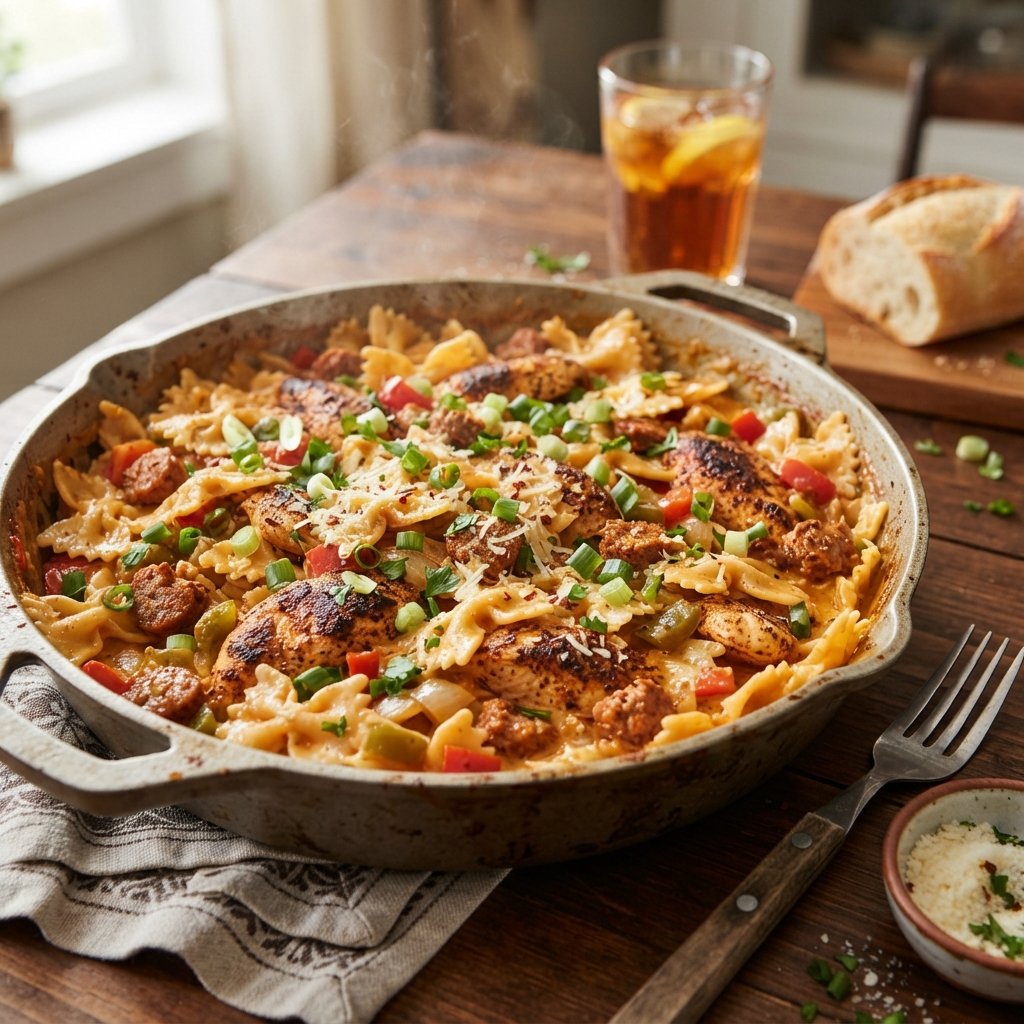
Welcome to the ultimate guide for creating a restaurant-quality meal right in the comfort of your own kitchen. The Creamy Cajun Chicken Bowtie Pasta Skillet is not merely a dinner option; it is a symphony of flavors that combines the robust, spicy heritage of Louisiana cooking with the comforting embrace of Italian pasta traditions. This dish has skyrocketed in popularity among home cooks and food enthusiasts alike because it perfectly balances convenience with gourmet taste. Imagine tender pieces of chicken coated in a zesty Cajun rub, seared to perfection, and then nestled into a rich, velvety sauce infused with garlic, herbs, and a hint of heat. All of this is tossed with al dente bowtie pasta that holds every drop of the creamy goodness in its ridges.
What makes this skillet meal truly exceptional is its one-pan nature. In today’s fast-paced world, the prospect of minimizing cleanup while maximizing flavor is a tremendous advantage. This recipe is designed to be a weeknight hero, ready in under forty minutes, yet sophisticated enough to serve to guests during a casual dinner party. The interplay between the smoky paprika, the earthy thyme, the pungent garlic, and the soothing heavy cream creates a depth of flavor that belies the simplicity of the preparation method. Whether you are a seasoned chef looking to expand your repertoire or a beginner eager to master the art of skillet cooking, this dish offers a forgiving yet rewarding culinary experience. Prepare to indulge in a bowl of warmth, spice, and creamy satisfaction that will undoubtedly become a staple in your household rotation.
The History
To truly appreciate the Creamy Cajun Chicken Bowtie Pasta Skillet, one must delve into the rich cultural tapestry from which its flavors originate. Cajun cuisine is rooted in the history of the Acadians, French colonists who were expelled from Canada in the 18th century and eventually settled in the bayous and prairies of Louisiana. Isolated from mainstream French culinary influences, they adapted their cooking to the local ingredients available to them, creating a rustic, hearty style of cooking known as “country cooking.” The hallmark of Cajun food is the “holy trinity” of onions, bell peppers, and celery, along with a heavy reliance on spices like cayenne, paprika, and black pepper to preserve food and add vitality to simple dishes.
The integration of pasta into Cajun cooking is a fascinating example of American culinary fusion. While traditional Cajun dishes often feature rice, such as in jambalaya or étouffée, the American adaptation of these flavors frequently incorporates pasta due to its widespread availability and popularity across the United States. The creamy element in this specific dish draws inspiration from Creole influences, which historically had more access to dairy and tomatoes due to greater urbanization in New Orleans compared to rural Cajun areas. The skillet method itself is a timeless cooking technique that dates back centuries, representing the most efficient way to cook over an open fire or a single heat source. By combining the spicy, aromatic profile of Cajun seasoning with the comforting texture of cream sauce and the structural integrity of bowtie pasta, this dish represents a modern evolution of traditional flavors, bridging the gap between historical roots and contemporary convenience.
Ingredients Breakdown
Understanding the role of each component in this recipe is crucial for mastering the final flavor profile. Let us dissect the key players in this culinary ensemble.
The Protein: Chicken
We typically use boneless, skinless chicken breasts or thighs. Breasts offer a leaner profile and absorb the seasoning well, while thighs provide a higher fat content that ensures juiciness even if slightly overcooked. The choice depends on your dietary preference, but both work exceptionally well when cut into bite-sized pieces for even cooking.
The Spice Blend: Cajun Seasoning
This is the heart of the dish. A quality Cajun seasoning blend should contain paprika, garlic powder, onion powder, dried oregano, dried thyme, cayenne pepper, and black pepper. Store-bought blends are convenient, but making your own allows you to control the sodium levels and adjust the heat intensity to your personal tolerance. The paprika provides smokiness and color, while the cayenne delivers the signature kick.
The Cream Base
Heavy cream or heavy whipping cream is preferred over milk because of its high fat content, which prevents the sauce from curdling when heated and provides a luxurious, thick consistency. Some cooks opt for half-and-half to lighten the dish, but you may need a cornstarch slurry to achieve the same thickness. Cream cheese is sometimes added as a secret ingredient to stabilize the emulsion and add a tangy depth.
The Pasta: Bowtie (Farfalle)
Bowtie pasta is not chosen merely for its aesthetic appeal. Its unique shape features ridges and a pinched center that are excellent at trapping thick, creamy sauces. Unlike smoother pasta shapes like penne or macaroni, farfalle ensures that every bite is coated evenly. It also holds its shape well during the tossing process, preventing the dish from becoming mushy.
Aromatics and Vegetables
Garlic is non-negotiable; fresh minced garlic provides a pungent aroma that powdered garlic cannot replicate. Onions and bell peppers contribute sweetness and texture, balancing the heat of the spices. Spinach or kale is often added at the end to introduce a nutrient-dense green element that wilts beautifully into the hot sauce.
Step-by-Step Recipe
Creating this dish is a journey through several stages of cooking, each building upon the last to create layers of flavor. Here is a narrative walkthrough of the process.
Phase 1: Preparation and Seasoning
Begin by gathering all your ingredients and preparing your workspace, a technique known as mise en place. Cut the chicken into uniform cubes to ensure they cook at the same rate. In a small bowl, mix your Cajun seasoning. Pat the chicken pieces dry with paper towels; this is a critical step because moisture on the surface of the meat creates steam, which prevents browning. Toss the chicken generously in the seasoning blend, ensuring every surface is coated. This coating will create a flavorful crust when seared.
Phase 2: Searing the Chicken
Heat a large skillet over medium-high heat. Add a combination of olive oil and butter. The oil raises the smoke point to prevent burning, while the butter adds richness. Once the fat is shimmering, add the chicken in a single layer. Do not overcrowd the pan, as this will lower the temperature and cause the chicken to boil in its own juices. Let the chicken sear undisturbed for a few minutes until a golden-brown crust forms. Flip and cook until the interior is no longer pink. Remove the chicken from the skillet and set it aside on a plate. This prevents the chicken from becoming tough while you build the sauce.
Phase 3: Building the Aromatic Base
In the same skillet, do not wipe out the browned bits left by the chicken. These bits, known as fond, are packed with flavor. Add a bit more butter if needed, then toss in your diced onions and bell peppers. Sauté them until they soften and become translucent. Add the minced garlic during the last minute of cooking to prevent it from burning, which can introduce a bitter taste. The heat of the pan will release the essential oils in the garlic, filling your kitchen with an irresistible aroma.
Phase 4: Creating the Sauce
Pour in the chicken broth to deglaze the pan. Use a wooden spoon to scrape up the fond from the bottom, incorporating those caramelized flavors into the liquid. Let this simmer for a moment to reduce slightly. Lower the heat to medium-low and gradually stir in the heavy cream. If you are using cream cheese, add it now and whisk until smooth. Allow the sauce to simmer gently; avoid a rolling boil, which can cause the cream to separate. Stir in grated Parmesan cheese, which acts as a thickener and adds a salty, umami kick.
Phase 5: Combining and Finishing
While the sauce simmers, cook your bowtie pasta in a separate pot of salted boiling water until it is al dente. Drain the pasta, reserving a cup of the starchy pasta water. Add the cooked pasta and the seared chicken back into the skillet with the sauce. Toss everything together gently. If the sauce is too thick, add a splash of the reserved pasta water to loosen it. Finally, stir in fresh spinach or parsley for color and freshness. Serve immediately while hot and creamy.
Tips
To elevate your Creamy Cajun Chicken Bowtie Pasta Skillet from good to extraordinary, consider these professional tips and tricks.
- Reserve Pasta Water: Always save a cup of the starchy water before draining your pasta. This liquid gold helps emulsify the sauce, making it cling better to the noodles without needing excessive cream.
- Control the Heat: Cajun seasoning can vary wildly in spice levels between brands. Taste your seasoning blend before adding it to the chicken. If you are sensitive to heat, reduce the cayenne pepper in your homemade blend.
- Don’t Overcook the Chicken: Chicken breast dries out quickly. Remove it from the pan as soon as it reaches an internal temperature of 165°F (74°C). It will continue to cook slightly when added back to the hot sauce.
- Fresh vs. Dried Herbs: While dried herbs are perfect for the seasoning rub, use fresh parsley or chives as a garnish at the end. The bright, grassy flavor of fresh herbs cuts through the richness of the cream.
- Cheese Quality: Use freshly grated Parmesan cheese rather than the pre-shaken variety found in green cans. Fresh cheese melts more smoothly and does not contain anti-caking agents that can make your sauce grainy.
- Pan Selection: Use a deep skillet or a sauté pan with high sides. This allows you to toss the pasta vigorously without spilling the creamy sauce over your stovetop.
- Resting Time: Let the dish sit for two minutes off the heat before serving. This allows the flavors to meld together and the sauce to thicken slightly to the perfect coating consistency.
Variations and Customizations
One of the greatest strengths of this skillet meal is its versatility. You can easily adapt it to suit different dietary needs or flavor preferences.
Protein Swaps
If chicken isn’t your preference, this sauce pairs beautifully with shrimp. Add peeled and deveined shrimp in the last few minutes of cooking, as they cook much faster than chicken. Andouille sausage is another authentic Cajun option that adds a smoky, spicy depth. For a vegetarian version, substitute the chicken with firm tofu cubes or chickpeas, ensuring they are well-seasoned and crisped before adding to the sauce.
Vegetable Additions
To increase the nutritional density, feel free to add more vegetables. Sliced mushrooms add an earthy umami flavor that complements the cream. Broccoli florets can be steamed lightly and tossed in for added crunch. Sun-dried tomatoes offer a sweet and tangy contrast to the spicy Cajun notes, while artichoke hearts provide a tender texture that absorbs the sauce wonderfully.
Dietary Modifications
For a gluten-free version, simply swap the bowtie pasta for a high-quality brown rice or corn-based gluten-free pasta. Be careful not to overcook gluten-free pasta as it can become mushy quickly. To make the dish dairy-free, substitute the heavy cream with full-fat coconut milk or a cashew-based cream alternative. Use nutritional yeast instead of Parmesan cheese to achieve a cheesy flavor without dairy.
Spice Levels
If you love extreme heat, add diced jalapeños or a dash of hot sauce like Tabasco or Crystal into the cream mixture. Conversely, for a family-friendly version suitable for children, omit the cayenne pepper from the seasoning blend and use a mild paprika instead.
Health Considerations and Nutritional Value
While this dish is indulgent, understanding its nutritional profile allows you to enjoy it mindfully. The primary sources of calories in this recipe come from the heavy cream, the pasta, and the cheese. A standard serving can be relatively high in saturated fats and carbohydrates. However, it is also a significant source of protein due to the chicken, which is essential for muscle repair and satiety.
To improve the health profile, consider using whole wheat bowtie pasta, which adds fiber and helps regulate blood sugar levels. You can also reduce the amount of heavy cream by substituting half of it with low-sodium chicken broth or evaporated milk. Increasing the volume of vegetables like spinach, peppers, and onions bulk up the meal with vitamins and minerals without adding significant calories. Portion control is key; serving this dish alongside a large green salad with a vinaigrette dressing can help balance the meal and reduce the overall calorie density per plate. For those monitoring sodium intake, making your own Cajun seasoning allows you to eliminate added salt, relying instead on the potency of the herbs and spices for flavor.
Ingredients
Below is the comprehensive list of ingredients required to prepare this dish for approximately four to six servings.
- Chicken: 1.5 pounds of boneless, skinless chicken breasts or thighs, cut into 1-inch cubes.
- Cajun Seasoning: 2 to 3 tablespoons (adjust based on spice tolerance).
- Pasta: 1 pound of bowtie (farfalle) pasta, uncooked.
- Fat: 2 tablespoons of olive oil and 2 tablespoons of unsalted butter.
- Aromatics: 1 medium yellow onion (diced), 1 red bell pepper (diced), 4 cloves of garlic (minced).
- Liquid Base: 1 cup of low-sodium chicken broth.
- Cream: 1.5 cups of heavy whipping cream.
- Cheese: 1 cup of freshly grated Parmesan cheese.
- Greens: 2 cups of fresh spinach leaves, packed.
- Garnish: Fresh chopped parsley and additional cracked black pepper.
- Salt: To taste (be cautious as the seasoning and cheese are salty).
Directions
Follow these precise instructions to ensure the perfect texture and flavor balance.
- Boil Water: Bring a large pot of salted water to a boil. Cook the bowtie pasta according to package directions until al dente. Drain and set aside, reserving ½ cup of pasta water.
- Season Chicken: While the water heats, toss the cubed chicken with the Cajun seasoning until evenly coated.
- Sear Chicken: Heat olive oil and 1 tablespoon of butter in a large skillet over medium-high heat. Add chicken in a single layer. Cook for 5-7 minutes until browned and cooked through. Remove chicken from the pan.
- Sauté Vegetables: Add the remaining butter to the skillet. Add onions and bell peppers. Cook for 3-4 minutes until softened. Add garlic and cook for 1 minute until fragrant.
- Deglaze: Pour in the chicken broth. Scrape the bottom of the pan to release browned bits. Simmer for 2 minutes.
- Make Sauce: Reduce heat to low. Stir in the heavy cream and Parmesan cheese. Simmer gently for 3-5 minutes until the sauce thickens slightly. Do not boil vigorously.
- Combine: Add the cooked pasta, seared chicken, and fresh spinach to the skillet. Toss to combine and coat everything in the sauce. If too thick, add reserved pasta water.
- Serve: Garnish with fresh parsley and serve immediately while hot.
FAQ
Here are answers to some of the most common questions regarding this recipe.
Can I make this dish ahead of time?
Yes, but with caution. Pasta tends to absorb sauce as it sits, which can make the dish dry. If preparing ahead, store the sauce and chicken separately from the pasta. Reheat the sauce and mix with freshly cooked pasta for the best results. If you must store it combined, add a splash of milk or broth when reheating to loosen the sauce.
Can I freeze Creamy Cajun Chicken Pasta?
Cream-based sauces do not freeze well as they can separate and become grainy upon thawing. It is generally recommended to enjoy this dish fresh. If you must freeze it, expect a change in texture and consider using a stabilizer like cream cheese to help maintain emulsion.
What can I use instead of heavy cream?
You can use half-and-half for a lighter version, though the sauce will be thinner. Coconut milk is a great dairy-free alternative that pairs surprisingly well with Cajun spices. Evaporated milk is another option that provides creaminess with less fat.
Why is my sauce grainy?
Grainy sauce usually results from high heat causing the cheese or cream to break. Always simmer cream sauces on low heat and add cheese gradually while stirring constantly. Using freshly grated cheese also prevents anti-caking agents from causing texture issues.
Is this dish very spicy?
It depends on the Cajun seasoning used. Most commercial blends have a moderate kick. If you want mild flavor, use half the recommended seasoning amount. If you want it fiery, add extra cayenne or fresh jalapeños.
Summary
This Creamy Cajun Chicken Bowtie Pasta Skillet combines spicy Louisiana flavors with rich cream sauce for a quick one-pan meal.
Perfect for weeknight dinners, it offers customizable ingredients and robust taste in under forty minutes.