Introduction
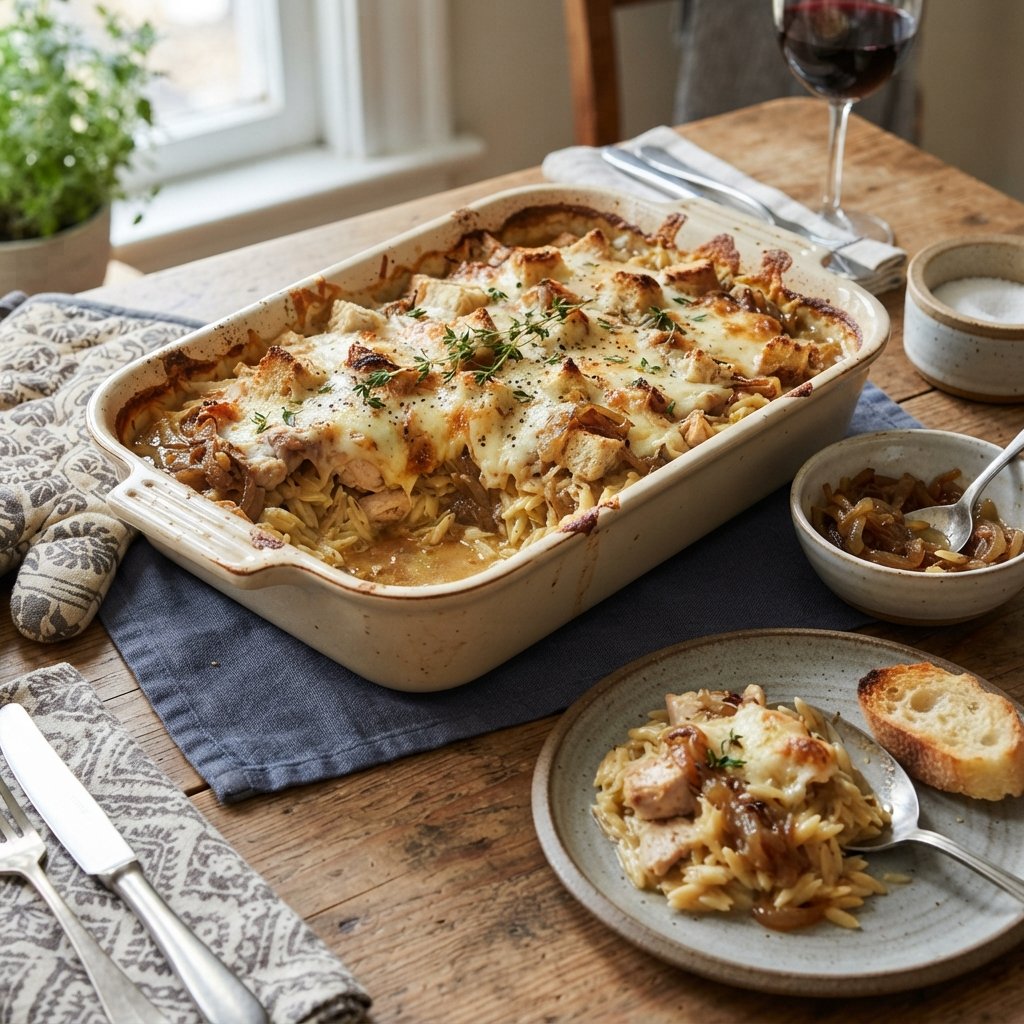
There is a specific kind of comfort found in the intersection of classic French bistro flavors and hearty, home-style American casseroles. The French Onion Chicken Orzo Casserole represents the pinnacle of this culinary marriage. Imagine the deep, savory sweetness of caramelized onions, traditionally served in a steaming bowl of soup, transformed into a rich, creamy sauce that coats tender bites of chicken and pillowy orzo pasta. Topped with a blanket of melted Gruyère and mozzarella, this dish offers a textural symphony that is both sophisticated enough for a dinner party and cozy enough for a weeknight family meal.
This recipe takes the soul-warming essence of French Onion Soup—often a starter—and elevates it to a main course status. By incorporating orzo, a rice-shaped pasta that perfectly absorbs the beefy broth and onion juices, we create a one-pan wonder that minimizes cleanup while maximizing flavor. Whether you are looking to impress guests or simply need a reliable, delicious meal to feed a hungry family, this casserole delivers layers of umami-rich goodness in every forkful.
The History
To understand the lineage of this dish, we must look back to the streets of Paris and the concept of the “casserole” itself. French Onion Soup (Soupe à l’oignon) has roots dating back to Roman times, but it became a staple of Parisian working-class cuisine in the 18th century. It was known as a restorative dish, often eaten late at night after a long shift or a night of revelry. The key component was always the onion, slowly cooked until it turned a deep mahogany brown, releasing its natural sugars.
Fast forward to the mid-20th century in the United States, where the casserole became a cultural icon. Post-WWII convenience cooking saw families combining proteins, starches, and canned soups into baked dishes. The “Chicken and Rice” casserole became a standard. The French Onion Chicken Orzo Casserole is a modern evolution of these two histories. It rejects the processed “cream of” soups of the 1950s in favor of the authentic, slow-cooked onion technique of the French, while utilizing orzo—a pasta that has gained immense popularity in Western kitchens over the last two decades for its versatility and quick cooking time. This dish bridges the gap between old-world technique and new-world comfort.
Ingredients Breakdown
Understanding the role of each component is vital for mastering this recipe. This isn’t just a mix-and-match situation; the chemistry between these ingredients creates the signature flavor profile.
The Onions
This is the heart of the dish. You need a large quantity of yellow onions. Yellow onions have a high sulfur content and sugar balance that makes them ideal for caramelizing. Unlike sweet onions (like Vidalia), which can turn to mush too quickly, yellow onions hold their structure better while developing that essential deep, savory-sweet flavor. Do not rush this step; the color of your onions dictates the color and depth of your entire sauce.
The Chicken
Boneless, skinless chicken thighs are the preferred choice here. While breasts are leaner, thighs contain more fat and connective tissue, which means they remain juicy and tender even after baking in the oven. They absorb the beef broth flavors more readily than breasts, which can sometimes dry out in a long bake.
The Orzo
Orzo is often mistaken for rice, but it is actually a short-cut pasta made from semolina flour. Its shape is crucial because it has a high surface-area-to-volume ratio. This allows it to soak up the beef broth and onion juices like a sponge, swelling up to become tender and flavorful. If you use long pasta like spaghetti, the flavor distribution will be uneven.
The Cheese
Authentic French Onion Soup uses Gruyère. For this casserole, we use a blend. Gruyère provides the nutty, earthy, slightly salty flavor profile that defines the “French Onion” taste. However, Gruyère can be oily when melted. We blend it with Mozzarella or Provolone to provide the “stretch” and creamy texture that makes a casserole so satisfying.
The Liquid (Beef Broth)
Since we aren’t using a cream-based soup base, the liquid is primarily beef broth. A high-quality, low-sodium beef broth is essential. It provides the dark, rich body of the sauce. Chicken broth can be used, but it will result in a lighter, less robust flavor profile that misses the mark of the traditional French Onion taste.
Step-by-Step Recipe Overview
Before diving into the specific measurements, here is the logical flow of cooking this dish to ensure success.
- The Sear: We begin by browning the chicken. This creates the “fond” (browned bits) on the bottom of the pan, which is pure flavor.
- The Caramelize: We remove the chicken and dedicate time to the onions. This is the longest step but the most important.
- The Deglaze: We use wine or broth to scrape up those browned bits from the chicken step, integrating them into the onion mixture.
- The Simmer: The orzo and liquids are combined. The pasta cooks directly in the sauce, thickening it naturally.
- The Bake: The mixture goes into the oven to finish cooking the pasta and meld the flavors.
- The Finish: Cheese is added at the very end to melt and bubble without burning.
Tips for Success
- Patience with Onions: True caramelization takes 30 to 45 minutes. If you rush this and the onions are only translucent, your sauce will lack depth. Cook them on medium-low heat until they are a deep golden brown.
- Don’t Overcook the Orzo Initially: Since the orzo will continue to cook in the oven, you want to undercook it slightly on the stovetop. It should be al dente (firm to the bite) before it goes into the baking dish. If it’s fully soft before baking, it will turn to mush.
- Room Temperature Ingredients: Try to let your chicken and broth come closer to room temperature before combining. Adding cold liquid to a hot pan can seize the proteins and stop the cooking process unevenly.
- The Bread Crust: For an extra authentic touch, toast some baguette slices and place them on top of the casserole before adding the cheese. This mimics the traditional crouton found in French Onion Soup.
- Resting Time: Let the casserole rest for 10 minutes after taking it out of the oven. This allows the sauce to thicken slightly and makes serving much easier.
Variations and Customizations
While the classic recipe is divine, this dish is highly adaptable to dietary needs and pantry staples.
Vegetarian Version
To make this meat-free, simply omit the chicken. Replace the chicken protein with hearty mushrooms (like Cremini or Portobello) sautéed until browned. Use a robust vegetable broth instead of beef broth. You can also add a can of drained lentils for extra protein and texture.
Low-Carb / Keto Adaptation
Orzo is wheat-based and high in carbs. To make this Keto-friendly, substitute the orzo with cauliflower rice or konjac rice. Note that cauliflower rice cooks much faster, so you should skip the stovetop simmer step and simply mix the raw cauliflower rice with the sauce before baking.
Creamier Texture
If you prefer a richer, Alfredo-style consistency, stir in a half-cup of heavy cream or a block of cream cheese during the simmering stage. This adds a velvety texture that contrasts beautifully with the sharp onions.
Spicy Kick
French Onion Soup is rarely spicy, but this casserole can handle heat. Add a teaspoon of red pepper flakes or a diced jalapeño when sautéing the onions to introduce a subtle warmth that cuts through the richness of the cheese.
Health Considerations and Nutritional Value
This dish is a balanced meal containing protein, carbohydrates, and fats, but there are a few health factors to consider.
Sodium Content: The primary concern in French Onion dishes is sodium. Beef broth, Worcestershire sauce, and cheese are all naturally salty. To mitigate this, always choose “Low Sodium” or “No Salt Added” beef broth. You can control the salt level by adding it at the end of cooking rather than the beginning.
Caloric Density: The cheese topping and the oil used for caramelizing onions add significant calories. A standard serving can range from 450 to 600 calories depending on portion size. To lighten it up, use a sharp cheddar or reduced-fat Gruyère; because the flavor is stronger, you can use less of it while maintaining taste satisfaction.
Nutritional Highlights: Onions are rich in antioxidants and Vitamin C. Chicken provides lean protein essential for muscle repair. If using whole wheat orzo, you increase the fiber content significantly, aiding in digestion and blood sugar regulation.
Ingredients
- Chicken: 1.5 lbs boneless, skinless chicken thighs, cut into 1-inch bite-sized pieces
- Onions: 4 large yellow onions, thinly sliced
- Orzo: 1 ½ cups dry orzo pasta
- Broth: 4 cups low-sodium beef broth (plus ½ cup extra if needed)
- Wine (Optional): ½ cup dry white wine or dry sherry (for deglazing)
- Butter & Oil: 2 tbsp unsalted butter and 2 tbsp olive oil
- Aromatics: 3 cloves garlic, minced; 1 tsp fresh thyme leaves (or ½ tsp dried)
- Seasoning: 1 tbsp Worcestershire sauce, ½ tsp black pepper, salt to taste
- Cheese Topping: 1 cup shredded Gruyère cheese, ½ cup shredded Mozzarella cheese
- Garnish: Fresh parsley, chopped
Directions
- Preheat and Prep: Preheat your oven to 375°F (190°C). Grease a 9×13 inch baking dish or a large casserole dish with cooking spray or butter.
- Sear the Chicken: In a large, deep skillet or Dutch oven, heat 1 tablespoon of olive oil over medium-high heat. Season the chicken pieces with salt and pepper. Add the chicken to the pan in a single layer (do not overcrowd; do it in batches if necessary). Cook for 3-4 minutes per side until golden brown. The chicken does not need to be cooked through yet. Remove chicken from the pan and set aside on a plate.
- Caramelize the Onions: Reduce heat to medium. Add the butter and remaining olive oil to the same pan. Add the sliced onions. Cook, stirring occasionally, for about 20-30 minutes. You want the onions to soften, turn golden, and eventually become a deep brown color. If the pan gets too dry, add a splash of water. This step is crucial for flavor.
- Deglaze: Once onions are caramelized, add the minced garlic and thyme. Cook for 1 minute until fragrant. Pour in the white wine (or ½ cup of broth) to deglaze the pan. Use a wooden spoon to scrape up all the browned bits (fond) from the bottom of the pan. Let the liquid reduce by half.
- Combine and Simmer: Stir in the Worcestershire sauce and black pepper. Add the beef broth and bring to a simmer. Stir in the dry orzo pasta. Return the seared chicken (and any juices on the plate) to the pan. Stir everything together.
- Transfer to Dish: Pour the entire mixture from the skillet into your prepared baking dish. Ensure the pasta is submerged in the liquid. If it looks too dry, add a splash more broth.
- Bake: Cover the dish tightly with aluminum foil. Bake in the preheated oven for 20 minutes. Remove the foil and bake for an additional 10-15 minutes, or until the orzo is tender and most of the liquid has been absorbed.
- Add Cheese: Remove the casserole from the oven. Sprinkle the Gruyère and Mozzarella cheese evenly over the top. Return the dish to the oven (uncovered) for 3-5 minutes, or until the cheese is melted and bubbly. For a browned top, switch the oven to “Broil” for the last 1-2 minutes, watching closely so it doesn’t burn.
- Serve: Let the casserole rest for 10 minutes. Garnish with fresh chopped parsley and serve warm.
FAQ
Can I make this ahead of time?
Yes. You can assemble the casserole up to the point of baking (before adding the cheese). Cover and refrigerate for up to 24 hours. When ready to cook, let it sit on the counter for 20 minutes, then bake. You may need to add 5-10 minutes to the baking time since the dish is starting cold.
My orzo is still crunchy. What do I do?
Orzo absorption rates vary by brand. If the liquid is gone but the pasta is hard, simply pour in a little more hot beef broth or water, cover with foil, and return to the oven for another 5-10 minutes.
Can I freeze this?
Yes, but for best results, freeze it before adding the cheese. Cool the casserole completely, wrap tightly in plastic wrap and foil, and freeze for up to 3 months. Thaw in the refrigerator overnight before reheating. Add the cheese fresh before the final bake.
What can I use instead of Gruyère?
If Gruyère is unavailable or too expensive, Swiss cheese is the closest substitute in flavor. Fontina or Provolone are also excellent melting cheeses that work well in this context.
Summary
This French Onion Chicken Orzo Casserole combines the deep, savory sweetness of caramelized onions with tender chicken and pasta in a rich beef broth, all topped with melted Gruyère. It is the ultimate comfort food that brings the elegance of a French bistro into a simple, one-dish family meal.