Lemon Poppy Seed Cheesecake Bars: A Zesty Delight for Any Occasion
The History
The origins of cheesecake can be traced back to ancient Greece, where it was served to athletes during the first Olympic Games in 776 BCE as a source of strength and energy. Over time, cheesecake evolved across cultures—adopted by the Romans, refined in Europe, and eventually transformed into the rich, creamy dessert we know today in America. The modern American cheesecake, particularly the New York-style version, emerged in the early 20th century with the advent of cream cheese, popularized by brands like Philadelphia.
Poppy seeds, on the other hand, have been used in culinary traditions for thousands of years, particularly in Eastern European and Middle Eastern cuisines. Known for their nutty flavor and crunchy texture, poppy seeds found their way into cakes, breads, and pastries, often symbolizing abundance and prosperity.
The fusion of lemon and poppy seeds gained popularity in the mid-20th century, especially in muffins and quick breads, thanks to the bright, citrusy tang that cuts through the richness of baked goods. It wasn’t long before bakers began experimenting with this dynamic duo in other desserts. The Lemon Poppy Seed Cheesecake Bar is a relatively recent innovation—likely born in the 1990s or early 2000s—as home bakers sought creative ways to combine the velvety texture of cheesecake with the refreshing zest of lemon and the subtle crunch of poppy seeds.
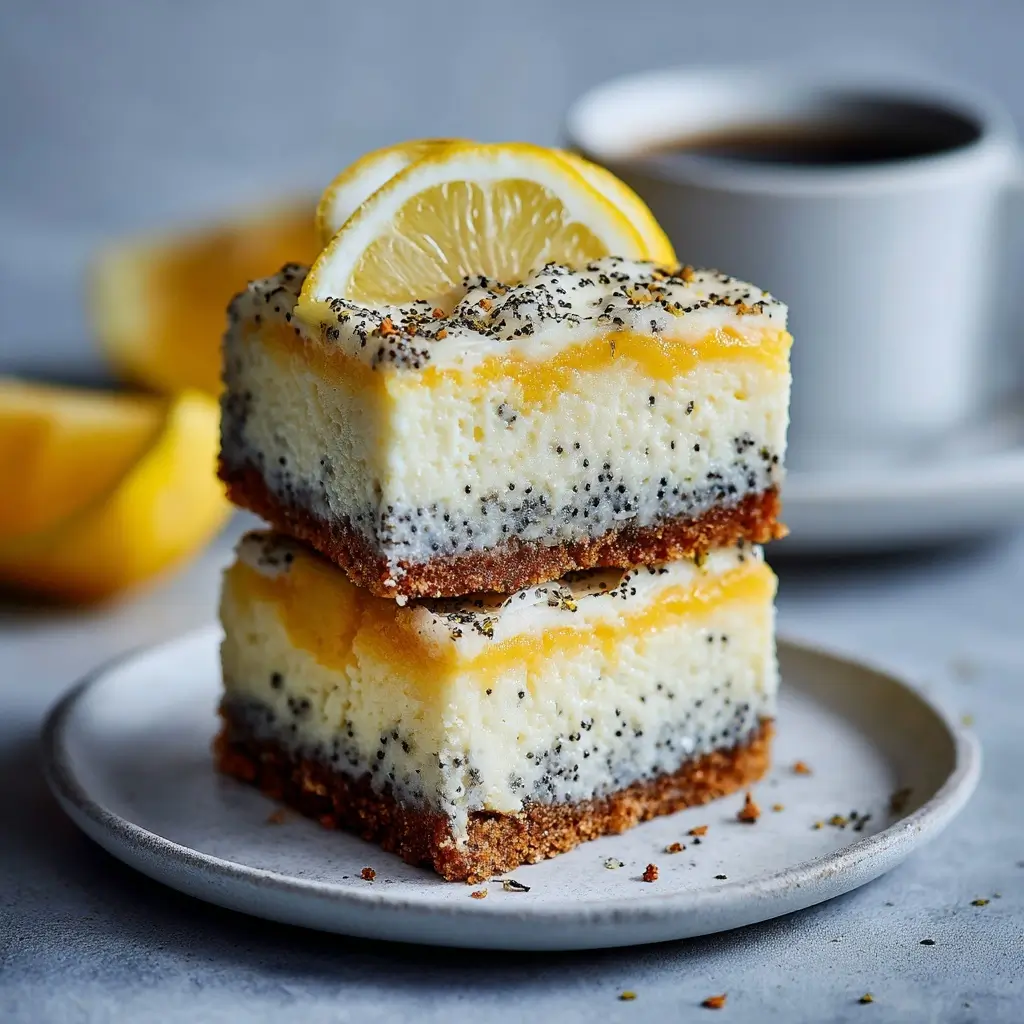
These bars became a staple at brunches, baby showers, and springtime gatherings, offering a portable, sliceable treat that balances indulgence with a hint of brightness. Today, they are celebrated not only for their exquisite taste but also for their elegant appearance—golden crust, creamy filling, and a delicate crumb studded with dark specks of poppy seeds.
Ingredients Breakdown
Creating the perfect Lemon Poppy Seed Cheesecake Bars requires a harmonious balance of textures and flavors. Each ingredient plays a crucial role—from providing structure and richness to delivering zing and crunch. Here’s a detailed look at what goes into these delightful bars:
For the Crust:
- Butter (1/2 cup, unsalted): Provides richness and helps create a crisp, buttery base. Melted butter binds the graham cracker crumbs together and ensures the crust holds its shape when sliced.
- Graham cracker crumbs (1 1/2 cups): The foundation of the crust, offering a slightly sweet, honeyed flavor that complements the tartness of the lemon. You can substitute with digestive biscuits or shortbread cookies for a different twist.
- Granulated sugar (1/4 cup): Enhances sweetness and promotes browning during baking.
- Pinch of salt: Balances the sweetness and enhances overall flavor depth.
For the Cheesecake Filling:
- Cream cheese (3 (8 oz) packages, full-fat, softened): The star ingredient. Full-fat cream cheese ensures a luxuriously smooth and rich texture. It must be softened to room temperature to avoid lumps when mixing.
- Granulated sugar (3/4 cup): Sweetens the filling while contributing to a tender consistency.
- Large eggs (3): Provide structure and help the filling set during baking. They also add moisture and richness.
- Sour cream (1/2 cup): Adds tanginess and improves creaminess. It also helps prevent cracking by adding moisture to the batter.
- Fresh lemon juice (1/4 cup, about 2 lemons): Delivers the signature citrus punch. Always use freshly squeezed juice for the brightest flavor.
- Lemon zest (2 tablespoons, from about 2 lemons): Contains aromatic oils that intensify the lemon flavor without adding extra liquid. Be sure to zest before juicing.
- Vanilla extract (1 teaspoon): Complements the lemon with a warm, sweet background note.
- Poppy seeds (2 tablespoons): Add a pleasant crunch and visual appeal. They don’t overpower the flavor but provide a subtle nuttiness that enhances the overall experience.
- All-purpose flour (1 tablespoon): Helps stabilize the filling and prevents excessive jiggliness.
Optional Glaze (for extra zing and shine):
- Powdered sugar (1 cup): Forms the base of the glaze, providing sweetness and thickness.
- Fresh lemon juice (2–3 tablespoons): Thins the glaze and amplifies the citrus profile.
- Lemon zest (1 teaspoon): Optional garnish in the glaze for added aroma and color.
Step-by-Step Recipe
Step 1: Prepare Your Pan
Preheat your oven to 325°F (165°C). Line a 9×13-inch baking pan with parchment paper, allowing the edges to overhang on two sides. This makes it easy to lift the bars out after chilling. Lightly grease any exposed sides of the pan to ensure clean removal.
Step 2: Make the Crust
- In a medium bowl, combine graham cracker crumbs, melted butter, sugar, and salt. Mix until the crumbs are evenly moistened and resemble wet sand.
- Press the mixture firmly and evenly into the bottom of the prepared pan using the back of a spoon or a flat measuring cup. Ensure the layer is compact to prevent crumbling later.
- Bake the crust for 10 minutes to set it. Remove from oven and let cool slightly while you prepare the filling. Keep the oven on.
Step 3: Prepare the Cheesecake Filling
- In a large mixing bowl, beat the softened cream cheese with an electric mixer on medium speed until smooth and creamy (about 2 minutes).
- Add the granulated sugar and continue beating until well combined and fluffy.
- Scrape down the sides of the bowl, then add the eggs one at a time, beating just until incorporated after each addition. Do not overmix, as this can introduce too much air and lead to cracks.
- Mix in the sour cream, followed by the fresh lemon juice, lemon zest, vanilla extract, and flour. Beat on low speed just until smooth.
- Fold in the poppy seeds gently using a spatula to distribute them evenly throughout the batter.
Step 4: Assemble and Bake
- Pour the cheesecake batter over the slightly cooled crust, spreading it into an even layer with a spatula.
- Tap the pan gently on the counter a few times to release any air bubbles.
- Place the pan in the preheated oven and bake for 30–35 minutes. The center should still have a slight jiggle, but the edges should be set and lightly golden.
- Turn off the oven, crack the door open slightly, and let the bars cool inside for 1 hour. This gradual cooling helps prevent cracks.
Step 5: Chill and Set
- Remove the pan from the oven and let it cool completely at room temperature.
- Once cooled, cover loosely with plastic wrap and refrigerate for at least 4 hours, preferably overnight. This step is crucial—the bars need time to firm up for clean slicing.
Step 6: Glaze (Optional)
- In a small bowl, whisk together powdered sugar and 2 tablespoons of fresh lemon juice. Add more juice, 1/2 teaspoon at a time, until the glaze reaches a smooth, pourable consistency.
- Drizzle the glaze over the chilled bars using a spoon or piping bag.
- Sprinkle with additional lemon zest or a light dusting of poppy seeds for garnish, if desired.
Step 7: Slice and Serve
- Lift the bars out of the pan using the parchment paper overhang.
- Use a sharp knife dipped in hot water and wiped dry between cuts for clean, neat slices.
- Serve chilled and store leftovers in an airtight container in the refrigerator.
Tips
- Room Temperature Ingredients: Always bring cream cheese, eggs, and sour cream to room temperature before mixing. Cold ingredients can cause lumps and uneven texture.
- Avoid Overmixing: Once you add the eggs, mix only until just combined. Overbeating incorporates too much air, which can cause the bars to rise and then collapse, leading to cracks.
- No Water Bath Needed: Unlike traditional cheesecakes, these bars are sturdy enough to bake without a water bath. However, placing a shallow pan of water on the rack below can help maintain moisture and prevent surface cracks.
- Use Fresh Lemons: Bottled lemon juice lacks the bright, vibrant flavor of fresh-squeezed. Always opt for fresh when possible.
- Chill Thoroughly: Don’t rush the chilling process. The bars need time to fully set for the perfect texture and clean cut.
- Sharp Knife: For clean slices, use a chef’s knife heated under hot water, wipe dry, and slice with a gentle sawing motion.
- Freezing Option: These bars freeze well! Wrap individual pieces tightly in plastic wrap and store in a freezer-safe container for up to 2 months. Thaw in the refrigerator before serving.
Variations and Customizations
Lemon Poppy Seed Cheesecake Bars are wonderfully adaptable. Whether you’re catering to dietary needs or simply want to experiment with flavors, here are some delicious variations:
Gluten-Free Version
Replace graham cracker crumbs with gluten-free graham crackers or crushed gluten-free shortbread cookies. Use certified gluten-free oats blended into crumbs for a nutty alternative. Ensure all other ingredients (like baking powder in cookies) are labeled gluten-free.
Dairy-Free / Vegan Option
- Use vegan cream cheese (such as Miyoko’s or Kite Hill) and dairy-free sour cream alternative.
- Substitute butter in the crust with coconut oil or vegan margarine.
- For the filling, replace eggs with flax eggs (1 tbsp ground flaxseed + 3 tbsp water per egg), though texture may be slightly softer.
Low-Sugar or Keto-Friendly
- Use a sugar substitute like erythritol or monk fruit blend in both the crust and filling.
- Choose keto-compliant graham cracker alternatives made from almond flour or coconut flour.
- Opt for a low-carb glaze using powdered erythritol and lemon juice.
Flavor Twists
- Lime or Orange: Swap lemon juice and zest with lime or orange for a tropical variation.
- Blueberry Swirl: Gently swirl 1/2 cup of blueberry compote into the batter before baking for a fruity surprise.
- Coconut Crust:
Add 1/2 cup shredded coconut to the graham cracker crust for a tropical flair.
- Almond Extract: Add 1/4 tsp almond extract to the filling for a marzipan-like nuance that pairs beautifully with lemon.
- White Chocolate Chips: Fold in 1/3 cup white chocolate chips for added decadence.
Mini Bars or Cupcakes
Make mini versions using a muffin tin! Line cups with parchment liners, press a small amount of crust into the bottom, fill with batter, and bake for 18–22 minutes. Perfect for parties and portion control.
Health Considerations and Nutritional Value
While Lemon Poppy Seed Cheesecake Bars are undeniably indulgent, understanding their nutritional profile can help you enjoy them mindfully.
Nutritional Highlights (per bar, assuming 12 servings):
- Calories: ~380–420 kcal
- Total Fat: 25–28g (mostly from cream cheese and butter)
- Saturated Fat: 15g
- Cholesterol: ~90mg
- Carbohydrates: 35–38g (primarily from sugars and graham crackers)
- Sugars: 25–28g (including added sugars)
- Protein: 6–7g (from eggs and dairy)
- Calcium: ~10% of daily value
- Vitamin C: From lemon juice (small amount)
Health Notes:
- High in Saturated Fat: Due to cream cheese and butter, these bars should be enjoyed in moderation, especially for those monitoring heart health.
- Sugar Content: The high sugar content means they’re best suited as occasional treats rather than everyday snacks.
- Poppy Seeds: While used in small amounts, poppy seeds offer fiber, healthy fats, calcium, and antioxidants. However, they do not contribute significantly to daily nutrient goals in this recipe.
- Digestive Impact: The combination of fat and sugar may be heavy on digestion for some individuals, particularly when consumed in large quantities.
Healthier Modifications:
- Use reduced-fat cream cheese (though texture may be less creamy).
- Reduce sugar by 1–2 tablespoons in both crust and filling.
- Boost fiber by using whole wheat graham crackers or adding ground flaxseed to the crust.
- Top with fresh berries instead of glaze for natural sweetness and added nutrients.
Ingredients
Crust:
- 1/2 cup (1 stick) unsalted butter, melted
- 1 1/2 cups graham cracker crumbs
- 1/4 cup granulated sugar
- Pinch of salt
Cheesecake Filling:
- 3 (8 oz) packages full-fat cream cheese, softened
- 3/4 cup granulated sugar
- 3 large eggs, room temperature
- 1/2 cup sour cream, room temperature
- 1/4 cup fresh lemon juice (about 2 lemons)
- 2 tablespoons lemon zest (from about 2 lemons)
- 1 teaspoon vanilla extract
- 1 tablespoon all-purpose flour
- 2 tablespoons poppy seeds
Optional Lemon Glaze:
- 1 cup powdered sugar
- 2–3 tablespoons fresh lemon juice
- 1 teaspoon lemon zest (optional)
Directions
- Preheat oven to 325°F (165°C). Line a 9×13-inch baking pan with parchment paper, leaving overhang on two sides. Grease exposed edges.
- Make the crust: In a bowl, mix graham cracker crumbs, melted butter, sugar, and salt. Press firmly into the pan. Bake for 10 minutes. Let cool.
- Beat cream cheese until smooth. Add sugar; beat until fluffy.
- Add eggs one at a time, mixing just until combined after each.
- Mix in sour cream, lemon juice, lemon zest, vanilla, and flour. Beat until smooth.
- Fold in poppy seeds.
- Pour batter over crust. Smooth top. Tap pan to remove air bubbles.
- Bake 30–35 minutes until edges are set and center jiggles slightly.
- Turn off oven, crack door open, and let cool inside for 1 hour.
- Cool completely at room temperature, then refrigerate for at least 4 hours (preferably overnight).
- Make glaze: Whisk powdered sugar and lemon juice until smooth. Drizzle over chilled bars.
- Cut into bars using a hot, clean knife. Serve chilled.
FAQ
Can I make these bars ahead of time?
Yes! These bars actually benefit from being made 1–2 days in advance. The flavor deepens and the texture firms up nicely in the fridge.
Why did my cheesecake bars crack?
Cracking is usually caused by overmixing, sudden temperature changes, or overbaking. To prevent this, avoid overbeating after adding eggs, cool gradually in the turned-off oven, and don’t bake beyond a slight jiggle in the center.
Can I use bottled lemon juice?
You can, but fresh lemon juice delivers a brighter, more authentic flavor. Bottled juice can taste flat or metallic in comparison.
Do these bars need to be refrigerated?
Yes. Due to the dairy and eggs, these bars must be stored in the refrigerator and consumed within 5–6 days.
Can I freeze Lemon Poppy Seed Cheesecake Bars?
Absolutely! Wrap tightly in plastic and store in an airtight container. Freeze for up to 2 months. Thaw in the refrigerator overnight before serving.
Are poppy seeds safe to eat?
Yes, in culinary amounts. The quantity used in this recipe is perfectly safe and will not cause issues on drug tests. However, consuming very large quantities could potentially trigger false positives, so moderation is key.
Can I make these bars without sour cream?
You can substitute with Greek yogurt or omit it entirely, but the texture may be slightly less creamy and more prone to cracking.
What size pan should I use?
A 9×13-inch pan is ideal. Using a smaller pan will result in thicker bars that require longer baking time, while a larger pan will yield thinner bars that may overbake.
Summary
Lemon Poppy Seed Cheesecake Bars combine a buttery graham cracker crust with a luscious, tangy cheesecake filling swirled with lemon zest and crunchy poppy seeds—offering a perfect balance of richness and refreshment.
Ideal for spring gatherings, brunches, or anytime you crave a bright, creamy dessert, these bars are as stunning as they are delicious, and can be customized to suit various dietary preferences with ease.