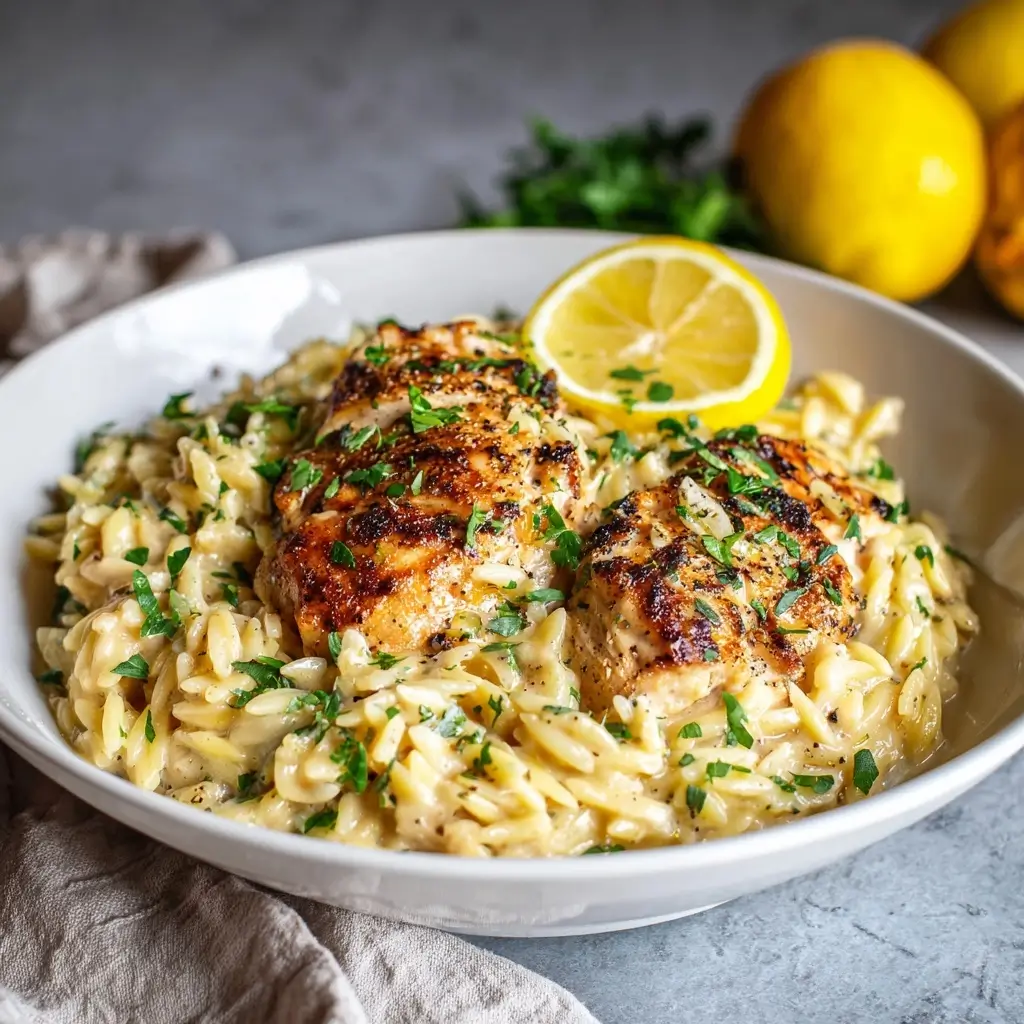
Creamy Lemon Chicken Orzo: A Zesty, Comforting Delight
There’s something undeniably comforting about a dish that blends rich creaminess with the bright zing of citrus—and Creamy Lemon Chicken Orzo delivers exactly that. This modern classic combines tender chicken, al dente orzo pasta, and a luxuriously smooth lemon-infused sauce into one harmonious bowl of comfort. Whether you’re preparing it for a weeknight dinner or impressing guests at a weekend gathering, this recipe strikes the perfect balance between elegance and simplicity.
The History: From Ancient Grains to Modern Kitchens
Orzo, though shaped like rice, is actually a small form of pasta traditionally made from durum wheat semolina. Its name comes from the Italian word for “barley,” reflecting its grain-like appearance. Originating in southern Italy, orzo has been enjoyed for centuries, often used in soups such as minestrone or baked dishes like pilafs. Over time, its versatility led to broader culinary applications across Mediterranean and Middle Eastern cuisines.
Lemon, too, has deep historical roots in Mediterranean cooking. First cultivated in Northeast India and later introduced to the Middle East and Europe via ancient trade routes, lemons became a staple in coastal Italian and Greek kitchens for their ability to elevate flavors with acidity and freshness. The combination of lemon and poultry dates back generations—think of Italian pollo al limone or Greek kotopoulo me lemoni, where lemon enhances the natural richness of chicken without overpowering it.
Creamy Lemon Chicken Orzo, while not an ancient recipe, represents a contemporary fusion of these traditions. It emerged in popularity during the late 20th century as home cooks sought ways to combine pasta, protein, and sauce in single-pot meals. With the rise of food blogs and social media sharing in the 2010s, variations of this dish began trending worldwide—praised for its vibrant taste, creamy texture, and ease of preparation. Today, it’s a beloved favorite in American households, often adapted with local ingredients and dietary preferences.
Ingredients Breakdown: Why Each Component Matters
The magic of Creamy Lemon Chicken Orzo lies in the thoughtful selection and synergy of its ingredients. Each plays a crucial role in building layers of flavor, texture, and nutrition:
- Chicken Breast or Thighs: Boneless, skinless chicken breasts are most commonly used for their lean profile and mild flavor, which absorbs the lemony sauce beautifully. However, thighs can be substituted for a juicier, more robust result due to their higher fat content.
- Orzo Pasta: This small, rice-shaped pasta cooks quickly and holds sauce exceptionally well. Unlike longer pastas, orzo releases starch during cooking, naturally thickening the sauce and contributing to the dish’s creamy consistency.
- Fresh Lemons: Both zest and juice are essential. The zest contains aromatic oils that infuse the dish with intense citrus fragrance, while the juice adds tartness that cuts through the richness of the cream. Always opt for fresh lemons—bottled juice lacks brightness and may contain preservatives.
- Heavy Cream or Half-and-Half: Provides the luxurious mouthfeel central to the dish. Heavy cream yields a richer sauce, while half-and-half offers a slightly lighter alternative without sacrificing too much creaminess.
- Chicken Broth: Forms the cooking liquid for the orzo and helps deglaze the pan, lifting flavorful browned bits (fond) from sautéed chicken and aromatics. Low-sodium broth is recommended to control salt levels.
- Garlic and Shallots (or Onion): These aromatics build the flavor foundation. Garlic adds pungency and depth, while shallots offer a subtle sweetness and mellow sharpness compared to yellow onion.
- Butter and Olive Oil: Used together for sautéing—they combine the rich flavor of butter with the high smoke point of olive oil, preventing burning during initial cooking stages.
- Grated Parmesan Cheese: Adds umami, saltiness, and further creaminess when melted into the sauce. Freshly grated works best; pre-shredded versions often contain anti-caking agents that hinder melting.
- Fresh Herbs (Parsley, Dill, or Basil): Added at the end for freshness and color. Flat-leaf parsley is most common, but dill complements the lemon notes especially well, adding a delicate, grassy aroma.
- Seasonings (Salt, Black Pepper, Red Pepper Flakes, Nutmeg): Salt enhances all flavors, pepper adds gentle heat, red pepper flakes introduce a subtle kick, and a pinch of nutmeg—optional—brings warmth and complexity that pairs surprisingly well with dairy and lemon.
Step-by-Step Recipe: How to Make Creamy Lemon Chicken Orzo
Follow this detailed guide to create a perfectly balanced, restaurant-quality dish right in your kitchen.
- Prep Ingredients: Before starting, gather and prepare everything. Slice 1.5 lbs (680g) boneless chicken breast into 1-inch cubes. Finely chop 1 small shallot or ½ small onion. Mince 3–4 garlic cloves. Zest one lemon (about 1 tsp), then juice it (you’ll need ¼ cup). Measure out 1 cup uncooked orzo, 2 cups low-sodium chicken broth, ½ cup heavy cream, ½ cup grated Parmesan, and have fresh herbs ready.
- Sear the Chicken: Heat 1 tbsp olive oil and 1 tbsp butter in a large skillet or Dutch oven over medium-high heat. Season chicken with salt, pepper, and a pinch of red pepper flakes. Add to the hot pan in a single layer, avoiding overcrowding. Cook 5–6 minutes, turning occasionally, until golden brown and cooked through (internal temp 165°F/74°C). Transfer to a plate and cover to keep warm.
- Sauté Aromatics: In the same pan, add another ½ tbsp butter if needed. Reduce heat to medium. Add chopped shallot and cook for 2–3 minutes until softened and translucent. Stir in minced garlic and cook for 30 seconds until fragrant—do not let it burn.
- Add Orzo and Liquids: Stir in the orzo and toast for 1 minute, allowing it to absorb some fat and develop a nutty aroma. Pour in chicken broth and scrape the bottom of the pan to lift any browned bits. Bring to a simmer.
- Cook the Orzo: Cover the skillet, reduce heat to low, and cook for 8–10 minutes, stirring occasionally, until orzo is tender and has absorbed most of the liquid. If the mixture becomes too dry before orzo is done, add a splash of water or extra broth.
- Incorporate Cream and Cheese: Once orzo is al dente, stir in heavy cream, grated Parmesan, lemon zest, and lemon juice. Mix gently until cheese melts and sauce becomes smooth and glossy. Taste and adjust seasoning—add more salt, pepper, or lemon as needed.
- Return Chicken to Pan: Add the seared chicken (and any accumulated juices) back into the skillet. Stir to combine and warm through for 2–3 minutes.
- Finish with Freshness: Remove from heat. Stir in 2 tbsp chopped fresh parsley (or dill). For extra richness, swirl in an additional tablespoon of cold butter just before serving—it enhances shine and silkiness.
- Serve Immediately: Spoon into warm bowls. Garnish with extra Parmesan, a lemon wedge, and a sprinkle of fresh herbs. Serve hot.
Tips for Perfect Creamy Lemon Chicken Orzo Every Time
- Don’t Overcook the Chicken: Since the chicken returns to the pan later, avoid overcooking during the searing step. Slightly undercooking it by a minute ensures it stays juicy after reheating.
- Toast the Orzo: Briefly toasting the orzo in fat before adding liquids deepens its flavor and prevents mushiness—this small step makes a noticeable difference.
- Use Fresh Lemon Juice: Bottled lemon juice has a flat, metallic taste. Freshly squeezed juice provides a vibrant, clean acidity essential for balancing the cream.
- Reserve Some Pasta Water: If you find the sauce too thick upon standing, loosen it with a few tablespoons of reserved pasta water or warm broth. The starch helps emulsify the sauce.
- Add Greens: For a pop of color and nutrition, stir in a handful of baby spinach or arugula just before serving. They wilt instantly and add a peppery contrast.
- Rest Before Serving: Let the dish sit off heat for 2–3 minutes before serving. This allows the sauce to settle and cling better to the pasta and chicken.
- Use a Wide Pan: A large, shallow skillet ensures even cooking and easier stirring. A Dutch oven also works well, especially for larger batches.
Variations and Customizations
Creamy Lemon Chicken Orzo is incredibly adaptable. Here are some popular twists to suit different tastes and dietary needs:
- Dairy-Free Version: Replace heavy cream with full-fat coconut milk and use nutritional yeast or a vegan Parmesan alternative instead of dairy cheese. Use olive oil instead of butter.
- Gluten-Free Option: Substitute orzo with gluten-free small pasta like quinoa rotini or rice-based orzo. Ensure broth and other ingredients are certified GF.
- Vegetarian Adaptation: Omit chicken and use sautéed mushrooms, artichoke hearts, or roasted vegetables (zucchini, bell peppers, asparagus). Use vegetable broth instead of chicken broth.
- Vegan Twist: Combine vegetarian substitutions above—use plant-based protein (like chickpeas or tofu), dairy-free cream and cheese, and vegetable broth.
- Mediterranean Style: Add sun-dried tomatoes, kalamata olives, capers, and crumbled feta for a bold, briny flavor profile.
- Herb Variations: Swap parsley for fresh basil, tarragon, or chives. Tarragon, in particular, has a slight anise note that pairs beautifully with lemon and chicken.
- Creamy Tomato-Lemon Fusion: Stir in 2–3 tbsp tomato paste with the aromatics, or add diced fire-roasted tomatoes at the end for a rosé-style twist.
- Baked Version: Combine all ingredients (except fresh herbs and final butter) in a baking dish and bake at 375°F (190°C) for 20–25 minutes, covered, until orzo is tender. Top with extra cheese and broil for 2–3 minutes for a golden crust.
- One-Pot Instant Pot Method: Sear chicken using Saute mode, remove, then sauté shallots and garlic. Add orzo, broth, cream, lemon zest, and return chicken. Seal and cook on High Pressure for 4 minutes, then quick release. Stir in cheese, lemon juice, and herbs.
Health Considerations and Nutritional Value
Creamy Lemon Chicken Orzo can be part of a balanced diet when enjoyed in moderation and adjusted for individual health goals.
Nutritional Highlights (per serving, approx. 1.5 cups):
- Calories: ~450–550 kcal
- Protein: ~30–35g (excellent source from chicken and cheese)
- Carbohydrates: ~40–45g (primarily from orzo; choose whole grain or legume-based for fiber)
- Fat: ~20–25g (includes saturated fat from cream and cheese)
- Fiber: ~2–3g (can increase with added vegetables)
- Vitamin C: From lemon juice—supports immune function and iron absorption
- Calcium and Phosphorus: From dairy—important for bone health
- B Vitamins: Especially B12 and niacin from chicken—support energy metabolism
Health Tips:
- Lower Sodium: Use low-sodium broth, limit added salt, and rely on lemon, garlic, and herbs for flavor.
- Reduce Saturated Fat: Substitute half the cream with evaporated skim milk or Greek yogurt (add off-heat to prevent curdling).
- Increase Fiber: Stir in steamed broccoli, peas, or kale. These add volume, nutrients, and satiety.
- Balanced Meal Pairing: Serve with a side salad dressed in vinaigrette to add freshness and aid digestion.
- Portion Control: This is a rich dish—consider smaller portions (1 cup) paired with a generous green salad.
- Keto/Low-Carb Note: Traditional orzo is high in carbs. For a lower-carb version, substitute with cauliflower rice—but note the texture and cooking method will differ significantly.
Ingredients
- 1.5 lbs (680g) boneless, skinless chicken breasts or thighs, cut into 1-inch pieces
- 1 cup (180g) uncooked orzo pasta
- 2 tbsp olive oil, divided
- 1.5 tbsp unsalted butter, divided
- 1 small shallot (or ½ small onion), finely chopped
- 3–4 garlic cloves, minced
- 2 cups (480ml) low-sodium chicken broth
- ½ cup (120ml) heavy cream (or half-and-half)
- ½ cup (50g) freshly grated Parmesan cheese, plus extra for garnish
- 1 large lemon – zested and juiced (about 1 tsp zest, ¼ cup juice)
- 2 tbsp fresh parsley, chopped (plus optional dill or basil)
- Salt and freshly ground black pepper, to taste
- Pinch of red pepper flakes (optional)
- Pinch of ground nutmeg (optional)
- Optional add-ins: spinach, peas, asparagus, artichokes
Directions
- Season chicken with salt, pepper, and a pinch of red pepper flakes.
- In a large skillet over medium-high heat, warm 1 tbsp olive oil and 1 tbsp butter. Add chicken in a single layer and sear until golden and cooked through, about 5–6 minutes. Transfer to a plate and cover.
- Reduce heat to medium. Add remaining ½ tbsp butter to the skillet. Sauté shallot for 2–3 minutes until soft. Add garlic and cook 30 seconds until fragrant.
- Stir in orzo and toast for 1 minute. Pour in chicken broth, scraping up any browned bits from the pan. Bring to a simmer.
- Cover, reduce heat to low, and cook for 8–10 minutes, stirring occasionally, until orzo is tender and liquid is mostly absorbed.
- Stir in heavy cream, Parmesan, lemon zest, and nutmeg (if using). Cook 1–2 minutes until cheese melts and sauce thickens.
- Add lemon juice and return chicken to the skillet. Stir to combine and warm through for 2–3 minutes.
- Remove from heat. Stir in fresh herbs and optional final ½ tbsp butter for extra gloss.
- Taste and adjust seasoning—more salt, pepper, or lemon as desired.
- Serve immediately, garnished with extra Parmesan, herbs, and a lemon wedge.
FAQ
Can I make Creamy Lemon Chicken Orzo ahead of time?
Yes, but it’s best served fresh. The orzo continues to absorb liquid as it sits. To reheat, add a splash of broth or water and warm gently on the stove or in the microwave.
Can I freeze this dish?
Freezing is possible but not ideal—the cream may separate upon thawing, and the orzo can become mushy. If freezing, omit the cream and Parmesan, then add them fresh when reheating.
Why is my sauce too thin or too thick?
If too thin, simmer uncovered for a few extra minutes to reduce. If too thick, stir in warm broth or water, 1–2 tbsp at a time, until desired consistency is reached.
Can I use dried herbs instead of fresh?
Fresh herbs are strongly preferred for brightness. If using dried, reduce quantity by two-thirds (e.g., 1 tsp dried parsley instead of 1 tbsp fresh) and add earlier in cooking.
Is orzo the same as risotto?
No. Orzo is a type of pasta, while risotto is a technique using starchy rice (like Arborio) cooked slowly with broth. This dish mimics risotto’s creaminess but uses quicker-cooking orzo.
Can I use frozen orzo?
Not typically. Orzo is sold dried. You could use precooked orzo, but adjust liquid and cooking time accordingly to avoid mushiness.
What wine pairs well with this dish?
A crisp white wine complements the lemon and cream beautifully. Try Sauvignon Blanc, Pinot Grigio, or a light Chardonnay (unoaked).
How do I store leftovers?
Cool completely and store in an airtight container in the refrigerator for up to 3 days. Reheat gently with added moisture to restore creaminess.
Summary
Creamy Lemon Chicken Orzo is a vibrant, satisfying dish that marries tender chicken, al dente orzo, and a silky lemon-parmesan sauce into a single pot of comfort. Easy to customize and bursting with Mediterranean flair, it’s perfect for busy nights and special occasions alike.