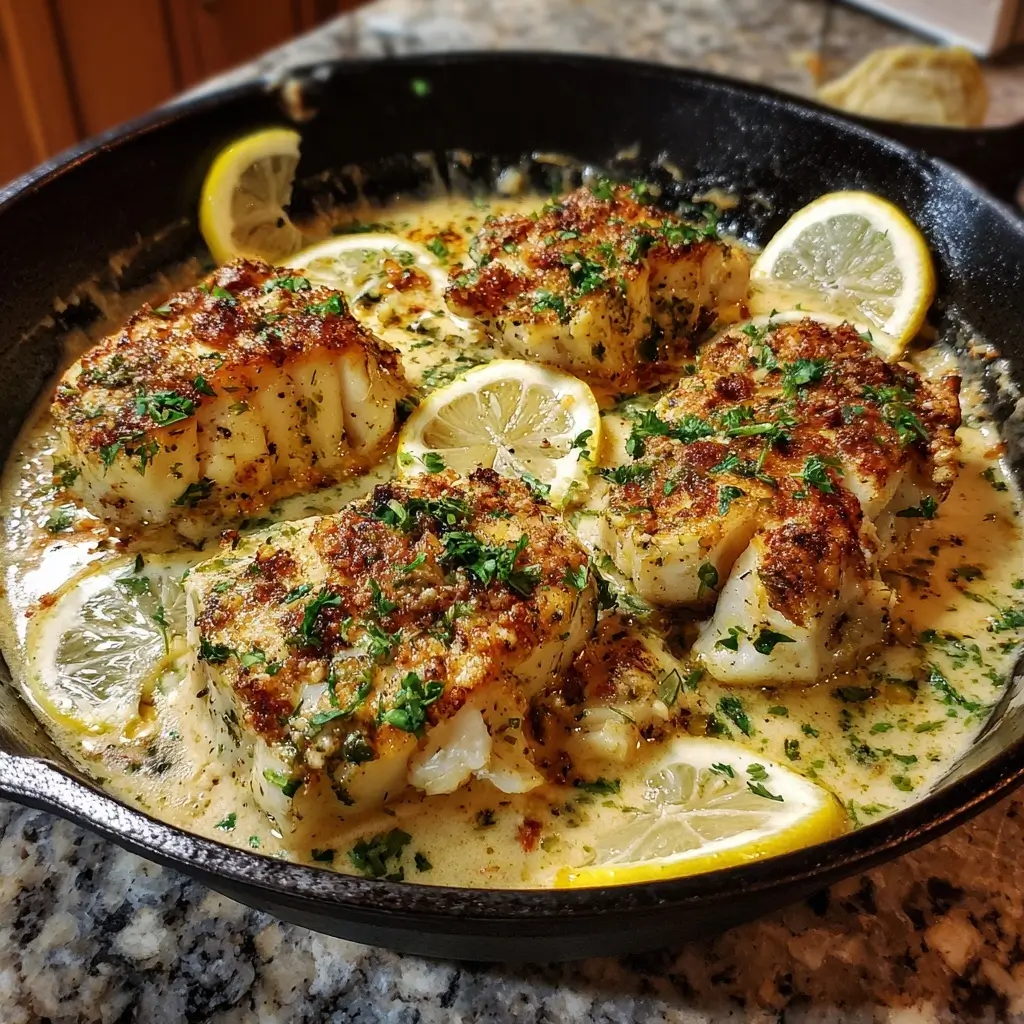
Creamy Garlic Butter Cod Skillet
The Creamy Garlic Butter Cod Skillet is a luxurious yet simple one-pan dish that brings together the delicate flavor of fresh cod with a rich, velvety garlic butter sauce. This recipe has become a favorite among home cooks and seafood lovers alike for its elegant taste, minimal cleanup, and quick preparation time. Whether you’re preparing a romantic dinner for two or a comforting weeknight meal, this skillet delivers restaurant-quality results with ease.
The History
Fish cooked in butter-based sauces has roots stretching back centuries across coastal European cuisines—particularly in France, Italy, and Portugal. The French have long celebrated beurre blanc, a classic emulsion of white wine vinegar, shallots, and copious amounts of butter, often served over poached fish. In contrast, Italian cuisine features dishes like pesce al burro e aglio—fish sautéed in garlic-infused butter—which highlights simplicity and freshness. The modern Creamy Garlic Butter Cod Skillet blends these traditions by incorporating heavy cream to create a luscious, silky sauce while preserving the tender texture of the cod. With the rise of one-pan meals in 21st-century cooking culture, this version evolved as a convenient yet indulgent way to enjoy seafood without sacrificing flavor.
Ingredients Breakdown
To achieve the perfect balance of richness and lightness in your Creamy Garlic Butter Cod Skillet, each ingredient plays a vital role:
- Cod Fillets (1.5 lbs): A mild, flaky white fish that absorbs flavors beautifully while remaining tender when cooked gently.
- Butter (4 tbsp): Unsalted butter forms the base of the sauce, providing richness and a nutty depth when browned slightly.
- Olive Oil (1 tbsp): Used in combination with butter to prevent burning and add a fruity note.
- Garlic (5–6 cloves): Freshly minced garlic gives the dish its signature aromatic punch—essential for building flavor.
- Shallot (1 medium, finely diced): Adds subtle sweetness and complexity without overpowering the fish.
- Heavy Cream (1 cup): Creates the creamy body of the sauce; its high fat content ensures smooth emulsification.
- Chicken or Vegetable Broth (½ cup): Enhances umami and helps deglaze the pan, lifting flavorful browned bits.
- White Wine (¼ cup, optional but recommended): Adds acidity and brightness, balancing the richness—substitute with more broth if avoiding alcohol.
- Lemon Juice (2 tbsp): Brightens the sauce and cuts through the fat, enhancing overall flavor perception.
- Red Pepper Flakes (¼ tsp): Introduces a gentle heat that complements the garlic and butter.
- Fresh Parsley (¼ cup, chopped): Provides a pop of color and a fresh herbal finish.
- Salt and Black Pepper (to taste): Crucial for seasoning each layer of the dish properly.
- Paprika (½ tsp, smoked or sweet): Adds warmth and a hint of smokiness, deepening the sauce’s complexity.
- Flour (optional, 1 tsp): Can be used to lightly dust cod fillets for a golden sear and slight thickening effect.
Step-by-Step Recipe
- Prepare Ingredients: Pat cod fillets dry with paper towels to ensure proper browning. Season both sides lightly with salt, pepper, and a sprinkle of paprika. Mince garlic, dice shallot, chop parsley, and measure out all liquids.
- Preheat Skillet: Place a large oven-safe skillet (preferably cast iron or stainless steel) over medium-high heat. Add olive oil and 2 tablespoons of butter. Allow the fat to heat until shimmering but not smoking.
- Sear the Cod: Carefully place cod fillets in the hot skillet. Sear for 2–3 minutes per side, just until golden on the outside but still translucent in the center. Remove fillets to a plate and set aside—do not overcook at this stage.
- Build the Sauce Base: In the same skillet, reduce heat to medium. Add remaining 2 tablespoons of butter. Once melted, add diced shallot and sauté for 2 minutes until soft and fragrant. Stir in minced garlic, red pepper flakes, and paprika; cook for 30 seconds until aromatic—be careful not to burn.
- Deglaze the Pan: Pour in white wine (if using), scraping the bottom of the pan with a wooden spoon to release any browned bits. Simmer for 1–2 minutes until reduced by half.
- Add Liquids: Stir in chicken or vegetable broth, followed by heavy cream. Bring to a gentle simmer, stirring occasionally. Let the sauce reduce slightly for 3–4 minutes to thicken.
- Incorporate Lemon and Seasoning: Stir in lemon juice and adjust seasoning with salt and pepper. Taste carefully—the sauce should be rich, balanced, and slightly tangy.
- Return Cod to Skillet: Gently place seared cod fillets back into the simmering sauce. Spoon sauce over the top. Reduce heat to low, cover loosely with foil or a lid, and let poach for 5–7 minutes, or until cod flakes easily with a fork and reaches an internal temperature of 145°F (63°C).
- Finish and Garnish: Turn off heat. Sprinkle generously with fresh parsley. For extra richness, swirl in an additional tablespoon of cold butter just before serving (optional).
- Serve Immediately: Plate the cod with ample sauce spooned over the top. Serve alongside crusty bread, mashed potatoes, rice, or roasted vegetables.
Tips
- Don’t Overcook the Cod: Cod is lean and cooks quickly. Overcooking leads to dry, rubbery texture. It continues to cook slightly after removal from heat due to residual warmth.
- Use High-Quality Butter: Since butter is central to the sauce, opt for European-style cultured butter for deeper flavor and better mouthfeel.
- Control Heat Carefully: Keep temperatures moderate when making the sauce to avoid curdling the cream or burning garlic.
- Dry Fish Before Searing: Moisture prevents proper browning. Always pat cod thoroughly before adding it to the pan.
- Acid Balance: Adjust lemon juice gradually. Too much can break the emulsion; too little leaves the dish feeling flat.
- Resist Stirring: Once cod returns to the sauce, avoid moving it too much to keep the fillets intact.
- Make It Ahead: While best served fresh, you can prep ingredients (chop aromatics, measure liquids) up to a day in advance for faster assembly.
- Sauce Too Thin? Simmer longer to reduce, or mix ½ tsp cornstarch with 1 tsp cold water and stir in gently.
Variations and Customizations
This versatile recipe welcomes numerous adaptations based on dietary needs, preferences, or available ingredients:
- Protein Swap: Substitute cod with halibut, haddock, sea bass, or even salmon (adjust cooking time accordingly).
- Dairy-Free Version: Replace butter with vegan butter or olive oil, and use full-fat coconut milk instead of heavy cream. Note: coconut flavor will come through slightly.
- Gluten-Free Option: Naturally gluten-free as written—just ensure broth and wine are certified GF if needed.
- Herb Variations: Try dill, chives, or tarragon instead of parsley for different aromatic profiles.
- Cream Alternatives: Half-and-half or whole milk can replace heavy cream, but expect a thinner sauce. Thicken with a roux or cornstarch slurry if desired.
- Spicier Kick: Increase red pepper flakes or add a dash of cayenne or hot sauce like Sriracha.
- Wine-Free: Omit wine and use extra broth with a splash of apple cider vinegar or lemon zest for acidity.
- Vegetable Add-Ins: Sauté spinach, cherry tomatoes, artichoke hearts, or mushrooms along with shallots for added nutrition and color.
- Tomato Twist: Stir in sun-dried tomatoes or a spoonful of marinara sauce for a Mediterranean flair.
- Cheesy Finish: Sprinkle grated Parmesan or Pecorino Romano over the top during the last minute of cooking for extra richness.
Health Considerations and Nutritional Value
Cod is a nutritious choice for health-conscious eaters:
- Low in Calories: A 4-ounce serving of cod contains approximately 90–100 calories.
- High-Quality Protein: Provides about 20g of complete protein per serving, essential for muscle repair and satiety.
- Rich in Iodine: Supports healthy thyroid function.
- Good Source of Selenium: An antioxidant mineral important for metabolism and immune support.
- Low in Mercury: Safer than many other fish for frequent consumption, including for pregnant women (in moderation).
While the sauce contains saturated fat from butter and cream, portion control and pairing with fiber-rich sides (like quinoa or steamed greens) help balance the meal. Using reduced-fat dairy alternatives can lower total fat content, though this may affect texture and mouthfeel. Omega-3 fatty acid levels in cod are moderate compared to fattier fish like salmon, so consider supplementing with other sources if needed.
Note: Individuals with lactose intolerance should proceed with caution or choose dairy-free substitutes. Those monitoring sodium intake should use low-sodium broth and limit added salt.
Ingredients
- 1.5 lbs cod fillets, skinless, patted dry
- 4 tablespoons unsalted butter, divided
- 1 tablespoon olive oil
- 5–6 cloves garlic, minced
- 1 medium shallot, finely diced
- 1 cup heavy cream
- ½ cup chicken or vegetable broth
- ¼ cup dry white wine (e.g., Sauvignon Blanc or Pinot Grigio)
- 2 tablespoons fresh lemon juice (about 1 lemon)
- ¼ teaspoon red pepper flakes (adjust to taste)
- ½ teaspoon paprika (smoked or sweet)
- ¼ cup fresh parsley, chopped (plus extra for garnish)
- Salt and freshly ground black pepper, to taste
- (Optional) 1 tsp all-purpose flour for dusting
Directions
- Season cod fillets with salt, pepper, and paprika. Optionally dust lightly with flour for a crispier exterior.
- In a large skillet over medium-high heat, warm olive oil and 2 tbsp butter until shimmering.
- Add cod fillets and sear for 2–3 minutes per side until golden. Transfer to a plate and set aside.
- Reduce heat to medium. Melt remaining 2 tbsp butter in the same pan.
- Add shallot and sauté for 2 minutes until soft. Stir in garlic, red pepper flakes, and paprika; cook 30 seconds until fragrant.
- Pour in white wine, scraping up browned bits. Simmer 1–2 minutes until reduced by half.
- Stir in broth and heavy cream. Bring to a gentle simmer and cook 3–4 minutes to thicken slightly.
- Add lemon juice and season with salt and pepper. Taste and adjust as needed.
- Return cod fillets to the skillet, nestling them into the sauce. Spoon sauce over the top.
- Cover loosely and simmer on low for 5–7 minutes, until cod is opaque and flakes easily.
- Turn off heat. Stir in chopped parsley and optionally swirl in extra butter for gloss.
- Serve immediately with sauce drizzled over each fillet.
FAQ
Can I use frozen cod?
Yes, but thaw completely in the refrigerator overnight. Pat very dry before cooking to prevent steaming instead of searing.
Why did my sauce curdle?
Sudden high heat or overly acidic ingredients can cause cream to separate. Maintain a gentle simmer and add acid gradually. If it curdles, remove from heat and whisk in a tablespoon of cold cream to stabilize.
Can I make this ahead of time?
Best made fresh. However, you can prep ingredients in advance. Reheating may overcook the fish, so assemble and cook just before serving.
Is this dish freezer-friendly?
Not recommended. Dairy-based sauces tend to separate upon freezing and reheating. Cod also becomes mushy after thawing.
What wine pairs well with this dish?
A crisp white such as Sauvignon Blanc, Chardonnay (unoaked), or Pinot Gris complements the buttery, garlicky notes perfectly.
Can I bake this instead of stovetop?
Yes! After searing, transfer the entire skillet to a preheated 375°F (190°C) oven for 10–12 minutes until cod is cooked through.
How do I store leftovers?
Store in an airtight container in the refrigerator for up to 2 days. Reheat gently on the stove over low heat to prevent further cooking.
Can I double the recipe?
Absolutely—use a larger skillet or divide between two pans to avoid overcrowding, which causes steaming instead of searing.
Summary
The Creamy Garlic Butter Cod Skillet is a sumptuous, restaurant-worthy dish that combines tender cod with a rich, aromatic garlic butter cream sauce—all cooked in one pan for easy cleanup.
Quick to prepare, endlessly customizable, and packed with delicate flavor, this recipe is perfect for weeknights, special occasions, or impressing guests with minimal effort.