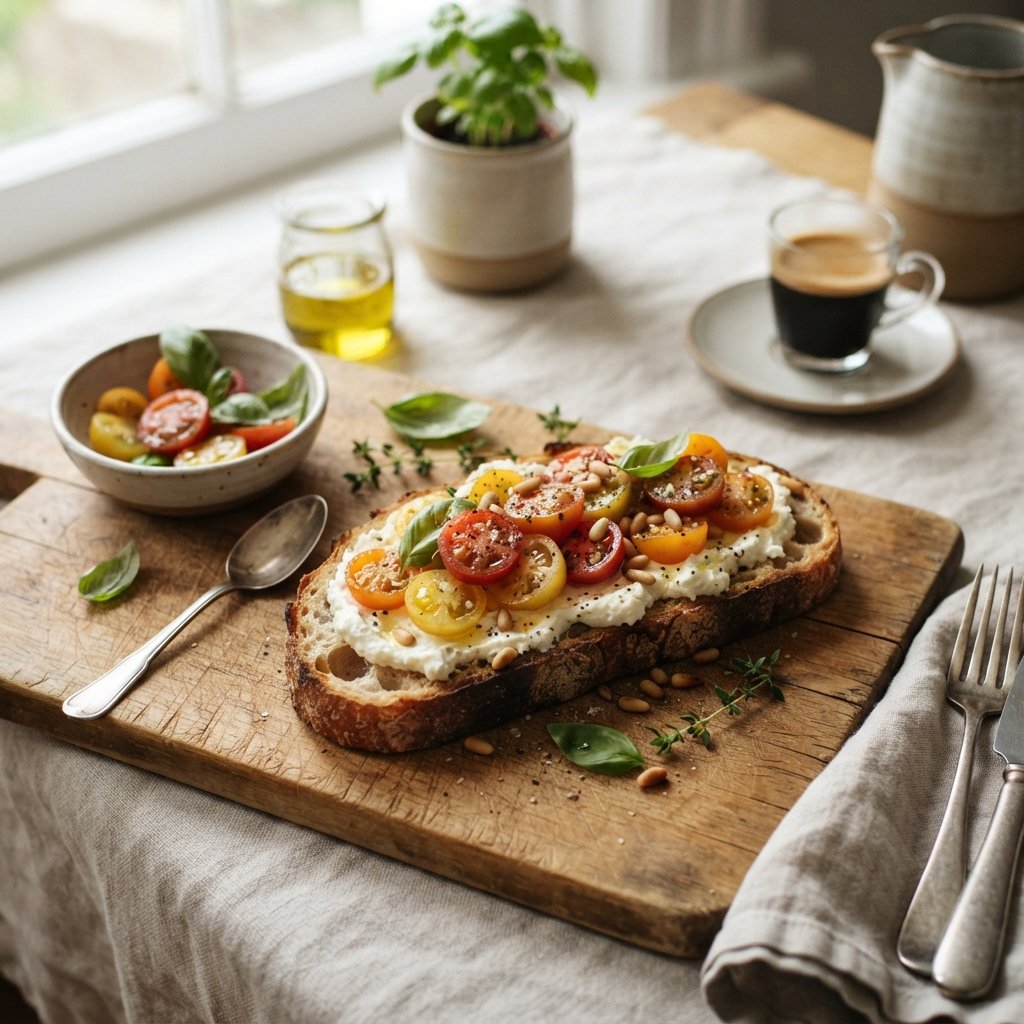
The Ultimate Ricotta and Tomato Sourdough Toast
Introduction
There is a specific kind of magic that happens in the kitchen when simplicity meets quality ingredients. The Ricotta and Tomato Sourdough Toast is not merely a breakfast item; it is a celebration of texture, flavor, and the slow living movement that has captivated food enthusiasts around the globe. Imagine the crunch of a perfectly toasted slice of artisanal sourdough, giving way to a creamy, lush layer of whole-milk ricotta cheese. atop this creamy canvas rests vibrant, juicy tomatoes, glistening with high-quality extra virgin olive oil and finished with a whisper of sea salt and fresh basil. This dish bridges the gap between a quick weekday morning fuel and a leisurely weekend brunch centerpiece.
In a world dominated by complex recipes and hours of preparation, this toast stands as a testament to the idea that less is often more. It requires no cooking skills beyond the ability to operate a toaster or broiler, yet the result tastes like something served in a high-end café. The acidity of the sourdough cuts through the richness of the cheese, while the sweetness of the tomatoes balances the savory notes of the salt and oil. Whether you are a busy professional looking for a nutrient-dense start to the day or a home cook seeking to impress guests with minimal effort, this recipe delivers satisfaction in every bite. It is a versatile dish that invites customization, allowing you to make it uniquely yours while respecting the classic Italian-inspired flavor profile.
The History
To truly appreciate this dish, one must understand the lineage of its three primary components: sourdough, ricotta, and tomatoes. Sourdough bread is one of the oldest forms of leavened bread known to humanity, with roots tracing back to ancient Egypt around 1500 BC. The natural fermentation process using wild yeast and lactobacilli was the standard method of bread-making until the advent of commercial yeast in the 19th century. In recent decades, sourdough has seen a massive resurgence, celebrated not only for its distinctive tangy flavor and chewy crust but also for its digestibility and nutritional profile compared to standard commercial breads.
Ricotta cheese, whose name literally means “recooked” in Italian, has a history deeply embedded in Roman cuisine. Historically, it was a way to utilize the whey leftover from the production of other cheeses, such as mozzarella or provolone. Instead of wasting this nutrient-rich liquid, Italian cheesemakers discovered that reheating the whey would cause the remaining proteins to coagulate into soft, delicate curds. This sustainable practice turned a byproduct into a delicacy that has graced Italian tables for centuries, valued for its mild sweetness and creamy texture.
The tomato, though now synonymous with Italian cooking, is actually a New World fruit that was brought to Europe by Spanish explorers in the 16th century. Initially feared as poisonous due to its relation to the nightshade family, it eventually became the cornerstone of Mediterranean cuisine. The convergence of these three elements—ancient bread, resourceful cheese, and the vibrant tomato—into a single toast recipe is a modern phenomenon. It reflects the contemporary “farm-to-table” ethos and the global popularity of avocado toast, pivoting towards a protein-rich, Italian-inspired alternative that honors tradition while fitting into modern dietary lifestyles.
Ingredients Breakdown
Sourdough Bread: The foundation of this dish is critical. A true sourdough loaf should have a crisp, caramelized crust and an airy, hole-filled crumb. The natural fermentation process breaks down gluten and phytates, making the bread easier to digest and giving it a lower glycemic index than standard white bread. The tanginess of the sourdough is essential to cut through the fat of the cheese.
Ricotta Cheese: Not all ricotta is created equal. For the best results, whole-milk ricotta is preferred over part-skim varieties. The higher fat content ensures a creamy, luxurious mouthfeel rather than a dry or grainy texture. Fresh ricotta from a local cheesemaker is ideal, but high-quality store-bought brands in tubs work well too. Avoid canned ricotta, which often contains stabilizers that affect the flavor.
Tomatoes: The choice of tomato depends on the season. In summer, heirloom tomatoes sliced thickly provide incredible sweetness and juice. In colder months, cherry or grape tomatoes roasted or halved offer a more concentrated flavor. The acidity and umami of the tomato provide the necessary contrast to the mild dairy.
Extra Virgin Olive Oil: This is the dressing that ties everything together. A high-quality EVOO adds fruity, peppery notes and healthy monounsaturated fats. It should be drizzled generously at the end to preserve its flavor compounds, which can be damaged by high heat.
Seasonings: Flaky sea salt provides a crunchy texture and bursts of salinity. Freshly cracked black pepper adds warmth. Fresh basil or oregano introduces an aromatic herbaceous note that elevates the dish from simple to sophisticated. A drizzle of balsamic glaze can add a touch of sweetness and acidity if desired.
Step-by-Step Recipe
Step 1: Preparation of Ingredients
Begin by washing your tomatoes thoroughly. If using large tomatoes, slice them into rounds approximately a quarter-inch thick. If using cherry tomatoes, hal them to release their juices. Place the sliced tomatoes on a paper towel and sprinkle lightly with salt; this helps draw out excess moisture that could make the bread soggy. While the tomatoes rest, wash and chop your fresh herbs.
Step 2: Perfecting the Toast
Slice your sourdough bread into thick slices, ideally about one inch thick. Thin slices may break under the weight of the toppings. Toast the bread until it is golden brown and firm to the touch. You want a sturdy crunch that will hold up against the creamy ricotta. Alternatively, you can brush the bread lightly with olive oil and broil it for a richer flavor.
Step 3: Preparing the Ricotta
Scoop the ricotta into a small bowl. Whisk it briefly with a fork to smooth it out. Some chefs recommend mixing a tiny pinch of salt and a drop of olive oil into the ricotta itself to season the cheese layer directly. This ensures every bite has seasoned cheese, not just seasoned tomatoes.
Step 4: Assembly
Spread a generous layer of the whipped ricotta over the warm toast. Do not skimp, as the cheese is the primary binding agent. Arrange the tomato slices neatly on top of the cheese. If you drained the tomatoes earlier, pat them dry before placing them to ensure maximum crispness.
Step 5: The Finish
Drizzle the extra virgin olive oil over the tomatoes and cheese. Sprinkle with flaky sea salt and freshly cracked black pepper. Tear the fresh basil leaves by hand to release their oils and scatter them over the top. Serve immediately while the bread is still warm and the cheese is cool.
Tips
- Prevent Sogginess: The enemy of great toast is sogginess. Always salt your tomatoes separately and let them sit for 10 minutes before assembling. This draws out water that would otherwise soak into the bread.
- Warm the Ricotta: For a more comforting dish, you can warm the ricotta slightly in the microwave for 10 seconds before spreading. This makes it spreadable and creates a pleasant temperature contrast with the cool tomatoes.
- Garlic Rub: For an extra layer of flavor, cut a clove of garlic in half and rub the cut side against the hot toast before adding the ricotta. The heat releases the garlic oils without overpowering the dish.
- Quality Matters: Since there are so few ingredients, the quality of each one is magnified. Invest in the best bread and olive oil you can find, as they will define the overall taste.
- Make Ahead: You can whip the ricotta and slice the tomatoes an hour in advance. Keep them separate in the fridge and assemble just before serving to maintain texture.
Variations and Customizations
The Sweet Twist: Transform this savory toast into a sweet treat by swapping the tomatoes for fresh figs or sliced peaches. Drizzle with honey instead of olive oil and add a sprinkle of cinnamon. This works exceptionally well with whole-grain sourdough.
Spicy Arrabbiata Style: For those who love heat, sprinkle red pepper flakes or drizzle chili oil over the top. You can also mix a little harissa paste into the ricotta before spreading for a deep, smoky heat.
Green Goddess: Add sliced avocado alongside the tomatoes for extra creaminess and healthy fats. Top with microgreens or arugula for a peppery bite that complements the mild ricotta.
Protein Boost: To make this a more substantial meal, top with a poached or fried egg. The runny yolk mixes with the ricotta and olive oil to create a rich sauce. Alternatively, add crispy prosciutto or bacon for a salty crunch.
Vegan Adaptation: Substitute the dairy ricotta with a high-quality almond or cashew-based ricotta alternative. Nutritional yeast can be sprinkled on top to mimic the savory umami flavor of cheese.
Health Considerations and Nutritional Value
This toast is not only delicious but also nutritionally balanced when consumed in moderation. Sourdough bread, due to its fermentation process, is often easier on the digestive system than standard yeast breads and may have a lower impact on blood sugar levels. The long fermentation breaks down gluten proteins, which some people with mild sensitivities find easier to tolerate.
Ricotta cheese is an excellent source of protein and calcium, essential for muscle repair and bone health. Whole-milk ricotta provides satiety through healthy fats, preventing hunger spikes shortly after eating. Tomatoes are rich in lycopene, a powerful antioxidant linked to heart health and reduced risk of certain cancers. Cooking tomatoes or pairing them with fat (like olive oil) increases the bioavailability of lycopene.
Olive oil is a cornerstone of the Mediterranean diet, known for its anti-inflammatory properties and heart-healthy monounsaturated fats. However, portion control is key, as both cheese and oil are calorie-dense. One slice of thick sourdough with half a cup of ricotta and a moderate drizzle of oil provides a balanced meal with approximately 350-450 calories, depending on specific brands and sizes.
Ingredients
- 2 thick slices of artisanal sourdough bread
- 1 cup of whole-milk ricotta cheese
- 2 medium ripe tomatoes or 1 cup cherry tomatoes
- 2 tablespoons extra virgin olive oil
- 1 teaspoon flaky sea salt (plus more for tomatoes)
- 1/2 teaspoon freshly cracked black pepper
- 4-5 fresh basil leaves, torn
- 1 clove garlic, optional (for rubbing)
- 1 teaspoon balsamic glaze, optional
Directions
- Slice the tomatoes and place them on a paper towel. Sprinkle lightly with salt and let them sit for 10 minutes to drain excess moisture.
- Toast the sourdough slices until golden brown and crispy. If desired, rub the warm toast with a cut garlic clove.
- In a small bowl, whisk the ricotta cheese with a fork to smooth it out. Mix in a pinch of salt and a teaspoon of olive oil.
- Spread the seasoned ricotta generously over the warm toast slices.
- Pat the tomato slices dry and arrange them evenly on top of the ricotta layer.
- Drizzle the remaining olive oil over the tomatoes and cheese.
- Season with freshly cracked black pepper and a sprinkle of flaky sea salt.
- Garnish with torn fresh basil leaves and a drizzle of balsamic glaze if using.
- Serve immediately while the bread is still warm.
FAQ
Can I use regular white bread instead of sourdough?
Yes, you can, but sourdough is recommended for its structural integrity and tangy flavor profile. White bread may become soggy faster and lacks the acidity to balance the rich cheese.
How do I store leftovers?
This toast is best eaten fresh. However, you can store the components separately. Keep ricotta in an airtight container in the fridge for up to 5 days and sliced tomatoes for 2 days. Assemble only when ready to eat.
Is this recipe gluten-free?
Traditional sourdough contains wheat gluten. To make it gluten-free, use a certified gluten-free sourdough loaf available at many specialty bakeries or supermarkets.
Can I make this dairy-free?
Absolutely. Substitute the ricotta with a plant-based alternative made from almonds, cashews, or tofu. The texture may vary slightly, but the flavor profile will remain similar.
Why is my toast soggy?
This usually happens due to excess moisture from the tomatoes or applying toppings to cold bread. Always drain tomatoes and assemble on hot, crispy toast.
Rich creamy ricotta meets tangy sourdough and sweet tomatoes.
A simple, nutritious masterpiece ready in minutes for any meal.