Introduction
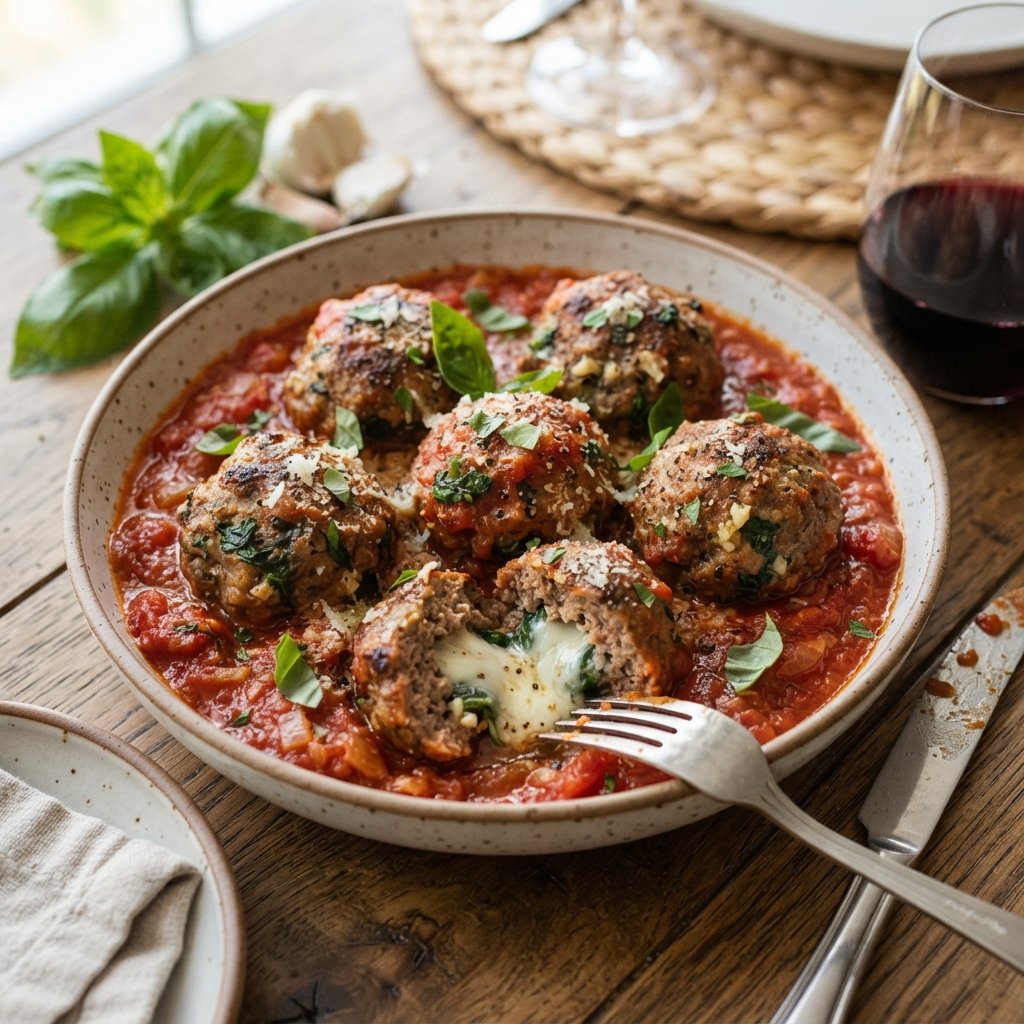
Welcome to the ultimate culinary journey involving one of the most comforting and flavorful dishes known to home cooks and professional chefs alike: Spinach Garlic Meatballs Stuffed with Molten Cheese. This dish represents the perfect harmony between earthy greens, pungent aromatics, savory meats, and a luxurious, gooey center that surprises the palate with every bite. Whether you are hosting a dinner party, preparing a weekly meal prep solution, or simply craving something hearty and nutritious, these meatballs offer a versatile foundation that can be adapted to suit any taste preference.
The combination of spinach and garlic within the meat matrix provides a moisture-rich environment that prevents the common pitfall of dry, tough meatballs. Meanwhile, the stuffed center—often filled with mozzarella, feta, or provolone—creates a delightful textural contrast that elevates the dish from a standard weeknight dinner to a gourmet experience. The aroma that fills your kitchen during the cooking process is nothing short of intoxicating, blending the sharpness of roasted garlic with the sweet undertones of caramelized spinach and the rich scent of browning meat.
Beyond their incredible taste, these meatballs are a powerhouse of nutrition. Spinach adds a significant boost of iron and vitamins, while garlic offers immune-boosting properties. When paired with lean meats, this dish becomes a balanced meal that satisfies hunger without weighing you down. In this comprehensive guide, we will explore every facet of creating the perfect stuffed spinach garlic meatball, from the historical origins of the concept to the scientific breakdown of ingredients, ensuring you master this recipe with confidence.
The History
The concept of the meatball is nearly as old as cooking itself, with variations appearing in countless cultures across the globe. Historically, meatballs were a practical solution for utilizing tougher cuts of meat or stretching limited protein supplies by binding ground meat with breadcrumbs, grains, or vegetables. In Italian cuisine, polpette have been a staple for centuries, often served in sauces or broths. However, the specific innovation of stuffing meatballs with cheese or other fillings is a more modern refinement, likely emerging from the desire to create a surprise element within familiar dishes.
The incorporation of spinach into meat mixtures draws heavy influence from Mediterranean and Middle Eastern cuisines. In Greek cooking, spinach is frequently paired with feta and meat in dishes like keftedes, while Persian kofta often integrates herbs and greens into the meat blend. The addition of garlic is universal, revered since ancient times for both its flavor profile and its medicinal properties. The fusion of these elements into a stuffed format represents a contemporary evolution of traditional recipes, combining the rustic heritage of the meatball with the sophisticated technique of stuffing.
In recent decades, the stuffed meatball has gained popularity in American and European fusion cuisine, often appearing in high-end restaurants before trickling down to home kitchens. The rise of food blogging and social media has further propelled this specific variation, as the visual appeal of cutting into a meatball to reveal a flowing cheese center is highly shareable. Today, spinach garlic stuffed meatballs stand as a testament to culinary globalization, borrowing techniques from Italian stuffing methods, Greek herb usage, and universal comfort food principles to create a dish that feels both nostalgic and new.
Ingredients Breakdown
Ground Meat Selection: The foundation of any great meatball is the meat itself. A blend of beef and pork is often recommended for flavor depth, with the pork providing fat and sweetness while the beef offers structure and robust taste. For a lighter option, ground turkey or chicken can be used, though care must be taken to add sufficient fat or oil to prevent dryness. The fat content should ideally be around 20% to ensure juiciness without excessive shrinkage.
Fresh Spinach: Spinach is not merely a filler; it is a flavor and moisture agent. When wilted and chopped finely, spinach releases water that keeps the meatballs tender during the cooking process. It also adds a vibrant green fleck to the interior and a mild, earthy sweetness that balances the savory umami of the meat. Frozen spinach can be used, but it must be thoroughly squeezed to remove excess liquid to avoid a soggy texture.
Garlic: Fresh garlic is non-negotiable for this recipe. Powdered garlic lacks the pungent kick and aromatic complexity required to cut through the richness of the meat. Roasting the garlic beforehand can mellow its flavor, while raw minced garlic provides a sharper bite. The allicin in garlic also acts as a natural preservative and flavor enhancer that permeates the meat mixture during the resting phase.
The Stuffing: The heart of this dish is the stuffing. Low-moisture mozzarella is the standard choice for its excellent melting properties and mild flavor. However, feta adds a salty tang, while provolone offers a smokier note. The cheese should be cubed small enough to fit inside the meatball but large enough to create a visible pocket of melted goodness. Chilling the cheese cubes before stuffing helps them maintain their shape during the initial cooking phase.
Binders and Fillers: To hold the meatballs together, a combination of breadcrumbs and egg is essential. The breadcrumbs absorb excess moisture and fat, expanding to create a light texture, while the egg acts as a protein glue that coagulates during cooking. Panko breadcrumbs are preferred for a lighter texture, but traditional dry breadcrumbs work well for a denser, more traditional bite. Parmesan cheese added to the binder mix enhances the overall savoriness.
Step-by-Step Recipe
Phase 1: Preparation of Components
Begin by preparing your spinach. If using fresh spinach, wash it thoroughly and remove any tough stems. Heat a small skillet over medium heat and wilt the spinach until it reduces significantly in volume. Once wilted, transfer it to a clean kitchen towel and squeeze out as much liquid as possible. Chop the spinach finely. If using garlic, peel and mince it into a paste using a chef’s knife or a garlic press. Prepare your cheese stuffing by cutting your chosen cheese into small cubes, approximately half an inch in size, and place them in the freezer for 15 minutes to firm up.
Phase 2: Mixing the Meat
In a large mixing bowl, combine your ground meat, the chopped spinach, minced garlic, breadcrumbs, beaten egg, grated Parmesan, salt, black pepper, and any dried herbs you wish to include, such as oregano or basil. Using your hands, gently mix the ingredients until just combined. It is crucial not to overmix the meat, as this can develop too much protein structure, resulting in tough, rubbery meatballs. The mixture should look cohesive but still slightly loose.
Phase 3: Stuffing and Shaping
Take a portion of the meat mixture, roughly the size of a golf ball, and flatten it into a patty in the palm of your hand. Place a cube of the chilled cheese in the center of the patty. Carefully fold the meat around the cheese, sealing the edges completely to ensure no cheese leaks out during cooking. Roll the ball gently between your palms to smooth the surface. Repeat this process until all meat and cheese are used. Place the formed meatballs on a tray and refrigerate them for at least 30 minutes to help them hold their shape.
Phase 4: Cooking Methods
You have three primary options for cooking. For baking, preheat your oven to 400°F (200°C) and place meatballs on a parchment-lined sheet, baking for 20-25 minutes until browned and cooked through. For pan-searing, heat oil in a skillet over medium-high heat and brown the meatballs on all sides, then reduce heat and cover to cook through. For a richer flavor, you can sear them first and then simmer them in a tomato sauce for 30 minutes, allowing the flavors to meld together beautifully.
Tips
- Control Moisture: The most common mistake with spinach meatballs is excess water. Ensure you squeeze the spinach dry using a cheesecloth or towel, otherwise, the meatballs may fall apart during cooking.
- Chill Before Cooking: Never skip the refrigeration step after shaping. Cold fat solidifies, which helps the meatball maintain its structure when it first hits the heat, preventing spreading or leaking.
- Uniform Size: Use a cookie scoop or a kitchen scale to ensure all meatballs are the same size. This guarantees even cooking, so you don’t end up with some raw and some overcooked.
- Don’t Overstuff: While a large cheese center is tempting, too much cheese can cause the meatball to burst. Stick to a modest cube size relative to the amount of meat surrounding it.
- Resting Time: Let the meatballs rest for 5 minutes after cooking before serving. This allows the juices to redistribute throughout the meat and the cheese center to set slightly, preventing burns from molten cheese.
- Testing Doneness: Use a meat thermometer to ensure safety. The internal temperature should reach 165°F (74°C) for poultry or 160°F (71°C) for beef and pork blends.
Variations and Customizations
Dietary Adjustments: For a gluten-free version, substitute traditional breadcrumbs with almond flour, crushed gluten-free crackers, or rolled oats. To make the dish dairy-free, omit the cheese stuffing or use a high-quality vegan mozzarella alternative that melts well. For a lower-carb option, increase the meat ratio and reduce the breadcrumbs, relying on the egg and spinach to bind the mixture.
Flavor Profiles: You can easily shift the cultural profile of these meatballs. Add cumin and coriander for a Middle Eastern twist, or incorporate red pepper flakes and smoked paprika for a Spanish albóndigas vibe. For an Asian fusion take, add ginger, soy sauce, and scallions to the meat mix, stuffing them with a cube of cream cheese instead of mozzarella.
Sauce Pairings: While a classic marinara tomato sauce is the traditional companion, these meatballs are versatile enough to handle other sauces. Try a creamy Alfredo sauce for a rich indulgence, a lemon-butter sauce for a lighter touch, or a spicy arrabbiata for those who enjoy heat. They also work exceptionally well in a sub sandwich or served over polenta or mashed potatoes.
Protein Swaps: Experiment with different ground meats to change the texture and flavor. Lamb offers a richer, gamier taste that pairs wonderfully with spinach and feta. Ground veal provides a delicate texture, while a blend of beef, pork, and veal creates the classic Italian meatball trifecta. For a budget-friendly option, extend the meat with cooked lentils or finely chopped mushrooms.
Health Considerations and Nutritional Value
Spinach garlic meatballs stuffed with cheese offer a balanced macronutrient profile suitable for various dietary goals. The ground meat provides a high source of complete protein, essential for muscle repair and satiety. Spinach contributes significant micronutrients, including Vitamin K, Vitamin A, manganese, and folate, along with dietary fiber which aids in digestion. Garlic is renowned for its potential to support cardiovascular health and boost the immune system due to its sulfur compounds.
However, calorie density can vary based on the meat fat content and the amount of cheese used. Using leaner meats like turkey or 90% lean beef can reduce the overall fat content, making this dish suitable for weight management plans. The cheese stuffing adds calcium and additional protein but also increases saturated fat and sodium levels. Portion control is key; consuming 3-4 meatballs alongside a large serving of vegetables or a salad ensures a balanced meal without excessive caloric intake.
For those monitoring sodium, be mindful of the salt added during mixing, as Parmesan cheese and processed breadcrumbs often contain hidden salt. Opting for low-sodium breadcrumbs and reducing added salt can mitigate this. Overall, when prepared with whole ingredients and balanced sides, this dish is a nutrient-dense option that supports energy levels and provides essential vitamins and minerals.
Ingredients
- 1 pound ground beef (80/20 blend recommended)
- 1/2 pound ground pork (optional, can substitute with more beef)
- 2 cups fresh spinach, washed and stems removed
- 4 cloves garlic, minced finely
- 1/2 cup Parmesan cheese, grated
- 1/2 cup breadcrumbs (Panko or traditional)
- 1 large egg, beaten
- 4 ounces mozzarella cheese, cut into small cubes
- 1 teaspoon dried oregano
- 1 teaspoon salt (adjust to taste)
- 1/2 teaspoon black pepper
- 2 tablespoons olive oil (for cooking)
- 1 jar of your favorite marinara sauce (for serving)
Directions
- Prepare the spinach by wilting it in a pan or microwave, then squeeze out all excess water using a kitchen towel and chop finely.
- In a large bowl, combine the ground beef, ground pork, chopped spinach, minced garlic, Parmesan, breadcrumbs, egg, oregano, salt, and pepper.
- Mix gently with your hands until ingredients are evenly distributed, being careful not to overwork the meat.
- Cut the mozzarella into small cubes and place them in the freezer for 15 minutes to firm up.
- Take a portion of meat (about 2 tablespoons), flatten it in your palm, place a cheese cube in the center, and wrap the meat around it, sealing completely.
- Roll into a smooth ball and place on a baking sheet lined with parchment paper.
- Refrigerate the formed meatballs for 30 minutes to set the shape.
- Preheat your oven to 400°F (200°C) or heat olive oil in a large skillet over medium-high heat.
- If baking, cook for 20-25 minutes until browned and internal temperature reaches 160°F. If pan-frying, brown on all sides and cover to cook through for about 15 minutes.
- Warm your marinara sauce in a separate pot and simmer the cooked meatballs in the sauce for 10 minutes before serving.
- Serve hot over pasta, rice, or with crusty bread, garnished with fresh basil if desired.
FAQ
Can I freeze these meatballs?
Yes, these meatballs freeze exceptionally well. You can freeze them raw before cooking or cooked after they have cooled. Place them in a single layer on a tray to freeze individually, then transfer to a freezer bag. They will keep for up to 3 months.
Why did my meatballs fall apart?
This usually happens due to excess moisture from the spinach or insufficient binding agents. Ensure the spinach is squeezed very dry and that you include enough egg and breadcrumbs. Chilling the meatballs before cooking also helps prevent breakage.
Can I make these without cheese?
Absolutely. If you prefer no stuffing, simply shape the meat mixture into standard balls without the cheese center. You may need to adjust the cooking time slightly as they will be denser.
What is the best way to reheat them?
The best method is to reheat them gently in a saucepan with some marinara sauce over low heat. This prevents the meat from drying out and ensures the cheese center melts evenly without burning.
Can I use frozen spinach?
Yes, frozen chopped spinach is a convenient alternative. Just ensure you thaw it completely and squeeze out every drop of water using a sieve or towel before adding it to the meat mixture.
How do I know if the cheese is melted?
If baking, the cheese should be fully melted by the time the meat reaches the safe internal temperature. If you are concerned, cut one test meatball open to check the center before serving the batch.
Summary (in two lines)
Juicy ground meat infused with earthy spinach and garlic hides a surprise molten cheese center for a perfect bite.
Easy to customize and bake, this dish delivers gourmet flavor and balanced nutrition for any family meal.