Introduction
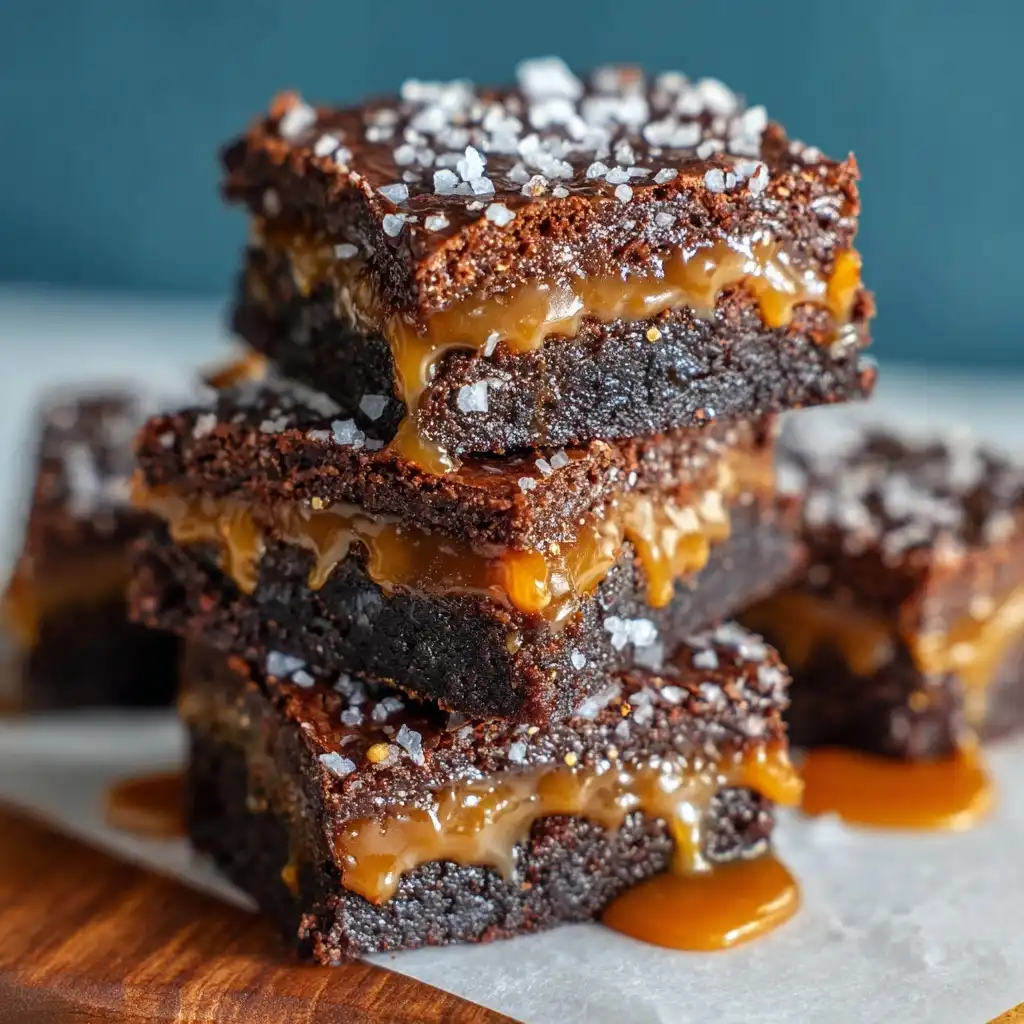
Salted caramel brownie bars are the ultimate indulgence—a rich, fudgy chocolate foundation swirled with velvety, buttery salted caramel and finished with a delicate flaky sea salt finish. This decadent hybrid dessert bridges the best of two beloved treats: the dense, cocoa-intense satisfaction of classic brownies and the luxurious, complex sweetness of artisanal salted caramel. Whether served at holiday gatherings, bake sales, dinner parties, or as a well-deserved personal treat, these bars deliver an unforgettable sensory experience—deep chocolate notes, gooey caramel ribbons, subtle salt-induced umami brightness, and a tender-yet-chewy texture that lingers long after the last bite. Their visual appeal—marbled swirls, glossy caramel sheen, and flecks of hand-harvested salt—makes them as stunning on a dessert platter as they are satisfying on the palate.
The History
The evolution of salted caramel brownie bars is a delicious convergence of culinary innovation and cultural shifts in sweet-savory pairing preferences. While traditional brownies trace their origins to the early 20th century—first appearing in the 1906 Fannie Farmer Cookbook as a “brownie cake” made with molasses and dates—the modern fudgy, butter-rich version gained popularity in the 1930s with the rise of boxed cake mixes and accessible cocoa powder. Salted caramel, meanwhile, has roots stretching back to 19th-century Brittany, France, where caramel au beurre salé was crafted using local seawater-influenced butter and coarse sea salt. Its global renaissance began in the late 1990s and early 2000s, propelled by chefs like Pierre Hermé and later popularized in the U.S. by gourmet ice cream brands and high-end confectioners. The fusion of these two icons emerged organically in the mid-2000s within food blogs and artisan bakeries, capitalizing on America’s growing love for bold contrasts and “elevated comfort food.” By the 2010s, salted caramel brownie bars had become a staple in bakery case displays, wedding dessert tables, and viral social media feeds—symbolizing both nostalgic familiarity and contemporary sophistication.
Ingredients Breakdown
Every exceptional batch of salted caramel brownie bars begins with intentionality in ingredient selection. Below is a detailed, function-driven analysis of each component:
- Unsalted Butter (1 cup / 2 sticks): Provides richness, moisture, and structure. Unsalted ensures precise sodium control—critical when balancing the salted caramel layer and finishing salt. Melted butter encourages a denser, fudgier crumb versus creamed butter, which would yield a cakier texture.
- Granulated Sugar (1 ½ cups): Not only sweetens but also contributes to crust formation and aeration during mixing. The fine crystals dissolve easily into the warm butter-cocoa mixture, aiding in emulsification and promoting that signature shiny, crackly top.
- Brown Sugar (½ cup, packed light or dark): Adds molasses depth, moisture retention, and subtle acidity—enhancing chocolate’s complexity and lending chewiness. Dark brown sugar intensifies caramel notes; light offers milder warmth.
- Large Eggs (3), room temperature: Act as binders and leavening agents. Their proteins coagulate during baking to set the structure, while their water content creates steam for lift. Room temperature eggs incorporate more evenly and reduce risk of seizing the melted chocolate-butter mixture.
- Pure Vanilla Extract (2 tsp): A flavor amplifier—its phenolic compounds heighten perception of both chocolate and caramel aromas. Avoid imitation vanilla, which can impart a harsh, medicinal off-note.
- Unsweetened Cocoa Powder (¾ cup, Dutch-processed preferred): Delivers intense, smooth chocolate flavor without added acidity. Dutch-processed cocoa is alkalized, yielding a deeper color, mellow bitterness, and superior solubility in fat-based batters—ideal for uniform distribution and rich mouthfeel.
- All-Purpose Flour (1 cup, spooned & leveled): Provides gluten-forming structure. Too much leads to toughness; too little yields fragile, greasy bars. Spoon-and-level method prevents overpacking and ensures accuracy.
- Espresso Powder (1 tsp, optional but highly recommended): A secret weapon—not for coffee flavor, but for intensifying chocolate’s natural bitterness and rounding out its profile. Even non-coffee drinkers appreciate its subtle, grounding effect.
- Flaky Sea Salt (¼ tsp in batter + 1–2 tsp for finishing): Enhances sweetness perception, suppresses bitterness, and adds textural contrast. Fine sea salt integrates into the batter for balanced seasoning; premium flaky varieties (like Maldon or Fleur de Sel) are reserved for topping to deliver bursts of salinity with every bite.
- High-Quality Salted Caramel Sauce (1 ¼ cups): Must be thick enough to hold shape when swirled—not runny or overly thin. Homemade is ideal (see Variations), but reputable store-bought options (e.g., Smucker’s Goober, Stonewall Kitchen, or Trader Joe’s) work if reheated and slightly cooled to a ribboning consistency. Avoid caramel sauces with excessive corn syrup or artificial stabilizers, which can weep or separate during baking.
Step-by-Step Recipe
- Preheat & Prep: Position oven rack in center position. Preheat oven to 350°F (175°C). Line a 9×13-inch metal baking pan with parchment paper, leaving 2-inch overhang on two opposite sides for easy lifting. Lightly grease exposed pan edges and parchment with butter or non-stick spray.
- Melt Butter & Chocolate Base: In a medium heatproof bowl set over a saucepan of barely simmering water (double boiler), combine unsalted butter, granulated sugar, brown sugar, and cocoa powder. Stir constantly with a silicone spatula until sugars dissolve and mixture is smooth, glossy, and hot to the touch (~120–130°F)—about 4–5 minutes. Remove from heat and let cool slightly (2 minutes) to avoid cooking eggs.
- Incorporate Eggs & Flavorings: Whisk in eggs one at a time, fully incorporating each before adding the next. Add vanilla and whisk vigorously for 30–45 seconds until batter is thick, shiny, and slightly pale—this aerates and builds volume. Stir in espresso powder and ¼ tsp fine sea salt until dissolved.
- Blend Dry Ingredients: Sift together flour and any optional additions (e.g., pinch of cinnamon or cayenne for warmth). Gently fold into wet mixture using a spatula in 2–3 additions, mixing *just until no streaks remain*. Overmixing develops gluten and causes toughness. Batter will be thick and glossy.
- Layer & Swirl Caramel: Pour two-thirds of the brownie batter into the prepared pan, spreading evenly with an offset spatula. Carefully spoon chilled (but still pourable) salted caramel sauce in dollops over the surface. Top with remaining one-third of batter. Using a butter knife or skewer, gently drag through layers in a figure-eight or zigzag motion—not over-swirling—to create dramatic, defined ribbons. Avoid dragging all the way to the bottom to preserve distinct layers.
- Finish & Bake: Sprinkle generously with flaky sea salt (1–2 tsp), focusing on caramel-exposed areas. Place pan on center oven rack. Bake 30–38 minutes—timing depends on desired doneness. Bars are done when edges are set and slightly pulled away from pan, top is dry and crackly, and a toothpick inserted 1 inch from edge comes out with *moist crumbs* (not wet batter). The center may appear soft—that’s ideal for fudgy texture. Do not overbake.
- Cool Completely: Transfer pan to a wire rack. Cool *undisturbed* for at least 2 hours at room temperature—this allows caramel to re-set and bars to firm up. For cleanest cuts, refrigerate uncovered for 1–2 additional hours before slicing.
- Cut & Serve: Use parchment overhang to lift entire slab from pan. Place on cutting board. With a sharp, hot knife (dipped in hot water and wiped dry between cuts), slice into 12–16 even bars. Wipe blade frequently for pristine edges.
Tips
- Temperature Is Everything: Ensure caramel is cool enough to hold shape but not cold enough to seize—ideally 75–85°F. If too warm, it’ll sink; if too cold, it’ll clump and resist swirling. Chill homemade caramel for 20–30 minutes, then stir to loosen before using.
- Measure Flour Accurately: Use the spoon-and-level method—never scoop directly from bag. Excess flour is the #1 cause of dry, cakey brownies. For precision, weigh flour: 120g per cup.
- Don’t Skip the Espresso: It doesn’t make bars taste like coffee—it deepens chocolate without bitterness. Substitute 1 tsp instant coffee granules if espresso powder is unavailable.
- Swirl with Intention: Less is more. 6–8 gentle passes with a knife create beautiful marbling. Over-swirling turns the batter muddy and eliminates caramel definition.
- Cooling Is Non-Negotiable: Cutting warm bars guarantees crumbling and caramel oozing. Patience = perfect squares. Refrigeration firms caramel and makes slicing effortless.
- Knife Technique Matters: Use a chef’s knife with a thin, rigid blade. Heat under hot tap water, dry thoroughly, and cut with downward pressure—no sawing. Reheat and wipe before each cut.
- Storage Wisdom: Keep bars airtight at room temperature for up to 3 days, refrigerated for up to 1 week, or frozen (wrapped individually in plastic + placed in freezer bag) for up to 3 months. Thaw overnight in fridge or at room temp for 30 minutes.
- Revive Stale Bars: Briefly warm in a 300°F oven for 3–4 minutes or microwave single bar at 50% power for 10–15 seconds—they’ll regain fudgy tenderness and caramel liquidity.
Variations and Customizations
These bars serve as a versatile canvas for creativity—whether adapting to dietary needs, seasonal ingredients, or flavor adventures:
- Gluten-Free Version: Substitute 1:1 gluten-free all-purpose flour blend (e.g., King Arthur or Bob’s Red Mill) + add ½ tsp xanthan gum if not included in blend. Ensure cocoa and caramel are certified GF.
- Vegan Adaptation: Replace butter with refined coconut oil (for neutral flavor) or vegan butter; use flax eggs (3 tbsp ground flax + 9 tbsp water, rested 10 min); swap dairy caramel for date-sweetened coconut milk caramel; ensure chocolate is dairy-free and vegan-certified.
- Nutty Crunch: Fold 1 cup toasted walnuts, pecans, or hazelnuts into batter before layering. Or sprinkle ½ cup chopped roasted almonds over caramel before final salt.
- Stout-Infused: Replace ¼ cup of the liquid (e.g., reduce butter slightly or omit 2 tbsp water if using brewed stout) with ¼ cup room-temp, reduced stout beer (simmered 5 min to mellow alcohol). Adds malty depth and velvety richness.
- Orange-Sea Salt: Add 1 tbsp finely grated orange zest to batter and 1 tsp orange extract with vanilla. Pair with smoked sea salt for aromatic brightness.
- Spiced Chai Swirl: Infuse warm butter-cocoa mixture with 2 chai tea bags (steep 3 min, remove), then proceed. Swirl in chai-spiced caramel (add ½ tsp ginger, ¼ tsp cardamom, pinch clove to warm caramel).
- White Chocolate Caramel: Replace ¼ cup cocoa powder with white chocolate chips melted into batter. Swirl with salted caramel and top with white chocolate drizzle + flaky salt.
- Mini Bar Bites: Press batter into lined mini muffin tin cups (fill ¾ full), swirl with ½ tsp caramel per cup, bake 12–15 min. Perfect for portion control or party favors.
- Boozy Upgrade: Stir 2 tbsp bourbon, rum, or Irish cream into cooled caramel before swirling. Or brush baked, cooled bars with simple syrup infused with same spirit.
- Seasonal Fruit Swirl: Layer ½ cup seedless raspberry or blackberry jam beneath caramel, or fold ⅓ cup dried tart cherries into batter.
Health Considerations and Nutritional Value
While salted caramel brownie bars are inherently indulgent, mindful preparation can enhance nutritional integrity without sacrificing pleasure. A standard serving (1 of 16 bars, approx. 2″x2″) contains roughly:
- Calories: 220–260 kcal
- Total Fat: 13–16g (8–10g saturated, primarily from butter and cocoa butter)
- Carbohydrates: 28–32g (24–27g sugars, including natural lactose and molasses-derived sugars)
- Protein: 2–3g
- Fiber: 1–2g (boostable with whole wheat pastry flour or added ground flax)
- Sodium: 140–180mg (highly variable based on salt type and quantity used)
Positive Attributes: High-quality dark cocoa provides flavonoids linked to improved endothelial function and antioxidant activity. Real butter supplies vitamins A, D, E, and K2 (especially from grass-fed sources). Sea salt contributes trace minerals like magnesium and potassium. When made with minimal processing and whole-food ingredients, these bars offer more nutritional density than ultra-processed alternatives.
Considerations: Naturally high in added sugars and saturated fats. Those managing diabetes should monitor portions and consider low-glycemic swaps (e.g., coconut sugar, erythritol blends—though texture may vary). Individuals with hypertension should moderate salt intake and opt for lower-sodium caramel or reduced finishing salt. For satiety and blood sugar balance, pair a bar with Greek yogurt, berries, or a handful of almonds.
Mindful Modifications: Reduce granulated sugar by ¼ cup and increase brown sugar for moisture retention; substitute 2 tbsp cocoa with raw cacao powder for higher antioxidant concentration; use grass-fed butter and organic, fair-trade chocolate; incorporate 2 tbsp ground walnuts or chia seeds for omega-3s and fiber.
Ingredients
- 1 cup (2 sticks / 227g) unsalted butter
- 1 ½ cups (300g) granulated sugar
- ½ cup (100g) packed light or dark brown sugar
- ¾ cup (75g) Dutch-processed unsweetened cocoa powder
- 3 large eggs, room temperature
- 2 teaspoons pure vanilla extract
- 1 teaspoon espresso powder (optional but recommended)
- 1 cup (120g) all-purpose flour, spooned & leveled
- ¼ teaspoon fine sea salt (for batter)
- 1 ¼ cups (300ml) thick salted caramel sauce, chilled but pourable
- 1–2 teaspoons flaky sea salt (e.g., Maldon or Fleur de Sel), for finishing
Directions
- Preheat oven to 350°F (175°C). Line a 9×13-inch metal baking pan with parchment paper, leaving 2-inch overhang on two opposite sides. Lightly grease exposed edges.
- In a heatproof bowl set over barely simmering water, combine butter, granulated sugar, brown sugar, and cocoa powder. Stir constantly until melted, smooth, and hot (120–130°F), ~4–5 minutes. Remove from heat; cool 2 minutes.
- Whisk in eggs one at a time, fully incorporating each. Whisk in vanilla and espresso powder. Stir in fine sea salt.
- Sift flour over mixture. Gently fold with spatula until *just* combined—no dry streaks, no overmixing.
- Pour ⅔ of batter into prepared pan. Dollop caramel evenly over top. Spoon remaining batter over caramel.
- Using a knife or skewer, gently swirl in figure-eight motions to create ribbons. Do not overmix.
- Sprinkle generously with flaky sea salt.
- Bake 30–38 minutes, until edges are set, top is crackly, and toothpick 1″ from edge shows moist crumbs.
- Cool in pan on wire rack for 2 hours minimum. For cleanest cuts, refrigerate 1–2 hours longer.
- Lift slab using parchment. Slice into 12–16 bars with hot, clean knife. Store airtight.
FAQ
- Can I use regular cocoa powder instead of Dutch-processed?
- Yes—but expect a sharper, more acidic chocolate note and slightly lighter color. Reduce baking powder/soda if recipe includes leaveners (this one doesn’t), and consider adding ¼ tsp baking soda to neutralize acidity if desired.
- Why did my caramel sink to the bottom?
- Most likely due to caramel being too warm or too thin. Always chill caramel until it holds its shape but remains fluid enough to swirl. Also, ensure brownie batter is thick—not runny—before layering.
- Can I make these ahead for an event?
- Absolutely. Bake 1–2 days ahead and store airtight at room temperature. They actually improve on day two as flavors meld and texture matures. For longer storage, freeze unbaked batter (layered in pan, wrapped tightly) up to 1 month—thaw overnight in fridge, then bake as directed.
- My bars cracked excessively on top—is that normal?
- A slight crackly crust is signature and desirable! But deep, jagged cracks suggest overmixing the batter after adding flour or overbeating eggs. Mix minimally and avoid vigorous stirring post-flour addition.
- What’s the best way to reheat leftovers?
- For single servings: Microwave at 50% power for 10–15 seconds. For multiple bars: Warm in 300°F oven for 4–5 minutes on parchment-lined sheet. Both methods restore fudgy texture and melt caramel gently.
- Can I substitute oil for butter?
- Not recommended. Butter contributes essential water, milk solids, and flavor compounds critical for texture and browning. Oil yields greasier, less flavorful, and crumblier bars. Coconut oil (refined) is the closest vegan alternative but alters mouthfeel.
- How do I prevent sticking when cutting?
- Chill thoroughly, use a sharp chef’s knife, and wipe blade with hot, damp cloth between every cut. A light spray of non-stick oil on the knife also helps.
- Is there a lower-sugar version?
- Yes—with caveats. Replace up to ½ cup granulated sugar with allulose or erythritol blends designed for baking (e.g., Lakanto Golden). Expect slightly drier texture and less crust development. Never replace all sugar—it’s structural, not just sweet.
- Can I add baking powder for a cakier version?
- This recipe is intentionally fudgy and unleavened. Adding ½ tsp baking powder will produce a lighter, airier bar—but you’ll lose the dense, caramel-pocketed decadence these are known for.
- Why use flaky salt *only* on top?
- Flaky salt dissolves slowly and delivers burst-of-salt sensation. Fine salt disperses evenly for balanced seasoning in the batter. Using flaky salt throughout would result in inconsistent salinity and gritty texture.
Summary
Salted caramel brownie bars are a masterclass in contrast and balance—fudgy, deeply chocolatey brownies swirled with rich, buttery caramel and elevated by the bright, mineral kiss of flaky sea salt.
With meticulous attention to ingredient quality, temperature control, and patient cooling, these bars transform humble pantry staples into an elegant, crowd-pleasing dessert worthy of celebration—or quiet, unapologetic self-indulgence.