Introduction
Welcome to the ultimate guide for Peanut Butter Banana Cupcakes — a decadent, nostalgic, and irresistibly moist fusion of two beloved American flavors. These cupcakes strike the perfect balance between creamy, nutty richness and naturally sweet, tender banana warmth, making them ideal for breakfast treats, afternoon snacks, or dessert-worthy celebrations. Whether you’re baking for kids’ school bake sales, potlucks, birthday parties, or simply treating yourself on a cozy Sunday, these cupcakes deliver comfort in every bite — with a velvety crumb, aromatic depth, and just the right amount of indulgence. What sets them apart is not just flavor, but versatility: they’re easily adaptable for dietary preferences (gluten-free, dairy-free, vegan, or lower-sugar options), freezer-friendly, and forgiving for bakers of all skill levels — from first-time cupcake creators to seasoned pastry chefs.
The History
The peanut butter banana cupcake is a modern evolution rooted in two iconic, deeply American food traditions. Peanut butter — first commercially popularized by Dr. John Harvey Kellogg in 1895 as a protein-rich health food, and later catapulted into mainstream culture by George Washington Carver’s advocacy and Jif’s 1956 national launch — became synonymous with homey, nourishing simplicity. Bananas, meanwhile, surged in U.S. popularity after the 1876 Centennial Exposition in Philadelphia introduced the fruit to mass audiences, and their natural sweetness and moisture made them a staple in Depression-era “warmer” cakes and wartime ration-friendly baking. The marriage of peanut butter and banana gained cultural traction in the mid-20th century: Elvis Presley famously adored the peanut butter-banana-honey sandwich (often dubbed the “Elvis Special”), inspiring countless reinterpretations in baked goods. By the 1990s and early 2000s, food bloggers and celebrity chefs began experimenting with layered interpretations — think peanut butter swirls in banana bread, banana-infused peanut butter frostings, and ultimately, full-fledged cupcakes that elevated both ingredients into elegant, portion-controlled delights. Today, Peanut Butter Banana Cupcakes represent more than nostalgia — they embody culinary innovation grounded in accessibility, sustainability (using overripe bananas that might otherwise be discarded), and emotional resonance.
Ingredients Breakdown
Understanding each ingredient’s functional and flavor role ensures consistent success and informed customization:
- Ripe Bananas (3 large, ~1 ¼ cups mashed): Provide natural sweetness, moisture, density, and enzymatic tenderness (amylase breaks down starches). Overripe bananas (black-speckled peel) offer maximum sugar concentration, caramel notes, and binding power — essential for structure without excess flour.
- Peanut Butter (¾ cup smooth, unsweetened or natural): Adds fat, protein, emulsifiers (lecithin), and deep roasted-nut flavor. Natural varieties (just peanuts + salt) yield cleaner taste and better emulsion; avoid “no-stir” types with hydrogenated oils, which can separate or mute flavor.
- Granulated Sugar (1 cup): Sweetens, tenderizes (by inhibiting gluten formation), and aids browning and crust development. Can be partially substituted with coconut sugar or brown sugar for molasses depth — though note added moisture may require slight flour adjustment.
- Brown Sugar (½ cup, light or dark): Contributes molasses-derived acidity (reacts with baking soda), extra moisture, chewiness, and complex caramel undertones — critical for balancing peanut butter’s richness.
- Unsalted Butter (½ cup, softened): Delivers flakiness, mouthfeel, and steam-based lift during baking. European-style (82–84% fat) yields superior tenderness. For dairy-free, use high-fat, neutral-flavored sticks like Miyoko’s or Naturli’, not margarine spreads.
- Large Eggs (2, room temperature): Act as emulsifiers and structural scaffolds — yolks add richness and fat; whites contribute protein-based stability. Cold eggs risk curdling the batter; always bring to room temp (15–20 min out of fridge).
- Vanilla Extract (2 tsp pure, not imitation): Enhances aromatic complexity and rounds out sharp peanut notes. Madagascar bourbon vanilla is recommended for its creamy, woody profile.
- All-Purpose Flour (1 ¾ cups): Provides gluten network for rise and crumb integrity. Sift before measuring to prevent compaction. For gluten-free: use a 1:1 blend with xanthan gum (e.g., King Arthur or Bob’s Red Mill); avoid almond or oat flours alone — they lack binding capacity.
- Baking Soda (1 tsp) & Baking Powder (1 ½ tsp): Dual-leavening system: soda reacts immediately with banana’s acidity for initial lift and browning; powder provides secondary, heat-activated rise for height and even crumb.
- Salt (¾ tsp fine sea or kosher): Not just for seasoning — it amplifies sweetness, tightens gluten, and balances fat. Reduce slightly if using salted peanut butter.
- Buttermilk (½ cup, or DIY: ½ cup milk + 1 ½ tsp lemon juice/vinegar, rested 5 min): Adds acidity for leavening activation, tenderness via lactic acid, and subtle tang that cuts through richness. Non-dairy alternatives: oat or soy milk + acid works well; coconut milk may impart flavor.
- Optional Add-Ins: ½ cup chopped roasted peanuts (for crunch), ¼ cup mini chocolate chips (for contrast), or 2 tbsp ground flaxseed (for fiber boost and egg replacement in vegan versions).
Step-by-Step Recipe
- Prep & Preheat: Position oven rack in center position. Preheat oven to 350°F (177°C). Line two standard 12-cup muffin tins with high-quality paper liners (or grease-and-flour if using silicone cups). Ensure all ingredients are at room temperature (except bananas — they’re best mashed cold-to-cool).
- Mash Bananas: In a medium bowl, mash ripe bananas with a fork or potato masher until mostly smooth with small lumps — avoid over-processing into liquid. Measure exactly 1 ¼ cups; drain excess liquid if overly wet. Stir in peanut butter until fully incorporated and glossy — this step aerates and emulsifies the fat.
- Cream Butter & Sugars: In a large bowl, beat softened butter, granulated sugar, and brown sugar with an electric mixer on medium-high for 3–4 minutes until pale, fluffy, and free of graininess. Scrape bowl thoroughly with a silicone spatula.
- Incorporate Eggs & Flavor: Add eggs one at a time, beating for 30 seconds after each addition until fully absorbed. Mix in vanilla extract. Do not rush — proper emulsification prevents greasiness or separation.
- Dry Ingredients: In a separate bowl, whisk together flour, baking soda, baking powder, and salt until homogenous. Sift once for guaranteed lump-free blending.
- Alternate Wet & Dry: On low speed, add ⅓ of dry mixture to butter-sugar-egg mixture; mix just until combined. Pour in ½ of buttermilk; mix until just incorporated. Repeat with another ⅓ dry, remaining buttermilk, then final ⅓ dry — always ending with dry ingredients. Fold gently with spatula 5–7 strokes to eliminate streaks. Batter will be thick, glossy, and slightly sticky — do not overmix (gluten development = toughness).
- Fold in Banana-PB Base: Gently fold mashed banana-peanut butter mixture into batter in two additions, rotating bowl and folding from bottom up. Stop when no streaks remain — overfolding deflates air bubbles.
- Portion & Bake: Use a 2-tablespoon ice cream scoop or spoon to fill liners ⅔ full (≈¼ cup per cupcake). Tap pan sharply twice on counter to release air pockets. Optional: press 2–3 chopped peanuts or a tiny chocolate chip into center of each for visual appeal.
- Bake: 18–22 minutes, rotating pans front-to-back at 12 minutes. Cupcakes are done when tops spring back to gentle touch, edges pull slightly from liner, and a toothpick inserted in center comes out with *moist crumbs* (not wet batter, not completely clean — this ensures moistness).
- Cool: Let cupcakes cool in pans for 10 minutes — this sets structure. Then transfer to wire racks to cool completely (≈1 hour) before frosting. Warm cupcakes absorb frosting; cold cupcakes hold detail.
Tips
- Banana Ripeness is Non-Negotiable: Use bananas with black or heavily brown-speckled peels — green or yellow bananas lack sufficient sugar and enzymes, resulting in bland, dry, or dense cupcakes.
- Weigh Your Ingredients: For professional consistency, use a digital kitchen scale: 1 ¾ cups AP flour = 210g; 1 cup granulated sugar = 200g; ½ cup butter = 113g. Volume measurements vary wildly by scooping method.
- Don’t Skip the Rest Step: After mixing batter, let it rest 15 minutes before portioning. This allows flour to fully hydrate, gluten to relax, and bubbles to stabilize — yielding finer, more even crumb.
- Rotate & Monitor Oven Hotspots: Most home ovens have uneven heating. Use an oven thermometer, and rotate pans halfway. If cupcakes brown too fast on top but aren’t set within, tent loosely with foil for final 5 minutes.
- Frosting Temperature Matters: Peanut butter frosting must be chilled (30–45 min) before piping — warm frosting melts, slides off, and loses definition. Conversely, over-chilled frosting cracks — bring to cool-room temp (62–65°F) before decorating.
- Freeze for Freshness: Unfrosted cupcakes freeze beautifully for up to 3 months. Wrap individually in plastic, then place in airtight freezer bag. Thaw overnight in fridge, then bring to room temp before frosting.
- Make-Ahead Strategy: Bake cupcakes 1 day ahead; store unfrosted in airtight container at room temp. Prepare frosting day-of — it holds 5 days refrigerated (stir well before using).
- Uniform Liners Prevent Leaks: Use greaseproof, double-layered liners (like Wilton or If You Care). Thin liners often bleed oil from peanut butter batter — test with one cupcake first.
- Altitude Adjustments: Above 3,000 ft: reduce sugar by 1 tbsp, increase flour by 1 tbsp, raise oven temp by 15°F, and decrease baking powder by ⅛ tsp.
- Visual Doneness Cues > Timer: Set timer for 17 minutes, then check every 60 seconds. Ovens vary — rely on springy tops and moist-crumbed toothpick, not the clock.
Variations and Customizations
This base recipe is a canvas — here’s how to make it your own, with tested modifications that preserve texture and balance:
- Vegan Version: Replace butter with vegan butter sticks (not tubs); eggs with flax “eggs” (2 tbsp ground flax + 6 tbsp water, rested 10 min); buttermilk with soy/oat milk + 1 ½ tsp apple cider vinegar; ensure peanut butter is palm-oil-free and sugar-free. Add ¼ tsp guar gum to batter for elasticity.
- Gluten-Free: Swap AP flour 1:1 with certified GF all-purpose blend containing xanthan gum. Add ½ tsp psyllium husk powder for chew. Increase buttermilk by 1 tbsp to offset GF flour’s absorbency.
- Protein-Packed: Add ¼ cup unflavored whey or plant-based protein isolate. Reduce flour by 2 tbsp and add 1 extra tbsp buttermilk to maintain hydration.
- Lower-Sugar: Reduce granulated sugar to ⅔ cup and brown sugar to ⅓ cup. Compensate with 2 tbsp mashed dates (soaked & blended) or 1 tbsp monk fruit-allulose blend. Expect slightly denser crumb.
- Chocolate-PB Swirl: Reserve ⅓ cup batter. Mix into it 3 tbsp melted dark chocolate + 1 tsp peanut butter. Alternate dollops in liners, then swirl gently with a skewer — don’t overmix.
- Spiced Chai Infusion: Steep 1 chai tea bag in warm buttermilk for 5 minutes, then remove. Add ½ tsp ground cinnamon, ¼ tsp cardamom, and pinch of cloves to dry ingredients.
- Savory-Sweet Twist: Add 1 tsp flaky sea salt to frosting and top with candied bacon bits or smoked sea salt flakes.
- Mini Cupcakes: Fill liners ½ full; bake 11–14 minutes. Yield: ~48 minis. Perfect for weddings or portion control.
- Sheet Cake Version: Pour batter into greased 9×13” pan; bake 30–35 min. Frost with doubled frosting batch.
- Kid-Friendly Fun: Bake as standard cupcakes, then use mini peanut butter cups as toppers instead of frosting — press into warm centers after baking.
Health Considerations and Nutritional Value
A single Peanut Butter Banana Cupcake (standard size, unfrosted) contains approximately:
- Calories: 225–250 kcal
- Protein: 4.5–5.5g (from banana, peanut butter, eggs, and flour — supports satiety and muscle maintenance)
- Fat: 11–13g (mostly monounsaturated from peanut butter and butter — heart-healthy when consumed in moderation)
- Carbohydrates: 30–33g (of which 16–18g natural sugars from banana and brown sugar; 1–1.5g dietary fiber)
- Vitamins & Minerals: Excellent source of Vitamin B6 (banana), Niacin & Magnesium (peanut butter), Calcium (buttermilk), and Antioxidants (vanilla, banana phenolics). Naturally cholesterol-free if using plant-based butter.
Functional Benefits: Bananas supply potassium (supports blood pressure regulation) and prebiotic fructooligosaccharides (feeds beneficial gut bacteria). Peanut butter contributes resveratrol and p-coumaric acid — compounds studied for anti-inflammatory effects. The combination of complex carbs, healthy fats, and protein creates a low-glycemic impact relative to sugar-only desserts — promoting steadier blood sugar response.
Dietary Notes: Naturally nut-free alternatives are not recommended — sunflower seed butter alters pH and fat profile, risking collapsed structure. For tree-nut allergies, use roasted soy nut butter (ensure no cross-contamination). Always verify peanut butter is certified peanut-free if serving those with severe allergy (cross-contact risk exists in many facilities). Gluten-free and vegan versions retain most nutrients but may require B12 or iron fortification depending on substitutes used.
Ingredients
Makes 24 standard cupcakes
- 3 large very ripe bananas (about 1 ¼ cups mashed)
- ¾ cup smooth natural peanut butter (unsalted, no added sugar or oils)
- 1 cup granulated sugar
- ½ cup packed light or dark brown sugar
- ½ cup (1 stick / 113g) unsalted butter, softened to 65°F
- 2 large eggs, room temperature
- 2 teaspoons pure vanilla extract
- 1 ¾ cups (210g) all-purpose flour, spooned & leveled (or GF 1:1 blend)
- 1 teaspoon baking soda
- 1 ½ teaspoons baking powder
- ¾ teaspoon fine sea salt
- ½ cup (120ml) buttermilk, room temperature (or DIY substitute)
- Optional: ½ cup coarsely chopped roasted peanuts or mini chocolate chips
For Classic Peanut Butter Frosting (optional but recommended):
- 1 cup (227g) unsalted butter, softened
- 1 ½ cups (180g) confectioners’ sugar, sifted
- ¾ cup (190g) smooth natural peanut butter
- 2–3 tablespoons heavy cream or whole milk
- 1 ½ teaspoons pure vanilla extract
- ¼ teaspoon fine sea salt
Directions
- Preheat oven to 350°F (177°C). Line two 12-cup muffin tins with paper liners. Set aside.
- In a medium bowl, mash bananas with a fork until mostly smooth. Stir in peanut butter until fully combined and glossy. Set aside.
- In a large bowl, beat butter, granulated sugar, and brown sugar with an electric mixer on medium-high for 3–4 minutes until light and fluffy. Scrape bowl.
- Add eggs one at a time, beating 30 seconds after each. Mix in vanilla.
- In another bowl, whisk flour, baking soda, baking powder, and salt.
- On low speed, add ⅓ dry mixture to butter mixture; mix until just combined. Add ½ buttermilk; mix until incorporated. Repeat with another ⅓ dry, remaining buttermilk, then final ⅓ dry — ending with dry ingredients. Fold gently with spatula 5–7 times.
- Fold banana-peanut butter mixture into batter in two additions until just swirled — no streaks.
- Portion evenly into liners (⅔ full). Optional: top each with 2 chopped peanuts.
- Bake 18–22 minutes, rotating pans at 12 minutes, until tops spring back and toothpick shows moist crumbs.
- Cool in pans 10 minutes. Transfer to wire racks to cool completely before frosting.
- For Frosting: Beat butter until creamy. Gradually add confectioners’ sugar. Beat in peanut butter, cream, vanilla, and salt until fluffy (3–4 min). Chill 30 minutes before piping.
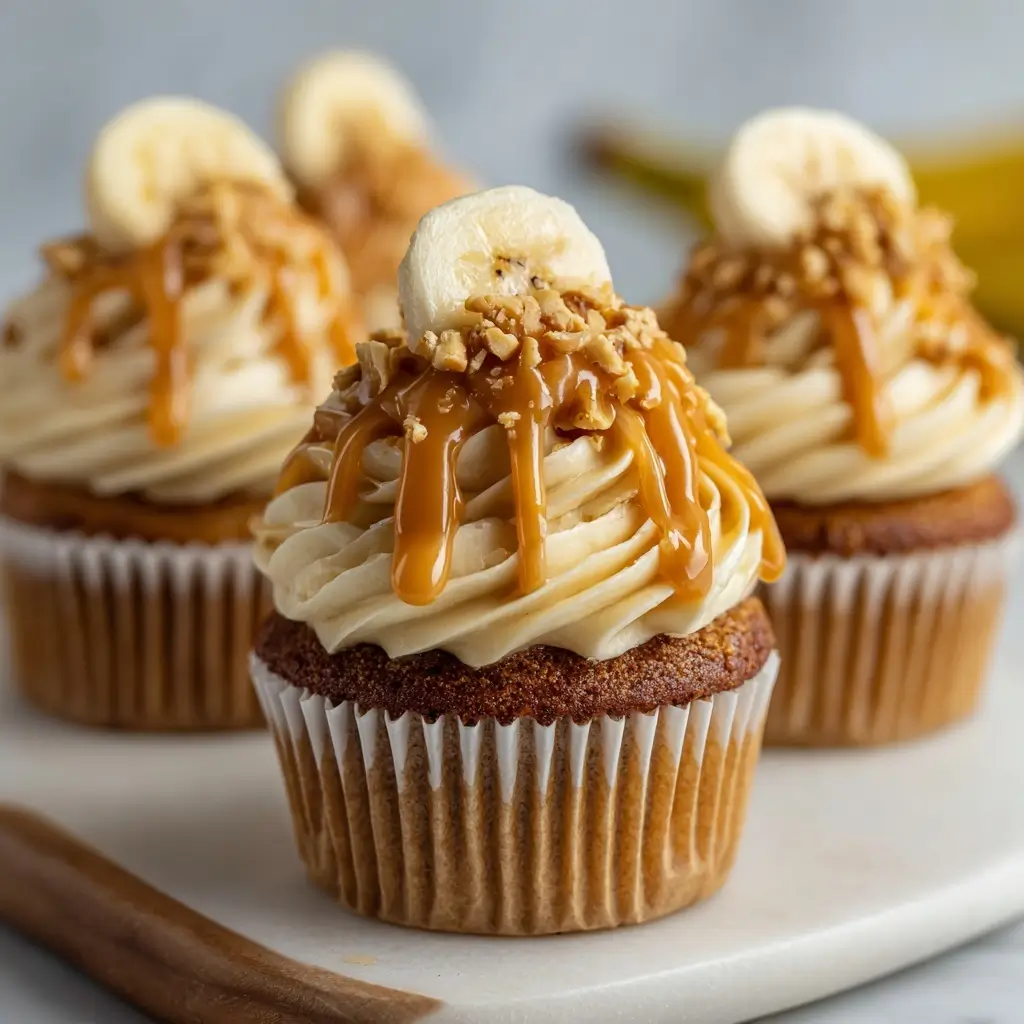
- Frost cooled cupcakes with swirls, rosettes, or simple spread. Garnish with extra peanuts, banana chips, or flaky salt.
FAQ
- Can I use crunchy peanut butter?
- Yes — but expect subtle textural variation and potential grittiness in crumb. For ultra-smooth cupcakes, stick with smooth. If using crunchy, fold in gently at the end and reduce optional chopped peanuts to avoid overload.
- Why did my cupcakes sink in the center?
- Most common causes: underbaking (toothpick came out too clean), opening oven door before 16 minutes, overmixing batter (excess gluten), expired leaveners, or inaccurate oven temp. Always verify oven calibration with a thermometer.
- Can I make these ahead for a party?
- Absolutely. Bake cupcakes up to 2 days ahead; store unfrosted in airtight container at room temp. Frost day-of. Frosted cupcakes keep 2 days refrigerated — bring to room temp 30 minutes before serving for best texture.
- My batter looks curdled — did I ruin it?
- No — curdling occurs when cold eggs hit warm butter-sugar mixture. As long as you continue beating, it will re-emulsify. If persistent, add 1 tsp flour and beat 15 seconds. Texture won’t suffer.
- Can I substitute oil for butter?
- You can — use ½ cup neutral oil (avocado or grapeseed). Result is moister, denser, and less rich-tasting. Reduce buttermilk by 1 tbsp to compensate for added liquid fat.
- How do I prevent domed tops?
- Fill liners only ⅔ full, avoid overmixing, and consider “muffin top” liners (taller, pleated). For flat tops, level with serrated knife after cooling — save scraps for trifle or crumbs.
- Is there a way to intensify peanut flavor without adding more PB?
- Yes — toast 2 tbsp chopped peanuts in dry skillet until fragrant, cool, then fold in at end. Or add ¼ tsp peanut butter powder (PB2) to dry ingredients for concentrated nuttiness without extra fat.
- Can I use frozen bananas?
- Yes — thaw completely, drain all liquid (it dilutes batter), and measure mashed amount. Frozen bananas often yield deeper flavor due to ice crystal cell rupture releasing sugars.
- What’s the best way to store leftovers?
- Unfrosted: room temp, covered, up to 3 days. Frosted: refrigerated in airtight container up to 5 days. Freeze unfrosted cupcakes up to 3 months — thaw wrapped in fridge overnight, then refresh at room temp.
- Can I make these into whoopie pies?
- Yes! Bake as directed, cool completely, then halve horizontally or use two full cupcakes per pie. Fill generously with peanut butter frosting and press together. Roll edges in crushed peanuts.
Summary
Peanut Butter Banana Cupcakes are a masterclass in balanced baking — where nature’s caramelized sweetness meets earthy, protein-rich depth, all wrapped in a tender, golden crumb that stays moist for days. With meticulous attention to ripeness, temperature, and technique — plus endless avenues for personalization — they transform humble pantry staples into joyful, shareable moments of pure, nostalgic delight.
Whether you’re honoring tradition, adapting for modern dietary needs, or simply craving a treat that feels like a hug in dessert form, these cupcakes prove that the simplest combinations, executed with care, deliver the most profound satisfaction — one perfectly spiced, peanut-kissed bite at a time.