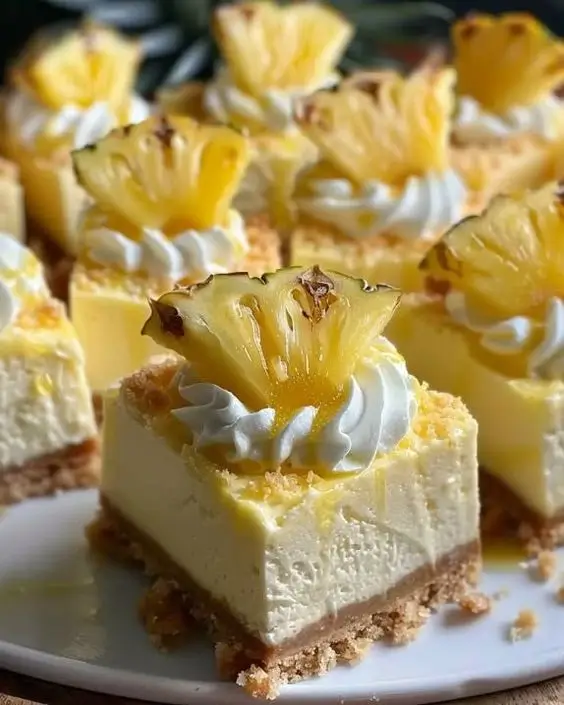
Pineapple Mousse Cheesecake Bars: A Tropical Delight
The History of Pineapple Mousse Cheesecake Bars
The story of pineapple mousse cheesecake bars begins with the rich legacy of cheesecake, a dessert that traces its roots back to ancient Greece. The Greeks served cheesecakes at the first Olympic Games in 776 BCE as a source of energy for athletes. Over centuries, cheesecake evolved across Europe, particularly in Italy and France, before making its way to America through European immigrants. In the early 20th century, American bakers began experimenting with cream cheese—popularized by brands like Philadelphia—which gave rise to the modern New York-style cheesecake.
The fusion of tropical flavors like pineapple into cheesecake emerged during the mid-20th century, a time when canned pineapple became widely accessible thanks to advancements in food preservation and global trade. Hawaii’s statehood in 1959 further popularized pineapple in American cuisine, symbolizing a gateway to tropical indulgence. Bakers started incorporating pineapple not only into cakes and tarts but also into creamy desserts like cheesecake.
Mousse cheesecake bars represent a modern twist on traditional cheesecake—lighter, airier, and often no-bake. The mousse element adds silkiness and elegance, while the bar format makes them perfect for gatherings, potlucks, and meal prep. Combining the tangy sweetness of pineapple with the velvety richness of cream cheese creates a harmonious balance that delights the palate. Today, pineapple mousse cheesecake bars are a favorite summer dessert, often seen at beach parties, luau-themed events, and brunch spreads around the world.
Ingredients Breakdown: What Makes These Bars Irresistible?
The magic of pineapple mousse cheesecake bars lies in the careful selection and layering of ingredients that contribute to their flavor, texture, and visual appeal. Each component plays a vital role:
- Cream Cheese: The foundation of any great cheesecake, full-fat cream cheese provides a rich, tangy base that balances the sweetness of the pineapple. It’s essential to use room-temperature cream cheese for smooth blending without lumps.
- Condensed Milk: This sweet, thick milk enhances creaminess and stabilizes the mousse while reducing the need for additional sugar. It also helps the filling set beautifully in the refrigerator.
- Fresh or Canned Pineapple: Fresh pineapple offers vibrant acidity and natural enzymes, while canned pineapple (in juice, not syrup) ensures consistent sweetness and soft texture. Crushed pineapple is typically used for even distribution.
- Gelatin or Agar-Agar: A crucial setting agent for the mousse, gelatin gives the filling its delicate jiggle and structure. For a vegetarian option, agar-agar can be substituted with slight adjustments in quantity and preparation.
- Whipped Cream or Whipping Cream: Folded into the mixture, this adds lightness and fluffiness, transforming dense cheesecake into an airy mousse.
- Graham Cracker Crust: A buttery, slightly sweet base made from crushed graham crackers and melted butter. It offers a satisfying crunch that contrasts perfectly with the silky mousse.
- Lemon Juice: A splash brightens the entire dessert, enhancing the pineapple flavor and cutting through the richness.
- Vanilla Extract: Adds depth and warmth to the overall flavor profile.
- Pineapple Jelly or Glaze (optional): Used as a shiny topping to enhance appearance and add an extra burst of pineapple flavor.
Optional enhancements include toasted coconut flakes, macadamia nuts, or a swirl of mango puree for a more tropical flair.
Step-by-Step Recipe: How to Make Pineapple Mousse Cheesecake Bars
Follow this detailed guide to create stunning, restaurant-quality pineapple mousse cheesecake bars at home. Perfect for beginners and seasoned bakers alike!
Ingredients
Makes 16 bars (8×8-inch pan)
For the Crust:
- 1 ½ cups graham cracker crumbs (about 10–12 full sheets)
- ⅓ cup granulated sugar
- 6 tablespoons unsalted butter, melted
- ¼ teaspoon ground cinnamon (optional)
For the Pineapple Mousse Filling:
- 1 (8 oz) package cream cheese, softened
- 1 cup powdered sugar
- 1 teaspoon vanilla extract
- 1 tablespoon fresh lemon juice
- 1 cup crushed pineapple, well-drained (use canned or fresh)
- 1 (14 oz) can sweetened condensed milk
- 1 packet (2 ¼ tsp) unflavored gelatin
- ¼ cup cold water
- 1 cup heavy whipping cream, whipped to stiff peaks
For the Topping (Optional):
- ½ cup pineapple jelly or apricot jam, warmed and strained
- Fresh pineapple chunks or maraschino cherries for garnish
- Shredded coconut or mint leaves (optional)
Directions
- Prepare the Pan: Line an 8×8-inch square baking dish with parchment paper, leaving overhang on two sides for easy removal. Lightly grease the sides if needed.
- Make the Crust: In a medium bowl, combine graham cracker crumbs, sugar, and cinnamon. Pour in melted butter and mix until the crumbs are evenly moistened. Press the mixture firmly into the bottom of the prepared pan using the back of a spoon or a flat-bottomed glass. Chill in the refrigerator for at least 20 minutes to set.
- Drain the Pineapple: Place crushed pineapple in a fine-mesh strainer and press out excess liquid using a spatula or paper towels. Excess moisture can prevent the mousse from setting properly.
- Bloom the Gelatin: In a small bowl, sprinkle gelatin over cold water. Let it sit for 5–10 minutes to “bloom” — it will become thick and spongy.
- Dissolve the Gelatin: Heat the bloomed gelatin in the microwave for 15–20 seconds until completely liquefied, or place the bowl over a double boiler. Stir until smooth. Set aside to cool slightly.
- Beat the Cream Cheese: In a large mixing bowl, beat softened cream cheese with an electric mixer until smooth and creamy, about 2 minutes. Add powdered sugar, vanilla extract, and lemon juice. Beat until fully incorporated and fluffy.
- Incorporate Condensed Milk and Pineapple: Gradually add sweetened condensed milk and mix on low speed until combined. Fold in the drained crushed pineapple by hand using a spatula.
- Add Gelatin Mixture: Slowly pour the slightly cooled gelatin into the cream cheese mixture while mixing on low. Mix just until uniform—do not overmix.
- Fold in Whipped Cream: In a separate bowl, whip the heavy cream to stiff peaks. Gently fold one-third into the cream cheese mixture to lighten it, then add the rest and fold gently until no white streaks remain. The goal is to keep as much air in the mixture as possible for a light mousse texture.
- Assemble the Bars: Pour the mousse mixture over the chilled crust. Use a spatula to spread it evenly and smooth the top. Tap the pan gently on the counter to remove air bubbles.
- Chill: Cover with plastic wrap and refrigerate for at least 6 hours, preferably overnight, to allow the gelatin to fully set.
- Add Topping (Optional): Warm pineapple jelly or jam with a teaspoon of water, stir until smooth, then strain to remove lumps. Carefully brush or pour over the set mousse for a glossy finish. Garnish with fresh fruit, coconut, or cherries.
- Cut Into Bars: Using the parchment overhang, lift the entire slab out of the pan. Place on a cutting board. Wipe a sharp knife with hot water between each cut for clean edges.
Tips for Success: Expert Advice for Perfect Pineapple Mousse Cheesecake Bars
- Room-Temperature Ingredients: Always bring cream cheese and other dairy products to room temperature before mixing. Cold ingredients lead to lumpy batter.
- Drain Pineapple Thoroughly: Even a little excess moisture can weaken the gelatin’s ability to set. Consider squeezing crushed pineapple in a cheesecloth for best results.
- Don’t Overmix After Adding Gelatin: Once gelatin is added, overbeating can cause the mixture to start setting too early and result in uneven texture.
- Use Real Whipping Cream: Avoid pre-whipped toppings like Cool Whip if you want a richer, more authentic texture. Homemade whipped cream whips better and holds air longer.
- Chill the Bowl Before Whipping Cream: For faster, stiffer whipped cream, chill your mixing bowl and beaters in the freezer for 10–15 minutes beforehand.
- Freeze for Cleaner Cuts (Optional): For ultra-sharp edges, freeze the set bars for 30 minutes before slicing.
- Serve Chilled: These bars are best served cold straight from the refrigerator. Let them sit at room temperature for 5 minutes before serving for optimal creaminess.
- Prevent Weeping: If condensation forms on the surface, cover loosely with parchment instead of plastic wrap directly touching the mousse.
Variations and Customizations
One of the joys of pineapple mousse cheesecake bars is their versatility. Here are creative ways to customize them for different tastes and occasions:
- Coconut-Pineapple Fusion: Add ½ cup toasted coconut to the crust and fold ⅓ cup coconut cream into the mousse. Top with coconut flakes for a piña colada-inspired treat.
- Macadamia Nut Crust: Replace ½ cup of graham cracker crumbs with finely chopped macadamia nuts for a nutty, Hawaiian twist.
- No-Bake Oreo Base: Swap graham crackers for crushed chocolate cookies or Oreos for a darker, more decadent contrast.
- Gluten-Free Version: Use gluten-free graham crackers or a blend of almond flour, coconut flour, and oats to make the crust. Ensure all other ingredients are certified gluten-free.
- Vegan Adaptation: Substitute cream cheese with cashew-based vegan cream cheese, use coconut cream instead of dairy cream, and replace gelatin with agar-agar. Sweeten with maple syrup or agave.
- Layered Look: Create a two-tone effect by dividing the mousse, tinting one half yellow with natural turmeric or annatto, and layering them in the pan.
- Mini Mason Jar Parfaits: Skip the bar format and layer crust and mousse in small jars for individual servings—perfect for parties.
- Boozy Twist: Add 1–2 tablespoons of rum or coconut rum to the mousse for an adult-only version.
- Fruit Swirls: Swirl in mango, passionfruit, or guava puree before chilling for a multi-fruit tropical experience.
- Protein Boost: Add unflavored collagen peptides or a scoop of vanilla protein powder to the dry ingredients for a more nutritious dessert.
Health Considerations and Nutritional Value
While pineapple mousse cheesecake bars are undeniably indulgent, understanding their nutritional content can help you enjoy them mindfully.
Nutritional Profile (Per Bar, Approximate):
- Calories: 280–320
- Total Fat: 18–22g (mostly from cream cheese, butter, and cream)
- Saturated Fat: 10–12g
- Cholesterol: 45–55mg
- Sodium: 180–220mg
- Total Carbohydrates: 28–32g
- Sugars: 22–26g (from condensed milk, sugar, and pineapple)
- Dietary Fiber: 0.5–1g
- Protein: 4–5g
Health Notes:
- Pineapple Benefits: Pineapple contains bromelain, an enzyme known for aiding digestion and reducing inflammation. It’s also rich in vitamin C, manganese, and antioxidants.
- High Sugar Content: Due to condensed milk and added sugars, these bars are high in simple carbohydrates. Diabetics should consume in moderation or explore sugar substitutes like erythritol or monk fruit.
- Lactose Sensitivity: Contains dairy; lactose-intolerant individuals may opt for lactose-free cream cheese and milk alternatives.
- Gelatin Benefits: Gelatin supports joint health and gut lining integrity, though it’s derived from animal collagen.
- Balanced Indulgence: Best enjoyed as an occasional treat rather than a daily dessert. Pair with a green salad or fresh berries to balance the meal.
- Portion Control: Cut into smaller squares (e.g., 20 pieces instead of 16) to reduce calorie intake per serving.
Frequently Asked Questions (FAQ)
Can I make these bars ahead of time?
Yes! These bars can be made up to 3 days in advance. Store covered in the refrigerator. For longer storage, freeze for up to 1 month (wrap tightly in plastic and foil).
Why didn’t my mousse set?
Common reasons include: insufficient gelatin, not cooling long enough, using frozen whipped topping instead of real cream, or adding warm gelatin to cold mixture causing premature setting. Always bloom and dissolve gelatin properly.
Can I use fresh pineapple instead of canned?
Absolutely. Fresh pineapple has more bromelain, which can interfere with gelatin setting. To avoid this, heat the fresh pineapple gently (microwave or simmer for 1 minute) to deactivate the enzyme before using.
Are these bars freezable?
Yes, but texture may change slightly. Freeze unbaked bars on a tray first, then wrap individually. Thaw in the refrigerator before serving. The crust may soften a bit.
Can I use yogurt instead of cream cheese?
Not recommended. Yogurt lacks the fat and structure needed. However, you can replace part of the cream cheese with Greek yogurt for a lighter version, but expect a softer set.
How do I store leftovers?
Keep in an airtight container in the refrigerator for up to 5 days. Place parchment between layers if stacking.
Is there a substitute for gelatin?
Yes. Use agar-agar (1 teaspoon agar powder per packet of gelatin). Dissolve in hot liquid and boil for 1–2 minutes before cooling. Note: agar sets faster and firmer than gelatin.
Can I make this in a larger pan?
Yes. Use a 9×13-inch pan for thinner bars (cut into 24 pieces). Adjust chilling time accordingly—may set slightly faster due to reduced thickness.
Can I use low-fat ingredients?
You can, but the texture will be less creamy and the mousse may not set as well. Full-fat dairy is recommended for best results.
Are these bars safe for kids?
Yes, they’re kid-friendly! Just ensure the gelatin is fully dissolved and avoid small choking hazards like whole nuts if serving to young children.
Summary
Pineapple mousse cheesecake bars are a dreamy fusion of creamy cheesecake and airy mousse, layered over a buttery graham cracker crust and bursting with tropical pineapple flavor. Easy to make, endlessly customizable, and perfect for any occasion—from summer BBQs to holiday desserts.