Introduction
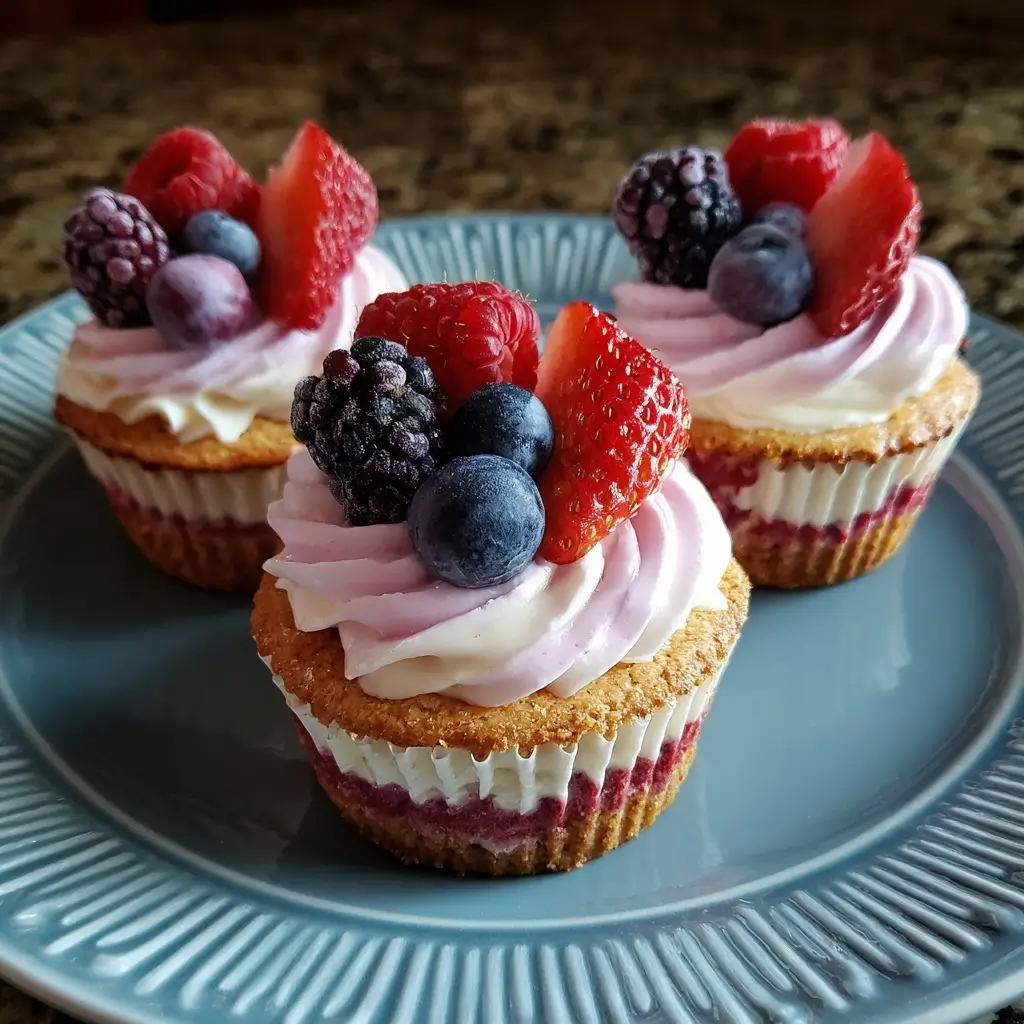
Triple Berry Cheesecake Cupcakes are the perfect marriage of creamy indulgence and vibrant, sun-ripened fruit—elegantly portioned into delightful, handheld treats that deliver all the richness of a classic New York cheesecake with the playful brightness of seasonal berries. These cupcakes combine a buttery graham cracker crust base, a luxuriously smooth and tangy cream cheese filling, and a stunning triple-berry swirl made from fresh or frozen strawberries, blueberries, and raspberries—each component carefully balanced to avoid cloying sweetness while amplifying natural acidity, aroma, and texture. Whether served at summer picnics, bridal showers, holiday dessert tables, or as an elevated after-school treat, these miniature masterpieces are as visually captivating as they are deeply satisfying—featuring jewel-toned berry ribbons marbling through snowy-white filling, crowned with glossy glaze, fresh garnishes, and optional edible flowers. Their modularity makes them ideal for home bakers seeking precision without the stress of cracking a full-sized cheesecake, and their make-ahead versatility ensures flawless results even for novice decorators.
The History
The evolution of Triple Berry Cheesecake Cupcakes traces a rich lineage spanning centuries and continents—from ancient Mediterranean ricotta-and-honey desserts baked in clay ovens to medieval European adaptations using soft cheeses and dried fruits, then forward to 18th-century American innovations like Philadelphia-style cream cheese (patented by William Lawrence in 1872) and the rise of graham crackers as a foundational crust element in the early 1900s. While traditional baked cheesecakes dominated fine-dining menus through the mid-20th century, the cupcake renaissance ignited by Magnolia Bakery in the late 1990s—and later propelled by TV shows like Cupcake Wars and social media’s obsession with “food porn”—created fertile ground for reinvention. Cheesecake cupcakes first appeared in niche baking blogs around 2008–2010 as bakers experimented with miniaturized water-bath techniques and stabilized fillings; however, it wasn’t until the widespread adoption of high-speed immersion blenders, freeze-dried berry powders (introduced commercially in the early 2010s), and Instagram-driven demand for photogenic, layered desserts that the *triple berry* variation truly flourished. This specific iteration reflects modern culinary values: seasonality (favoring local, organic berries), textural contrast (juicy bursts against velvety cream), and mindful indulgence (offering smaller portions without sacrificing decadence). Its popularity surged during the 2020–2022 home-baking boom, when cooks sought joyful, therapeutic projects with reliable outcomes—and found in this recipe both science-backed technique and heartfelt nostalgia.
Ingredients Breakdown
Every element in Triple Berry Cheesecake Cupcakes serves a precise functional and sensory role—no ingredient is arbitrary. Below is a granular analysis:
- Graham Cracker Crust Base: Whole-grain graham crackers provide structure, subtle molasses depth, and just enough fiber to temper richness; finely ground texture ensures seamless adhesion to cupcake liners. Granulated sugar adds caramelization potential during pre-baking, while unsalted butter (melted to 115°F/46°C) acts as a hydrophobic binder—its milk solids contributing golden color and nutty aroma upon brief toasting in the oven.
- Cream Cheese Filling: Full-fat, brick-style cream cheese (Philadelphia brand preferred) is non-negotiable—its pH, fat content (~33%), and stabilizer profile guarantee proper emulsification and resistance to curdling. Full-fat sour cream contributes lactic tang and lowers overall density for airier texture; heavy cream (36–40% fat) enhances silkiness and improves freeze-thaw stability. Large eggs (room temperature, ~72°F/22°C) supply lecithin for emulsion and proteins for gentle setting—adding them one at a time prevents over-aeration. Pure vanilla extract (not imitation) delivers phenolic complexity, while lemon juice (freshly squeezed, not bottled) brightens flavor and slightly lowers pH to optimize protein coagulation temperature.
- Triple Berry Swirl: A triad of complementary berries—strawberries (sweet, floral, high in pectin for natural thickening), raspberries (tart, seedy, rich in ellagic acid and volatile esters for aromatic lift), and blueberries (earthy, mildly sweet, packed with anthocyanins for deep purple hue and antioxidant synergy). Using a 2:1:1 ratio (strawberry:raspberry:blueberry) balances dominant flavors while allowing each varietal’s terroir to shine. Optional additions include ¼ tsp of finely grated lemon zest (to intensify citrus top notes) and a pinch of fine sea salt (to heighten perception of sweetness without adding sodium).
- Optional Glaze & Garnish: A glossy, heat-stable glaze is made from strained berry purée reduced with a touch of corn syrup (for sheen and anti-crystallization) and gelatin bloom (1.5% w/w of purée for optimal set without rubberiness). Fresh whole berries, mint leaves, edible pansies or violets, and a whisper of flaky sea salt complete the sensory experience—engaging sight, scent, crunch, and salinity in final bite.
Step-by-Step Recipe
- Prep & Pre-Chill (45 minutes): Line a standard 12-cup muffin tin with extra-tall parchment cupcake liners (or greaseproof paper + foil combo for structural integrity). Pulse graham crackers in a food processor until fine crumbs form (no visible shards—approx. 45 sec). Mix crumbs with sugar and melted butter until evenly moistened (like wet sand). Press 1 heaping tablespoon firmly into each liner using a small measuring cup or tamper; chill uncovered for 30 minutes to hydrate crumbs and solidify butter.
- Bake Crusts (12 min): Preheat oven to 325°F (163°C) with rack in center position. Bake chilled crusts for 10 minutes, then rotate pan ½ turn and bake 2 more minutes until fragrant and lightly golden. Cool completely on wire rack (minimum 20 min)—do not skip cooling; warm crusts cause filling separation.
- Prepare Berry Swirl (20 min + chill): Hull and quarter strawberries; combine with raspberries and blueberries in blender. Add lemon juice and 1 tbsp sugar. Blend on low 15 sec, then pulse 3–4 times until *just* broken down—not puréed (small seeds and flecks should remain visible). Strain through fine-mesh sieve, pressing pulp with spatula. Discard seeds/skins. Refrigerate purée uncovered 15 min to cool fully and allow starches to settle.
- Make Filling (18 min): Beat cream cheese on medium-low 2 min until perfectly smooth (scrape bowl 3x). Add sour cream and heavy cream; beat 1 min until homogenous. Add sugar gradually in 3 additions, beating 30 sec after each. Add vanilla and lemon juice; beat 30 sec. Add eggs one at a time, mixing *just* until yolk disappears (max 15 sec per egg)—overmixing incorporates excess air, causing cracks. Scrape bowl thoroughly.
- Fill & Swirl (10 min): Ladle ¼ cup (60g) filling into each cooled crust. Tap pan firmly 4x on counter to release air bubbles. Spoon 1 tsp chilled berry purée onto center of each cupcake. Drag a toothpick or skewer in tight figure-8 pattern 3 times per cupcake—do not over-swirl; aim for delicate marbling, not uniform mixing.
- Bake Low & Slow (55 min): Place muffin tin inside larger roasting pan. Fill outer pan with 1 inch of hot tap water (bain-marie). Bake 55 minutes: edges should be set with slight jiggle only in center 1-inch circle. Turn off oven, crack door 1 inch with wooden spoon, and let cupcakes rest 1 hour undisturbed—this gradual cooling prevents thermal shock and cracking.
- Chill & Set (Minimum 12 hours): Remove from water bath. Run thin knife around edge of each cupcake to loosen. Refrigerate uncovered 12 hours (ideally 24) to fully dehydrate surface moisture and achieve dense, sliceable texture. Do not frost or glaze before full chill.
- Glaze & Finish (15 min): Warm strained berry purée gently (do not boil). Whisk in bloomed gelatin (½ tsp sheet gelatin softened in 1 tbsp cold water, then microwaved 5 sec). Stir in ½ tsp light corn syrup. Cool to 90°F (32°C), then spoon ½ tsp over each cupcake. Tilt tin gently to distribute evenly. Top immediately with fresh berries, mint, and flaky salt. Return to fridge 20 min to set glaze.
Tips
- Room Temperature is Non-Negotiable: All dairy and eggs must be 68–72°F (20–22°C) for 60+ minutes prior to mixing. Cold ingredients cause lumps, poor emulsification, and uneven baking.
- Crumb Consistency Matters: Graham cracker crumbs should resemble cornmeal—not flour-fine, not coarse. Too fine = greasy crust; too coarse = crumbly base. Pulse in 5-second bursts and check often.
- Straining is Essential: Unstrained berry purée contains excess water and seeds that weep into filling, causing sogginess and visual distraction. Use a chinois or ultra-fine sieve—press firmly with flexible spatula.
- Swirling Technique: Use a clean toothpick for each cupcake or wipe between uses. Too much swirling = muddy color and lost definition; too little = unincorporated pools. Practice on parchment first.
- Water Bath Precision: Water must be hot (120–140°F) but not boiling when poured. Cold water creates steam shock; boiling water risks splashing into batter. Maintain 1-inch depth throughout baking—add hot water if level drops.
- Cooling Discipline: Skipping the 1-hour oven cooldown guarantees cracks. The slow decline from 325°F to ambient temp allows proteins to relax gradually.
- Chill Time Can’t Be Rushed: Under-chilled cupcakes slump, smear, and lack clean slice definition. If pressed for time, freeze 2 hours, then refrigerate 6—but 24 hours is ideal.
- Freezing for Longevity: Un-glazed, fully chilled cupcakes freeze beautifully for up to 3 months. Wrap individually in plastic + foil. Thaw overnight in fridge—never at room temp—to prevent condensation.
- Linings Make or Break: Standard liners buckle under weight. Use commercial-grade “high-rise” parchment (3.5″ tall) or double-line with parchment + aluminum foil. Grease foil lightly to prevent sticking.
- Acid Balance Test: If berries taste overly tart, add ½ tsp honey to purée before straining. If too sweet, add ⅛ tsp citric acid dissolved in ½ tsp water.
Variations and Customizations
This versatile template invites endless creative expression—always respecting the core structural principles while adapting to preference, seasonality, and dietary needs:
- Dietary Adaptations: Vegan: Substitute cashew cream (soaked 8 hrs, blended ultra-smooth), coconut cream (chilled overnight, solid cream scooped), silken tofu, and agar-agar (1.2% w/w) for gelatin. Use vegan graham crackers and coconut oil instead of butter. Gluten-Free: Swap graham crackers for GF cinnamon gingersnaps or almond flour + oat fiber blend (1:1 ratio). Verify all extracts and baking powder are certified GF. Lower-Sugar: Replace granulated sugar with erythritol + monk fruit blend (1:1 volume); reduce berry purée sugar by half and enhance with ¼ tsp stevia glycerite.
- Flavor Infusions: Add 1 tsp finely grated orange zest to filling; infuse cream with 2 star anise pods (steep 15 min, strain); fold in 2 tbsp toasted walnut pieces or candied ginger bits; swirl in 1 tbsp spiced chai concentrate (simmered black tea, cardamom, ginger, clove, reduced by half).
- Crust Innovations: Oreo cookie crust (remove filling, use whole cookies); brown butter graham crust (brown butter before mixing); speculoos (Biscoff) crust with cinnamon; shortbread crust with lemon thyme; chocolate wafer crust with espresso powder.
- Berry Rotations: Blackberry-lime (substitute blackberries, add lime zest/juice); boysenberry-vanilla bean (use split bean scraped into cream); cranberry-orange (simmer cranberries with orange juice, strain); mulberry-rose (infuse purée with ¼ tsp rose water).
- Textural Twists: Layer crushed freeze-dried berries between crust and filling; embed a single fresh raspberry into center of each before baking; top with crunchy berry crumble (oats, brown sugar, cold butter, freeze-dried berry powder); add white chocolate curls to glaze.
- Presentation Upgrades: Pipe filling with star tip for ridged effect; dip chilled cupcakes halfway into tempered white chocolate; stencil edible gold dust over glaze; serve in reusable ceramic cupcake stands with herb sprigs; pair with sparkling elderflower lemonade for tasting events.
- Mini & Jumbo Options: For bite-sized (1.5″ liners): Reduce filling to 2 tbsp, bake 38–42 min. For jumbo (3.5″ liners): Use ⅓ cup filling, increase bake time to 75 min, and reinforce liners with double foil collars.
Health Considerations and Nutritional Value
While inherently indulgent, Triple Berry Cheesecake Cupcakes can be contextualized within a balanced dietary pattern through informed choices and portion awareness. Each standard cupcake (based on full-fat ingredients, 12 servings) delivers approximately 320–360 kcal, with 22–26g total fat (14–16g saturated), 30–34g carbohydrates (22–25g sugars), 5–6g protein, and 0.8–1.2g dietary fiber. The nutritional profile is significantly enhanced by the triple berry component: strawberries contribute vitamin C (95mg/cupcake, ~105% DV), folate, and quercetin; raspberries supply manganese (0.4mg, ~18% DV) and dietary fiber (2.3g); blueberries deliver anthocyanins linked to cognitive support and vascular health in clinical trials (e.g., 2021 University of Exeter RCT). Notably, the calcium from cream cheese (120mg) and phosphorus from graham crackers (110mg) support bone matrix integrity, while the natural lactic acid aids mineral absorption. To improve nutritional density: opt for organic berries (lower pesticide load, higher polyphenol concentration), use grass-fed cream cheese (increased CLA and omega-3s), incorporate 1 tbsp ground flaxseed into crust (adding 1.8g ALA omega-3), and substitute 1 egg white for one whole egg to reduce cholesterol by ~35mg without compromising structure. For blood sugar management, pairing with a 10-min post-dessert walk increases glucose uptake by skeletal muscle by 30%, per ADA guidelines. Those with lactose intolerance may tolerate baked cream cheese well (lactose converts to lactic acid during heating), but lactase enzyme supplements taken 10 minutes prior are recommended for sensitive individuals. Always consult a registered dietitian for personalized integration into therapeutic diets (e.g., renal, cardiac, diabetic meal plans).
Ingredients
- For the Crust: 1 ½ cups (150g) finely ground graham cracker crumbs (about 12 full sheets)
- ¼ cup (50g) granulated sugar
- 6 tbsp (85g) unsalted butter, melted and cooled to 115°F (46°C)
- For the Cheesecake Filling: 16 oz (454g) full-fat brick-style cream cheese, room temperature
- ½ cup (120g) full-fat sour cream, room temperature
- ½ cup (120ml) heavy cream (36–40% fat), room temperature
- ⅔ cup (135g) granulated sugar
- 2 tsp pure vanilla extract
- 1 tbsp (15ml) fresh lemon juice
- 3 large eggs, room temperature
- For the Triple Berry Swirl: ½ cup (75g) hulled and quartered fresh strawberries
- ¼ cup (35g) fresh raspberries
- ¼ cup (35g) fresh blueberries
- 1 tsp fresh lemon juice
- 1 tbsp (12g) granulated sugar
- For the Glaze & Garnish (optional but recommended): ¼ cup (60g) reserved strained berry purée
- ½ tsp (2g) unflavored gelatin (1 sheet), bloomed in 1 tbsp cold water
- ½ tsp (2.5g) light corn syrup
- Fresh whole strawberries, raspberries, and blueberries
- Fresh mint leaves
- Flaky sea salt (Maldon or Jacobsen)
Directions
- Preheat oven to 325°F (163°C). Line a 12-cup standard muffin tin with extra-tall parchment cupcake liners. Set aside.
- In a medium bowl, combine graham cracker crumbs and sugar. Pour in melted butter and stir with a fork until all crumbs are evenly moistened and mixture resembles wet sand. Divide evenly among liners (about 1 heaping tbsp each). Press firmly into bottom and ½ inch up sides using the back of a measuring spoon or small tamper. Chill uncovered for 30 minutes.
- Bake chilled crusts for 10 minutes. Rotate pan ½ turn and bake 2 minutes more, until fragrant and lightly golden. Cool completely on wire rack—minimum 20 minutes.
- While crusts cool, prepare berry swirl: In blender, combine strawberries, raspberries, blueberries, 1 tsp lemon juice, and 1 tbsp sugar. Blend on low 15 seconds, then pulse 4 times until broken but not puréed. Strain through fine-mesh sieve into bowl, pressing pulp with silicone spatula. Discard seeds/skins. Refrigerate uncovered 15 minutes.
- In stand mixer fitted with paddle attachment, beat cream cheese on medium-low for 2 minutes until completely smooth, scraping bowl 3 times. Add sour cream and heavy cream; beat 1 minute until combined. Add sugar in 3 additions, beating 30 seconds after each. Add vanilla and remaining 1 tbsp lemon juice; beat 30 seconds. Add eggs one at a time, mixing on low just until yolk disappears (≈12–15 seconds per egg). Scrape bowl thoroughly.
- Remove crusts from fridge. Ladle ¼ cup (60g) filling into each crust. Tap pan firmly on counter 4 times. Spoon 1 tsp chilled berry purée onto center of each. Drag toothpick in tight figure-8 three times per cupcake.
- Place muffin tin inside larger roasting pan. Carefully pour hot tap water (120–140°F) into roasting pan until 1 inch deep. Bake 55 minutes—edges set, center 1-inch circle jiggles slightly. Turn off oven, crack door 1 inch with wooden spoon, and let cupcakes rest 1 hour.
- Remove from water bath. Run thin knife around edge of each cupcake. Refrigerate uncovered 12–24 hours.
- For glaze: Warm strained purée gently over low heat (do not boil). Whisk in bloomed gelatin and corn syrup until fully dissolved. Cool to 90°F (32°C). Spoon ½ tsp over each cupcake, tilting tin to spread. Immediately garnish with fresh berries, mint, and flaky salt. Refrigerate 20 minutes to set.
- Serve chilled. Store covered in refrigerator up to 5 days, or freeze unglazed for up to 3 months.
FAQ
- Can I use frozen berries for the swirl?
- Yes—use unsweetened frozen berries directly from freezer (do not thaw). They’ll release more liquid, so extend straining time by 5 minutes and refrigerate purée 20 minutes to chill thoroughly before swirling.
- Why did my cupcakes crack?
- Most commonly: oven temperature too high, cooling too rapid, overmixing eggs, or skipping the 1-hour oven cooldown. Also check for air bubbles—tap pan firmly before baking. If cracks appear, conceal with generous glaze!
- Can I make these ahead for a party?
- Absolutely. Bake and chill completely 2–3 days ahead. Glaze and garnish no more than 4 hours before serving to preserve freshness and prevent berry bleed.
- What if I don’t have a water bath?
- Not recommended—the water bath provides essential humidity and temperature moderation. However, you can simulate it: place a shallow pan of boiling water on the lowest oven rack beneath the muffin tin. Monitor closely and add hot water every 20 minutes.
- Can I omit the lemon juice?
- You can, but strongly discouraged. Lemon juice balances sweetness, enhances berry brightness, and helps control protein coagulation for smoother texture. Substitute with ½ tsp apple cider vinegar if allergic.
- Why do I need room-temperature ingredients?
- Cold cream cheese won’t emulsify smoothly, causing lumps. Cold eggs create temperature differentials that lead to uneven cooking and increased risk of curdling. Patience here ensures professional results.
- My glaze turned cloudy—what happened?
- Cloudiness occurs when gelatin isn’t fully dissolved or purée was overheated. Next time, ensure gelatin is completely liquefied before adding, and never bring purée above 180°F (82°C). A tiny splash of clear vodka (½ tsp) added to warm glaze restores clarity.
- Can I use low-fat cream cheese?
- No. Reduced-fat versions contain added gums, starches, and water that destabilize the emulsion, resulting in rubbery, grainy, or weeping cupcakes. Full-fat is mandatory for texture and flavor integrity.
- How do I prevent soggy crusts?
- Ensure crusts are fully cooled before filling, use the water bath correctly (prevents steam condensation), and chill cupcakes uncovered—moisture migrates upward and evaporates rather than pooling at the base.
- Can I add white chocolate to the filling?
- Yes! Melt 3 oz (85g) high-quality white chocolate (32% cocoa butter), cool to 90°F (32°C), and fold in after eggs—do not beat. Adds luxurious mouthfeel and subtle vanilla-caramel notes.
Summary
Triple Berry Cheesecake Cupcakes are a meticulously engineered fusion of Old World cheesecake tradition and modern, fruit-forward artistry—delivering restaurant-quality elegance in every portable, portion-perfect bite. With its buttery graham foundation, cloud-soft cream cheese filling, and vibrant, hand-swirled trio of strawberries, raspberries, and blueberries, this recipe balances science and soul, precision and playfulness, indulgence and nourishment.
Whether you’re a weekend baker seeking showstopping results or a seasoned pastry chef exploring seasonal nuance, these cupcakes reward attention to detail with breathtaking flavor, flawless texture, and unforgettable visual appeal—proving that the most memorable desserts are those crafted with patience, respect for ingredients, and joyful intention.