Introduction
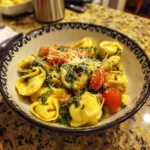
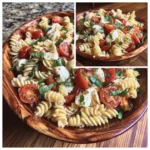
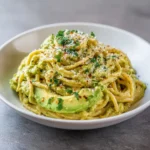
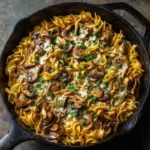
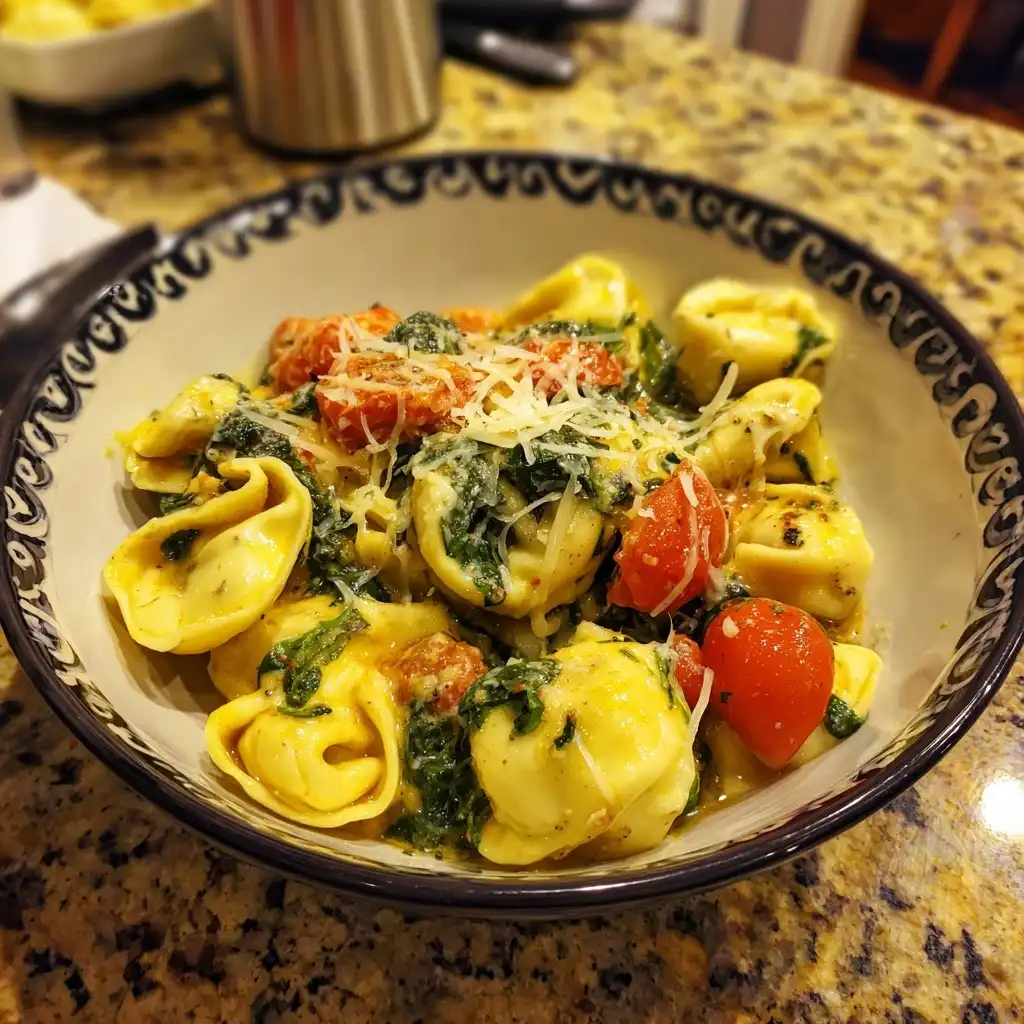
Tomato Spinach Tortellini is a vibrant, comforting, and nutritionally balanced pasta dish that marries the bright acidity of ripe tomatoes with the earthy sweetness of fresh spinach and the tender, cheese-stuffed goodness of tortellini. Whether served as a weeknight family dinner, a cozy lunch on a rainy afternoon, or an elegant yet approachable entrée for guests, this dish delivers layers of flavor, texture, and color in every bite. Its versatility—easily adaptable to vegetarian, vegan, gluten-free, or protein-enriched preferences—makes it a true kitchen staple. Unlike heavier cream-based pastas, this version celebrates simplicity, freshness, and balance, letting high-quality ingredients shine without overwhelming technique or time commitment.
The History
The origins of Tomato Spinach Tortellini lie at the intersection of Italian culinary tradition and modern American home cooking innovation. Tortellini—small, ring-shaped stuffed pasta—traces its roots to the Emilia-Romagna region of Northern Italy, with legendary ties to Bologna and Modena. Folklore claims the shape was inspired by Venus’s navel, while historical records from the 17th century reference tortellini in festive contexts, often filled with pork, prosciutto, and Parmigiano-Reggiano. Spinach, native to Persia and introduced to Europe via Arab trade routes, became a beloved green across Mediterranean cuisines by the Middle Ages—valued for its iron, versatility, and mild flavor. Tomatoes, though originally from the Andes, only entered Italian kitchens after the Columbian Exchange in the 16th century—and weren’t widely embraced until the 18th and 19th centuries, when they transformed regional sauces, especially in Campania and Sicily. The fusion of tomato sauce, leafy greens, and stuffed pasta emerged more recently—likely in the mid-to-late 20th century—as Italian-American cooks sought heartier, vegetable-forward interpretations of classic dishes. Home economists, food magazines like Bon Appétit and Food & Wine, and later, digital recipe platforms helped popularize the tomato-spinach-tortellini trio as a nutritious, accessible, and restaurant-worthy weeknight option. Today, it stands as a testament to culinary evolution—honoring heritage while embracing wellness, convenience, and global ingredient consciousness.
Ingredients Breakdown
Every exceptional Tomato Spinach Tortellini begins not with technique—but with intention behind each ingredient. Below is a detailed, chef-informed analysis of why each component matters—not just for flavor, but for structure, mouthfeel, balance, and nutritional synergy:
- Tortellini: The soul of the dish. Traditional cheese tortellini (typically ricotta, Parmigiano-Reggiano, eggs, and nutmeg) offers creamy richness and delicate chew. Whole wheat or spinach-infused varieties add fiber and subtle vegetal notes. Frozen tortellini is preferred over dried for optimal tenderness and consistent cook time; avoid “pre-cooked” or “microwave-ready” versions, which often break down in simmering sauce.
- Olive Oil (Extra Virgin): Not merely a cooking fat—it’s an aromatic foundation. High-quality EVOO contributes polyphenols, fruity bitterness, and a peppery finish that cuts through acidity and binds flavors. Used early (to sauté aromatics) and late (as a finishing drizzle), it bridges raw freshness and cooked depth.
- Garlic & Shallots (or Yellow Onion): Aromatic bedrock. Shallots offer a milder, sweeter, more nuanced allium profile than onions—ideal for delicate sauces where sharpness could dominate. Garlic adds pungent warmth; always mince finely and add *after* shallots to prevent burning, preserving its enzymatic complexity.
- Canned San Marzano Tomatoes (Whole, Peeled, DOP-certified if possible): The gold standard for sauce integrity. Grown in Italy’s volcanic soil, San Marzanos boast low acidity, high sugar content, thick flesh, and minimal seeds—yielding a luxuriously velvety, sweet-tart base without needing excessive reduction. Crush them by hand for ideal texture: chunky enough to retain body, smooth enough to coat pasta evenly.
- Fresh Basil (not dried): Added at the very end, basil contributes volatile oils (linalool, eugenol) that deliver floral, anise-like brightness impossible to replicate with dried herb. Torn—not chopped—to preserve essential oil integrity and prevent bruising.
- Fresh Baby Spinach: Chosen over mature spinach for its tender stems, mild flavor, and rapid wilting properties. It dissolves seamlessly into the sauce without stringiness, contributing magnesium, folate, and beta-carotene while adding vibrant green contrast. Roughly 5–6 oz yields perfect visual and textural balance—enough to be noticeable, not overwhelming.
- Grated Parmigiano-Reggiano (aged 24+ months): More than garnish—it’s umami reinforcement. The crystalline texture and deep nuttiness enhance savoriness, help emulsify the sauce, and add subtle saltiness that reduces need for added sodium. Avoid pre-grated “Parmesan” blends containing cellulose or fillers—they lack depth and don’t melt properly.
- Red Pepper Flakes (optional but recommended): A whisper—not a shout—of heat. Toasted lightly in oil before aromatics, they release capsaicin and aromatic terpenes, adding dimension and a gentle warmth that lifts the entire profile without distracting from freshness.
- Sea Salt & Freshly Cracked Black Pepper: Salting in stages—first to bloom aromatics, then to season the tomatoes, finally to taste at the end—ensures layered seasoning. Coarse sea salt dissolves gradually; freshly cracked pepper provides volatile piperine oils for aroma and subtle spice.
Step-by-Step Recipe
This method prioritizes control, timing precision, and sauce integrity—ensuring tortellini remains plump and tender, spinach stays vivid, and tomato flavor remains bright—not boiled-out or muted.
- Prep All Ingredients (Mise en Place): Measure and organize everything before heating a pan. Finely mince 2 shallots and 3 garlic cloves. Tear 1½ cups fresh basil. Grate ¾ cup Parmigiano-Reggiano. Rinse and spin-dry 5 oz baby spinach. Crush 1 (28 oz) can San Marzano tomatoes by hand into a bowl—juice and pulp included. Have 16 oz refrigerated cheese tortellini ready (do not pre-boil).
- Heat & Bloom Aromatics: In a wide, heavy-bottomed stainless steel or enameled cast-iron skillet (12–14 inches), warm 3 tbsp extra virgin olive oil over medium-low heat. Add ¼ tsp red pepper flakes and toast 30 seconds until fragrant—but not smoking. Immediately add minced shallots; cook 3–4 minutes, stirring frequently, until translucent and soft but not browned. Add garlic and stir constantly for 60–90 seconds until aromatic—do not let it color.
- Build the Tomato Base: Pour crushed tomatoes into the skillet. Increase heat to medium. Add 1 tsp sea salt, ¼ tsp black pepper, and 1 tsp sugar (optional, only if tomatoes taste overly tart). Simmer uncovered, stirring occasionally, for 8–10 minutes. The sauce should thicken slightly, darken to a rich brick-red, and develop a glossy sheen—avoid vigorous boiling, which can break down texture.
- Introduce Spinach Gradually: Reduce heat to medium-low. Add half the spinach, stirring gently until wilted (about 30 seconds). Repeat with remaining spinach. Cook just until all leaves are fully collapsed and vibrant green—no longer than 1 minute total. Overcooking turns spinach murky and bitter.
- Simmer Tortellini Directly in Sauce (Key Step): Gently add uncooked tortellini directly into the warm sauce. Pour in ½ cup reserved pasta water (if using dried tortellini) or ½ cup low-sodium vegetable broth (for fresh/frozen). Stir once to submerge. Cover skillet and simmer gently for 5 minutes—stirring once halfway—to allow tortellini to cook *in* the sauce, absorbing flavor while releasing starch to naturally thicken and emulsify.
- Finish with Freshness & Fat: Remove from heat. Stir in torn basil and 2 tbsp cold olive oil. Let rest 2 minutes—this allows residual heat to infuse herbs without cooking them. Taste and adjust: more salt? A splash of balsamic vinegar (½ tsp) for brightness? A pinch of lemon zest for lift?
- Serve Immediately: Spoon into warmed shallow bowls. Top generously with grated Parmigiano-Reggiano, a final drizzle of olive oil, and a few whole basil leaves. Serve with crusty sourdough or garlic-rubbed crostini on the side.
Tips
- Never Boil Tortellini Separately (Unless Required): Cooking tortellini directly in sauce prevents waterlogging, enhances flavor absorption, and leverages released starch for silkier texture. Only pre-boil if using ultra-firm dried tortellini (rare) or if recipe requires exact al dente control (e.g., baked versions).
- Reserve Pasta Water Strategically: If using dried tortellini, reserve 1 cup starchy water before draining. Its alkalinity and starch content are irreplaceable for binding and gloss. For fresh/frozen, low-sodium veg broth works beautifully—and adds depth.
- Control Spinach Moisture: Excess water = diluted sauce. Always spin-dry washed spinach thoroughly—or pat dry with clean towels. Squeeze gently if leaves feel damp.
- Tomato Acid Balance: Taste your tomatoes *before* cooking. If excessively sharp, balance with a pinch of sugar, a splash of balsamic, or a small knob of butter (1 tsp) stirred in off-heat for roundness—not richness.
- Garlic Timing Is Non-Negotiable: Garlic burns at 300°F (149°C). Adding it too early or over high heat creates acrid bitterness. Always wait until shallots soften, then reduce heat slightly before adding.
- Finish Hot, Serve Hot: This dish suffers from temperature drop. Warm bowls, serve within 2 minutes of finishing, and avoid holding under heat lamps or covered steam trays.
- Texture Contrast Matters: For added interest, top with toasted pine nuts, crispy pancetta (if not vegetarian), or shaved fennel ribbons. A sprinkle of flaky Maldon salt right before serving elevates every bite.
- Batch Scaling Notes: Doubling? Use a wider, shallower pan—not deeper—to maintain surface area for evaporation and even cooking. Never triple in one batch—sauce consistency and tortellini doneness become unpredictable.
Variations and Customizations
This recipe is a canvas—not a contract. Below are rigorously tested adaptations, each preserving structural integrity and flavor harmony:
- Vegan Version: Substitute cheese tortellini with certified vegan spinach or mushroom tortellini (check labels for egg/whey). Replace Parmigiano with 3 tbsp nutritional yeast + 1 tsp white miso paste (whisked into sauce at the end) for umami depth. Use vegan butter (1 tsp) instead of olive oil finish for creaminess. Garnish with hemp seeds or toasted sunflower kernels.
- Protein-Enriched: Add 12 oz seared Italian sausage (casings removed, crumbled), 1 cup cooked lentils (French Puy, drained well), or 8 oz grilled shrimp (added in last 90 seconds). Adjust salt accordingly—sausage and lentils add sodium.
- Gluten-Free: Use certified GF spinach or ricotta tortellini (many brands now offer excellent options—Barilla, Simply Balanced, or local artisan makers). Ensure broth and cheese are GF-certified (some Parmigiano contains anti-caking agents). Thicken with 1 tsp psyllium husk mixed into broth before adding.
- Creamy Light Version: Stir in ¼ cup full-fat coconut milk (canned, unsweetened) or cashew cream (soaked raw cashews blended with water) during final rest. Adds luxurious mouthfeel without dairy heaviness.
- Roasted Vegetable Upgrade: Toss 1 diced zucchini, 1 cup cherry tomatoes, and ½ red bell pepper in olive oil, salt, and oregano. Roast at 425°F (220°C) for 20 minutes until caramelized. Fold into finished dish just before serving for smoky-sweet complexity.
- Herb-Forward Summer Twist: Swap basil for equal parts fresh mint + flat-leaf parsley + chives. Add ¼ cup lemon juice and lemon zest at the end. Perfect with grilled fish or as a chilled pasta salad (cool completely, toss with extra EVOO and lemon).
- Winter Comfort Variation: Stir in ½ cup roasted butternut squash purée and 1 tsp smoked paprika with the tomatoes. Finish with crumbled goat cheese instead of Parmigiano for tangy creaminess.
- One-Pot Baked Version: After Step 5, transfer mixture to a greased 9×13 baking dish. Top with ½ cup shredded mozzarella + ¼ cup breadcrumbs + 1 tbsp melted butter. Bake at 375°F (190°C) for 20–25 minutes until bubbly and golden. Rest 5 minutes before serving.
Health Considerations and Nutritional Value
A single 1¾-cup serving (approx. 425g) of Tomato Spinach Tortellini—made with whole wheat tortellini, low-sodium tomatoes, and minimal added oil—delivers remarkable macro- and micronutrient density:
- Calories: ~480 kcal (balanced between complex carbs, plant-based fats, and moderate protein)
- Protein: 22g (from cheese filling, spinach, and fortified pasta—supports muscle maintenance and satiety)
- Dietary Fiber: 8g (nearly 30% DV)—primarily from whole wheat tortellini and spinach, promoting gut health, stable blood sugar, and digestive regularity
- Vitamin A (as Beta-Carotene): 180% DV—spinach and tomatoes synergize for potent antioxidant support, vital for vision, immunity, and skin health
- Vitamin K: 420% DV—spinach is among the highest dietary sources; critical for blood clotting and bone mineralization
- Folate (B9): 65% DV—essential for DNA synthesis and particularly important during pregnancy and cellular repair
- Lycopene Bioavailability: Cooking tomatoes in olive oil increases lycopene absorption by up to 400%—a powerful phytonutrient linked to reduced risk of prostate cancer and cardiovascular protection
- Low Sodium Option: Using no-salt-added tomatoes, unsalted butter (if used), and limiting added salt keeps sodium under 450mg/serving—ideal for hypertension management
- Heart-Healthy Fats: Olive oil provides monounsaturated fats and polyphenols shown to reduce LDL oxidation and improve endothelial function
- Considerations: Those with GERD may reduce garlic/shallots or omit red pepper flakes. For low-FODMAP diets, substitute garlic-infused oil (garlic removed) and use green onion tops only. Gluten-sensitive individuals must verify tortellini certification.
This dish exemplifies the “Mediterranean Diet Pyramid” in action—centered on plants, whole grains, healthy fats, and modest, high-quality dairy—making it not just delicious, but clinically supported for longevity and metabolic health.
Ingredients
- 3 tablespoons extra virgin olive oil, plus more for finishing
- ¼ teaspoon red pepper flakes (adjust to taste)
- 2 medium shallots (about ½ cup), finely minced
- 3 large garlic cloves, finely minced
- 1 (28-ounce) can whole peeled San Marzano tomatoes, hand-crushed with juices
- 1 teaspoon fine sea salt, plus more to taste
- ¼ teaspoon freshly ground black pepper
- 1 teaspoon granulated sugar (optional, for acidity balance)
- 5 ounces fresh baby spinach, rinsed and thoroughly spun dry
- 16 ounces refrigerated cheese tortellini (whole wheat or regular)
- ½ cup reserved pasta water or low-sodium vegetable broth
- 1½ cups fresh basil leaves, torn (plus extra for garnish)
- ¾ cup freshly grated Parmigiano-Reggiano cheese (aged 24 months preferred)
- Flaky sea salt (like Maldon), for finishing
Directions
- Gather and prep all ingredients as outlined in the Step-by-Step Recipe section above.
- Warm olive oil in a large, heavy-bottomed skillet over medium-low heat. Add red pepper flakes and toast for 30 seconds until fragrant.
- Add minced shallots and cook 3–4 minutes until soft and translucent, stirring often.
- Add minced garlic and stir constantly for 60–90 seconds until aromatic but not browned.
- Pour in crushed tomatoes with their juices. Add sea salt, black pepper, and sugar (if using). Increase heat to medium and simmer uncovered for 8–10 minutes, stirring occasionally, until sauce thickens slightly and deepens in color.
- Reduce heat to medium-low. Add spinach in two batches, stirring until each batch wilts completely—about 30 seconds per batch. Total spinach cooking time should not exceed 1 minute.
- Gently stir uncooked tortellini into the sauce. Add ½ cup reserved pasta water or broth. Stir once to submerge, cover, and simmer gently for 5 minutes, stirring once halfway through.
- Remove from heat. Stir in torn basil and 2 tablespoons cold olive oil. Let rest 2 minutes.
- Taste and adjust seasoning—add more salt, a splash of balsamic vinegar, or lemon zest if desired.
- Spoon into warmed shallow bowls. Generously top with grated Parmigiano-Reggiano, a final drizzle of olive oil, flaky salt, and whole basil leaves.
FAQ
- Can I use dried tortellini instead of fresh/refrigerated?
- Yes—but adjust method. Boil dried tortellini separately in salted water until *just shy* of al dente (1 minute less than package directs). Reserve 1 cup starchy water. Drain, then add to simmering sauce with ½ cup reserved water. Cook uncovered 2–3 minutes to finish and absorb flavor. Dried versions require more liquid and careful timing to avoid mush.
- Why does my sauce look watery after adding tortellini?
- Fresh/frozen tortellini releases minimal starch compared to dried. To compensate: (1) Simmer sauce 2–3 minutes longer before adding pasta to reduce excess liquid; (2) Use broth instead of water for richer binding; (3) Stir vigorously for 30 seconds after adding tortellini to encourage natural emulsification.
- Can I make this ahead and reheat?
- You can prepare sauce up to 3 days ahead and refrigerate. Reheat gently, then cook tortellini directly in warmed sauce as directed. Do *not* cook tortellini ahead and refrigerate—texture degrades significantly. For meal prep, portion sauce and tortellini separately; combine and heat simultaneously.
- Is frozen spinach acceptable?
- Not recommended. Frozen spinach contains 5–6x more water than fresh and must be fully thawed and squeezed *extremely* dry (press in cheesecloth) to avoid diluting sauce. Even then, flavor and texture suffer. Fresh baby spinach is superior in every way—readily available year-round and cooks perfectly in under 60 seconds.
- What’s the best cheese substitute for vegans?
- Nutritional yeast alone lacks complexity. For best results: blend 3 tbsp nutritional yeast + 1 tsp white miso paste + ½ tsp lemon juice + pinch of garlic powder. Whisk into sauce off-heat. Alternatively, use a high-fat vegan ricotta (made from almonds or tofu) folded in at the end.
- My tortellini broke apart while cooking—why?
- Three likely causes: (1) Sauce was at a rolling boil—not a gentle simmer—causing agitation; (2) You stirred too vigorously or used a metal spoon that snagged edges; (3) Tortellini was past its prime—check expiration date and avoid packages with ice crystals or freezer burn. Always stir with a silicone or wooden spoon using gentle folding motions.
- Can I freeze leftovers?
- Sauce-only freezes beautifully for up to 3 months. Tortellini-containing portions can be frozen but expect slight textural softening upon thaw/reheat. Freeze in airtight containers with ½-inch headspace. Thaw overnight in fridge, then reheat gently on stove with 1–2 tbsp broth to refresh moisture.
- What wine pairs best with this dish?
- A medium-bodied, high-acid red like Chianti Classico or Barbera d’Alba cuts through richness and complements tomato brightness. For white lovers, try a crisp Vermentino or unoaked Pinot Grigio—its citrus notes echo the dish’s freshness without overwhelming.
Summary
Tomato Spinach Tortellini is a masterclass in simple elegance—where premium, minimally processed ingredients converge through thoughtful technique to create a nourishing, deeply flavorful, and endlessly adaptable meal.
It honors Italian tradition while embracing modern wellness values, delivering vibrant color, satisfying texture, and science-backed nutrition—all in under 30 minutes, with just one pot and zero compromise.