Introduction
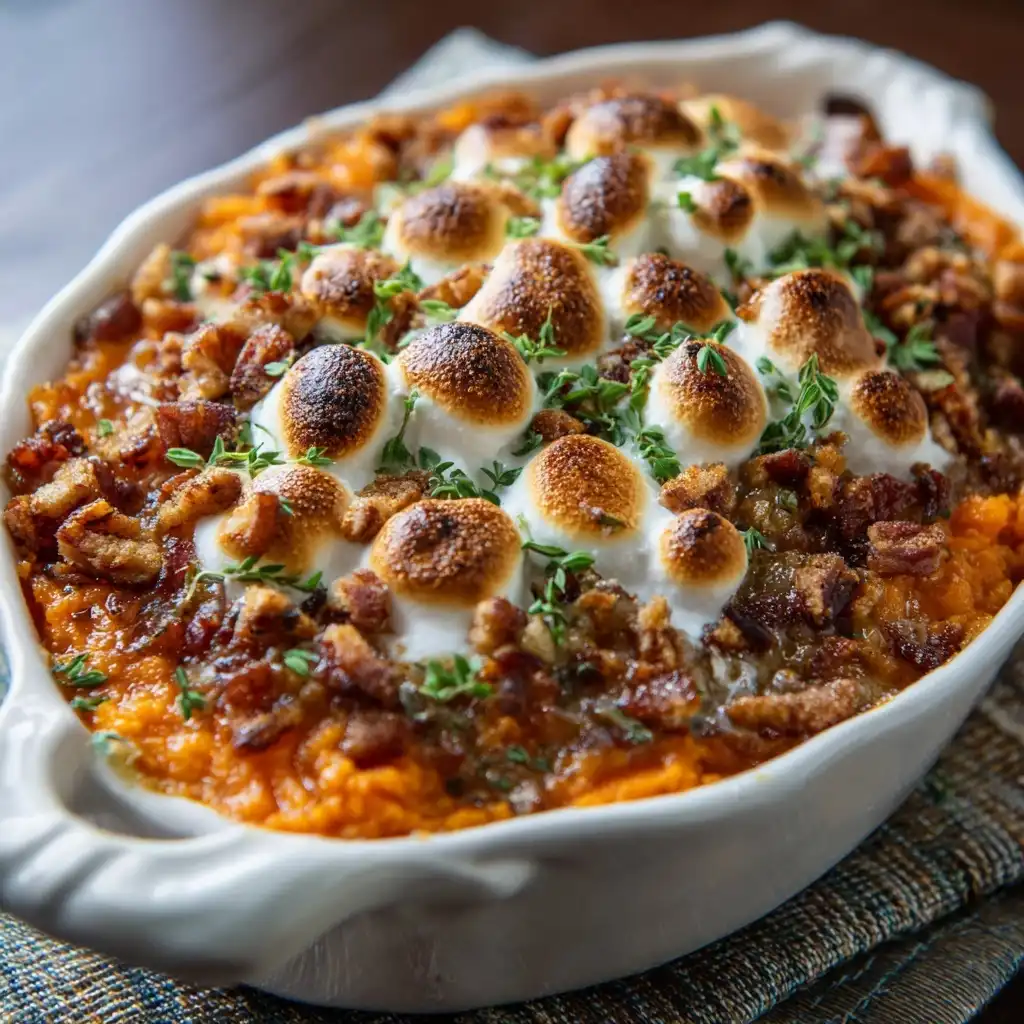
Sweet potato casserole is often synonymous with holiday feasts—think Thanksgiving and Christmas—where it traditionally appears as a rich, sweet, buttery side dish crowned with marshmallows or a crunchy pecan-brown sugar streusel. But what if we shift the paradigm? Enter the Savory Sweet Potato Casserole: a deeply flavorful, umami-forward, herb-infused, and nutritionally balanced reinterpretation that honors the natural earthiness and creamy texture of sweet potatoes while deliberately sidestepping added sugars, marshmallows, and overt sweetness. This version celebrates sweet potatoes not as dessert—but as a sophisticated, hearty, vegetable-forward centerpiece worthy of any season, from crisp autumn dinners to spring potlucks and weeknight family meals. It’s comfort food reimagined: warmly spiced yet grounded, creamy yet textured, nourishing yet indulgent—and entirely gluten-free, dairy-optional, and easily adaptable for vegan, paleo, or low-FODMAP diets.
The History
The roots of sweet potato casserole trace back to early American culinary traditions, where Indigenous peoples cultivated and prepared sweet potatoes long before European colonization. Enslaved Africans brought deep knowledge of root vegetables and stewing techniques that influenced Southern cooking profoundly; sweet potatoes became a staple crop in the Southeast due to their resilience, high yield, and nutrient density. By the late 19th century, recipes for “baked sweet potatoes” began appearing in cookbooks like Fannie Farmer’s Boston Cooking-School Cook Book (1896), though they remained simple preparations—roasted or boiled, sometimes mashed with butter and salt. The transformation into a *casserole* gained traction in the 1930s–40s, propelled by the rise of canned goods, home ovens, and the marketing genius of marshmallow manufacturers. A now-iconic 1917 recipe from Angelus Marshmallows (later Campfire) paired sweet potatoes with marshmallows—capitalizing on post-war ingredient accessibility and the desire for celebratory, crowd-pleasing dishes. For decades, the sweet version dominated cultural memory—but regional and generational variations always existed. In parts of the South, savory renditions appeared with black pepper, thyme, and roasted garlic; Appalachian cooks layered sweet potatoes with sharp cheddar and smoked paprika; and modern farm-to-table chefs began deconstructing the casserole into its elemental components—celebrating the tuber’s inherent savoriness when paired with herbs, alliums, fermented dairy, toasted nuts, and umami boosters like miso or nutritional yeast. Today’s Savory Sweet Potato Casserole is both an homage and an evolution—a conscious return to authenticity, seasonality, and culinary integrity.
Ingredients Breakdown
Every ingredient in this savory casserole is chosen for purpose—not just flavor, but function, texture, and nutritional synergy:
- Sweet Potatoes (Yams): Use orange-fleshed varieties like Beauregard or Garnet—they offer dense, creamy flesh, high beta-carotene content, and subtle caramel notes that deepen beautifully when roasted. Avoid overly watery or pale varieties (e.g., Japanese white sweet potatoes), which lack the ideal starch-to-moisture ratio for a cohesive casserole base.
- Olive Oil & Ghee (or Butter): Olive oil provides polyphenol-rich, peppery depth and stability at high heat; ghee adds nutty richness and lactose-free browning power (ideal for those with sensitivities). Together, they create a luxurious fat matrix that carries aromatics and prevents dryness.
- Aromatics (Onion, Garlic, Leeks, Shallots): A trifecta of alliums builds layered savory complexity. Yellow onion contributes sweetness when caramelized; garlic delivers pungent umami; leeks add delicate, grassy notes; shallots bring brightness and finesse. Roasting them first intensifies their natural glutamates.
- Fresh Herbs (Rosemary, Thyme, Sage): These woody herbs are nature’s umami enhancers. Rosemary’s camphorous lift cuts through richness; thyme’s lemony-earthy nuance binds flavors; sage’s peppery warmth complements the tuber’s earthiness. Always add rosemary and thyme early (to infuse fat), and finish with fresh sage leaves for aromatic contrast.
- Dijon Mustard & Worcestershire Sauce: Both act as “flavor bridges.” Dijon adds tang, depth, and emulsifying power; traditional Worcestershire (vegan versions available) contributes tamarind, anchovy, molasses, and vinegar—delivering fermented complexity and a whisper of smoke and salt.
- Nutritional Yeast & Miso Paste: Vegan “cheesy” depth and fermented savoriness. Nutritional yeast supplies B-vitamins and a nutty, Parmesan-like finish; white miso paste (low-sodium) contributes koji-driven umami, gentle sweetness, and probiotic enzymes—especially beneficial when used raw or gently warmed.
- Toasted Nuts & Seeds (Walnuts, Pecans, Pepitas): Provide crunch, healthy fats (omega-3s and monounsaturated), and toasted amino acids that amplify Maillard reactions. Toasting is non-negotiable—it unlocks volatile aromatics and prevents sogginess.
- Hard Cheese (Gruyère, Fontina, Sharp Cheddar, or Vegan Alternatives): Adds protein, calcium, and melty richness. Gruyère offers nuttiness and superior melt; fontina brings buttery creaminess; aged cheddar gives bold, tangy punch. For dairy-free, try cashew-based “cheddar” or almond-miso cheese sauces.
- Umami Boosters (Mushroom Powder, Tomato Paste, Anchovy Paste): Optional but transformative. Dried porcini powder adds forest-floor depth; tomato paste, cooked until brick-red, concentrates glutamic acid; anchovy paste (½ tsp) dissolves seamlessly, adding mineral-rich savoriness without fishiness.
- Acid & Brightness (Apple Cider Vinegar, Lemon Zest, Pickled Red Onions): Balances richness and lifts heaviness. A splash of vinegar stirred in at the end wakes up every other flavor; lemon zest adds citrus oil volatility; pickled onions serve as a vibrant, textural garnish.
Step-by-Step Recipe
- Roast the Sweet Potatoes: Preheat oven to 400°F (200°C). Pierce 3 large (2.5–3 lb total) scrubbed sweet potatoes with a fork. Place directly on middle oven rack and roast for 60–75 minutes, rotating halfway, until very tender when pierced with a knife and yielding slightly to pressure. Cool 20 minutes, then halve lengthwise and scoop flesh into a large bowl, discarding skins. Reserve ¼ cup of the natural roasting liquid (amber-colored, starchy, flavorful) — do not drain or discard.
- Caramelize the Aromatics: While potatoes roast, heat 3 tbsp olive oil + 2 tbsp ghee in a large skillet over medium-low heat. Add 1 finely diced yellow onion, 2 minced shallots, 1 thinly sliced leek (white/light green only, rinsed well), and 4 smashed garlic cloves. Cook gently for 20–25 minutes, stirring occasionally, until deeply golden, fragrant, and jammy—do not brown or burn. Stir in 1 tbsp fresh rosemary (minced), 1½ tsp fresh thyme leaves, and 6–8 fresh sage leaves (chopped); cook 2 more minutes until herbs perfume the oil.
- Build the Umami Base: Push aromatics to one side. In the cleared space, add 2 tbsp tomato paste and 1 tsp mushroom powder (or 1 tbsp finely minced dried porcini). Cook, stirring constantly, for 4–5 minutes until paste darkens to brick red and smells toasted and sweet. Stir in 1 tsp Dijon mustard, 1 tsp Worcestershire sauce (or coconut aminos for soy-free), and 1 tbsp white miso paste. Remove from heat and cool 5 minutes.
- Combine & Season the Base: To the bowl of roasted sweet potato flesh, add the cooled aromatic mixture, miso-tomato blend, reserved roasting liquid, ½ cup grated Gruyère (or dairy-free alternative), 3 tbsp nutritional yeast, 1 tsp apple cider vinegar, zest of 1 lemon, 1 tsp freshly cracked black pepper, and 1½ tsp fine sea salt (adjust to taste). Using a potato masher or hand mixer on low, beat until smooth but still slightly textured—avoid overmixing, which can make it gluey. Taste and adjust: more salt for depth, vinegar for brightness, miso for savoriness, pepper for warmth.
- Layer & Top: Transfer mixture to a lightly greased 9×13-inch ceramic or enameled cast-iron baking dish. Smooth top with an offset spatula. Sprinkle evenly with ¾ cup toasted walnuts, ¼ cup toasted pepitas, and ½ cup additional grated cheese. Optional: scatter 12–15 fresh sage leaves across the surface.
- Bake to Perfection: Bake uncovered at 375°F (190°C) for 35–40 minutes, until edges bubble vigorously, top is deeply golden, and center is set (a toothpick inserted 1 inch from edge should come out clean). For extra browning and crunch, broil on high for 2–3 minutes—watch closely!
- Rest & Garnish: Let rest 15 minutes before serving. This allows starches to fully set and flavors to harmonize. Just before serving, drizzle with 1 tbsp high-quality olive oil, sprinkle with flaky sea salt, and top with quick-pickled red onions (thinly sliced red onion soaked 15 min in equal parts apple cider vinegar, water, and pinch of sugar/salt) and microgreens or parsley.
Tips
- Texture Is Everything: Over-mixing leads to gummy, dense casserole. Mash just until combined—small flecks of herb or nut are welcome. For ultra-luxurious silkiness, pass half the mixture through a food mill before combining with aromatics.
- Roast, Don’t Boil: Boiling leaches flavor, nutrients, and starch—roasting concentrates sweetness, enhances mouthfeel, and creates complex Maillard-derived notes essential for savory depth.
- Toast Everything—Even the Spices: Toast whole cumin seeds or coriander alongside nuts for 1 minute before grinding; bloom smoked paprika or ground cumin in warm oil for 30 seconds before adding aromatics.
- Layer Flavors in Stages: Build in layers—fat first, then aromatics, then umami agents, then acid—so each element has time to develop and integrate rather than compete.
- Don’t Skip the Rest: Serving hot from the oven yields a loose, saucy texture; resting firms it into sliceable, elegant portions and allows residual heat to gently meld the cheese and herbs.
- Make-Ahead Magic: Assemble completely (unbaked) up to 24 hours ahead; cover tightly and refrigerate. Add 10–15 minutes to bake time. Or bake fully, cool, refrigerate up to 3 days, then reheat covered at 325°F (160°C) for 30 minutes, uncovering last 10 to recrisp top.
- Freeze With Confidence: Freeze unbaked casserole (well-wrapped) up to 3 months. Thaw overnight in fridge before baking. Freezing baked casserole is possible but may soften texture slightly—best for meal prep, not presentation.
- Use the Skins: Don’t toss them! Toss roasted skins with oil, smoked paprika, and salt; bake at 425°F (220°C) for 12–15 minutes until crisp. Serve as a smoky, fiber-rich garnish or snack.
Variations and Customizations
Regional & Cultural Twists
- Mediterranean Style: Swap Gruyère for crumbled feta and add ½ cup chopped sun-dried tomatoes (oil-packed, drained), ¼ cup Kalamata olives, and 2 tbsp chopped oregano. Top with lemon-dill yogurt drizzle.
- Smoky Southwest: Add 1 chipotle in adobo (minced), 1 tsp ground cumin, ½ tsp smoked paprika, and ¼ cup roasted corn. Top with crumbled cotija, pickled jalapeños, and cilantro.
- French Provincial: Infuse milk with thyme and garlic, use Brie rind (simmered in base) for depth, fold in sautéed wild mushrooms, and finish with truffle oil and chives.
- East Asian Fusion: Replace miso with 1 tbsp tamari and 1 tsp toasted sesame oil; add 1 tbsp grated ginger and 2 scallions. Top with furikake, nori strips, and quick-pickled daikon.
Dietary Adaptations
- Vegan: Use vegan butter/ghee, nutritional yeast + white miso + cashew cream (¼ cup) for cheesiness, and ensure Worcestershire is vegan (Annie’s or Coconut Secret). Top with hemp seeds and toasted sesame.
- Paleo/Whole30: Omit cheese and miso; use ghee, coconut aminos instead of Worcestershire, and top with crispy bacon bits, crushed macadamia nuts, and avocado crema.
- Low-FODMAP: Replace onion/shallot with 1 tbsp garlic-infused oil and 2 green parts of leek (green only); use certified low-FODMAP miso (Kikkoman) and omit wheat-based Worcestershire (substitute coconut aminos).
- High-Protein: Fold in 1 cup cooked lentils or crumbled tempeh sautéed with tamari and maple (for balance); top with hemp hearts and pumpkin seed pesto.
- Kid-Friendly: Reduce black pepper and herbs; add mild cheddar and a swirl of basil pesto before baking. Serve with apple slices and hummus for dipping.
Textural & Visual Upgrades
- Crispy Crust Option: Before baking, press a thin layer of crushed sourdough croutons, seeded crackers, or gluten-free panko mixed with olive oil and herbs onto the surface.
- Deconstructed Individual Servings: Layer mashed sweet potato, caramelized onions, roasted mushrooms, and cheese in ramekins; bake until bubbly. Garnish with edible flowers.
- Brunch Version: Stir in 4 whisked eggs and ¼ cup heavy cream before baking for a savory soufflé-casserole hybrid. Top with fried eggs before serving.
Health Considerations and Nutritional Value
This savory reinterpretation transforms sweet potato casserole from a calorie-dense holiday indulgence into a nutrient-dense, phytonutrient-rich cornerstone dish. A standard 1-cup serving (approx. 220g) provides approximately:
- Calories: 280–320 kcal (varies by cheese/nut choices)
- Fiber: 6–8g (30% DV) — supports gut microbiota diversity, satiety, and blood sugar regulation
- Vitamin A (as Beta-Carotene): >400% DV — critical for immune function, vision, skin health, and antioxidant defense
- Vitamin C: 45% DV — boosts iron absorption (especially from plant sources), collagen synthesis, and oxidative stress reduction
- Potassium: 25% DV — supports healthy blood pressure, nerve transmission, and fluid balance
- Manganese & Copper: >30% DV each — essential co-factors for mitochondrial energy production and connective tissue formation
- Phytonutrients: Anthocyanins (in purple sweet potato variations), chlorogenic acid, and rosmarinic acid (from herbs) exert anti-inflammatory and neuroprotective effects.
Why Savory Wins Nutritionally:
- No Added Sugars: Eliminates insulin spikes, glycation risk, and empty calories associated with brown sugar, marshmallows, or maple syrup.
- Healthy Fat Profile: Monounsaturated (olive oil), medium-chain (coconut options), and omega-3 (walnuts, flax) fats improve lipid profiles and reduce systemic inflammation.
- Probiotic & Fermented Elements: Raw miso, fermented Worcestershire, and optional kimchi garnish introduce beneficial microbes and bioactive peptides.
- Lower Glycemic Load: Roasting + fiber + fat + acid slows carbohydrate digestion—GL estimated at 12–15 vs. 35+ for classic sweet versions.
- Reduced Sodium: Controlled salting (vs. processed marshmallows or pre-shredded cheese) supports cardiovascular and renal health.
Who Benefits Most? Individuals managing diabetes, hypertension, IBS, autoimmune conditions (AIP-friendly with modifications), or seeking anti-aging, brain-supportive, or gut-healing foods will find this casserole exceptionally supportive. Its versatility also makes it ideal for athletes needing complex carbs + recovery fats, seniors requiring soft, nutrient-dense meals, and children developing diverse palates.
Ingredients
Makes 10–12 servings
- 3 large orange-fleshed sweet potatoes (2.5–3 lb / 1.1–1.4 kg total)
- ⅓ cup extra-virgin olive oil, plus more for drizzling
- ¼ cup ghee or unsalted butter (or vegan butter)
- 1 large yellow onion, finely diced
- 2 shallots, finely minced
- 1 large leek (white and light green parts only), thinly sliced and thoroughly rinsed
- 4 garlic cloves, smashed and peeled
- 1 tbsp fresh rosemary, finely chopped
- 1½ tsp fresh thyme leaves
- 8–10 fresh sage leaves, finely chopped (plus 12–15 whole for garnish)
- 2 tbsp tomato paste
- 1 tsp dried porcini mushroom powder (or 1 tbsp finely minced dried porcini)
- 1 tbsp Dijon mustard
- 1 tsp Worcestershire sauce (or coconut aminos)
- 1 tbsp white miso paste (low-sodium, chickpea or rice-based for soy-free)
- ½ cup grated Gruyère cheese (or aged cheddar, fontina, or vegan alternative)
- 3 tbsp nutritional yeast
- Zest of 1 large lemon
- 1 tsp apple cider vinegar
- 1½ tsp fine sea salt (plus flaky salt for finishing)
- 1 tsp freshly cracked black pepper
- ¾ cup toasted walnut halves or pieces
- ¼ cup toasted pepitas (shelled pumpkin seeds)
- ½ cup additional grated cheese (for topping)
- Quick-pickled red onions, microgreens, and high-quality olive oil for garnish
Directions
- Roast the sweet potatoes: Preheat oven to 400°F (200°C). Pierce sweet potatoes all over with a fork. Place directly on oven rack and roast for 60–75 minutes, turning halfway, until extremely tender. Cool 20 minutes. Slice in half lengthwise; scoop flesh into a large mixing bowl. Reserve ¼ cup of the amber roasting liquid.
- Caramelize aromatics: In a large skillet over medium-low heat, warm olive oil and ghee. Add onion, shallots, leek, and garlic. Cook gently 20–25 minutes, stirring occasionally, until deeply golden and jammy. Stir in rosemary, thyme, and chopped sage; cook 2 minutes more. Remove from heat; cool 5 minutes.
- Build umami base: Push aromatics to side of skillet. Add tomato paste and mushroom powder to cleared space. Cook 4–5 minutes, stirring constantly, until brick-red and fragrant. Stir in Dijon, Worcestershire, and miso. Remove from heat; cool 5 minutes.
- Combine base: To sweet potato flesh, add cooled aromatics, miso-tomato mixture, reserved roasting liquid, ½ cup cheese, nutritional yeast, lemon zest, apple cider vinegar, salt, and pepper. Mash or mix on low speed until smooth but textured. Taste and adjust seasoning.
- Assemble: Spread mixture into a greased 9×13-inch baking dish. Smooth top. Sprinkle with walnuts, pepitas, and remaining ½ cup cheese. Scatter whole sage leaves on top.
- Bake: At 375°F (190°C), bake uncovered 35–40 minutes, until bubbling at edges and golden on top. For extra crispness, broil 2–3 minutes—watch carefully.
- Rest and serve: Let stand 15 minutes. Drizzle with olive oil, flaky salt, pickled onions, and microgreens. Serve warm.
FAQ
- Can I use canned sweet potatoes?
- No—canned varieties are packed in syrup or water, resulting in excess moisture, bland flavor, and compromised texture. Fresh, roasted sweet potatoes provide unmatched depth, structure, and nutrition.
- Why no marshmallows or brown sugar?
- This is a deliberate savory reimagining. Those ingredients mask the tuber’s natural complexity and introduce refined sugars, artificial colors, and unnecessary glycemic load. Our umami-forward approach reveals—rather than overrides—its inherent deliciousness.
- Can I make it ahead for Thanksgiving?
- Absolutely. Prepare and assemble up to 24 hours ahead; refrigerate covered. Bake straight from fridge—just add 10–15 minutes to total time. You can also fully bake, cool, refrigerate 3 days, and reheat covered at 325°F (160°C) for 30 minutes, then uncover to crisp.
- My casserole turned out watery—what went wrong?
- Likely causes: (1) Boiled or steamed potatoes (not roasted); (2) Not reserving and using the natural roasting liquid (which is thick and flavorful—not water); (3) Using overly moist cheese (e.g., fresh mozzarella); (4) Skipping the caramelization step, which reduces moisture and concentrates flavor.
- What’s the best cheese substitute for vegan versions?
- For melt and richness: blend 1 cup raw cashews (soaked 4 hrs), ¼ cup nutritional yeast, 2 tbsp lemon juice, 1 tsp white miso, ½ tsp garlic powder, and ¼ cup water until ultra-smooth. Use ½ cup in base + ¼ cup for topping. Alternatively, use store-bought Miyoko’s Creamery or Violife blocks, grated.
- Is this safe for Passover or Rosh Hashanah?
- Yes—with minor adjustments: omit Worcestershire (contains anchovies and malt vinegar) and miso (fermented grain—check kosher certification), use coconut aminos, and verify all cheeses are kosher-certified. Top with matzo meal–toasted nuts for crunch.
- How do I store leftovers?
- Cool completely, then refrigerate in airtight container up to 5 days. Reheat individual portions in toaster oven or skillet for best texture (microwave softens nuts). Freeze portions up to 3 months—thaw overnight before reheating.
- Can kids enjoy this version?
- Yes—many children prefer savory over overly sweet dishes. For picky eaters: reduce black pepper and rosemary; increase cheese; add a swirl of basil pesto before baking; serve with apple wedges and tahini dip. The creamy texture and familiar orange color help ease acceptance.
- What wine or beverage pairs best?
- Earth-driven reds: Pinot Noir (Willamette Valley), Gamay (Beaujolais Cru), or lighter Syrah. For white lovers: aged Chenin Blanc (Vouvray Sec) or skin-contact orange wine. Non-alcoholic: house-made ginger-turmeric shrub soda or roasted barley tea (mugicha).
Summary
This Savory Sweet Potato Casserole redefines tradition by honoring the sweet potato’s innate earthiness, nutritional brilliance, and culinary versatility—transforming it from a sugary side into a deeply satisfying, umami-rich, herb-kissed centerpiece bursting with fiber, antioxidants, and mindful fats. Every bite balances creamy comfort with textural excitement, layered savoriness with bright acidity, and timeless technique with modern wellness intelligence.
Whether served at a harvest feast, a cozy weeknight dinner, or a wellness-focused gathering, it proves that true comfort doesn’t require compromise—it demands intention, respect for ingredients, and the courage to reimagine what “classic” can be.