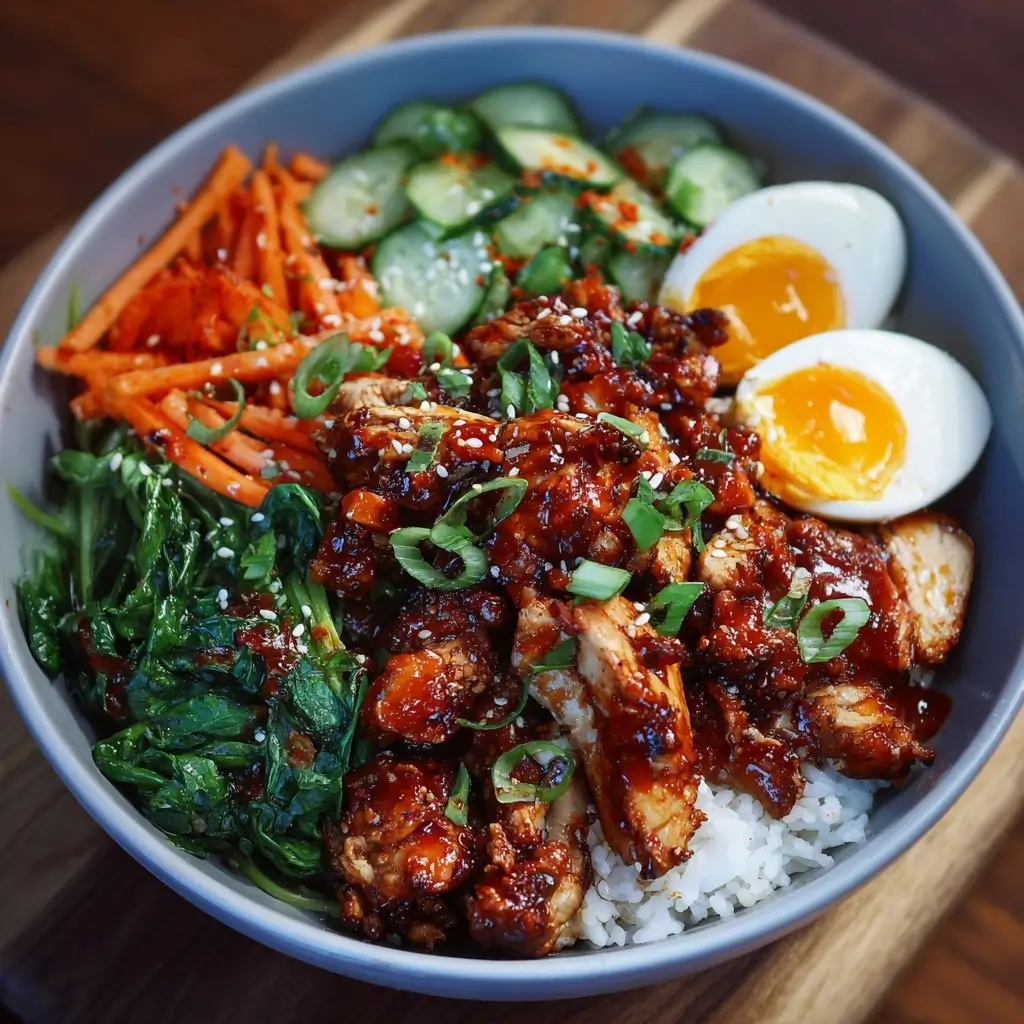
Spicy Korean Chicken Bowls: A Flavorful Fusion of Heat and Umami
The History
Spicy Korean chicken bowls are a modern culinary creation that fuses traditional Korean flavors with the global trend of grain-based, bowl-style meals. While not rooted in ancient Korean cuisine per se, this dish draws heavily from iconic Korean staples such as gochujang (fermented red chili paste), bulgogi (marinated grilled meat), and banchan (side dishes). The concept of combining marinated, spicy chicken with rice and vegetables has evolved alongside the popularity of Korean barbecue and Korean-inspired street food outside of Korea, particularly in North America and Europe.
Korean cuisine has long emphasized balance—between spice, sweetness, saltiness, and umami—and these principles shine through in spicy Korean chicken bowls. The rise of fusion cuisine in the 2010s made room for creative reinterpretations of traditional dishes, and the “Korean bowl” emerged as a favorite among health-conscious diners and flavor seekers alike. Today, these bowls can be found on menus from fast-casual chains to high-end restaurants, often customized with various proteins, grains, and toppings. Yet their heart remains deeply tied to Korea’s rich culinary heritage, especially its love for bold, fermented flavors and vibrant textures.
Ingredients Breakdown
The magic of spicy Korean chicken bowls lies in the harmony of ingredients that deliver layers of flavor and texture. Below is a detailed breakdown of each component:
For the Spicy Korean Chicken Marinade:
- Gochujang (Korean Red Chili Paste): The soul of the dish, gochujang brings deep, fermented heat, sweetness, and umami. Made from red chili flakes, glutinous rice, fermented soybeans, and salt, it’s essential for authentic flavor.
- Soy Sauce: Adds saltiness and depth. Use reduced-sodium soy sauce if you’re watching your salt intake, or tamari for a gluten-free option.
- Sesame Oil: Toasted sesame oil contributes a nutty aroma and richness that enhances the overall profile.
- Rice Vinegar: Provides brightness and cuts through the richness of the sauce.
- Honey or Brown Sugar: Balances the heat with natural sweetness. Honey adds a floral note, while brown sugar gives a deeper molasses-like flavor.
- Garlic and Ginger: Freshly minced garlic and grated ginger add pungency and warmth, forming the aromatic base of the marinade.
- Green Onions: Sliced green onions contribute freshness and a mild onion bite.
- Sriracha or Gochugaru (Korean Chili Flakes): For extra heat. Sriracha blends easily into sauces, while gochugaru offers a more authentic, smoky kick.
- Cooking Oil (Neutral): Such as vegetable or avocado oil, used to cook the chicken without overpowering the flavors.
For the Bowl Base:
- Cooked Rice: Traditionally short-grain white rice, but brown rice, jasmine, quinoa, or cauliflower rice work well for different dietary preferences.
- Kimchi: Fermented napa cabbage with chili, garlic, and fish sauce. It adds tang, heat, and probiotics.
- Shredded Carrots: For crunch and color.
- Sliced Cucumber: Cool and refreshing, balancing the spiciness.
- Steamed Broccoli or Bok Choy: Adds fiber and nutrients.
- Bean Sprouts: Light and crisp, offering texture contrast.
- Avocado Slices: Creamy richness that tempers the spice.
For Garnish and Extra Flavor:
- Toasted Sesame Seeds: Nutty finish and visual appeal.
- Sliced Green Onions: Freshness and pop of color.
- Fried Egg or Soft-Boiled Egg: Adds protein and creaminess when the yolk breaks.
- Crispy Fried Shallots or Garlic Chips: Crunchy topping for gourmet flair.
- Lime Wedges: Bright acidity to squeeze over the top before eating.
Step-by-Step Recipe
- Prepare the Marinade: In a medium bowl, whisk together ¼ cup gochujang, 3 tablespoons soy sauce, 2 tablespoons honey, 1 tablespoon rice vinegar, 1 tablespoon toasted sesame oil, 2 cloves minced garlic, 1 tablespoon grated fresh ginger, and 1 teaspoon sriracha (adjust to taste). Set aside.
- Marinate the Chicken: Cut 1.5 lbs of boneless, skinless chicken thighs or breasts into bite-sized pieces. Place in a resealable bag or shallow dish and pour the marinade over. Toss to coat evenly. Marinate for at least 30 minutes at room temperature or up to 8 hours in the refrigerator for deeper flavor.
- Cook the Rice: Prepare 2 cups of cooked rice according to package instructions. Keep warm.
- Cook the Chicken: Heat 1–2 tablespoons of neutral oil in a large skillet or wok over medium-high heat. Add the marinated chicken (reserve excess marinade) and cook for 5–7 minutes, stirring occasionally, until browned and cooked through. In the last 2 minutes, pour in the reserved marinade and stir constantly until it thickens into a glossy glaze coating the chicken.
- Prepare the Vegetables: While chicken cooks, assemble toppings: shred carrots, slice cucumbers, steam broccoli, and drain kimchi. Warm bok choy or sauté spinach with a splash of soy sauce if desired.
- Make Optional Fried Eggs: In a non-stick pan, fry eggs sunny-side up or over-easy for topping each bowl.
- Assemble the Bowls: In each serving bowl, start with a base of warm rice. Arrange the glazed chicken on one side and arrange colorful vegetables on the other. Top with kimchi, avocado slices, and bean sprouts.
- Garnish and Serve: Sprinkle with toasted sesame seeds, sliced green onions, and crispy shallots. Serve with lime wedges on the side for squeezing.
Tips
- Use Chicken Thighs: They stay juicier and more flavorful than breasts when marinated and cooked quickly.
- Don’t Skip the Rest Time: Letting the chicken marinate for at least 30 minutes dramatically improves flavor penetration.
- Control the Heat: Gochujang varies in spiciness by brand. Taste before adding extra sriracha or gochugaru.
- Double the Sauce: Make extra marinade to serve on the side or use as a dipping sauce.
- Meal Prep Friendly: Components can be prepped ahead—cook rice, chop veggies, make sauce—and stored separately for up to 4 days. Cook chicken fresh for best texture.
- Wok or Grill for Smokiness: For an authentic touch, cook the chicken on a grill or in a hot wok to develop a slight char.
- Bloom the Gochujang: Briefly cooking the sauce helps deepen its flavor and reduce raw fermentation notes.
Variations and Customizations
One of the greatest strengths of spicy Korean chicken bowls is their adaptability. Here are some popular variations:
Protein Swaps:
- Beef: Use thinly sliced ribeye or sirloin for a bulgogi-style twist.
- Tofu or Tempeh: Press and cube extra-firm tofu, then marinate and pan-fry or bake for a vegan version.
- Shrimp or Salmon: Great seafood alternatives; adjust cooking time accordingly.
Grain & Base Options:
- Quinoa or Farro: High-protein, nutty grains that hold up well to bold flavors.
- Noodles: Substitute rice with glass noodles (japchae) or soba for a noodle bowl variation.
- Cauliflower Rice: Low-carb alternative that still absorbs flavors beautifully.
Vegetable Rotations:
- Roasted Sweet Potatoes: Add sweetness and earthiness.
- Mushrooms: Shiitake or oyster mushrooms sautéed in sesame oil add umami depth.
- Red Cabbage Slaw: Tossed with rice vinegar and sesame seeds for crunch.
Flavor Twists:
- Peanut-Gochujang Fusion: Stir in 1–2 tablespoons of peanut butter for a Thai-Korean hybrid.
- Pineapple Addition: Add grilled pineapple chunks for tropical sweetness that complements the spice.
- Coconut Milk Infusion: Simmer the sauce with light coconut milk for a creamy, slightly sweet version.
Health Considerations and Nutritional Value
Spicy Korean chicken bowls can be both delicious and nutritious when balanced properly. Here’s a general nutritional breakdown per serving (with chicken thighs, white rice, and standard vegetables):
| Nutrient | Amount (Approx.) |
|---|---|
| Calories | 550–650 |
| Protein | 35–40g |
| Fat | 18–22g (mostly healthy fats from sesame oil, avocado) |
| Carbohydrates | 60–70g |
| Fiber | 6–8g |
| Sodium | 900–1200mg (can be reduced with low-sodium soy sauce) |
Health Benefits:
- High-Quality Protein: Supports muscle repair and satiety.
- Fermented Foods: Kimchi provides probiotics that support gut health.
- Antioxidants and Anti-Inflammatory Compounds: Found in gochujang, garlic, ginger, and colorful vegetables.
- Healthy Fats: From sesame oil and avocado, which support heart and brain health.
Dietary Modifications:
- Low-Sodium Option: Use tamari or coconut aminos and rinse kimchi briefly to reduce salt.
- Low-Carb/Keto: Replace rice with cauliflower rice and increase avocado and protein portions.
- Gluten-Free: Ensure gochujang and soy sauce are certified gluten-free (many are, but not all).
- Vegan/Vegetarian: Swap chicken for tofu, omit fish sauce from kimchi (or use vegan kimchi), and use maple syrup instead of honey.
Ingredients
For the Spicy Chicken:
- 1.5 lbs boneless, skinless chicken thighs, cut into cubes
- ¼ cup gochujang paste
- 3 tbsp soy sauce (or tamari)
- 2 tbsp honey (or maple syrup)
- 1 tbsp rice vinegar
- 1 tbsp toasted sesame oil
- 2 cloves garlic, minced
- 1 tbsp fresh ginger, grated
- 1 tsp sriracha (optional, for extra heat)
- 2 green onions, sliced (white and green parts separated)
- 1–2 tbsp neutral oil (avocado or vegetable)
For the Bowls:
- 2 cups cooked rice (white, brown, or alternative)
- 1 cup kimchi
- 1 cup shredded carrots
- 1 cucumber, thinly sliced
- 1 cup steamed broccoli or bok choy
- ½ cup bean sprouts
- 1 avocado, sliced
- 4 eggs (optional, for frying)
- 1 tbsp toasted sesame seeds
- Lime wedges, for serving
Directions
- In a mixing bowl, combine gochujang, soy sauce, honey, rice vinegar, sesame oil, garlic, ginger, sriracha, and the white parts of the green onions. Whisk until smooth.
- Add chicken pieces to the marinade and toss to coat. Cover and refrigerate for 30 minutes to 8 hours.
- Cook rice according to package instructions and set aside.
- Heat oil in a large skillet over medium-high heat. Remove chicken from marinade (reserve liquid) and cook for 5–7 minutes, turning occasionally, until golden and cooked through.
- Pour reserved marinade into the skillet and simmer for 2–3 minutes, stirring frequently, until sauce thickens and coats the chicken.
- While chicken cooks, prepare all vegetables and keep them ready.
- If using eggs, fry them in a separate pan to desired doneness.
- To assemble, divide rice among four bowls. Top with chicken, kimchi, carrots, cucumber, broccoli, bean sprouts, and avocado.
- Garnish with fried egg (if using), green onion tops, sesame seeds, and a squeeze of lime juice.
- Serve immediately, encouraging everyone to mix their bowl before eating.
FAQ
- Can I make this ahead of time?
- Absolutely! Marinate the chicken and prep all vegetables and rice up to a day in advance. Cook the chicken fresh for best texture.
- Is gochujang very spicy?
- It varies by brand, but generally, gochujang is moderately spicy with a complex blend of sweet, savory, and fermented flavors—not just heat.
- What can I use instead of gochujang?
- There’s no perfect substitute, but a mix of sriracha, tomato paste, and a bit of miso or soy sauce can mimic the flavor profile, though less authentically.
- Are these bowls kid-friendly?
- You can reduce or omit the sriracha and use milder kimchi. Many kids enjoy the sweet-savory glaze even without extra spice.
- Can I bake the chicken instead of pan-frying?
- Yes! Bake at 400°F (200°C) for 20–25 minutes, flipping halfway, then toss in the reduced sauce afterward.
- How long do leftovers last?
- Stored in an airtight container, the bowls (without fried egg) will keep for 3–4 days in the fridge. Reheat gently in a skillet or microwave.
- Is kimchi necessary?
- While not mandatory, it adds authenticity, tang, and probiotics. If unavailable, substitute with quick-pickled vegetables.
Summary
Spicy Korean chicken bowls deliver a vibrant explosion of sweet, spicy, and umami flavors layered over fluffy rice and crisp vegetables. Packed with protein, fiber, and healthy fats, they’re as nourishing as they are satisfying.