Spicy Gochujang Chicken Bowls: A Flavor-Packed Korean-Inspired Delight
The History
Gochujang, the fiery red fermented chili paste that forms the heart of this dish, has deep roots in Korean culinary tradition. Originating over 2,000 years ago during the Three Kingdoms period of Korea, gochujang was developed as a way to preserve flavor and add depth to meals using available ingredients like glutinous rice, fermented soybeans, and red chili powder. Historically used by nobility and commoners alike, it became a staple condiment in Korean households due to its bold umami, sweet heat, and ability to enhance everything from stews (like kimchi jjigae) to marinades and dipping sauces.
The modern concept of the “Spicy Gochujang Chicken Bowl” is a fusion creation that emerged alongside the global popularity of Korean cuisine in the 21st century. As Korean BBQ and home-cooked Korean dishes gained traction worldwide, chefs and home cooks began blending traditional elements with Western-style bowl meals—think grain bases, protein toppings, and colorful vegetables—all tied together with that unmistakable gochujang kick. This dish reflects both authenticity and innovation, honoring ancient flavors while adapting them for fast, nutritious, and customizable meals perfect for today’s busy lifestyles.
Ingredients Breakdown
The magic of Spicy Gochujang Chicken Bowls lies in its balance of sweet, spicy, savory, and tangy notes. Each ingredient plays a crucial role in building complexity and texture:
- Gochujang Paste: The star of the show. This thick, fermented Korean chili paste delivers deep umami, moderate sweetness, and a lingering heat. Made from red chili flakes, glutinous rice, fermented soybeans, and salt, it’s essential for authentic flavor. Look for brands like Chung Jung One or Sempio for best quality.
- Chicken Breast or Thighs: Boneless, skinless chicken breasts are lean and widely preferred, but thighs offer richer flavor and juicier texture due to higher fat content. Both work well depending on your preference.
- Soy Sauce (or Tamari): Adds saltiness and depth. Use low-sodium soy sauce to control salt levels, or tamari for a gluten-free alternative.
- Honey or Brown Sugar: Balances the heat and salt with natural sweetness. Honey adds floral notes; brown sugar gives a deeper molasses-like warmth.
- Rice Vinegar or Apple Cider Vinegar: Provides acidity to cut through richness and brighten the sauce. Rice vinegar is more traditional and milder.
- Garlic and Ginger: Freshly minced garlic and grated ginger lend aromatic pungency and warmth, enhancing the overall savoriness.
- Sesame Oil: Toasted sesame oil contributes nutty aroma and richness. Use sparingly—it’s potent!
- Neutral Oil (like vegetable or avocado oil): For searing the chicken without burning the gochujang-based marinade.
- Water or Broth: Helps thin the sauce slightly for even coating and prevents scorching during cooking.
For the bowl assembly:
- Base Grains: White or brown rice, quinoa, cauliflower rice, or mixed grains like forbidden black rice for visual appeal and fiber.
- Vegetables: Shredded carrots, cucumber ribbons, steamed broccoli, sautéed mushrooms, kimchi, pickled radish, or fresh spinach.
- Toppings: Sliced green onions, toasted sesame seeds, nori flakes, soft-boiled egg, avocado slices, or crushed peanuts for crunch.
Step-by-Step Recipe
- Prepare the Gochujang Sauce: In a medium bowl, whisk together 3 tablespoons gochujang paste, 2 tablespoons soy sauce, 1 tablespoon honey (or brown sugar), 1 tablespoon rice vinegar, 1 teaspoon toasted sesame oil, 3 cloves minced garlic, 1 tablespoon freshly grated ginger, and 2 tablespoons water. Mix until smooth and uniform. Taste and adjust—add more honey for sweetness, vinegar for tang, or gochujang for heat.
- Marinate the Chicken: Cut 1.5 lbs of boneless chicken (breast or thighs) into bite-sized cubes. Place in a bowl and pour half the sauce over it. Toss thoroughly to coat every piece. Cover and refrigerate for at least 30 minutes (ideally 2–4 hours) for maximum flavor infusion.
- Cook the Base Grain: While marinating, cook 1 cup of rice or quinoa according to package instructions. For extra flavor, use chicken broth instead of water. Fluff and keep warm.
- Prep the Vegetables: Julienne carrots, thinly slice cucumbers, chop scallions, and prepare any other toppings. If desired, quickly pickle some carrots and daikon in rice vinegar, sugar, and salt for 15 minutes for added zing.
- Cook the Chicken: Heat 1 tablespoon neutral oil in a large skillet or wok over medium-high heat. Remove chicken from marinade (reserve leftover marinade). Shake off excess and sear chicken in batches to avoid overcrowding. Cook for 5–7 minutes, turning occasionally, until golden and cooked through (internal temp 165°F).
- Glaze the Chicken: Pour the reserved marinade into the pan. Reduce heat to medium and simmer for 2–3 minutes, stirring constantly, until the sauce thickens and coats the chicken evenly. Be careful not to burn—the sugars in gochujang can caramelize quickly.
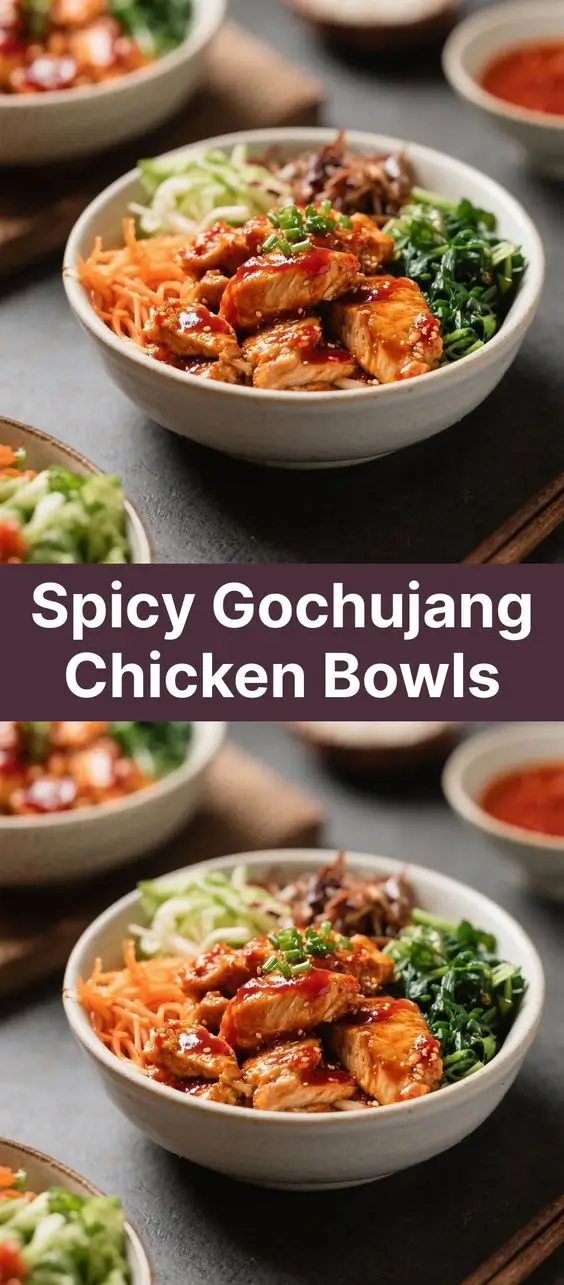
- Assemble the Bowls: Divide warm grains among serving bowls. Top with glazed gochujang chicken. Arrange colorful vegetables around the bowl. Garnish generously with sliced green onions, toasted sesame seeds, and optional extras like kimchi, soft-boiled eggs, or avocado.
- Serve Immediately: Drizzle with extra gochujang sauce, sriracha mayo, or a splash of lime juice. Serve hot and enjoy the explosion of flavors and textures.
Tips
- Don’t Skip the Marination Time: Even 30 minutes makes a difference, but longer marination (up to overnight) results in deeper flavor penetration.
- Avoid Burning the Sauce: Gochujang contains sugar, so it can burn easily. Always cook over medium or medium-low heat when reducing the sauce after searing.
- Bloom the Gochujang: For enhanced depth, sauté the gochujang with a little oil and aromatics (garlic/ginger) before adding liquids—this unlocks more complex flavors.
- Batch-Friendly: This recipe doubles easily for meal prep. Store components separately in airtight containers for up to 4 days. Reheat chicken and grains gently; add fresh toppings when serving.
- Use a Non-Stick or Well-Seasoned Pan: Prevents sticking and makes cleanup easier, especially with sticky glazes.
- Double the Sauce: Extra sauce is great for drizzling, dipping, or tossing with noodles later in the week.
- Add Crunch: Top with crispy fried shallots, roasted seaweed, or crushed ramen noodles for an unexpected textural contrast.
Variations and Customizations
This versatile recipe welcomes endless personalization. Here are some creative twists:
- Protein Swaps: Replace chicken with tofu (pressed and cubed), shrimp, pork tenderloin, ground turkey, or even tempeh for plant-based versions.
- Spice Level Adjustments: Reduce gochujang to 1–2 tablespoons and mix with miso or tomato paste for milder heat. Add gochugaru (Korean chili flakes) or a dash of cayenne for extra fire.
- Low-Carb/Keto Option: Serve over riced cauliflower or a bed of sautéed greens. Swap honey for sugar-free maple syrup or monk fruit sweetener.
- Vegan Version: Use firm tofu or king oyster mushrooms, replace honey with agave or maple syrup, and omit animal-based garnishes.
- Buddha Bowl Style: Turn it into a nourishing Buddha bowl with roasted sweet potatoes, edamame, kale, hummus, and tahini dressing.
- Noodle Twist: Skip the rice and toss the chicken and sauce with udon, soba, or glass noodles for a stir-fry version.
- Pineapple Kick: Add fresh pineapple chunks to the marinade or bowl for tropical sweetness that complements the spice.
- Miso-Gochujang Fusion: Blend equal parts gochujang and white miso for a less spicy, more rounded umami profile.
Health Considerations and Nutritional Value
When prepared mindfully, Spicy Gochujang Chicken Bowls can be a balanced, nutrient-dense meal. Here’s what you need to know:
- Protein Powerhouse: Chicken breast provides high-quality lean protein (about 26g per 3 oz), supporting muscle repair and satiety.
- Fermented Benefits: Gochujang contains beneficial microbes from fermentation, which may support gut health, though pasteurized versions have fewer live cultures.
- Antioxidants and Capsaicin: Red chili peppers in gochujang contain capsaicin, known for boosting metabolism, reducing inflammation, and potentially aiding weight management.
- Sodium Watch: Gochujang and soy sauce are high in sodium. A single serving of sauce can contain 500–800mg sodium. Opt for low-sodium soy sauce and moderate portion size if on a restricted diet.
- Sugar Content: Depending on the amount of honey or sugar used, the sauce may contain 5–10g of added sugar per serving. Balance with fiber-rich grains and veggies.
- Healthy Fats: Sesame oil and optional avocado or egg yolk contribute monounsaturated and polyunsaturated fats, beneficial for heart and brain health.
- Gluten-Free Options: Use tamari instead of soy sauce and ensure gochujang is certified gluten-free (some brands contain wheat).
- Calorie Range: A typical bowl ranges from 450–650 calories, depending on grain choice, oil usage, and toppings. Lighter versions can dip below 400 with careful adjustments.
Ingredients
For the Gochujang Chicken:
- 1.5 lbs boneless, skinless chicken breasts or thighs, cut into 1-inch cubes
- 3 tbsp gochujang paste (adjust to taste)
- 2 tbsp soy sauce (or tamari for gluten-free)
- 1 tbsp honey or packed brown sugar
- 1 tbsp rice vinegar (or apple cider vinegar)
- 1 tsp toasted sesame oil
- 3 cloves garlic, finely minced
- 1 tbsp fresh ginger, grated
- 2 tbsp water
- 1 tbsp neutral oil (vegetable, canola, or avocado) for cooking
For the Bowls:
- 1 cup uncooked rice (white, brown, or mixed grains), cooked according to package directions
- 1 cup shredded carrots
- 1 cucumber, thinly sliced or ribboned
- 1 cup steamed broccoli or sautéed mushrooms
- ¼ cup kimchi (optional)
- 3 green onions, thinly sliced
- 2 tbsp toasted sesame seeds
- 2 soft-boiled eggs (optional)
- ½ avocado, sliced (optional)
Optional Sauces for Drizzling:
- Sriracha mayo (mix sriracha with mayo or Greek yogurt)
- Extra gochujang thinned with a little water or vinegar
- Lime crema (lime juice + sour cream or vegan alternative)
Directions
- In a mixing bowl, combine gochujang paste, soy sauce, honey, rice vinegar, sesame oil, minced garlic, grated ginger, and water. Whisk until completely smooth and uniform in texture.
- Place chicken pieces in a separate bowl. Pour half of the sauce mixture over the chicken and toss to coat evenly. Cover and refrigerate for at least 30 minutes, or up to 8 hours for best results.
- Cook rice or grain base according to package instructions using water or low-sodium broth. Keep warm once done.
- While chicken marinates, prepare all vegetables and toppings. Set aside in small bowls for easy assembly.
- Heat neutral oil in a large non-stick skillet or wok over medium-high heat. Remove chicken from marinade, letting excess drip off, and sear in batches to ensure browning. Cook for 5–7 minutes, stirring occasionally, until golden and internal temperature reaches 165°F. Transfer to a plate.
- Reduce heat to medium. Pour the reserved gochujang sauce into the same pan. Simmer for 1–2 minutes until fragrant and slightly thickened.
- Return cooked chicken to the pan. Stir to coat thoroughly with the glaze. Cook for another 1–2 minutes until sauce is glossy and clinging to the chicken. Remove from heat.
- To assemble: Divide warm rice among bowls. Top with gochujang chicken. Arrange carrots, cucumber, broccoli, kimchi, and other veggies artistically around the bowl.
- Garnish with green onions, sesame seeds, soft-boiled egg halves, and avocado slices. Drizzle with extra sauce or sriracha mayo if desired.
- Serve immediately while hot. Encourage mixing before eating to blend all flavors.
FAQ
Q: Can I make this ahead of time?
A: Absolutely! Marinate the chicken up to 24 hours in advance. Cooked chicken and grains can be stored separately in the fridge for 3–4 days. Reheat gently on the stove or microwave, and add fresh toppings just before serving.
Q: Is gochujang very spicy?
A: It varies by brand, but generally gochujang has a moderate heat level with a strong umami and slight sweetness. It’s less fiery than pure chili oil but packs a slow-building warmth. Start with less and increase to taste.
Q: Where can I buy gochujang?
A: Most major supermarkets carry it in the international aisle (near soy sauce or miso). Asian grocery stores offer wider selections. You can also find it online (Amazon, Korean food specialty sites).
Q: Can I freeze gochujang chicken?
A: Yes. Cooked chicken freezes well for up to 3 months. Thaw overnight in the fridge and reheat gently with a splash of water to revive the sauce.
Q: What can I use instead of gochujang?
A: There’s no perfect substitute, but a mix of sriracha + miso paste + a touch of sugar comes close. Alternatively, try sambal oelek with a bit of tomato paste and soy sauce for depth.
Q: Are these bowls kid-friendly?
A: Adjust the gochujang down to 1 tablespoon and increase honey for a milder, sweeter version kids might enjoy. Serve with familiar sides like corn or peas.
Q: How do I prevent the sauce from burning?
A: Always reduce the heat when adding the sauce back to the pan. Stir frequently and add a splash of water or broth if it starts to stick.
Summary
Spicy Gochujang Chicken Bowls deliver a vibrant fusion of Korean-inspired flavors—sweet, spicy, savory, and umami-rich—layered over wholesome grains and fresh vegetables. Quick to make, endlessly customizable, and perfect for meal prep, this bowl is a satisfying powerhouse of taste and nutrition.