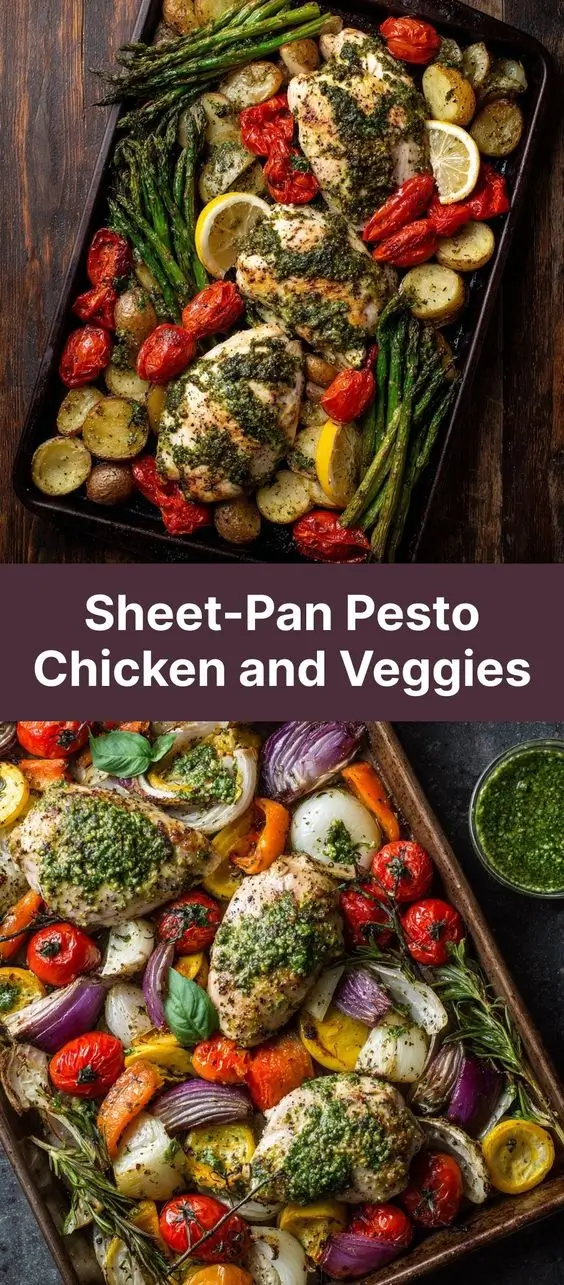
Sheet-Pan Pesto Chicken and Veggies: A Complete Guide
The History
The concept of one-pan meals has been a staple in home cooking for centuries, particularly in Mediterranean cultures where simplicity, flavor, and nutrition are highly valued. While the modern “sheet-pan dinner” trend gained momentum in the early 2010s as part of the clean-eating and meal-prep movements, its roots can be traced back to rustic Italian cucina povera—cooking with minimal ingredients and tools. The combination of chicken and vegetables roasted together on a single pan maximizes convenience without sacrificing taste.
Pesto, originating from Genoa, Italy, is traditionally made from basil, pine nuts, garlic, Parmesan cheese, and olive oil. Its vibrant green color and bold, herbaceous flavor have made it a beloved condiment worldwide. Merging pesto with sheet-pan roasting techniques was a natural evolution, allowing home cooks to infuse rich flavor into proteins and vegetables with minimal effort. Sheet-Pan Pesto Chicken and Veggies emerged as a go-to weeknight dinner, praised for its balance of protein, fiber, healthy fats, and bright herbal notes—all cooked on one tray for easy cleanup.
Ingredients Breakdown
What makes this dish both nutritious and delicious lies in the quality and synergy of its ingredients. Each component plays a specific role in building flavor, texture, and nutritional value.
- Chicken breasts: Boneless, skinless chicken breasts are lean and high in protein. They serve as the base protein source and absorb the pesto seasoning beautifully during roasting.
- Pesto sauce: Whether store-bought or homemade, pesto brings an intense burst of fresh herbs (primarily basil), garlic, nuts, and cheese. It acts as both a marinade and a finishing sauce.
- Olive oil: Extra virgin olive oil enhances browning, prevents sticking, and adds heart-healthy monounsaturated fats that help carry fat-soluble vitamins from the vegetables.
- Garlic: Fresh minced garlic amplifies the savory depth of the pesto and contributes antimicrobial and antioxidant properties.
- Cherry tomatoes: These sweet-tart tomatoes add moisture, acidity, and a pop of color. They burst slightly when roasted, creating a jammy texture that complements the chicken.
- Zucchini: Mild and tender when roasted, zucchini contributes fiber, vitamin C, and potassium. It soaks up the pesto juices during cooking.
- Red bell pepper: Crunchy and sweet, red peppers are rich in vitamin A and antioxidants like lycopene and capsanthin. They hold their shape well during roasting.
- Red onion: Adds a sharp bite when raw but mellows into caramelized sweetness when roasted, enhancing the overall complexity of flavors.
- Salt and black pepper: Essential seasonings that enhance all other flavors and bring balance to the dish.
- Lemon zest and juice (optional): Brightens the dish and cuts through the richness of the pesto and olive oil.
- Parmesan cheese (optional garnish): Adds umami and a salty crunch, especially when sprinkled before serving.
- Pine nuts or walnuts (optional topping): Toasted nuts reintroduce the nutty element of pesto and add satisfying crunch.
Step-by-Step Recipe
- Preheat the oven: Set your oven to 400°F (200°C). This temperature ensures even roasting—hot enough to caramelize vegetables and cook chicken thoroughly without drying it out.
- Prepare the baking sheet: Line a large rimmed baking sheet with parchment paper or lightly grease it with olive oil to prevent sticking. A rimmed sheet helps contain any juices or oils.
- Marinate the chicken: In a bowl, combine ¼ cup of pesto, 2 tablespoons of olive oil, 1 teaspoon of minced garlic, salt, and black pepper. Add 1½ pounds (about 4) boneless, skinless chicken breasts and toss to coat evenly. Let sit while you prep the vegetables.
- Chop the vegetables: Slice 1 medium zucchini into half-moons, 1 red bell pepper into 1-inch pieces, 1 cup cherry tomatoes in half, and ½ red onion into wedges. Keep them roughly uniform in size to ensure even cooking.
- Toss veggies with seasoning: In a large mixing bowl, combine the chopped vegetables with 2 tablespoons of pesto, 2 tablespoons of olive oil, ½ teaspoon garlic, salt, and pepper. Mix until everything is evenly coated.
- Arrange on the sheet pan: Place the marinated chicken breasts in the center of the baking sheet. Spread the seasoned vegetables around the chicken in a single layer. Avoid overcrowding—this allows proper air circulation and promotes roasting instead of steaming.
- Raise the chicken (optional): For more even cooking, place the chicken on a wire rack set over the baking sheet. This allows heat to circulate underneath, resulting in crispier exteriors.
- Roast in the oven: Bake for 20–25 minutes, or until the chicken reaches an internal temperature of 165°F (74°C) and the vegetables are tender and slightly caramelized at the edges.
- Baste halfway (optional): At the 12-minute mark, open the oven and spoon some of the pan juices over the chicken and vegetables to boost moisture and flavor distribution.
- Rest and finish: Remove from the oven and let the chicken rest for 5 minutes. Drizzle with an additional tablespoon of pesto, a squeeze of lemon juice, and garnish with freshly grated Parmesan, toasted pine nuts, or chopped basil.
Tips
- Use high-quality pesto: Homemade pesto offers superior flavor, but if using store-bought, choose one with simple ingredients—basil, olive oil, pine nuts, garlic, Parmesan, and salt—without artificial preservatives or excessive sodium.
- Uniform cutting: Cut vegetables to similar sizes so they cook at the same rate. Larger chunks of zucchini may remain undercooked, while tiny tomato halves could become mushy.
- Don’t skip the oil: Even though pesto contains oil, adding extra olive oil helps prevent drying and encourages browning.
- Check chicken early: Ovens vary, and chicken breast thickness differs. Start checking at 18 minutes to avoid overcooking, which leads to dry meat.
- Rotate the pan: If your oven has hot spots, rotate the baking sheet halfway through cooking for even roasting.
- Double the batch: This recipe reheats beautifully. Cook extra for meal prep—store in airtight containers for up to 4 days.
- Add starch for heartiness: Serve over quinoa, farro, brown rice, or couscous to turn it into a complete meal. You can also roast baby potatoes alongside the veggies.
- Boost freshness post-cook: Always finish with a drizzle of fresh pesto after roasting—heat dulls the delicate herbal notes, so this step revives the brightness.
- Prevent soggy bottoms: Use parchment paper, not foil, to reduce sticking and make cleanup easier. Foil can react with acidic ingredients like tomatoes.
Variations and Customizations
This recipe is highly adaptable to dietary needs, seasonal produce, and personal taste preferences. Here are some creative twists:
- Protein swaps: Replace chicken with chicken thighs, turkey cutlets, salmon fillets, tofu, tempeh, or chickpeas for a vegetarian version.
- Dairy-free pesto: Use a vegan pesto made without cheese or substitute nutritional yeast for Parmesan to keep the umami flavor.
- Nut-free pesto: Substitute pine nuts with sunflower seeds or omit nuts entirely for those with allergies.
- Low-carb/keto version: Stick to non-starchy vegetables like zucchini, bell peppers, broccoli, cauliflower, and mushrooms. Serve with a side salad or avocado slices.
- Mediterranean twist: Add kalamata olives, artichoke hearts, and feta cheese after roasting for a Greek-inspired flair.
- Spicy kick: Mix a pinch of red pepper flakes into the pesto or sprinkle sliced jalapeños over the vegetables before roasting.
- Seasonal rotations: In fall, use butternut squash and Brussels sprouts; in spring, try asparagus and peas; in winter, go for carrots and parsnips.
- Creamy upgrade: Stir a spoonful of mascarpone or ricotta into the pesto before drizzling for a richer finish.
- Grilled option: Instead of roasting, grill the chicken and vegetables on skewers brushed with pesto for a smoky flavor.
- Pantry-friendly version: Use frozen vegetables (thawed and drained) if fresh aren’t available. Just pat them dry to avoid excess moisture.
Health Considerations and Nutritional Value
Sheet-Pan Pesto Chicken and Veggies is not only convenient but also packed with nutrients that support overall health.
Nutritional Highlights (per serving, serves 4):
- Calories: Approximately 380–420 kcal
- Protein: 35–40g – Supports muscle repair and satiety
- Fat: 20–25g – Primarily healthy fats from olive oil, nuts, and cheese
- Carbohydrates: 12–15g – Mostly from fiber-rich vegetables
- Fiber: 4–5g – Promotes digestive health and stabilizes blood sugar
- Vitamin C: Over 100% DV – From bell peppers and tomatoes, boosts immunity
- Vitamin A: High – From red peppers and zucchini, supports vision and skin
- Iron and B-vitamins: Moderate – From chicken, essential for energy metabolism
- Calcium: Present – From Parmesan and greens, important for bones
- Antioxidants: Abundant – Lutein, zeaxanthin, lycopene, and flavonoids from colorful produce
Health Benefits:
- The dish aligns well with heart-healthy diets like the Mediterranean diet, emphasizing plant-based foods, lean protein, and unsaturated fats.
- Olive oil’s polyphenols have anti-inflammatory effects and may reduce the risk of chronic diseases.
- Basil in pesto contains eugenol, which may help lower blood pressure and reduce inflammation.
- High protein content helps maintain fullness, making this meal supportive of weight management goals.
- Low in added sugars and refined carbs, ideal for balanced blood glucose levels.
Considerations:
- Sodium: Store-bought pesto can be high in salt. Opt for low-sodium versions or make your own to control salt content.
- Fat content: While mostly healthy fats, portion control matters if calorie intake is a concern. Reduce added oil slightly if needed.
- Allergens: Contains dairy, tree nuts (pine nuts), and sometimes garlic, which may affect sensitive individuals.
- Gout or kidney concerns: Limit if following a low-purine diet, as chicken and certain vegetables may contribute to uric acid buildup.
Ingredients
- 1½ lbs (680g) boneless, skinless chicken breasts
- ⅓ cup basil pesto (homemade or high-quality store-bought)
- 4 tbsp extra virgin olive oil (divided)
- 2 cloves garlic, minced
- 1 medium zucchini, sliced into half-moons
- 1 red bell pepper, cut into 1-inch pieces
- 1 cup cherry tomatoes, halved
- ½ red onion, cut into wedges
- ½ tsp salt (or to taste)
- ¼ tsp black pepper
- 1 tbsp lemon juice (optional)
- 1 tsp lemon zest (optional)
- Fresh basil leaves, for garnish
- Grated Parmesan cheese, for serving (optional)
- Toasted pine nuts, for crunch (optional)
Directions
- Preheat oven to 400°F (200°C). Line a large rimmed baking sheet with parchment paper.
- In a bowl, mix ¼ cup pesto, 2 tbsp olive oil, 1 tsp minced garlic, salt, and pepper. Add chicken breasts and coat evenly. Set aside.
- In another bowl, combine zucchini, red bell pepper, cherry tomatoes, and red onion. Toss with remaining 2 tbsp pesto, 2 tbsp olive oil, ½ tsp garlic, salt, and pepper.
- Arrange marinated chicken in the center of the prepared baking sheet. Spread vegetables around the chicken in a single layer.
- Roast for 20–25 minutes, until chicken reaches 165°F internally and vegetables are tender and lightly charred.
- Remove from oven. Let chicken rest for 5 minutes.
- Drizzle with fresh pesto, lemon juice, and zest. Garnish with Parmesan, pine nuts, and fresh basil.
- Serve immediately, optionally over grains or with a side salad.
FAQ
Can I use frozen vegetables?
Yes, but thaw and drain them first. Excess water can steam the dish instead of roasting it. Pat dry before tossing with oil and pesto.
Can I make this ahead of time?
Absolutely! Marinate the chicken and chop the vegetables the night before. Store separately in the fridge. Assemble and bake when ready.
How do I store leftovers?
Cool completely and store in an airtight container in the refrigerator for up to 4 days. Reheat in the oven at 350°F or microwave until warm.
Can I freeze this dish?
Yes, though texture may change slightly. Freeze in portions for up to 3 months. Thaw overnight in the fridge before reheating.
Is this recipe gluten-free?
Yes, as long as the pesto is certified gluten-free. Always check labels, as some commercial pestos may contain additives with gluten.
Why is my chicken dry?
Overcooking is the most common cause. Use a meat thermometer and remove chicken at 160–163°F—it will continue to rise to 165°F while resting.
Can I use jarred roasted red peppers?
Yes, but they’re softer and release more liquid. Add them in the last 5–10 minutes of roasting to prevent sogginess.
What can I do if I don’t have pesto?
Make a quick substitute: blend basil, spinach, garlic, olive oil, Parmesan, and a nut of choice. Or use sun-dried tomato paste thinned with oil.
Can I cook everything at once on the same pan?
Yes—that’s the beauty of this recipe! Just ensure space between items for proper airflow and even cooking.
Is this kid-friendly?
Many children love the mild flavors and colorful veggies. Serve with a side of pasta or breadsticks to make it more appealing.
Summary
Sheet-Pan Pesto Chicken and Veggies is a flavorful, nutritious, and effortless one-pan meal that combines tender chicken, vibrant vegetables, and aromatic pesto in perfect harmony. With minimal prep and cleanup, it’s ideal for busy weeknights, meal prep, or healthy eating goals—deliciously satisfying every time.