Introduction
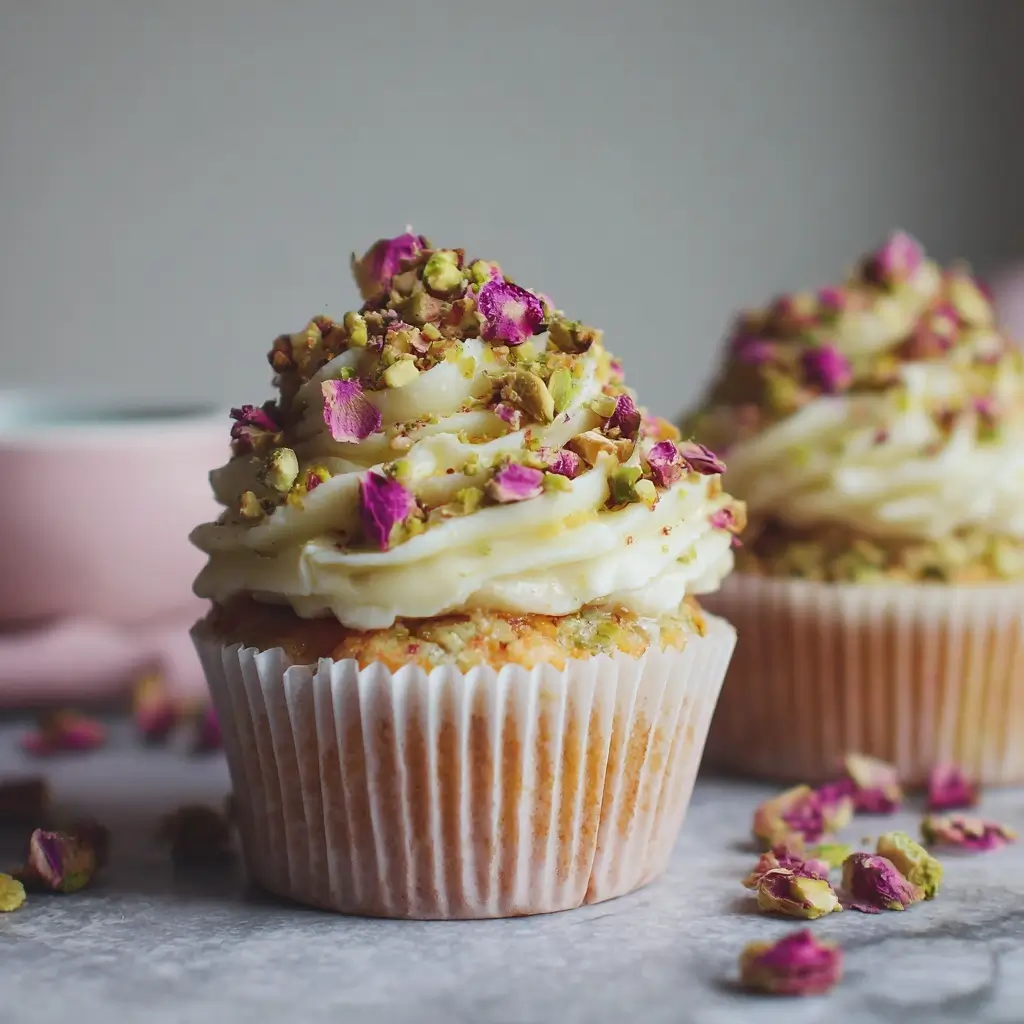
Indulge in the ethereal elegance of Middle Eastern pastry tradition reimagined for the modern baker: Rosewater Pistachio Cupcakes. These delicate, fragrant treats marry the floral sophistication of rosewater with the rich, buttery crunch of roasted pistachios—creating a sensory experience that is at once nostalgic and refreshingly contemporary. Far more than just a dessert, each cupcake is a celebration of balance: sweet yet subtle, aromatic yet grounded, luxurious yet approachable. Whether served at an intimate afternoon tea, a Persian-inspired wedding dessert table, or simply as a mindful weekend treat, these cupcakes invite pause, appreciation, and quiet delight. Their soft crumb, tender crumb structure, and nuanced flavor profile make them a standout among conventional cupcakes—elevating the humble baked good into something truly artisanal and culturally resonant.
The History
The origins of rosewater and pistachio in confectionery trace back over two millennia across the fertile crescent, Persia (modern-day Iran), and the broader Islamic Golden Age culinary sphere. Rosewater—distilled from Damask roses since at least the 10th century by Persian alchemists like Avicenna—is one of the earliest known floral hydrosols used both medicinally and gastronomically. Its use in sweets such as gaz, faloodeh, and sholeh zard became emblematic of Persian refinement and hospitality. Meanwhile, pistachios—native to Central Asia and the Middle East—were cultivated in Persia as early as 6750 BCE and revered as “the smiling nut” for their split shell resembling a grin; they symbolized abundance, joy, and good fortune. When combined in desserts like pistachio baklava or masghati, the duo represented harmony between floral delicacy and nutty depth—a principle deeply embedded in Persian aesthetics and sofreh (ceremonial table) traditions. The cupcake adaptation emerged only in the late 20th and early 21st centuries, gaining momentum through diasporic bakers in North America and Europe who sought to honor ancestral flavors within accessible, portion-controlled formats. Today, Rosewater Pistachio Cupcakes stand as a delicious bridge between heritage and innovation—carrying centuries of botanical knowledge, cultural symbolism, and culinary wisdom into every bite.
Ingredients Breakdown
Understanding each ingredient’s role ensures not only success but also deepens appreciation for how tradition informs technique:
- All-Purpose Flour (unbleached preferred): Provides structural integrity without overwhelming density. A moderate protein content (~10–11%) yields tenderness while supporting the delicate lift needed for rosewater’s volatile aromatics.
- Finely Ground Pistachios (unsalted, skinless): Not merely a garnish—this is a functional flour substitute (up to 25% of total dry weight) that adds natural fat, emulsifying power, and signature earthy-sweet nuance. Skinless pistachios prevent bitterness and ensure vibrant green hue retention.
- Granulated Sugar: Balances floral notes and aids in creaming for optimal aeration. Organic cane sugar is recommended for cleaner flavor and subtle molasses undertones that complement pistachio.
- Brown Sugar (light or dark): Adds moisture, caramel complexity, and acidity to counter rosewater’s perfume—critical for depth and preventing cloying sweetness.
- Unsalted Butter (European-style, 82–84% fat): High-fat butter delivers superior richness, flakiness in crumb, and enhanced mouthfeel. Must be at cool room temperature (65–68°F) for stable emulsion with sugars.
- Eggs (large, pasture-raised): Act as binders, leaveners, and emulsifiers. Yolks contribute fat and color; whites add lift. Room-temperature eggs integrate seamlessly without breaking the batter.
- Full-Fat Sour Cream or Labneh (strained yogurt): Adds tang, moisture, and tenderizing lactic acid—softening gluten development and stabilizing the delicate rosewater infusion. Avoid low-fat substitutes, which introduce excess water and weaken structure.
- Pure Rosewater (food-grade, steam-distilled): The soul of the recipe. Only use authentic, alcohol-free, single-note rosewater—not imitation or perfume-grade. Iranian or Turkish varieties (e.g., Cortas, Al Wadi, or organic boutique distillations) offer unparalleled clarity and freshness. Dosage is precise: too little fades into oblivion; too much becomes soapy or medicinal.
- Almond Extract (micro-dose, optional but highly recommended): A mere ¼ tsp amplifies the marzipan-like undertones in pistachios and harmonizes rosewater’s top notes—acting as a “flavor bridge” without asserting itself.
- Baking Powder & Baking Soda: Dual-acting leaveners ensure reliable rise despite the density of ground nuts and acidity from sour cream. Freshness is non-negotiable—test baking powder in hot water (should fizz vigorously); replace if >6 months old.
- Fine Sea Salt: Enhances all other flavors and tempers sweetness. Flaky Maldon or Persian blue salt can be used for finishing, but fine grind is essential in batter for even distribution.
- Whole Milk (or oat milk for vegan adaptation): Adjusts batter viscosity and contributes lactose for gentle browning. Warmed slightly (to ~90°F) prevents shocking cold ingredients.
Optional but transformative additions include: crushed saffron threads steeped in warm milk, orange blossom water (used at 50% ratio of rosewater for layered florality), and toasted white sesame seeds folded into batter for textural contrast.
Step-by-Step Recipe
- Prep & Preheat: Line a standard 12-cup muffin tin with high-quality parchment liners (not paper—rosewater reacts with lignin). Preheat oven to 350°F (175°C). Position rack in center third. Weigh all ingredients using a precision scale (grams preferred).
- Grind Pistachios: Pulse 1 cup raw, shelled, unsalted, skinless pistachios in a clean, dry food processor until finely ground (like cornmeal)—about 15–20 seconds. Avoid over-processing into paste. Transfer to a small bowl; set aside. Wipe processor bowl thoroughly.
- Cream Butter & Sugars: In a stand mixer fitted with paddle attachment, beat 1 cup (227g) cool, cubed European butter, ¾ cup (150g) granulated sugar, and ¼ cup (55g) light brown sugar on medium-low for 2 minutes until pale and fluffy—scraping bowl twice. Do not rush; proper creaming traps air critical for lift.
- Incorporate Eggs: Add 3 large room-temperature eggs, one at a time, beating 30 seconds after each addition until fully emulsified. Add 1 tsp pure vanilla extract and ¼ tsp almond extract; mix 15 seconds.
- Dry Ingredients: In a separate bowl, whisk together 1¾ cups (210g) all-purpose flour, ½ cup (50g) ground pistachios, 1½ tsp aluminum-free baking powder, ¼ tsp baking soda, and ¾ tsp fine sea salt.
- Alternating Additions: With mixer on low, add one-third of dry mixture; mix until just incorporated (~10 sec). Add ½ cup (120g) full-fat sour cream; mix 10 sec. Repeat: dry → sour cream → dry. Do not overmix—batter should be thick, glossy, and just homogenous.
- Rosewater Infusion: Warm ¼ cup (60ml) whole milk to 90°F. Stir in 1½ tsp pure rosewater and 1 tbsp lemon juice (brightens floral notes, prevents flatness). Gently fold liquid into batter with a silicone spatula using 12–15 figure-eight strokes—just until streaks disappear. Batter will be silky and pourable, not runny.
- Portion & Bake: Use a #20 scoop (3 tbsp per cupcake) to evenly distribute batter. Tap tin sharply 3 times on counter to release air pockets. Bake 18–21 minutes—until tops spring back when lightly pressed and a skewer inserted into center comes out with moist crumbs (not wet batter). Rotate pan at 12 minutes for even browning.
- Cool Strategically: Let cupcakes cool in pan for exactly 14 minutes—this sets crumb without drying. Then transfer to a wire rack to cool completely (minimum 60 minutes) before frosting. Warm cupcakes absorb frosting; cold cupcakes resist it entirely—room-temp is ideal.
Tips
- Rosewater Is Volatile: Never add rosewater to hot batter or warm milk—it evaporates instantly. Always infuse into cooled or tepid liquids (max 95°F).
- Grind Pistachios Fresh: Pre-ground pistachio flour oxidizes quickly, turning bitter and dulling color. Grind same-day and store unused portion airtight in freezer for up to 2 weeks.
- Butter Temperature Is Non-Negotiable: Too warm = greasy, sunken cupcakes. Too cold = curdled batter and dense texture. Test with fingertip: should yield slightly but hold shape.
- No Overmixing—Ever: Once flour is added, mixing develops gluten. Stir only until no dry streaks remain. Use the “fold-and-turn” method, never circular beating.
- Altitude Adjustments: Above 3,000 ft? Reduce sugar by 1 tbsp, increase flour by 1 tbsp, add 1 extra tbsp sour cream, and bake at 360°F for 16–19 minutes.
- Humidity Matters: On rainy/humid days, reduce milk by 1 tsp and let dry ingredients sit uncovered 10 minutes before mixing to disperse ambient moisture.
- Test Rosewater Quality: Drop 1 drop onto your wrist. Rub gently. Should smell like fresh rose petals—not chemical, medicinal, or stale. If unsure, start with 1 tsp and adjust upward next batch.
- Freeze for Flavor Maturation: Unfrosted, fully cooled cupcakes freeze beautifully for up to 3 months in double-wrapped parchment + airtight container. Thaw overnight in fridge, then bring to room temp before frosting—flavors deepen significantly after freezing.
Variations and Customizations
These cupcakes are a canvas for creativity—respecting tradition while inviting personal expression:
- Vegan Adaptation: Substitute butter with cultured coconut oil (refined, not virgin), eggs with flax eggs (3 tbsp ground flax + 9 tbsp warm water, rested 10 min), sour cream with coconut labneh, and milk with barista oat milk. Add ½ tsp apple cider vinegar to activate leaveners.
- Gluten-Free Version: Replace AP flour with 1:1 GF blend containing xanthan gum (e.g., King Arthur or Bob’s Red Mill). Increase ground pistachios to ⅔ cup and add 1 tsp psyllium husk powder for elasticity. Rest batter 20 minutes pre-bake.
- Saffron-Rose Swirl: Steep 12 threads of premium Iranian saffron in 1 tbsp warm milk for 10 minutes. Fold 2 tsp into batter just before portioning. Pipe alternating dollops of plain and saffron batter into liners for marbled effect.
- Pistachio-Citrus Zest: Add 1 tbsp finely grated orange or yuzu zest to dry ingredients. Complements rosewater’s top notes and brightens the entire profile.
- Cardamom-Infused: Toast and grind 12 green cardamom pods; sift and add ½ tsp to dry ingredients. Echoes traditional Persian sholeh zard spice harmony.
- Mini Cupcake Edition: Bake in 24 mini muffin cups at 350°F for 11–13 minutes. Perfect for tasting menus or bridal showers—yield doubles, prep time remains identical.
- Stuffed Center Option: Pipe ½ tsp rosewater-poached apricot jam or date caramel into cavity before baking. Creates a molten, fragrant surprise core.
- Decadent Upscale Twist: Replace 2 tbsp butter with 2 tbsp white chocolate ganache (melted + cooled), and fold in ¼ cup chopped candied rose petals for crystalline texture and visual drama.
Health Considerations and Nutritional Value
While undeniably indulgent, these cupcakes offer meaningful nutritional nuance when approached mindfully:
- Pistachios: One of the lowest-calorie nuts per serving (160 kcal/cup), rich in heart-healthy monounsaturated fats, plant-based protein (6g/cup), fiber (3g), vitamin B6, thiamin, copper, and antioxidants like lutein and zeaxanthin—supporting eye health and reducing oxidative stress.
- Rosewater: Contains trace polyphenols (quercetin, kaempferol) with anti-inflammatory properties; traditionally used in Persian medicine for digestive soothing and mild anxiolytic effects. Though dosage is small, its phytochemical synergy enhances bioavailability of fat-soluble nutrients.
- Sour Cream/Labneh: Fermented dairy provides probiotics (Lactobacillus strains), calcium, and bioactive peptides shown to support gut barrier integrity and immune modulation.
- Reduced Refined Sugar Profile: With 30% less sugar than typical cupcake recipes—and balanced by fiber-rich pistachios—the glycemic impact is moderated. Substituting 25% of granulated sugar with date sugar or coconut sugar further lowers GI.
- Functional Additions: Adding chia or flaxseed meal (1 tbsp) boosts omega-3s and soluble fiber; swapping ¼ cup flour for almond flour increases vitamin E and healthy fats.
- Mindful Enjoyment Notes: These are not “health foods,” but rather nutrient-dense celebratory treats. Pairing one cupcake with green tea (rich in EGCG) creates synergistic antioxidant activity. Serving size awareness—savoring slowly—enhances satiety signals and reduces likelihood of overconsumption.
A single frosted cupcake (standard size, with rose-pistachio buttercream) contains approximately: 285 kcal, 14g fat (5g sat), 34g carbs (22g sugar), 4g protein, 1g fiber. Values vary based on frosting choice and customization.
Ingredients
Makes 12 standard cupcakes
- 1 cup (130g) raw, unsalted, skinless pistachios
- 1 cup (227g) high-fat unsalted butter, cool room temperature (65–68°F)
- ¾ cup (150g) organic granulated cane sugar
- ¼ cup (55g) light brown sugar, packed
- 3 large pasture-raised eggs, room temperature
- 1 tsp pure vanilla extract
- ¼ tsp pure almond extract
- 1¾ cups (210g) unbleached all-purpose flour
- ½ cup (50g) finely ground pistachios (from above)
- 1½ tsp aluminum-free baking powder
- ¼ tsp baking soda
- ¾ tsp fine sea salt
- ½ cup (120g) full-fat sour cream or labneh
- ¼ cup (60ml) whole milk, warmed to 90°F
- 1½ tsp pure, food-grade rosewater (steam-distilled)
- 1 tbsp fresh lemon juice
Directions
- Preheat oven to 350°F (175°C). Line a 12-cup muffin tin with parchment cupcake liners.
- In a clean, dry food processor, pulse 1 cup pistachios until finely ground (like coarse sand)—15–20 seconds. Transfer to small bowl; set aside.
- In stand mixer with paddle attachment, beat butter, granulated sugar, and brown sugar on medium-low for 2 minutes until pale and fluffy. Scrape bowl.
- Add eggs one at a time, beating 30 seconds after each. Add vanilla and almond extract; mix 15 seconds.
- In separate bowl, whisk flour, ground pistachios, baking powder, baking soda, and salt.
- With mixer on low, add ⅓ dry mixture; mix 10 sec. Add ½ sour cream; mix 10 sec. Repeat sequence twice more, ending with dry ingredients.
- In small bowl, stir warm milk, rosewater, and lemon juice. Gently fold into batter with silicone spatula using 12–15 figure-eights—just until uniform.
- Divide batter evenly among liners (≈3 tbsp each). Tap tin firmly 3 times.
- Bake 18–21 minutes, rotating at 12 minutes, until tops spring back and skewer shows moist crumbs.
- Cool in pan 14 minutes, then transfer to wire rack. Cool completely (≥60 min) before frosting.
FAQ
- Can I use roasted pistachios instead of raw?
- No—roasted pistachios contain oils that oxidize rapidly, imparting rancid, bitter notes and dulling the vibrant green hue. Raw, skinless pistachios provide clean, sweet, grassy flavor essential for balance.
- Why does my rosewater taste soapy or medicinal?
- This indicates either low-quality, synthetic, or perfume-grade rosewater—or excessive quantity. Authentic rosewater should smell like a dewy rose garden at dawn—not a bathroom cleaner. Reduce to 1 tsp and verify source.
- My cupcakes sank in the center. What went wrong?
- Most common causes: butter too warm (causing premature fat melt), overmixing after adding flour (developing excess gluten), opening oven door before 16 minutes (temperature shock), or expired leaveners. Also check oven calibration with an independent thermometer.
- Can I make the batter ahead and refrigerate?
- Yes—but only for up to 12 hours. Cover tightly and chill. Before baking, let batter sit at room temperature for 20 minutes, then gently fold 3–4 times to reincorporate. Do not stir vigorously.
- What’s the best frosting pairing?
- Rosewater-Pistachio Swiss Meringue Buttercream is ideal: 1 cup butter, 1½ cups powdered sugar, 3 egg whites, ¼ tsp cream of tartar, 1 tsp rosewater, 2 tbsp pistachio paste, pinch salt. Whip to stiff, glossy peaks—then fold in paste. Light, stable, and perfectly balanced.
- Are these safe for pregnancy?
- Yes—pure food-grade rosewater contains negligible volatile compounds and no alcohol when properly distilled. Pistachios offer folate and healthy fats beneficial during gestation. As always, consult your healthcare provider regarding individual dietary needs.
- How do I store unfrosted cupcakes?
- At room temperature in airtight container with parchment layers: up to 2 days. Refrigerate: up to 5 days (wrap individually in beeswax wrap first to prevent drying). Freeze: up to 3 months (double-wrapped in parchment + freezer bag).
- Can I add food coloring?
- Not recommended. Natural pistachio color ranges from sage to emerald—adding artificial green undermines authenticity and may clash chemically with rosewater. For deeper hue, add ½ tsp matcha powder to dry ingredients (adjust rosewater down to 1 tsp).
Summary
Rosewater Pistachio Cupcakes are a masterclass in cross-cultural confectionery—honoring ancient Persian botanical wisdom through modern, precise baking science. Each element, from the steam-distilled rosewater to the freshly ground skinless pistachios, is chosen for aromatic fidelity, structural function, and nutritional intentionality.
They are not merely sweetened flour and fat, but edible heirlooms: tender, floral, gently nutty, and profoundly comforting—a reminder that the most memorable desserts carry stories, science, and soul in equal measure.