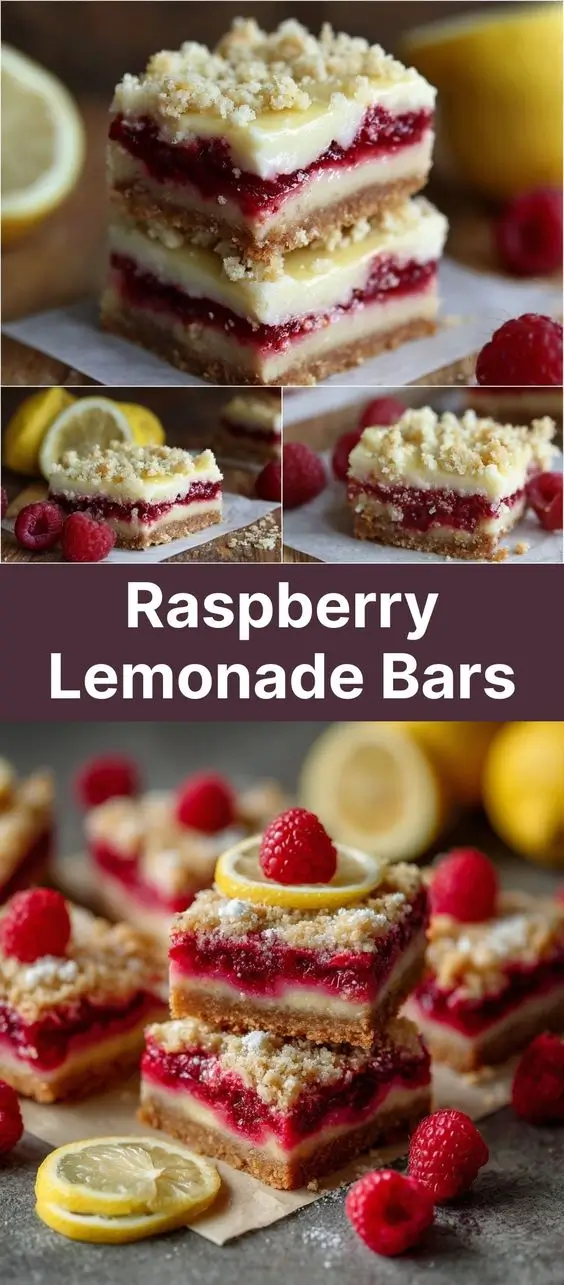
Raspberry Lemonade Bars: A Zesty, Fruity Delight for Every Occasion
Introduction
If you’re searching for a dessert that perfectly balances tangy citrus with sweet-tart berries, look no further than Raspberry Lemonade Bars. These vibrant, colorful treats combine the refreshing zing of lemonade with the juicy burst of fresh raspberries, all layered into a buttery shortbread crust and baked to golden perfection. Ideal for summer picnics, holiday gatherings, or just a cozy afternoon tea at home, these bars deliver an explosion of flavor in every bite. Whether you’re a seasoned baker or a beginner looking to impress, this recipe is simple enough to master yet elegant enough to serve at any event.
The History
While the exact origin of Raspberry Lemonade Bars is difficult to trace, their roots lie in the broader tradition of fruit bars and American-style dessert squares. Lemon bars themselves have been a staple in American baking since the mid-20th century, gaining popularity through community cookbooks and home baking traditions. The addition of raspberries likely emerged as bakers sought to elevate the classic lemon bar with extra color, texture, and complexity.
Lemonade, as a beverage, has its origins in ancient Egypt and medieval Europe, but it became especially popular in North America during the 19th century as a refreshing summer drink. Combining the essence of lemonade with a baked dessert was a natural evolution—transforming a beloved drink into a portable, sliceable treat. Raspberries, native to temperate regions of Europe and North America, have long been prized for their delicate flavor and vivid hue, making them a perfect pairing with citrus in desserts.
Raspberry Lemonade Bars represent a modern twist on these traditions—a fusion of nostalgic flavors and contemporary tastes. They’ve gained traction in food blogs, Pinterest boards, and gourmet bakeries over the last decade, becoming a favorite among those who appreciate desserts that are both visually stunning and deliciously balanced.
Ingredients Breakdown
The magic of Raspberry Lemonade Bars lies in the harmony of simple, high-quality ingredients. Each component plays a crucial role in creating the final texture and flavor profile:
- All-Purpose Flour: The foundation of both the crust and filling, providing structure and tenderness. Make sure to sift it to avoid clumps and ensure even mixing.
- Unsalted Butter: Used in both the crust and the filling, butter adds richness and a melt-in-your-mouth quality. It should be softened to room temperature for easy creaming but not melted.
- Powdered Sugar (for crust): Adds sweetness and helps create a crumbly, shortbread-like base. It blends smoothly without adding moisture like granulated sugar might.
- Granulated Sugar (for filling): Provides sweetness to balance the tartness of the lemons and raspberries. It dissolves easily into the egg mixture.
- Fresh Lemons: Essential for juice and zest. Freshly squeezed lemon juice offers the brightest flavor, while the zest intensifies the citrus aroma. Avoid bottled juice for best results.
- Eggs: Act as a binder and give the filling its custard-like consistency. Room temperature eggs blend more evenly into the batter.
- Fresh Raspberries: The star of the show. Use plump, ripe berries for maximum juiciness and color. Frozen raspberries can be used but may release more liquid and affect texture slightly.
- Cornstarch (optional): Sometimes added to the raspberry layer to prevent excess moisture from seeping into the filling and making it soggy.
- Salt: A pinch enhances all the other flavors, balancing sweetness and acidity.
- Vanilla Extract (optional): A small amount can deepen the flavor profile, though it’s not traditional in lemon bars.
Step-by-Step Recipe
Follow these detailed instructions to create flawless Raspberry Lemonade Bars at home:
Ingredients
- 1 ½ cups (190g) all-purpose flour
- ½ cup (115g) unsalted butter, softened
- ¼ cup (30g) powdered sugar
- Pinch of salt
- ¾ cup (150g) granulated sugar
- 2 large eggs
- ⅓ cup (80ml) freshly squeezed lemon juice (about 2–3 lemons)
- 1 tablespoon lemon zest
- 1 cup (125g) fresh raspberries
- 1 teaspoon cornstarch (optional)
- Powdered sugar, for dusting
Directions
- Preheat oven to 350°F (175°C). Line an 8×8-inch baking pan with parchment paper, leaving overhang on two sides for easy removal. Lightly grease the sides if needed.
- Make the crust: In a medium bowl, mix together the flour, powdered sugar, salt, and softened butter. Use a pastry cutter or your fingers to work the mixture until it resembles coarse crumbs. Press evenly into the bottom of the prepared pan. Bake for 18–20 minutes, or until lightly golden around the edges. Remove and let cool slightly while preparing the filling. Keep the oven on.
- Prepare the raspberries: If using cornstarch, toss the raspberries gently with 1 teaspoon cornstarch to absorb excess juice. Set aside.
- Make the lemon filling: In a medium bowl, whisk together granulated sugar, eggs, lemon juice, and lemon zest until smooth and slightly thickened, about 2–3 minutes. Do not overmix.
- Assemble the layers: Scatter the raspberries evenly over the warm crust. Pour the lemon filling carefully over the berries, ensuring they remain mostly intact and evenly distributed.
- Bake: Place in the oven and bake for 20–25 minutes, or until the filling is set and no longer jiggly in the center. A toothpick inserted near the edge should come out clean.
- Cool completely: Allow the bars to cool at room temperature for 1 hour, then transfer to the refrigerator and chill for at least 2 hours. This ensures clean slicing.
- Slice and serve: Use the parchment overhang to lift the slab out of the pan. Cut into 16 squares using a sharp knife wiped clean between cuts. Dust with powdered sugar just before serving.
Tips
- Use room temperature ingredients: Especially butter and eggs, which blend more smoothly and create a uniform batter.
- Don’t skip chilling: Cooling the bars thoroughly prevents crumbling and allows the flavors to meld.
- Prevent soggy bottoms: Tossing raspberries in cornstarch or draining them briefly after washing can help reduce moisture.
- Even pressing of crust: Use the back of a measuring cup or glass wrapped in plastic to press the crust firmly and uniformly for a sturdy base.
- Avoid overbaking: Overcooked lemon filling can curdle or crack. Remove from oven when center is just set.
- Sharp knife is key: For clean edges, dip the knife in hot water and wipe dry between each cut.
- Adjust sweetness: If you prefer a tarter bar, reduce sugar in the filling by 1–2 tablespoons.
Variations and Customizations
Raspberry Lemonade Bars are wonderfully adaptable. Here are some creative ways to customize them:
- Other Berries: Try blackberries, blueberries, or sliced strawberries. Mix raspberries with other berries for a “summer medley” version.
- Lime or Orange Twist: Replace half the lemon juice with lime or orange juice for a different citrus profile.
- Gluten-Free: Substitute all-purpose flour with a gluten-free 1:1 baking blend. Add ¼ teaspoon xanthan gum if not included in the blend.
- Dairy-Free: Use plant-based butter (like vegan stick butter) for a dairy-free crust and filling.
- Layered Look: Create a swirled effect by dropping spoonfuls of raspberry puree into the lemon mixture and gently swirling with a toothpick.
- White Chocolate Drizzle: Melt white chocolate and drizzle over cooled bars for added sweetness and visual appeal.
- Nutty Crust: Add ¼ cup finely ground almonds or pecans to the crust for a richer, nuttier base.
- Mini Bars: Bake in a muffin tin for individual servings—perfect for parties!
- No-Bake Version: Use a graham cracker crust and a filling made from sweetened condensed milk, lemon juice, and gelatin for a chilled, no-bake alternative.
Health Considerations and Nutritional Value
While Raspberry Lemonade Bars are undeniably indulgent, they do offer some nutritional benefits thanks to their real fruit content:
- Raspberries: Packed with fiber, vitamin C, manganese, and antioxidants like ellagic acid, which may support heart health and reduce inflammation.
- Lemons: High in vitamin C and citric acid, which may aid digestion and boost immunity.
- Eggs: Provide high-quality protein, choline, and essential amino acids.
However, it’s important to note the following considerations:
- Sugar Content: These bars are relatively high in added sugars, primarily from granulated and powdered sugar. Those managing blood sugar levels or following low-sugar diets should consume in moderation.
- Butter and Fat: Contains saturated fat from butter. While fine in moderation, those with cardiovascular concerns may want to limit intake or experiment with reduced-fat alternatives (though texture may suffer).
- Calories: One bar (1/16 of the pan) contains approximately 150–180 calories, depending on size and ingredients.
- Allergens: Contains dairy, eggs, and wheat. Not suitable for those with allergies unless modified with substitutions.
- Portion Control: Serve smaller squares and pair with fresh fruit or yogurt to balance the meal.
To make a healthier version:
- Reduce sugar by 25% and add a touch of stevia or monk fruit.
- Use whole wheat pastry flour or oat flour for added fiber.
- Replace half the butter with unsweetened applesauce (best in crust only).
- Top with fresh berries instead of powdered sugar.
FAQ
Can I use frozen raspberries?
Yes, but thaw them first and drain excess liquid to prevent a soggy crust. Pat dry with paper towels if needed.
How long do these bars last?
Store in an airtight container in the refrigerator for up to 5 days. They can also be frozen for up to 3 months—wrap tightly in plastic and thaw in the fridge before serving.
Why did my filling crack?
Overbaking or sudden temperature changes (like opening the oven door too early) can cause cracking. Ensure you remove the bars when the center is just set.
Can I make them ahead of time?
Absolutely! These bars taste even better the next day. Prepare up to 2 days in advance and store refrigerated.
Can I double the recipe?
Yes, but use a 9×13-inch pan and increase baking time by 5–10 minutes. Adjust ingredient quantities accordingly.
Are these bars suitable for freezing?
Yes. Slice before freezing and separate layers with parchment paper. Thaw in the refrigerator for best texture.
Can I use bottled lemon juice?
Freshly squeezed is always best for bright flavor. Bottled juice can taste flat or overly acidic.
Summary
Raspberry Lemonade Bars are the perfect harmony of buttery shortbread, tangy lemon curd, and juicy raspberries—baked into one irresistible dessert square. Easy to make, endlessly customizable, and guaranteed to impress, they’re a must-have for bakers seeking a refreshing twist on classic lemon bars.