Introduction
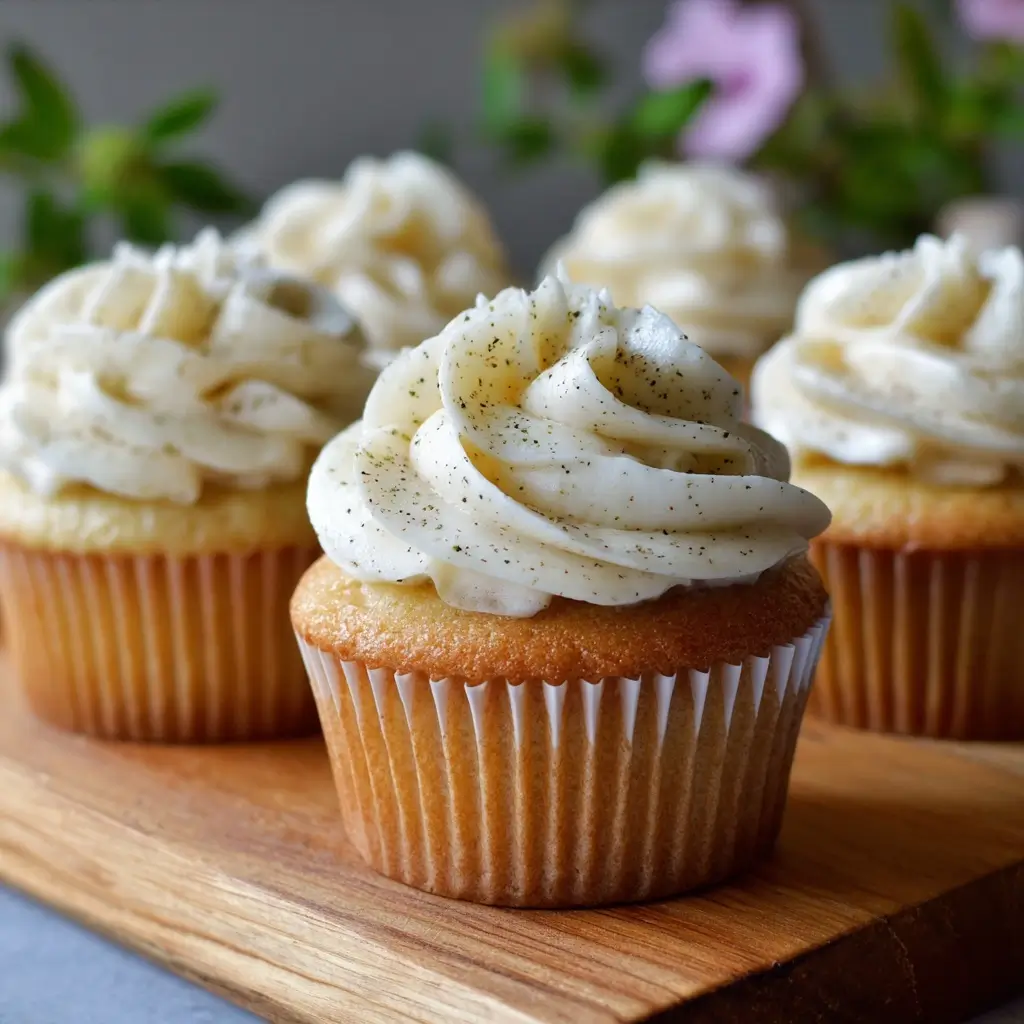
Minimalist Vanilla Bean Cupcakes embody the quiet elegance of simplicity—where fewer ingredients, intentional technique, and reverence for quality converge to create something profoundly satisfying. These aren’t just “plain” cupcakes; they’re a masterclass in restraint, highlighting the warm, floral, almost creamy depth of real vanilla beans without distraction. Designed for bakers who value clarity over clutter—whether you’re a novice seeking confidence or a seasoned baker craving purity—each cupcake delivers a tender crumb, delicate aroma, and subtle speckled beauty that signals authenticity. No artificial extracts, no stabilizers, no unnecessary flour blends—just butter, eggs, sugar, flour, leavening, salt, and the star: whole vanilla beans. This recipe honors tradition while embracing modern minimalism—not as austerity, but as intentionality.
The History
The lineage of the vanilla cupcake stretches back to the broader evolution of American layer cakes and tea-time treats in the late 19th century—but the *minimalist* interpretation is distinctly contemporary. Early vanilla cakes relied on scraped vanilla beans when accessible (a luxury in colonial and Victorian eras), though most home bakers substituted cheaper alternatives like vanilla tinctures or even tonka bean infusions. The 20th century saw the rise of single-flavor “basic” cupcakes standardized for school bake sales and convenience—often made with synthetic vanillin and over-processed ingredients. The minimalist movement in baking emerged alongside broader cultural shifts in the 2010s: a reaction against hyper-processed foods, influencer-driven excess, and algorithmic recipe bloat. Chefs like Erin McDowell, Stella Parks, and food writers at Food & Wine and King Arthur Baking began re-examining foundational formulas—not to reinvent, but to refine. This recipe draws from that ethos: it’s rooted in classic creaming-method vanilla cake science (first documented in Fannie Farmer’s 1896 Boston Cooking-School Cook Book), yet stripped to its essential variables—no sour cream, no buttermilk, no pudding mix, no oil substitution. It reflects a return to craft: understanding how granulated sugar’s crystal size affects aeration, how room-temperature butter emulsifies with eggs, and why scraping a single Tahitian or Madagascar bean can transform texture and aroma more than any extract ever could.
Ingredients Breakdown
Every ingredient here serves a precise functional and sensory role—no filler, no “just-in-case” additions:
- Unsalted Butter (100g / ½ cup, cubed & room temperature): Provides richness, tenderness, and structure via fat crystals that trap air during creaming. Unsalted ensures full sodium control; room temperature (~65°F/18°C) allows optimal emulsification—too cold = curdled batter; too warm = greasy collapse.
- Granulated Sugar (150g / ¾ cup): Not only sweetens but aerates the butter when creamed, creating microscopic air pockets vital for lift. Fine-grain sugar works best; avoid raw or coconut sugars—they don’t dissolve evenly or cream effectively.
- Eggs (2 large, room temperature): Act as emulsifiers, binders, and leaveners. Their proteins coagulate to set the crumb; yolks add fat and richness; whites contribute structure. Room temperature prevents shocking the butter and ensures uniform incorporation.
- All-Purpose Flour (150g / 1¼ cups, spooned & leveled): Provides gluten for structure—but only enough to hold shape without toughness. We use AP (not cake flour) for balanced tenderness and resilience. Spooning—not scooping—prevents compaction and over-measuring, which causes dryness.
- Baking Powder (2 tsp, aluminum-free): The sole chemical leavener. Aluminum-free avoids metallic aftertaste and offers more predictable, gentle rise. Double-acting means it reacts once when wet and again when heated—critical for consistent oven spring.
- Fine Sea Salt (¼ tsp): Enhances all other flavors, balances sweetness, and subtly strengthens gluten network. Never omit—even in “sweet” bakes, salt is the conductor of the flavor orchestra.
- Whole Vanilla Bean (1 medium pod, preferably Madagascar Bourbon or Tahitian): The soul of the recipe. Real beans contain over 250 aromatic compounds (vanillin, piperonal, heliotropin) that extracts cannot replicate. Scraping releases fragrant black seeds *and* the flavorful gel surrounding them—the entire pod pulp matters. Avoid “vanilla bean paste” unless certified pure (many contain fillers); never substitute imitation “vanilla bean” powder—it’s often ground wood pulp dyed black.
- Whole Milk (60g / ¼ cup, room temperature): Adds moisture, slight acidity for tenderizing, and lactose for subtle browning. Whole milk—not skim or plant-based—is non-negotiable here: its fat content emulsifies seamlessly with butter and prevents crumb dryness. Temperature matching prevents shocking the batter.
Note on substitutions: This recipe is calibrated for these exact ingredients. Coconut oil, oat milk, almond flour, or egg replacers will alter hydration, fat profile, protein structure, and Maillard reaction—yielding fundamentally different results. Minimalism means honoring ingredient integrity—not adaptability at all costs.
Step-by-Step Recipe
- Prep & Preheat: Line a standard 12-cup muffin tin with unbleached paper liners. Position oven rack in center position. Preheat oven to 350°F (175°C). Ensure all ingredients are at true room temperature (65–70°F)—this can take 45–60 minutes out of the fridge. Cold ingredients cause separation and poor aeration.
- Scrape the Bean: Split the vanilla bean lengthwise with a paring knife. Use the back of the knife to scrape out *all* the tiny black seeds *plus* the sticky, fragrant pulp clinging to the pod interior. Transfer seeds and pulp to the bowl of a stand mixer (or large mixing bowl if using hand mixer). Discard the empty pod—or save it to make vanilla sugar later.
- Cream Butter & Sugar: Add cubed, room-temperature butter and granulated sugar to the bowl with the vanilla. Using the paddle attachment (or hand mixer on medium), beat for 3–4 minutes until pale, fluffy, and nearly doubled in volume. Scrape down sides halfway through. The mixture should look like soft whipped cream—not grainy, not greasy. This step is irreplaceable: it builds the cake’s architecture.
- Incorporate Eggs: Add eggs one at a time, beating for 45 seconds after each addition until fully absorbed and glossy. Do not rush—under-beaten eggs yield dense cupcakes; over-beaten eggs risk curdling. If batter looks slightly broken after second egg, don’t panic—dry ingredients will rescue it.
- Dry Whisk: In a separate bowl, whisk together flour, baking powder, and salt until fully homogenous—no lumps, no streaks. A fine-mesh sieve is ideal for aerating and ensuring even distribution of leavener.
- Alternate Dry & Wet: With mixer on low speed, add ⅓ of dry ingredients—mix just until no flour is visible. Scrape bowl. Add ½ of milk—mix until just incorporated. Scrape bowl. Add another ⅓ dry—mix. Add remaining milk—mix. Scrape. Add final ⅓ dry—mix *only until the last trace of flour disappears*. Overmixing develops gluten → tunneling, toughness, domed tops that sink. Batter will be thick, glossy, and pipeable—not runny.
- Portion & Tap: Use a 2-tablespoon ice cream scoop or piping bag to divide batter evenly among 12 liners (≈55g per cup). Gently tap filled tin on counter 3 times to release trapped air bubbles—prevents uneven rising and craters.
- Bake with Precision: Place tin in preheated center oven. Bake 18–21 minutes. Begin checking at 17 minutes: cupcakes are done when tops spring back lightly when touched, edges pull slightly from liner, and a toothpick inserted into center comes out with *moist crumbs* (not wet batter, not completely clean—that indicates overbaking). Ovens vary—use visual cues over timer alone.
- Cool Strategically: Let cupcakes cool in tin for exactly 5 minutes—this sets structure. Then transfer to a wire rack to cool completely before frosting (at least 1.5 hours). Warm cupcakes melt frosting and steam inside liners, causing sogginess.
Tips
- Vanilla Bean Sourcing Matters: Seek plump, flexible, oily pods—not brittle or dusty. Madagascar Bourbon offers creamy, sweet, woody notes; Tahitian is floral, anise-like, and fruitier. Mexican beans bring spiciness. Avoid “vanilla powder” labeled as “natural flavor”—it’s often maltodextrin + vanillin.
- Butter Temperature Test: Press fingertip gently into butter. It should yield slowly, leaving a clean imprint—not slide right in (too soft) or resist entirely (too cold). If rushed, cut butter into ½” cubes and leave on counter 20 minutes—no microwave!
- No Guesswork on Flour: Use the “spoon-and-level” method: fluff flour in bag, spoon into measuring cup until heaping, then level with straight edge. Scooping packs flour—adding up to 25% extra—and guarantees dry cupcakes.
- Room-Temperature Shortcut: Place eggs in warm (not hot) water for 5 minutes. Cut butter into small cubes and spread on plate—takes ~15 mins at room temp.
- Why No Vanilla Extract?: Extract contains alcohol and water, which interfere with emulsion stability and can inhibit proper aeration. Bean pulp is fat-soluble and integrates seamlessly.
- Oven Thermometer Required: Most built-in oven thermostats are inaccurate by ±25°F. An oven thermometer prevents under- or over-baking—critical for this lean formula.
- Altitude Adjustment: Above 3,000 ft: reduce baking powder to 1¾ tsp, increase flour to 155g, bake at 355°F. Above 5,000 ft: reduce sugar to 140g, add 1 tbsp extra milk.
- Freezing Success: Unfrosted, completely cooled cupcakes freeze beautifully for up to 3 months. Wrap individually in parchment, then place in airtight freezer bag. Thaw overnight at room temperature—do not refrigerate.
Variations and Customizations
While the core recipe resists modification, thoughtful, ingredient-respectful variations exist—each preserving the minimalist spirit:
- Lemon-Bean Cupcakes: Add zest of 1 organic lemon (finely grated, no pith) with vanilla seeds. Reduce salt to ⅛ tsp. Brightens without adding liquid.
- Earl Grey Infusion: Steep 1 tsp loose-leaf Earl Grey in warm milk for 5 minutes. Strain, cool to room temp, then use as directed. Adds bergamot complexity—no additional vanilla needed.
- Cardamom-Bean Swirl: Whisk ¼ tsp freshly ground green cardamom into dry ingredients. Earthy, citrusy, and warm—complements vanilla’s depth.
- Brown Butter Version: Brown 100g butter (cook until nutty aroma & golden flecks appear), cool to room temp, then use as directed. Adds profound toasty richness—reduce salt to ⅛ tsp.
- Gluten-Free Adaptation (Minimalist GF): Substitute 150g King Arthur Measure-for-Measure GF Flour *exactly*. Add ½ tsp xanthan gum (if not included in blend). Rest batter 15 minutes before portioning—allows flours to hydrate fully.
- Vegan Option (Philosophically Aligned): Use 100g high-fat European-style vegan butter (e.g., Miyoko’s), 2 flax eggs (2 tbsp ground flax + 5 tbsp water, rested 10 min), 150g AP flour, and 60g oat milk (full-fat, unsweetened). Accept that texture will be slightly denser—true minimalism includes honoring biological constraints.
- Mini Cupcake Format: Fill mini muffin tin ⅔ full. Bake at 350°F for 10–12 minutes. Yields 36. Perfect for tasting menus or portion control.
What’s Not a Variation: Adding chocolate chips, fruit, nuts, swirls, or syrups contradicts the minimalist principle. Those are delightful—but belong to other recipes.
Health Considerations and Nutritional Value
A single unfrosted Minimalist Vanilla Bean Cupcake (1/12th of batch) contains approximately:
- Calories: 185 kcal
- Total Fat: 9g (5.5g saturated)
- Carbohydrates: 23g (16g sugars, naturally occurring from milk + added sucrose)
- Protein: 3g
- Fiber: 0.3g
- Sodium: 115mg
Nutritional Context: This is a refined-carbohydrate, moderate-fat baked good—not a health food, but not nutritionally hostile either. It contains zero trans fats, no artificial preservatives, no high-fructose corn syrup, no gums or emulsifiers. The butter provides fat-soluble vitamins A, D, E, and K₂; eggs deliver choline and lutein; milk contributes calcium and bioavailable vitamin B12. While not “low-sugar,” the 16g per cupcake aligns with WHO’s recommendation of <25g added sugar per day. For those managing blood sugar: pair with a source of protein/fat (e.g., Greek yogurt dip) to slow glucose absorption. Gluten-sensitive individuals should note this uses wheat flour—but the GF variation above maintains integrity. Allergen note: Contains dairy, eggs, and wheat. Tree nuts, soy, and sesame are absent unless added in frosting.
Mindful Enjoyment Philosophy: Minimalism extends to consumption. These cupcakes are designed to satisfy with intention—not excess. Their pure flavor profile encourages slower eating, heightened sensory awareness, and portion respect. They’re meant to be savored, not stuffed. Nutrition is not just chemistry—it’s context, culture, and care.
Ingredients
- 100g (½ cup) unsalted butter, cubed & at room temperature
- 150g (¾ cup) granulated sugar
- 2 large eggs, room temperature
- 150g (1¼ cups) all-purpose flour, spooned & leveled
- 2 tsp aluminum-free baking powder
- ¼ tsp fine sea salt
- 1 medium vanilla bean (Madagascar Bourbon or Tahitian preferred)
- 60g (¼ cup) whole milk, room temperature
Directions
- Preheat oven to 350°F (175°C). Line a 12-cup muffin tin with unbleached paper liners.
- Split vanilla bean and scrape seeds + pulp into the bowl of a stand mixer.
- Add butter and sugar. Beat with paddle attachment on medium-high for 3–4 minutes until pale, fluffy, and doubled in volume.
- Add eggs one at a time, beating 45 seconds after each until fully incorporated and glossy.
- In separate bowl, whisk together flour, baking powder, and salt until uniform.
- With mixer on low, add ⅓ dry ingredients—mix until just combined. Scrape bowl. Add ½ milk—mix until just absorbed. Scrape bowl. Add another ⅓ dry—mix. Add remaining milk—mix. Scrape bowl. Add final ⅓ dry—mix only until last trace of flour disappears.
- Divide batter evenly among 12 liners (≈55g each). Tap tin firmly on counter 3 times.
- Bake 18–21 minutes, until tops spring back and toothpick shows moist crumbs.
- Cool in tin 5 minutes, then transfer to wire rack to cool completely before frosting.
FAQ
- Can I use vanilla extract instead of a bean?
- No—extract introduces water and alcohol that disrupt emulsion and aeration. The bean’s natural oils and pulp are integral to texture and aroma. If absolutely necessary, use 1 tsp *pure* extract *in addition to* half a scraped bean—but never as sole source.
- Why do my cupcakes have tunnels or sink in the center?
- Overmixing after adding dry ingredients develops excess gluten, causing tunnels. Under-creaming butter/sugar or using cold eggs leads to poor aeration and sinking. Also verify oven temperature—too low = weak rise; too high = rapid dome then collapse.
- Can I make batter ahead of time?
- No. Leaveners begin reacting immediately upon contact with liquid. Batter must be baked within 15 minutes of mixing for optimal rise and texture.
- My cupcakes stuck to the liners. What went wrong?
- Liners were likely not high-quality or unbleached. Try brands like If You Care or Reynolds. Also ensure full cooling before removal—warm cupcakes adhere. Never grease liners; the formula contains enough fat to prevent sticking when properly baked.
- Can I double the recipe?
- Yes—but mix in two separate batches. Doubling in one bowl risks under-creaming and uneven mixing, leading to inconsistent texture.
- What’s the best frosting for these?
- A minimalist Swiss meringue buttercream (egg whites, sugar, butter, pinch of salt) or a simple vanilla bean-infused mascarpone cream. Avoid heavy ganaches or overly sweet frostings that mask the cupcake’s subtlety.
- How long do they keep?
- At room temperature in an airtight container: 2 days. Refrigerated: up to 5 days (but texture firms—bring to room temp before serving). Frosted cupcakes should be refrigerated if using dairy-based frosting.
- Can I use salted butter?
- Technically yes—but salinity varies by brand, making sodium control impossible. Unsalted butter gives precision and cleaner flavor.
Summary
Minimalist Vanilla Bean Cupcakes distill centuries of cake science into twelve perfect, speckled, tender bites—where every ingredient earns its place and every step serves purpose.
They are not simple because they’re basic, but because they refuse distraction—honoring vanilla not as flavoring, but as fragrance, memory, and quiet revelation.