Introduction
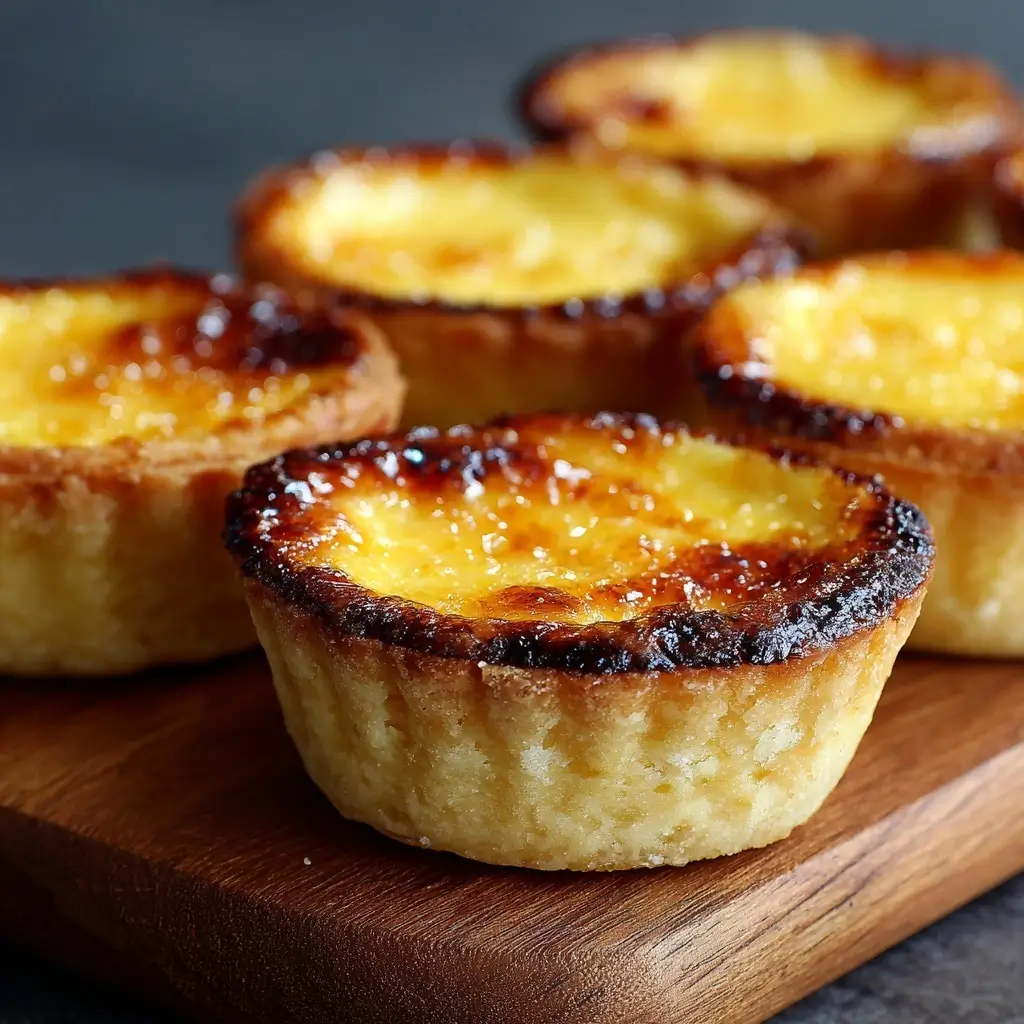
Indulge in the delicate elegance of Mini Vanilla Bean Custard Tarts—bite-sized confections that blend buttery, flaky pastry shells with a luxuriously smooth vanilla custard filling. These petite tarts are perfect for afternoon tea parties, bridal showers, holiday gatherings, or as an exquisite finale to a gourmet dinner. With their golden crusts and silky interiors flecked with real vanilla bean, each tart delivers a sophisticated balance of texture and flavor that delights both the eyes and the palate. Whether you’re a seasoned baker or an enthusiastic beginner, mastering this recipe will elevate your dessert repertoire and leave your guests asking for seconds—and the recipe.
The History
Custard tarts have a rich and storied past that dates back centuries, with origins believed to lie in medieval Europe. The earliest known versions were mentioned in English cookbooks from the 14th century, such as The Forme of Cury, where they were made with eggs, milk, sugar, and spices, baked inside a simple pastry shell. These early tarts were often enjoyed by nobility and served at banquets and feasts.
Over time, custard tarts evolved with the availability of ingredients and advancements in baking techniques. In Portugal, the famous Pastéis de Nata emerged from monastery kitchens in the 18th century, later gaining global fame. In England, the classic “Egg Custard Tart” became a staple of traditional bakeries and tearooms. The addition of vanilla—a luxury spice imported from Mesoamerica—transformed the humble custard into a more aromatic and refined treat during the 1800s.
Miniature versions gained popularity in the 20th century as elegant finger foods for cocktail parties and formal events. Today, mini vanilla bean custard tarts represent the fusion of old-world charm and modern precision baking, beloved by pastry chefs and home bakers alike for their dainty size and decadent taste.
Ingredients Breakdown
The magic of mini vanilla bean custard tarts lies in the quality and harmony of their ingredients. Each component plays a crucial role in achieving the ideal balance between crisp crust and velvety filling.
For the Pastry Shells (Pâte Sucrée):
- All-Purpose Flour: Provides structure to the dough. Opt for unbleached flour for better flavor and texture.
- Unsalted Butter (cold): Adds richness and flakiness. Cold butter creates steam during baking, resulting in a light, tender crust.
- Confectioners’ Sugar: Sweetens the dough while contributing to a delicate, melt-in-your-mouth texture.
- Egg Yolk: Binds the dough and enhances richness without making it tough.
- Salt: Balances sweetness and enhances overall flavor.
- Ice Water: Helps bring the dough together without warming the butter. Use sparingly to avoid a sticky texture.
For the Vanilla Bean Custard Filling:
- Whole Milk and Heavy Cream: The creamy base of the custard. Whole milk provides body, while heavy cream adds luxurious richness.
- Real Vanilla Bean: The star ingredient. Scrape the seeds from one pod for visible speckles and deep, floral vanilla aroma. Alternatively, high-quality vanilla paste or extract can be used, though the bean offers superior depth.
- Egg Yolks: Thicken the custard naturally through gentle cooking, creating a silky texture without starch.
- Granulated Sugar: Sweetens the custard and helps stabilize the egg yolks during heating.
- Cornstarch (optional): Added in small amounts to ensure the custard sets firmly, especially important for tarts that may be transported or served at room temperature.
Optional Garnishes:
- Fresh berries (raspberries, strawberries)
- Whipped cream or crème fraîche
- Dusted confectioners’ sugar
- Edible gold leaf or mint leaves for elegance
- Caramelized sugar topping (torched like crème brûlée)
Step-by-Step Recipe
Making the Pâte Sucrée (Sweet Pastry Dough)
- In a food processor, pulse 1½ cups (190g) all-purpose flour, ¼ cup (30g) confectioners’ sugar, and ¼ teaspoon salt until combined.
- Add ½ cup (1 stick / 113g) cold unsalted butter, cut into cubes. Pulse until the mixture resembles coarse sand with some pea-sized butter pieces remaining.
- Add 1 large egg yolk and 2–3 tablespoons ice water, one tablespoon at a time, pulsing just until the dough begins to clump together. Do not overmix.
- Turn the dough out onto a lightly floured surface and shape into a flat disk. Wrap in plastic wrap and refrigerate for at least 1 hour (up to 2 days).
Rolling and Shaping the Tart Shells
- Preheat oven to 375°F (190°C). Lightly grease a 12-cup mini tart pan with removable bottoms or use non-stick spray.
- On a floured surface, roll the chilled dough to ⅛-inch thickness. Using a round cutter slightly larger than the tart molds (about 3 inches), cut out circles.
- Gently press each circle into the tart pan, ensuring the dough fits snugly into the fluted edges without stretching. Trim excess dough from the top.
- Prick the bottom of each shell with a fork to prevent puffing. Freeze for 15 minutes to preserve shape during baking.
- Line shells with parchment paper and fill with pie weights or dried beans. Bake for 12 minutes. Remove weights and parchment, then bake an additional 6–8 minutes until golden brown. Let cool completely.
Preparing the Vanilla Bean Custard
- In a medium saucepan, combine 1 cup whole milk, ½ cup heavy cream, and the scraped seeds and pod of 1 vanilla bean. Heat over medium until steaming but not boiling. Remove from heat, cover, and let steep for 15 minutes.
- In a bowl, whisk 4 large egg yolks with ½ cup granulated sugar until pale and slightly thickened. Whisk in 1 tablespoon cornstarch (optional, for stability).
- Slowly temper the yolks: Gradually pour the warm cream mixture into the yolks while whisking constantly to prevent curdling.
- Return the mixture to the saucepan. Cook over medium-low heat, stirring constantly with a wooden spoon or silicone spatula, until the custard thickens enough to coat the back of the spoon (about 170°F / 77°C). This takes 5–7 minutes. Do not boil.
- Strain the custard through a fine-mesh sieve into a clean bowl to ensure smoothness. Discard the vanilla pod.
- Press plastic wrap directly onto the surface of the custard to prevent a skin from forming. Chill for at least 1 hour.
Filling and Finishing the Tarts
- Once the tart shells are cooled and the custard is chilled, use a small spoon or piping bag to fill each shell evenly.
- Refrigerate filled tarts for at least 30 minutes before serving to set the custard.
- Garnish as desired—dust with powdered sugar, add fresh berries, or lightly torch the tops with a kitchen torch for a crème brûlée effect.
Tips
- Keep Everything Cold: For flaky tart shells, ensure butter and water are very cold. Work quickly to prevent the butter from softening.
- Don’t Skip Blind Baking: Pre-baking (blind baking) the shells prevents sogginess and ensures a crisp base.
- Temper Eggs Carefully: Adding hot liquid too quickly to eggs will scramble them. Always temper slowly while whisking.
- Use Real Vanilla Bean: While extract works, the visual appeal and complex flavor of real vanilla bean are unmatched.
- Avoid Overbaking Custard: Overcooking leads to curdling. Remove from heat just as it thickens—it will continue to set as it cools.
- Chill Before Serving: These tarts taste best when served cold, enhancing the contrast between crisp shell and creamy filling.
- Make Ahead Friendly: Dough can be made 2 days ahead; custard can be prepared 1 day in advance.
Variations and Customizations
While classic mini vanilla bean custard tarts are timeless, there are countless ways to personalize them for different tastes and occasions:
- Lemon Vanilla Twist: Add 1 tablespoon finely grated lemon zest and 1 teaspoon lemon juice to the custard for a bright, citrusy variation.
- Chocolate Swirl: Melt 2 ounces dark chocolate and swirl into the custard before chilling for a marbled effect.
- Bourbon Vanilla: Stir in 1–2 teaspoons of bourbon after cooking the custard for a warm, sophisticated note.
- Fruit-Infused Custard: Infuse the milk with raspberries or passionfruit pulp, then strain before mixing with eggs.
- Gluten-Free Option: Substitute the all-purpose flour with a gluten-free 1:1 baking blend for the pastry shell.
- Vegan Adaptation: Use plant-based butter, oat flour, and a custard base made with coconut milk, cornstarch, and agar-agar or commercial egg replacer.
- Savory-Sweet Version: Sprinkle a pinch of flaky sea salt on top before serving for a salted caramel-like experience.
- Seasonal Themes: Top with holly sprigs at Christmas, edible flowers in spring, or pumpkin spice dusting in autumn.
Health Considerations and Nutritional Value
Mini vanilla bean custard tarts are a treat best enjoyed in moderation due to their calorie and sugar content. However, they do provide some nutritional benefits from quality ingredients.
Nutritional Profile (Per Tart, Approximate):
- Calories: 180–220 kcal
- Fat: 12–15g (mostly from butter and cream)
- Saturated Fat: 7–9g
- Carbohydrates: 18–22g
- Sugars: 12–15g (natural and added)
- Protein: 3–4g (from eggs and dairy)
- Calcium: 40–60mg (supports bone health)
- Vitamin A & D: Present in egg yolks and dairy
Health Notes:
- Dairy Sensitivity: Not suitable for those with lactose intolerance unless modified with lactose-free milk and cream alternatives.
- Egg Allergies: Contains egg yolks in both crust and custard—substitutions may alter texture significantly.
- Low-Sugar Option: Replace granulated sugar with erythritol or monk fruit sweetener for a reduced-sugar version (note: may affect browning and texture).
- Portion Control: Their small size naturally limits intake, making them a sensible indulgence compared to larger desserts.
- Balanced Pairing: Serve with fresh fruit or herbal tea to offset richness and improve digestion.
Ingredients
For the Pâte Sucrée (Makes 12 Mini Tart Shells):
- 1½ cups (190g) all-purpose flour
- ¼ cup (30g) confectioners’ sugar
- ¼ teaspoon salt
- ½ cup (113g) cold unsalted butter, cubed
- 1 large egg yolk
- 2–3 tablespoons ice water
For the Vanilla Bean Custard (Fills 12 Tarts):
- 1 cup whole milk
- ½ cup heavy cream
- 1 vanilla bean (or 1 tablespoon vanilla paste)
- 4 large egg yolks
- ½ cup (100g) granulated sugar
- 1 tablespoon cornstarch (optional, for firmness)
For Garnish (Optional):
- Fresh berries
- Whipped cream
- Confectioners’ sugar
- Mint leaves or edible flowers
Directions
- Prepare the dough: Combine flour, confectioners’ sugar, and salt in a food processor. Add cold butter and pulse until crumbly. Mix in egg yolk and ice water until dough forms. Shape into a disk, wrap, and chill for 1 hour.
- Roll and shape shells: Roll dough to ⅛-inch thickness. Cut into 3-inch circles and press into mini tart pans. Prick bottoms, freeze 15 minutes, then blind bake at 375°F for 12 minutes with weights, then 6–8 minutes uncovered until golden. Cool completely.
- Make the custard: Heat milk, cream, and scraped vanilla bean (pod included) until steaming. Steep 15 minutes. Whisk egg yolks, sugar, and cornstarch. Temper yolks with warm cream, return to stove, and cook until thickened (do not boil). Strain, cover surface with plastic, and chill 1+ hours.
- Fill tarts: Pipe or spoon custard into cooled shells. Refrigerate 30 minutes. Garnish and serve cold.
FAQ
Can I make these tarts ahead of time?
Yes! The dough can be made 2 days in advance and stored in the fridge. Fully baked shells keep in an airtight container for up to 3 days. The custard can be made 1 day ahead. Assemble no more than 4 hours before serving for best texture.
Why did my custard curdle?
Custard curdles when heated too quickly or boiled. Always cook over low to medium heat and stir constantly. If slight curdling occurs, immediately strain through a fine sieve—the texture should still be smooth.
Can I freeze mini custard tarts?
It’s not recommended. The custard may separate upon thawing, and the pastry can become soggy. However, unbaked shells can be frozen before baking—just add 1–2 minutes to baking time.
How do I prevent soggy bottoms?
Ensure thorough blind baking of the shells. Let them cool completely before filling. You can also brush the inside of baked shells with melted white chocolate or egg white and re-bake for 2 minutes to create a moisture barrier.
Can I use vanilla extract instead of a vanilla bean?
Yes. Substitute 1 tablespoon of pure vanilla extract for the vanilla bean. However, the visual appeal and nuanced flavor of real bean specks will be lost.
Are these tarts safe to eat if pregnant?
The custard contains raw egg yolks cooked gently. For extra safety, ensure the custard reaches at least 160°F (71°C) during cooking to eliminate any risk of salmonella.
What size are mini tart pans?
Standard mini tart pans are about 2.5 to 3 inches in diameter and ¾ inch deep. They often come in 12-cup sets with removable bottoms for easy release.
Summary
Mini Vanilla Bean Custard Tarts combine buttery, flaky pâte sucrée shells with a lusciously smooth, real-vanilla-infused custard, offering an elegant bite-sized dessert perfect for any occasion. With attention to technique and quality ingredients, these tarts deliver timeless flavor and unforgettable presentation.