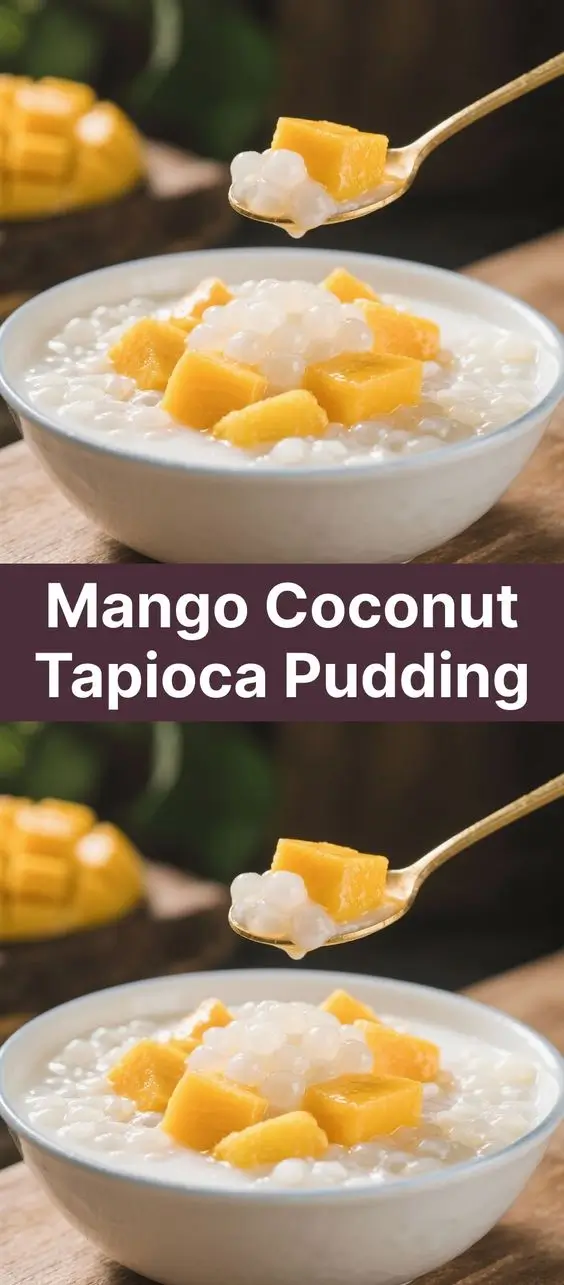
Mango Coconut Tapioca Pudding: A Tropical Delight
Introduction
Mango Coconut Tapioca Pudding is a luscious, creamy dessert that brings together the exotic sweetness of ripe mangoes and the rich, velvety texture of coconut milk, all suspended in delicate tapioca pearls. This dish is more than just a dessert—it’s an experience, evoking sun-kissed beaches, tropical breezes, and the vibrant flavors of Southeast Asia and the Caribbean. Whether served warm or chilled, this pudding offers a luxurious mouthfeel with each spoonful, combining chewy tapioca, smooth coconut cream, and bursts of juicy mango. It’s a favorite at family gatherings, festive celebrations, and as a comforting treat after a long day. Easy to prepare and endlessly customizable, Mango Coconut Tapioca Pudding bridges tradition and modern taste preferences, making it a must-have in any dessert lover’s repertoire.
The History
Tapioca pudding has its roots in ancient South American cuisine, where cassava root—a staple crop of indigenous peoples—was processed into tapioca starch. The Portuguese colonists adopted this ingredient and spread its use across their colonies, including Brazil, India, and parts of Africa. As tapioca traveled the world, it adapted to local ingredients and tastes. In tropical regions like Thailand, the Philippines, and Jamaica, coconut milk became a natural pairing due to its abundance and rich flavor. Similarly, mangoes—native to South Asia—have been cultivated for over 4,000 years and eventually made their way to Africa, the Americas, and the Pacific Islands through trade and colonization.
The fusion of mango and coconut in tapioca pudding likely emerged in countries where both ingredients thrived—such as Thailand, Indonesia, and the Caribbean islands. Over time, street vendors and home cooks began blending sweetened coconut milk with cooked tapioca and fresh mango, creating a refreshing dessert perfect for hot climates. Today, Mango Coconut Tapioca Pudding is celebrated globally, appearing on menus from Bangkok night markets to upscale New York dessert bars. Its enduring popularity lies in its simplicity, cultural fusion, and irresistible tropical flair.
Ingredients Breakdown
- Tapioca Pearls (Small/Quick-Cooking): These tiny spheres are made from cassava starch and provide the signature chewy texture. Small pearls absorb liquid well and cook faster than large ones.
- Coconut Milk: Full-fat canned coconut milk gives the pudding its creamy richness and distinct tropical flavor. Light coconut milk can be used for a less caloric version, but the result will be thinner.
- Whole Milk or Plant-Based Alternative: Added to balance the intensity of coconut milk and create a smoother consistency. Almond, oat, or soy milk work for dairy-free versions.
- Ripe Mangoes: Fresh, sweet, and fragrant mangoes are ideal. Varieties like Ataulfo, Kent, or Tommy Atkins offer the best flavor and smooth texture when blended.
- Sugar: Granulated sugar enhances sweetness. Adjust based on mango ripeness and personal preference. Honey, agave, or maple syrup can substitute for natural sweeteners.
- Vanilla Extract: Adds depth and warmth to the overall flavor profile, complementing both mango and coconut.
- Pinch of Salt: Balances sweetness and enhances all other flavors.
- Lime or Lemon Zest (optional): Brightens the flavor and adds a citrusy lift that cuts through the richness.
- Toasted Coconut Flakes (for garnish): Adds crunch and intensifies the coconut essence.
- Mint Leaves (optional): For a pop of color and freshness.
Step-by-Step Recipe
- Prepare the Tapioca Pearls: Rinse ½ cup small tapioca pearls under cold water. In a medium saucepan, bring 4 cups of water to a boil. Add the tapioca pearls and stir gently. Reduce heat to low, cover, and simmer for 15–20 minutes, stirring occasionally, until the pearls are translucent with no white center. Drain thoroughly.
- Cook the Coconut Base: Return the clean saucepan to the stove. Add 1 can (13.5 oz) full-fat coconut milk, 1 cup whole milk (or plant-based alternative), ½ cup sugar, and a pinch of salt. Heat over medium-low, stirring constantly until the sugar dissolves and the mixture is warm but not boiling (about 5 minutes).
- Combine Tapioca and Coconut Mixture: Add the cooked tapioca pearls to the warm coconut mixture. Stir well and continue cooking on low for another 5–7 minutes, allowing the pearls to absorb some of the liquid and thicken slightly. Do not let it boil vigorously, as coconut milk may separate.
- Add Flavor Enhancers: Remove from heat. Stir in 1 teaspoon vanilla extract and optional lime zest. Taste and adjust sweetness if needed.
- Prepare the Mango Component: While the pudding cooks, peel and dice 2 large ripe mangoes. Blend 1½ cups of diced mango with ¼ cup reserved coconut milk (or plain yogurt for tang) until smooth. Set aside.
- Assemble the Pudding: You can either swirl the mango puree into the coconut-tapioca mixture for a marbled effect or layer them in serving glasses. For layered presentation: spoon a layer of coconut tapioca, then a layer of mango puree, repeat, and top with extra diced mango.
- Chill or Serve Warm: For a chilled version, refrigerate for at least 2 hours. For a warm dessert, serve immediately while still creamy and aromatic.
- Garnish and Serve: Top with toasted coconut flakes, fresh mango cubes, mint leaves, or a drizzle of coconut cream before serving.
Tips
- Use Quick-Cooking Tapioca: Small or minute tapioca pearls reduce cooking time significantly compared to traditional large pearls, which require soaking overnight.
- Don’t Overcook: Once tapioca pearls turn translucent, they’re done. Overcooking makes them mushy and loses the desirable chewy texture.
- Stir Frequently: Especially when heating coconut milk, to prevent scorching on the bottom of the pan.
- Balance Sweetness: Ripe mangoes vary in sweetness. Always taste before adding sugar and adjust accordingly. You can always add more, but you can’t take it away!
- Thickening Tip: If your pudding is too thin after cooling, reheat gently with a splash of milk and a cornstarch slurry (1 tsp cornstarch + 1 tbsp water), stirring until thickened.
- Storage: Store covered in the refrigerator for up to 4 days. The pudding thickens as it chills; add a little warm milk when reheating or serving cold to loosen it.
- Make Ahead: Cook the tapioca and coconut base a day ahead and assemble with fresh mango just before serving for optimal freshness and texture.
- Avoid Boiling Coconut Milk: High heat can cause separation. Keep temperatures moderate and stir often.
Variations and Customizations
- Vegan Version: Use full-fat coconut milk, plant-based milk, and ensure sugar is vegan-friendly (some refined sugars use bone char). Skip honey or use maple syrup.
- Gluten-Free: Naturally gluten-free, provided all ingredients (especially pre-made coconut milk) are certified GF.
- Protein Boost: Stir in a scoop of unflavored or vanilla plant-based protein powder after removing from heat, or top with Greek yogurt.
- Fruit Swaps: Substitute mango with passionfruit, pineapple, banana, or lychee for different tropical profiles.
- Layered Parfaits: Alternate layers with granola, chia pudding, or crushed graham crackers for added texture.
- Spiced Version: Infuse the coconut milk with a cinnamon stick, star anise, or cardamom pods during cooking for a warm, aromatic twist.
- Alcoholic Twist: Add a splash of dark rum, Malibu, or coconut liqueur for an adult dessert cocktail-style pudding.
- Colorful Presentation: Use dragon fruit, kiwi, or berries to top for visual appeal.
- Ice Cream Version: Churn the cooled mixture in an ice cream maker for a frozen tapioca delight.
- Dessert Shooters: Serve in martini glasses or mason jars for parties and special occasions.
Health Considerations and Nutritional Value
Mango Coconut Tapioca Pudding offers a mix of macronutrients and micronutrients, though it should be enjoyed in moderation due to its calorie and sugar content.
Nutritional Highlights:
- Energy Source: Tapioca provides quick-digesting carbohydrates, ideal for energy replenishment.
- Healthy Fats: Coconut milk contains medium-chain triglycerides (MCTs), which are metabolized differently than other fats and may support brain function and metabolism.
- Vitamins & Antioxidants: Mangoes are rich in vitamin C, vitamin A (beta-carotene), folate, and antioxidants like quercetin and mangiferin, which may reduce inflammation.
- Digestive Aid: Ripe mangoes contain enzymes like amylases that help break down carbohydrates.
- Low Protein Content: This dish is naturally low in protein unless modified. Consider pairing with a protein-rich side or adding nut butter or protein powder.
Considerations:
- High in Sugar: Natural and added sugars contribute to high carbohydrate levels. Diabetics should monitor portion sizes and consider using sugar substitutes like stevia or erythritol.
- Calorie-Dense: Due to coconut milk and sugar, this pudding is rich. Smaller portions are recommended for weight management.
- Allergies: Contains coconut (a tree nut allergen in some classifications) and possibly dairy. Always label appropriately for guests.
- Portion Control: Stick to ¾ to 1 cup servings to enjoy the treat without overindulging.
Ingredients
- ½ cup small tapioca pearls
- 4 cups water (for cooking tapioca)
- 1 can (13.5 oz) full-fat coconut milk
- 1 cup whole milk (or unsweetened almond/oat milk)
- ½ cup granulated sugar (adjust to taste)
- 2 large ripe mangoes, peeled and diced
- 1 teaspoon vanilla extract
- Pinch of sea salt
- Optional: ½ teaspoon lime zest, toasted coconut flakes, fresh mint
Directions
- In a saucepan, bring 4 cups of water to a rolling boil. Add tapioca pearls and cook uncovered over medium-low heat for 15–20 minutes, stirring occasionally, until pearls are fully translucent. Drain and set aside.
- In the same saucepan, combine coconut milk, whole milk, sugar, and salt. Warm over medium heat, stirring constantly until sugar dissolves (do not boil).
- Add cooked tapioca pearls to the coconut mixture. Simmer on low for 5–7 minutes, stirring gently, until slightly thickened.
- Remove from heat. Stir in vanilla extract and lime zest (if using). Let cool slightly.
- Blend 1½ cups diced mango until smooth. Reserve remaining mango for topping.
- To serve, either fold half the mango puree into the pudding for a uniform color or layer pudding and puree in glasses.
- Refrigerate for 2+ hours for a chilled dessert, or serve warm.
- Garnish with fresh mango cubes, toasted coconut, and mint before serving.
FAQ
Can I use instant tapioca?
Yes, instant tapioca is designed to cook quickly and works perfectly in this recipe. Follow package instructions for ratios.
Why did my pudding separate?
Coconut milk can separate if boiled too hard. Always cook on low heat and stir frequently. If separation occurs, blend briefly with an immersion blender.
Can I make it without sugar?
Yes, especially if using very ripe mangoes. The mango puree adds natural sweetness. Taste before adding any sweetener.
How do I store leftovers?
Store in an airtight container in the refrigerator for up to 4 days. Stir in a splash of warm milk before serving to restore creaminess.
Can I freeze Mango Coconut Tapioca Pudding?
Freezing is not recommended, as tapioca becomes tough and rubbery upon thawing, and coconut milk may separate.
Is this pudding safe for pregnant women?
Yes, as long as all ingredients are fresh and properly handled. Avoid unpasteurized dairy or coconut products if advised by a doctor.
What if my tapioca is still crunchy?
Return to low heat with a splash of milk and simmer longer, covered. Ensure enough liquid is present to soften the pearls.
Can I use canned mango?
Fresh is best for flavor and texture. Canned mango may be overly sweet and softer, altering the final result. If using, choose in juice (not syrup) and drain well.
Summary
Mango Coconut Tapioca Pudding is a harmonious blend of chewy tapioca, creamy coconut milk, and sweet, vibrant mango—a tropical dessert that delights the senses and transports you to paradise with every bite.
Easy to customize, nutritious in moderation, and beloved across cultures, this pudding is a timeless treat perfect for warm days, special occasions, or whenever you crave a taste of the tropics.