Introduction
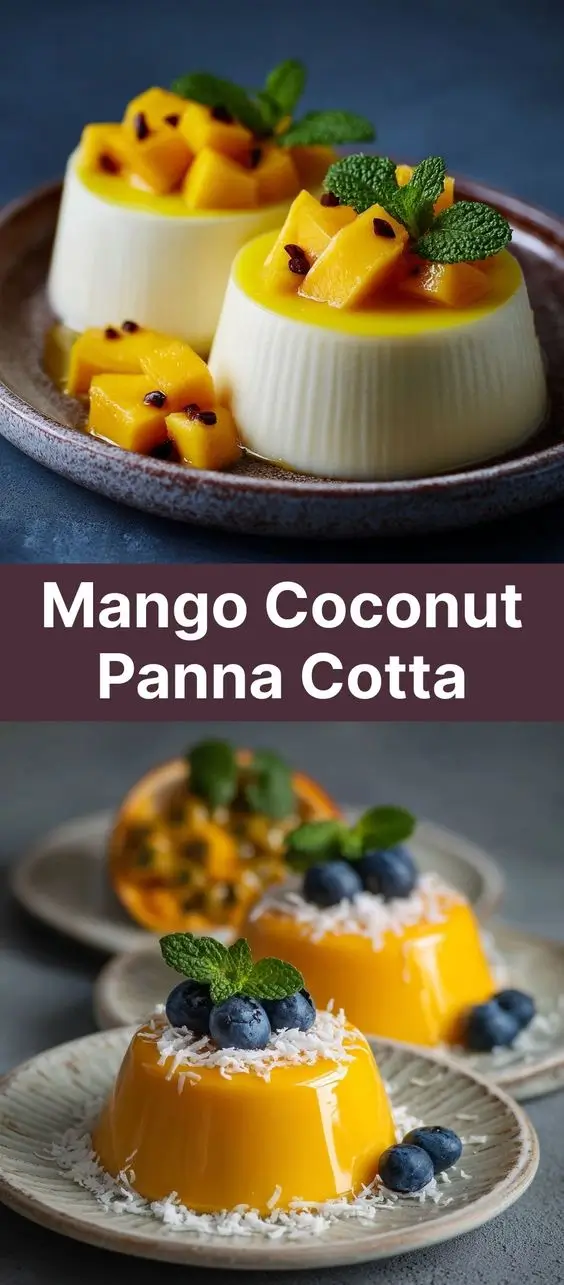
Mango Coconut Panna Cotta is a luxurious, creamy dessert that marries the tropical sweetness of ripe mango with the rich, velvety texture of coconut-infused panna cotta. Originating from Italy but reimagined with Southeast Asian flair, this dessert has become a favorite in fusion cuisine, particularly in tropical regions where both mangoes and coconuts are abundant. Light yet indulgent, it’s perfect for warm weather gatherings, romantic dinners, or as a refreshing end to a spicy meal. With its vibrant color, smooth consistency, and delicate balance of flavors, Mango Coconut Panna Cotta is more than just a dessert—it’s an experience for the senses.
The History
Panna cotta, which translates to “cooked cream” in Italian, originated in the Piedmont region of northern Italy during the late 19th century. Traditionally made with sweetened cream thickened with gelatin and often flavored with vanilla, it was a simple dessert designed to highlight the richness of dairy. As Italian cuisine spread globally, so did panna cotta, evolving into countless variations. The addition of tropical ingredients like mango and coconut reflects a modern culinary trend of blending European techniques with exotic flavors. This particular version—Mango Coconut Panna Cotta—gained popularity in the early 2000s, especially in resorts and fine-dining restaurants across Thailand, Bali, and the Caribbean, where chefs began experimenting with local fruits and coconut milk to create a lighter, dairy-free alternative. Today, it stands as a symbol of global gastronomy, merging tradition with innovation.
Ingredients Breakdown
The magic of Mango Coconut Panna Cotta lies in its carefully balanced ingredients, each contributing to flavor, texture, and stability:
- Coconut Milk: Full-fat canned coconut milk provides a rich, creamy base and a subtle tropical flavor. It replaces traditional heavy cream, making the dessert dairy-free while maintaining silkiness.
- Mango Puree: Made from ripe, sweet mangoes (preferably Alphonso, Ataulfo, or Kent varieties), the puree adds natural sweetness, vibrant color, and a fruity tang that cuts through the richness.
- Sugar: Granulated sugar enhances sweetness and helps stabilize the gelatin. Adjust according to mango ripeness and personal preference.
- Vanilla Extract: Adds depth and warmth, complementing both mango and coconut without overpowering them.
- Gelatin: Unflavored powdered gelatin is essential for setting the panna cotta. It dissolves easily and creates a soft, wobbly texture. For a vegetarian option, agar-agar can be used.
- Water: Used to bloom the gelatin and thin the mixture slightly for even setting.
- Lime Juice (optional): A splash brightens the mango flavor and balances sweetness.
- Fresh Mango Cubes & Toasted Coconut Flakes (for garnish): Enhance presentation and add contrasting textures.
Step-by-Step Recipe
- Bloom the Gelatin: In a small bowl, sprinkle 2 teaspoons of unflavored gelatin over 3 tablespoons of cold water. Let it sit for 5–10 minutes until it becomes spongy and fully hydrated.
- Heat the Coconut Mixture: In a saucepan over medium heat, combine 1 cup of full-fat coconut milk, 1/4 cup sugar, and 1/2 teaspoon vanilla extract. Warm gently, stirring occasionally, until the sugar dissolves completely—do not boil.
- Dissolve the Gelatin: Add the bloomed gelatin to the warm coconut mixture. Stir continuously until the gelatin melts completely and integrates smoothly into the liquid.
- Prepare the Mango Puree: Blend 1 1/2 cups of ripe mango chunks (peeled and cubed) with 1 tablespoon lime juice (if using) until completely smooth. Strain through a fine-mesh sieve to remove any fibrous bits for a silky texture.
- Combine Mixtures: Remove the coconut mixture from heat. Stir in the strained mango puree until fully incorporated. Taste and adjust sweetness if needed.
- Cool Slightly: Let the mixture cool at room temperature for 10–15 minutes, stirring occasionally to prevent a skin from forming.
- Pour into Molds: Place ramekins, glasses, or silicone molds on a baking tray. Carefully pour the mixture into each container, filling them about 3/4 full to allow room for garnish.
- Chill to Set: Refrigerate uncovered for at least 4 hours, preferably overnight, until completely firm and jiggly when gently shaken.
- Unmold (Optional): To unmold, dip the bottom of each ramekin briefly in warm water for 5–10 seconds, then invert onto a serving plate. Alternatively, serve directly in dessert glasses for a layered look.
- Garnish and Serve: Top with fresh mango cubes, toasted coconut flakes, mint leaves, or a drizzle of coconut cream before serving.
Tips
- Use Ripe Mangoes: Underripe mangoes lack sweetness and may result in a tart, astringent flavor. Choose mangoes that yield slightly to gentle pressure and smell fragrant at the stem end.
- Avoid Boiling After Adding Gelatin: High heat can weaken gelatin’s setting power. Always dissolve gelatin off direct heat or in warm, not boiling, liquid.
- Straining is Key: Straining the mango puree ensures a luxuriously smooth texture, free of stringy fibers that can affect mouthfeel.
- Uniform Setting: Pour the mixture into molds at the same time and chill them on a level surface to ensure even setting.
- Prevent Condensation: If covering the panna cotta while chilling, use parchment paper instead of plastic wrap to avoid condensation dripping onto the surface.
- Serve Chilled: Always serve panna cotta well-chilled. Allow it to sit at room temperature for only 5 minutes before serving to maintain structure.
- Layer Creatively: For visual appeal, layer mango puree at the bottom, followed by coconut panna cotta, or vice versa, creating a sunset effect.
Variations and Customizations
- Dairy-Free/Vegan Version: Use agar-agar instead of gelatin (1 teaspoon agar-agar powder per cup of liquid) and ensure all other ingredients are plant-based. Note: Agar sets firmer and faster than gelatin.
- Passion Fruit Swirl: Swirl in some passion fruit pulp before chilling for a tangy contrast.
- Mixed Tropical Layers: Create a rainbow panna cotta with layers of mango, pineapple, and guava purees.
- Coconut Water Jelly Layer: Add a clear coconut water and agar layer at the bottom for a refreshing crunch.
- Alcoholic Infusion: Add 1–2 tablespoons of rum, Malibu, or mango liqueur to the coconut mixture for an adult version.
- Herbal Notes: Infuse the coconut milk with lemongrass, pandan leaf, or kaffir lime leaves for an aromatic twist.
- Texture Play: Add tapioca pearls, chia seeds, or diced lychee for a chewy contrast.
- Chocolate Accent: Drizzle dark chocolate around the rim of the glass or add a thin layer of chocolate ganache at the base.
Health Considerations and Nutritional Value
Mango Coconut Panna Cotta, while delicious, should be enjoyed in moderation due to its sugar and fat content. However, it does offer some nutritional benefits when made with care:
- Mango Benefits: Rich in vitamin C, vitamin A (beta-carotene), antioxidants, and dietary fiber, mango supports immune health, vision, and digestion.
- Coconut Milk: Contains medium-chain triglycerides (MCTs), which are metabolized differently than long-chain fats and may support energy and satiety. However, it is high in saturated fat, so portion control is advised, especially for those monitoring cholesterol.
- Sugar Content: The added sugar increases calorie density. For a healthier version, reduce sugar or substitute with honey, maple syrup, or monk fruit sweetener (note: liquid sweeteners may affect setting).
- Gelatin: Provides collagen, which may benefit joint and skin health. For vegans, agar-agar is a seaweed-based alternative rich in fiber and minerals.
- Calorie Estimate: One serving (1/2 cup) contains approximately 180–220 calories, depending on ingredients and portion size.
- Allergen Info: Naturally gluten-free and nut-free (unless garnished with nuts). Always check labels on gelatin and coconut milk for potential cross-contamination.
Ingredients
- 1 1/2 cups ripe mango flesh (about 2 medium mangoes)
- 1 cup full-fat coconut milk (canned)
- 1/4 cup granulated sugar (adjust to taste)
- 2 teaspoons unflavored gelatin powder
- 3 tablespoons cold water
- 1/2 teaspoon vanilla extract
- 1 tablespoon fresh lime juice (optional)
- Fresh mango cubes, toasted coconut flakes, mint leaves (for garnish)
Directions
- In a small bowl, sprinkle gelatin over cold water. Let bloom for 5–10 minutes.
- In a saucepan, warm coconut milk, sugar, and vanilla over medium heat. Stir until sugar dissolves completely. Do not boil.
- Add bloomed gelatin to the warm coconut mixture. Stir until fully dissolved and smooth.
- In a blender, puree mango flesh and lime juice until smooth. Strain through a fine-mesh sieve.
- Remove coconut mixture from heat. Stir in mango puree until well combined.
- Allow mixture to cool at room temperature for 10–15 minutes.
- Pour into serving glasses or molds. Chill in the refrigerator for at least 4 hours or until set.
- Before serving, garnish with fresh mango cubes, toasted coconut, and mint. Serve chilled.
FAQ
Can I make panna cotta without gelatin?
Yes, use agar-agar as a vegan alternative. Use 1 teaspoon agar-agar powder per cup of liquid. Heat the mixture to a full boil and simmer for 1–2 minutes to activate agar, then pour and chill.
Why didn’t my panna cotta set?
Common causes include insufficient gelatin, boiling after adding gelatin (which deactivates it), or acidic ingredients (like too much lime) interfering with setting. Ensure accurate measurements and follow the recipe closely.
Can I freeze Mango Coconut Panna Cotta?
Freezing is not recommended, as it alters the delicate creamy texture, causing separation and graininess upon thawing. Refrigeration is ideal.
How long does it last in the fridge?
Properly stored (covered with parchment or lids), panna cotta lasts up to 4 days. However, for best texture and flavor, consume within 2–3 days.
Can I use frozen mango?
Yes, thawed frozen mango works well, though fresh yields the best flavor and aroma. Ensure it’s fully thawed and drained of excess liquid before blending.
Can I make this ahead of time?
Absolutely! Panna cotta is an excellent make-ahead dessert. Prepare it 1–2 days in advance and add garnishes just before serving.
Is this dessert suitable for kids?
Yes, but ensure they are not allergic to any ingredients. Reduce sugar for younger children and avoid alcohol in the adult versions.
Summary
Mango Coconut Panna Cotta is a harmonious blend of tropical fruit and creamy indulgence, offering a refreshing twist on the classic Italian dessert. Easy to customize and perfect for any occasion, it’s a show-stopping treat that delights both the eyes and the palate.