Introduction
Welcome to the ultimate indulgence—Lotus Biscoff Swirl Cheesecake! This decadent, no-bake (or baked—your choice!) dessert is a harmonious marriage of creamy New York–style cheesecake and the unmistakable warm, caramelized spice of Lotus Biscoff spread and cookies. With its velvety texture, rich cinnamon-ginger depth, and mesmerizing marbled swirls, this cheesecake isn’t just a dessert—it’s an experience. Whether you’re hosting a dinner party, celebrating a milestone, or simply treating yourself after a long week, this showstopping creation delivers comfort, nostalgia, and sophistication in every forkful. Its growing popularity on social media platforms like TikTok and Instagram is no accident: stunning visuals, irresistible aroma, and deeply satisfying flavor make it a viral favorite—and for excellent reason.
The History
The story of Lotus Biscoff Swirl Cheesecake begins not in a Michelin-starred kitchen, but in the humble Belgian bakery where Lotus Bakeries first introduced Speculoos cookies in 1932. Originally crafted as a festive treat for Christmas and Saint Nicholas Day, these spiced shortbread biscuits—made with brown sugar, cinnamon, ginger, nutmeg, and cloves—gained cult status across Europe. In 2007, Lotus launched Biscoff Spread, transforming the crumbled cookie into a silky, spreadable caramelized delight that quickly became a global pantry staple (even gracing airline trays and coffee shop menus worldwide). Meanwhile, cheesecake boasts ancient roots—dating back to Ancient Greece—evolving through Roman adaptations and later flourishing in America with the iconic dense, creamy New York style. The fusion of these two beloved icons emerged organically in the early 2010s among home bakers experimenting with flavor pairings, but it wasn’t until 2018–2019 that food bloggers and pastry chefs began refining the technique—perfecting the balance between Biscoff’s boldness and cheesecake’s delicate richness. By 2022, #BiscoffCheesecake had amassed over 1.2 billion views on TikTok, cementing its place in modern dessert canon—not as a trend, but as a timeless classic-in-the-making.
Ingredients Breakdown
Understanding each component is key to mastering this dessert’s layered complexity:
- Cream Cheese: Full-fat, brick-style (not whipped or low-fat) at room temperature—ensures smooth emulsification and prevents lumps. Philadelphia is widely preferred for its consistent tang and density.
- Heavy Cream (or Sour Cream/Crème Fraîche): Adds luxurious silkiness, stabilizes texture, and balances acidity. For ultra-luxury, use 36% fat heavy cream; for subtle tang and firm set, opt for full-fat sour cream.
- Granulated Sugar: Not just for sweetness—acts as a tenderizer by interfering with protein coagulation and helps create that signature glossy sheen.
- Vanilla Extract & Paste: Pure Madagascar bourbon vanilla adds floral depth; vanilla bean paste contributes visible specks and intensified aroma—never substitute with artificial extract.
- Fresh Lemon Juice & Zest: Brightens the richness, cuts through fat, and enhances Biscoff’s spice profile without tasting “lemony.”
- Lotus Biscoff Spread: Use authentic Lotus-brand spread (not generic “speculoos” imitations)—its precise caramelization and spice ratio are irreplaceable. Warm slightly before swirling for optimal ribboning.
- Lotus Biscoff Cookies: Crushed finely for the crust, coarsely for garnish, and reserved whole for elegant plating. Note: Original Lotus Biscoff cookies contain gluten and soy; certified gluten-free versions are available but yield a more fragile crust.
- Gelatin (for No-Bake Version): Grass-fed, unflavored powdered gelatin bloomed in cold water ensures clean set without rubberiness. Agar-agar is a vegan alternative—but requires precise boiling and yields a firmer, less creamy bite.
- Butter (for Crust): Unsalted European-style butter (82–84% fat) offers superior browning and nutty depth when pre-baked.
- Salt: A pinch of flaky Maldon or fine sea salt heightens all other flavors—don’t skip it.
Step-by-Step Recipe
Makes one 9-inch springform cheesecake (14–16 servings); chilling time: minimum 12 hours, ideally 24–48 hours
- Prepare the Biscoff Cookie Crust: Pulse 250g (about 2½ cups) Lotus Biscoff cookies in a food processor until fine, sandy crumbs form—no large shards. Melt 100g (7 tbsp) unsalted butter and stir into crumbs until evenly moistened and clumping when squeezed. Press firmly into bottom and 1½ inches up sides of a 9-inch springform pan using the back of a spoon or flat-bottomed measuring cup. Chill uncovered for 30 minutes. Optional: Pre-bake at 350°F (175°C) for 10 minutes for enhanced crunch and stability—cool completely before filling.
- Softening & Whisking the Base: Ensure 750g (3 standard blocks) full-fat cream cheese is truly room temperature (68–72°F). Beat with paddle attachment on medium-low for 2–3 minutes until creamy and lump-free. Scrape bowl thoroughly. Add 150g (¾ cup) granulated sugar and beat 2 more minutes until lightened. Add 1 tsp pure vanilla extract, 1 tbsp lemon juice, 1 tsp lemon zest, and ½ tsp fine sea salt—mix 1 minute. Scrape again.
- Incorporating Dairy: Add 240ml (1 cup) cold heavy cream in three additions, beating on low after each until just combined—do not overmix. Then add 240g (1 cup) full-fat sour cream (or crème fraîche) in two additions, mixing minimally to avoid incorporating excess air (which causes cracking).
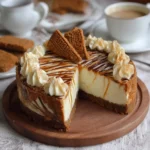
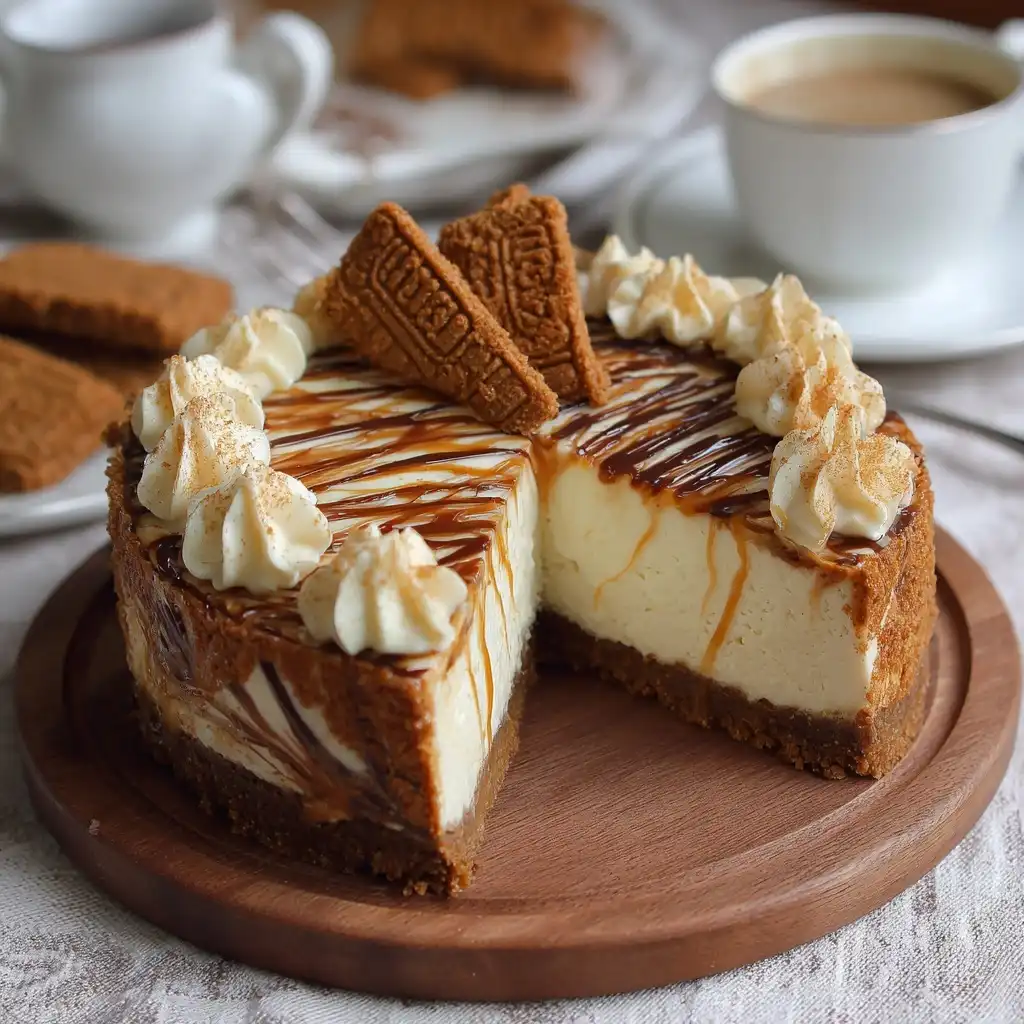
- Swirling Technique (The Art of the Ribbon): Warm 200g (scant 1 cup) Lotus Biscoff spread in microwave at 5-second intervals until fluid but not hot (~90°F). Transfer half (100g) to a piping bag fitted with a small round tip (or zip-top bag with corner snipped). Pour cheesecake batter into chilled crust. Starting at center, pipe concentric circles of Biscoff, then drag a toothpick or skewer from center outward in straight lines, rotating pan 45° between each drag—repeat 8 times for elegant, even marbling. For extra drama, sprinkle 2–3 tbsp finely crushed Biscoff cookies over surface before chilling.
- Chilling & Setting: Cover loosely with plastic wrap (touching surface to prevent condensation). Refrigerate minimum 12 hours—but 24–48 hours yields dramatically improved texture: denser, smoother, and more cohesive. Avoid freezing unless absolutely necessary (may cause slight graininess upon thawing).
- Unmolding & Finishing: Run thin knife under hot water, dry thoroughly, and glide around inner edge. Release springform collar. For flawless sides, dip entire pan base in hot water for 5 seconds, then wipe dry. Garnish with whole Lotus cookies, extra swirls of warmed Biscoff spread drizzled artistically, edible gold leaf, candied ginger, or a dusting of cinnamon-sugar blend.
Tips
- Temperature Is Everything: All dairy ingredients must be within 65–72°F. Cold cream cheese = lumps; warm Biscoff = bleeding into batter instead of holding shape.
- No Overmixing Rule: Once cream cheese is smooth, beat only until ingredients are *just* incorporated. Over-beating introduces air → cracks, puffing, or weeping during chill.
- Crust Integrity Secret: Press crust *up the sides*—not just bottom—to prevent slumping and support tall slice height. If pre-baking, cool fully—warm crust melts filling on contact.
- Swirl Like a Pro: Don’t swirl too vigorously. Gentle, deliberate motions preserve contrast. Too much dragging = muddy gray-brown batter.
- Chill Slowly, Serve Cold: Never rush refrigeration. Sudden temperature shifts cause condensation, sweating, or separation. Always serve straight from fridge—not room temp—unless specified for no-bake versions with gelatin.
- Knife Hygiene: Wipe blade with hot, damp cloth between every slice for pristine layers. A heated knife (dipped in hot water, dried) gives glassy edges.
- Prevent Sticking: Line bottom of springform with parchment paper *before* pressing crust—guarantees easy lift-off without tearing.
- Flavor Layering: Add ¼ tsp ground cardamom or a pinch of black pepper to Biscoff swirl for unexpected aromatic complexity that complements—not competes with—cinnamon.
Variations and Customizations
This recipe is a canvas—here’s how to make it uniquely yours:
- No-Bake Gelatin Version: Bloom 2½ tsp (7g) unflavored gelatin in 3 tbsp cold water. Heat ¼ cup heavy cream until steaming (not boiling), whisk in gelatin until dissolved, cool 5 minutes, then fold into batter *after* sour cream. Chill 6 hours minimum.
- Baked Version: Pour batter into pre-baked crust. Bake in water bath at 325°F (160°C) for 1 hour 15 minutes—center should jiggle slightly. Turn off oven, crack door open 2 inches, let rest 1 hour. Cool completely, then chill 12+ hours.
- Mini Jar Cheesecakes: Layer crust, filling, and swirl in 4-oz mason jars. Chill 6 hours. Top with whipped cream and cookie crumble.
- Chocolate-Biscoff Fusion: Fold 100g melted & cooled dark chocolate (70%) into batter before swirling. Or drizzle white chocolate ganache post-chill.
- Vegan Adaptation: Use soaked cashews (blended ultra-smooth), coconut cream, maple syrup, coconut oil, and agar-agar. Flavor with toasted almond butter + Biscoff powder (grind cookies finely) for depth.
- Gluten-Free: Substitute certified GF gingersnaps or GF Biscoff-style cookies (e.g., Trader Joe’s Speculoos). Verify all labels—cross-contamination risk is real.
- Low-Sugar/Keto: Replace sugar with ⅔ cup erythritol + 10 drops liquid stevia; use keto-friendly Biscoff alternative (e.g., homemade speculoos made with almond flour, erythritol, and spices).
- Seasonal Twists: Autumn: swirl in roasted pear purée. Winter: add orange zest + star anise infusion. Spring: top with fresh raspberries & mint. Summer: layer with salted caramel and toasted pecans.
- Boozy Upgrade: Add 2 tbsp spiced rum or bourbon to batter—or soak crust crumbs in 1 tbsp before adding butter.
Health Considerations and Nutritional Value
While undeniably indulgent, mindful preparation allows for balanced enjoyment:
- Nutrition Snapshot (per standard slice, ~1/16th cake): Approx. 385 kcal | 26g fat (15g saturated) | 32g carbs (24g sugars) | 6g protein | 0.5g fiber. High in calcium (22% DV) and vitamin A (18% DV) from dairy; moderate sodium (180mg).
- Sugar Awareness: Lotus Biscoff spread contains ~10g added sugar per tbsp. Opt for “reduced sugar” Biscoff cookies (if available) or cut spread用量 by 25% and enhance spice notes with extra cinnamon/ginger.
- Dairy Sensitivity Options: Lactose-intolerant? Use lactose-free cream cheese and sour cream—their enzymatic treatment preserves texture and flavor flawlessly.
- Heart-Healthy Tweaks: Substitute half the butter in crust with cold-pressed walnut or almond butter for omega-3s. Replace ¼ cup heavy cream with Greek yogurt (strained 24h) for added protein and probiotics.
- Allergen Notes: Contains dairy, wheat/gluten (unless GF version), soy (in most Biscoff spreads), and sometimes egg (in some commercial spreads—always verify). Tree nuts are not present in original Lotus products, but check for “may contain” statements if severe allergy exists.
- Mindful Serving: Pair a modest slice with antioxidant-rich blackberries or tart cherries. The polyphenols in berries help mitigate glycemic impact while adding vibrancy.
- Not a “Health Food”—and That’s Okay: Dessert serves joy, tradition, and celebration. Prioritize ingredient quality (organic dairy, fair-trade spices) over guilt-driven restriction. One intentional, delicious slice is infinitely more satisfying than three rushed, low-quality ones.
Ingredients
- For the Crust: 250g Lotus Biscoff cookies (approx. 2½ cups crushed), 100g unsalted butter (7 tbsp), melted, pinch of flaky sea salt
- For the Cheesecake Filling: 750g full-fat brick cream cheese, room temperature, 150g granulated sugar, 1 tsp pure vanilla extract, 1 tbsp fresh lemon juice, 1 tsp lemon zest, ½ tsp fine sea salt, 240ml (1 cup) cold heavy cream (36% fat), 240g (1 cup) full-fat sour cream or crème fraîche
- For the Swirl: 200g Lotus Biscoff spread, gently warmed
- For Garnish (optional): 6–8 whole Lotus Biscoff cookies, extra crushed cookies, edible gold dust, fresh berries, cinnamon-sugar blend
Directions
- Position rack in center of oven. Grease bottom and sides of 9-inch springform pan; line bottom with parchment paper.
- In food processor, pulse cookies until fine, sandy crumbs form (~15 sec). Transfer to bowl; stir in melted butter and salt until mixture resembles wet sand. Press firmly into pan bottom and 1½ inches up sides. Chill 30 minutes (or pre-bake 350°F/175°C for 10 min; cool completely).
- In stand mixer with paddle, beat cream cheese on medium-low 2–3 min until perfectly smooth. Add sugar; beat 2 min more until pale and fluffy. Scrape bowl. Add vanilla, lemon juice, zest, and salt; beat 1 min.
- Add heavy cream in three parts, beating on low 10 sec after each until just blended. Add sour cream in two parts, mixing only until incorporated—do not overbeat.
- Warm Biscoff spread in microwave in 5-sec bursts until fluid but cool to touch (~90°F). Spoon half into piping bag. Pour batter into crust. Pipe Biscoff in concentric circles. Drag toothpick from center outward in 8 evenly spaced lines, rotating pan between each. Sprinkle with crushed cookies.
- Cover pan loosely with plastic wrap, ensuring wrap touches surface. Refrigerate minimum 12 hours, ideally 24–48 hours.
- To serve: Run hot knife around edge. Release springform. Lift off ring. Wipe knife, slice cleanly. Garnish as desired. Store covered in fridge up to 5 days.
FAQ
- Can I freeze Lotus Biscoff Swirl Cheesecake?
- Yes—but with caveats. Wrap *tightly* in plastic + foil after full chill. Freeze up to 2 months. Thaw overnight in fridge (not at room temp) to preserve texture. Slight moisture separation may occur at edges—pat dry with paper towel before serving.
- Why did my swirl disappear or turn muddy?
- Most common causes: Biscoff spread too warm (bleeds into batter), over-swirling (destroys contrast), or batter too cold/thick (resists ribboning). Solution: Cool spread to 90°F, use gentle drag motion, and ensure batter is fluid but not runny.
- My crust is soggy. How do I fix it?
- Sogginess arises from moisture migration. Always pre-bake crust (even for no-bake versions), chill thoroughly before filling, and avoid overloading with wet toppings. A thin layer of melted white chocolate painted onto cooled crust creates a moisture barrier.
- Can I use store-brand speculoos spread?
- You can—but expect variance. Many generics lack deep caramelization and contain palm oil, which separates when chilled. Stick with authentic Lotus for guaranteed performance and flavor integrity.
- What’s the best way to get clean slices?
- Use a long, thin, non-serrated knife. Dip in hot water, wipe dry, slice, repeat. For ultra-clean edges, heat knife under hot tap, dry instantly, and slice in one confident motion—no sawing.
- Can I make this ahead for an event?
- Absolutely—and recommended! It improves for up to 72 hours. Assemble 2 days prior, keep refrigerated, and garnish day-of for maximum freshness and visual appeal.
- Is there a lower-fat version that still tastes great?
- Full-fat dairy is non-negotiable for authentic texture and mouthfeel. However, you can reduce total fat by using Neufchâtel cheese (⅓ less fat) *combined* with full-fat sour cream—test batch first, as texture will be slightly looser.
- How do I prevent cracks in the baked version?
- Water bath is essential. Also: avoid opening oven during bake, cool gradually in turned-off oven, and never overmix batter. Adding 1 tbsp cornstarch to dry ingredients also reinforces structure.
Summary
Lotus Biscoff Swirl Cheesecake is a masterclass in balance—where the deep, spiced warmth of authentic Biscoff meets the cool, lush elegance of slow-chilled cheesecake, resulting in a dessert that is simultaneously nostalgic and innovative, rich yet refreshing, simple in concept but extraordinary in execution.
With meticulous attention to temperature, texture, and technique—and endless possibilities for customization—it transcends trends to become a cherished centerpiece for celebrations, a soul-soothing solo treat, and a testament to the magic that happens when two icons unite in perfect, swirled harmony.