Introduction
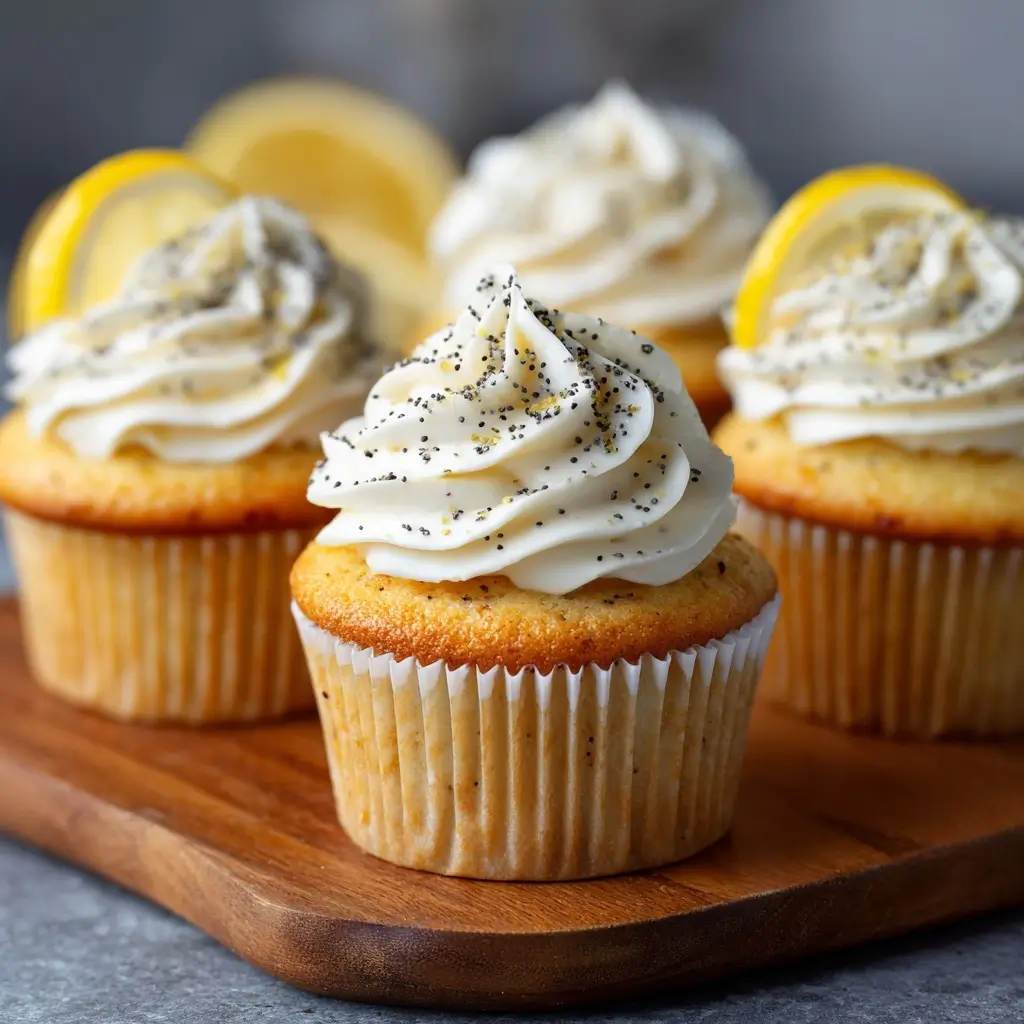
Lemon Poppy Seed Cupcakes are a timeless classic—bright, zesty, tender, and subtly crunchy—capturing the essence of springtime in every bite. With their vibrant citrus aroma, delicate floral undertones, and the delightful textural contrast from poppy seeds, these cupcakes strike the perfect balance between refreshing and indulgent. Whether served at brunches, baby showers, garden parties, or as a cheerful weekday treat, they evoke nostalgia while remaining endlessly adaptable. Their widespread appeal lies not only in their irresistible flavor profile but also in their surprising versatility: equally stunning as simple, rustic delights or elevated into elegant, professionally finished desserts with refined frostings and garnishes.
The History
The origins of lemon poppy seed baked goods trace back centuries, though the modern cupcake iteration emerged in mid-20th-century America. Poppy seeds have been used since ancient Mesopotamian times—not only for culinary purposes (oil extraction, thickening agents, and texture enhancement) but also symbolically in art and ritual. Lemon, native to Southeast Asia and later cultivated across the Mediterranean and Middle East, entered European baking via Arab trade routes during the medieval period. By the 18th century, British bakers were incorporating both lemons and poppy seeds into cakes and puddings—often as luxury ingredients due to their relative scarcity and labor-intensive preparation.
In the United States, the lemon poppy seed combination gained mainstream popularity in the 1950s and ’60s, coinciding with the rise of boxed cake mixes and home baking culture. The 1970s saw an explosion of lemon-poppy seed loaves, muffins, and quick breads—fueled by food magazines like Bon Appétit and Martha Stewart Living, which championed fresh, ingredient-forward baking. The cupcake format surged again in the early 2000s amid the “cupcake craze” ignited by bakeries like Magnolia Bakery and TV shows such as Sex and the City. Today, Lemon Poppy Seed Cupcakes stand as a beloved staple in professional patisseries, bakery menus, wedding dessert tables, and home kitchens alike—a testament to their enduring charm and cross-generational resonance.
Ingredients Breakdown
Understanding each ingredient’s role is key to mastering this recipe—not just for flavor, but for structure, moisture retention, emulsification, and texture:
- All-purpose flour: Provides gluten structure without over-densifying; a blend of hard and soft wheat ensures tenderness while supporting lift. For gluten-free versions, a 1:1 certified GF blend with xanthan gum is recommended.
- Granulated sugar: Sweetens, aids browning (caramelization), stabilizes air bubbles during creaming, and contributes to crumb softness by interfering with gluten development.
- Baking powder & baking soda: A dual-leavening system—baking powder provides primary lift through acid–base reaction with moisture and heat, while baking soda neutralizes acidity from lemon juice and buttermilk (if used), enhancing rise and preventing sour bitterness.
- Salt: Enhances all other flavors, strengthens gluten slightly, and balances sweetness and acidity.
- Unsalted butter: Adds richness, mouthfeel, and flakiness when properly creamed; its fat coats flour proteins, limiting gluten formation for a tender crumb. European-style butter (82–84% fat) yields even more luxurious results.
- Large eggs (room temperature): Act as emulsifiers and structural binders; yolks contribute fat and lecithin for moisture and richness, while whites provide lift and stability. Cold eggs can cause batter to curdle and reduce volume.
- Fresh lemon zest: Contains volatile aromatic oils (limonene, citral) concentrated in the yellow outer peel—this is where 90% of the lemon’s fragrance resides. Always zest before juicing and avoid the bitter white pith.
- Fresh lemon juice: Adds bright acidity that activates leaveners and cuts through richness. Bottled juice lacks nuance and contains preservatives that may dull flavor and affect chemistry.
- Whole milk or buttermilk: Milk adds moisture and protein; buttermilk (with its lactic acid) enhances tenderness, deepens flavor, and boosts leavening synergy—especially when paired with baking soda. For dairy-free options, full-fat oat or soy milk with 1 tsp vinegar (rested 5 minutes) works beautifully.
- Poppy seeds: Tiny blue-black seeds from the opium poppy (Papaver somniferum), safe for consumption and legally sold worldwide. They contribute nutty, earthy notes and a signature subtle crunch. Their high oil content (up to 50%) means freshness matters—store in the fridge or freezer and use within 6 months for optimal aroma and texture.
- Vanilla extract (pure): Not traditional but highly recommended—it rounds out acidity, bridges citrus and butter notes, and adds depth without overpowering. Avoid imitation vanillin, which tastes flat and medicinal.
Step-by-Step Recipe
- Prep & Preheat: Line a standard 12-cup muffin tin with high-quality paper liners (or grease-and-flour for naked cupcakes). Preheat oven to 350°F (175°C). Position rack in the center third of the oven for even heat circulation. Allow all dairy and eggs to reach true room temperature (68–72°F / 20–22°C)—this can take 45–60 minutes out of the fridge.
- Zest & Juice Lemons: Using a microplane grater, zest 3 large organic lemons until you have 3 tablespoons of fine, fluffy zest (avoiding white pith). Then juice them to yield exactly ¼ cup (60 ml) of fresh juice. Strain to remove pulp and seeds. Set both aside separately.
- Dry Ingredients: In a medium bowl, whisk together 1 ½ cups (188g) all-purpose flour, 1 ½ tsp baking powder, ¼ tsp baking soda, and ½ tsp fine sea salt. Add 2 tbsp (22g) poppy seeds and whisk thoroughly to evenly distribute—this prevents clumping in the batter.
- Cream Butter & Sugar: In a large stand mixer fitted with the paddle attachment (or using a hand mixer), beat ¾ cup (170g) unsalted butter and 1 cup (200g) granulated sugar on medium-high speed for 4–5 minutes until pale, fluffy, and nearly doubled in volume. Scrape down the bowl twice with a silicone spatula. This step incorporates vital air—skip rushing it!
- Add Eggs One at a Time: Add 3 large room-temperature eggs, one at a time, beating for 30 seconds after each addition until fully incorporated and glossy. Add 1 tsp pure vanilla extract with the final egg. Pause to scrape the bowl thoroughly.
- Alternate Wet & Dry: Reduce mixer speed to low. Add one-third of the dry ingredients; mix just until no flour streaks remain. Pour in half of the lemon juice–milk mixture (¼ cup lemon juice + ½ cup cold whole milk or buttermilk = ¾ cup total liquid); mix until just combined. Repeat: another third of dry, remaining liquid, final third of dry—mixing only until uniform. Do NOT overmix; a few small lumps are acceptable and preferable to toughness.
- Fold in Zest & Seeds: Gently fold in the reserved lemon zest using a spatula with 3–4 strokes—just enough to disperse without deflating air. If using extra poppy seeds (for visual impact), reserve 1 tsp to sprinkle on top pre-bake.
- Portion & Bake: Divide batter evenly among lined cups—fill each ⅔ to ¾ full (≈ 3.5 oz / 100g per cupcake). Tap the pan sharply twice on the counter to release trapped air bubbles. Optional: gently press 2–3 extra poppy seeds onto the surface of each for artisanal appeal. Bake for 18–22 minutes—rotating pan halfway through—until a toothpick inserted into the center comes out clean or with moist crumbs (no wet batter). Tops should be golden, lightly domed, and spring back when touched.
- Cool Completely: Let cupcakes cool in the pan for 5 minutes—this sets the structure. Then transfer carefully to a wire rack to cool fully (minimum 45–60 minutes) before frosting. Warm cupcakes will melt frosting and steam, causing sogginess.
Tips
- Measure Flour Correctly: Spoon flour into measuring cup and level with a knife—never scoop directly from the bag (causes up to 25% excess flour and dry cupcakes).
- Don’t Skip the Rest: Letting the batter rest for 15–20 minutes before portioning allows gluten to relax and starches to hydrate, yielding a more uniform rise and finer crumb.
- Use a Scale: Weighing ingredients (especially flour, sugar, and butter) eliminates variability and guarantees consistency batch after batch.
- Poppy Seed Prep: Lightly toast poppy seeds in a dry skillet over medium-low heat for 1–2 minutes until fragrant—cool completely before adding. This amplifies nuttiness without bitterness.
- Oven Thermometer Essential: Most built-in oven thermostats are inaccurate by ±25°F. An oven thermometer prevents under- or over-baking.
- Rotate & Monitor: Ovens have hot spots. Rotate pans 180° at the 10-minute mark—and begin checking at 17 minutes to avoid drying out.
- High-Altitude Adjustments: Above 3,000 ft: decrease sugar by 1 tbsp, increase liquid by 1–2 tbsp, raise oven temp by 15–25°F, and reduce baking powder by ⅛ tsp.
- Frosting Adhesion Tip: Before piping frosting, brush cooled cupcakes lightly with simple syrup (1:1 sugar:water, cooled) infused with ½ tsp lemon zest—adds moisture and helps frosting cling.
- Storage Wisdom: Unfrosted cupcakes keep well wrapped at room temperature for 2 days, refrigerated for 5 days, or frozen (unfrosted, in airtight container) for up to 3 months. Thaw overnight in fridge, then bring to room temp before frosting.
Variations and Customizations
These cupcakes serve as a brilliant canvas for creativity—whether adapting to dietary needs, seasonal produce, or festive occasions:
- Gluten-Free: Substitute certified GF 1:1 flour blend (like Bob’s Red Mill or King Arthur). Add ½ tsp xanthan gum if not included. Increase milk by 1 tbsp and bake 1–2 minutes longer.
- Vegan: Replace butter with vegan butter (Miyoko’s or Earth Balance), eggs with flax eggs (1 tbsp ground flax + 2.5 tbsp water × 3), and dairy milk with unsweetened soy or oat milk. Add ½ tsp apple cider vinegar to mimic buttermilk tang.
- Low-Sugar: Reduce granulated sugar to ¾ cup and add 2 tbsp monk fruit–erythritol blend. Boost lemon zest to ¼ cup and include 1 tsp lemon oil for amplified flavor without added sweetness.
- Blueberry-Lemon Swirl: Fold in ¾ cup fresh or frozen (unthawed) wild blueberries tossed in 1 tsp flour. Optional: swirl 2 tbsp blueberry compote into batter before baking.
- Lavender-Lemon: Infuse milk with 1 tsp culinary lavender (steep 10 min, strain) and add ¼ tsp dried lavender buds to dry ingredients—pair with honey-lemon glaze.
- Earl Grey Infusion: Steep 2 Earl Grey tea bags in warm milk for 5 minutes, then chill before using. Add ½ tsp bergamot oil to frosting for aromatic sophistication.
- Maple-Lemon: Replace ¼ cup granulated sugar with Grade B maple syrup (reduce milk by 2 tbsp) and add 1 tbsp real maple extract to batter. Top with maple cream cheese frosting.
- Coconut-Lemon: Substitute ¼ cup flour with toasted coconut flour, use coconut milk instead of dairy, and fold in ⅓ cup toasted shredded coconut. Frost with lime-coconut buttercream.
- Mini & Jumbo Versions: For mini cupcakes: bake 9–11 minutes at 350°F. For jumbo (6-cup pan): bake 26–32 minutes—use a digital thermometer; internal temp should read 205–209°F for perfect doneness.
- Seasonal Twists: In fall—add ½ tsp ground cardamom and 1 tbsp candied ginger. In winter—infuse with orange zest and clove. In summer—top with edible pansies and lemon verbena sugar.
Health Considerations and Nutritional Value
A single unfrosted Lemon Poppy Seed Cupcake (based on standard recipe, ~2.5 oz / 70g) contains approximately:
- Calories: 185 kcal
- Total Fat: 8.2 g (including 5.0 g saturated fat)
- Carbohydrates: 26 g (including 14 g sugars, 0.6 g fiber)
- Protein: 2.8 g
- Sodium: 145 mg
- Vitamin C: ~4.5 mg (5% DV from lemon juice and zest)
- Calcium: 42 mg (4% DV)
- Iron: 0.7 mg (4% DV)
- Omega-3 ALA: 120 mg (from poppy seeds—supports heart and brain health)
Nutritional Highlights & Notes:
- Poppy Seeds: Rich in magnesium, zinc, copper, calcium, and plant-based omega-3s. Their lignans may support hormonal balance and antioxidant activity. Note: While poppy seeds contain trace amounts of opiate alkaloids (morphine, codeine), the levels are far below pharmacological thresholds and pose no safety risk—even with daily consumption. However, they may trigger false positives on sensitive workplace drug tests; rinsing seeds before use reduces residue by ~80%.
- Lemon Zest & Juice: High in flavonoids (hesperidin, eriocitrin), limonoids, and vitamin C—shown in studies to support collagen synthesis, immune function, and iron absorption.
- Butter vs. Alternatives: Grass-fed butter offers conjugated linoleic acid (CLA) and vitamin K2; olive oil–based versions improve monounsaturated fat profile but sacrifice structure unless emulsified carefully.
- Glycemic Impact: Moderate (GI ~65–70); pairing with protein-rich frosting (e.g., Greek yogurt buttercream) or serving alongside nuts lowers overall glycemic load.
- Allergen Awareness: Contains dairy, eggs, and gluten. Tree nut allergens are absent unless added in variations (e.g., almond flour, walnut garnish). Always label clearly for shared environments.
- Portion Mindfulness: While nutrient-dense for a treat, cupcakes are energy-concentrated. Enjoying one as part of a balanced meal—not as a standalone snack—optimizes satiety and metabolic response.
Ingredients
- 1 ½ cups (188g) all-purpose flour, spooned & leveled
- 1 ½ tsp aluminum-free baking powder
- ¼ tsp baking soda
- ½ tsp fine sea salt
- 2 tbsp (22g) whole poppy seeds, plus extra for garnish (optional)
- ¾ cup (170g) unsalted butter, room temperature
- 1 cup (200g) granulated sugar
- 3 large eggs, room temperature
- 1 tsp pure vanilla extract
- 3 tbsp (6g) finely grated lemon zest (from ~3 medium organic lemons)
- ¼ cup (60ml) freshly squeezed lemon juice (from same lemons)
- ½ cup (120ml) whole milk or buttermilk, cold
Directions
- Preheat oven to 350°F (175°C). Line a 12-cup standard muffin tin with parchment or high-rise paper liners.
- Using a microplane, zest lemons into a small bowl—avoiding white pith. Juice lemons and strain; set zest and juice aside separately.
- In a medium bowl, whisk flour, baking powder, baking soda, salt, and 2 tbsp poppy seeds until fully combined and no streaks remain.
- In the bowl of a stand mixer fitted with paddle attachment, beat butter and sugar on medium-high for 4–5 minutes until pale, fluffy, and voluminous. Scrape bowl thoroughly.
- Add eggs one at a time, beating 30 seconds after each. Add vanilla with the last egg. Scrape bowl again.
- In a separate measuring cup, combine lemon juice and milk.
- Reduce mixer speed to low. Add ⅓ of dry ingredients; mix until just incorporated. Add ½ of lemon-milk mixture; mix until just combined. Repeat alternating, ending with dry ingredients. Mix only until no streaks remain—do not overmix.
- Gently fold in lemon zest with a spatula using 3–4 strokes. Batter will be thick, glossy, and speckled.
- Divide evenly among prepared cups (≈ 3.5 oz / 100g each). Tap pan firmly twice on counter. Optional: press 2–3 poppy seeds onto each cupcake top.
- Bake 18–22 minutes, rotating pan at 10 minutes, until tops are golden and a toothpick inserted comes out clean or with moist crumbs.
- Cool in pan 5 minutes, then transfer to wire rack. Cool completely (≥45 minutes) before frosting.
FAQ
- Why did my cupcakes sink in the center?
- Likely causes: underbaking (check with toothpick *and* internal temp—205°F minimum), opening oven door too early (causes rapid temperature drop), over-creaming butter/sugar (traps unstable air), or expired leaveners. Always test baking powder by mixing ½ tsp with ¼ cup hot water—if it doesn’t fizz vigorously, replace it.
- Can I make the batter ahead of time?
- Yes—but only for up to 1 hour at room temperature (covered tightly). Longer rests encourage gluten development and may yield denser texture. For make-ahead convenience, bake cupcakes up to 2 days ahead, freeze unfrosted, and thaw overnight before decorating.
- My frosting is runny—what went wrong?
- Cupcakes were likely still warm, melting the buttercream. Or butter was too soft/melted during prep. Always use cool (not cold) butter and ensure cupcakes are fully room-temp before frosting. If frosting softens mid-piping, refrigerate for 10 minutes and rewhip.
- Can I substitute lemon extract for zest and juice?
- Not recommended. Extract lacks volatile citrus oils and complexity. At best, use ½ tsp lemon extract *in addition to* zest and juice for intensified aroma—but never as a full replacement.
- How do I prevent poppy seeds from sinking to the bottom?
- Toss seeds with 1 tsp of the measured flour before adding to dry ingredients—this coats them lightly and improves suspension. Also, avoid overmixing after folding in zest.
- What’s the best frosting pairing?
- Classic Lemon Cream Cheese Frosting (softened cream cheese, butter, powdered sugar, lemon zest, juice, pinch of salt) balances tang and sweetness. Alternatives: Swiss meringue buttercream with lemon curd swirl, honey-vanilla bean, or stabilized whipped coconut cream for lighter fare.
- Can I bake these as a layer cake?
- Absolutely! Double the recipe and divide between two 8-inch round pans. Bake at 350°F for 28–34 minutes. Cool in pans 15 minutes, then invert onto racks. Level layers before filling and stacking.
- Are poppy seeds safe for kids and pregnant individuals?
- Yes—poppy seeds used in culinary quantities are recognized as safe (GRAS) by the FDA and EFSA. No adverse effects are documented from typical consumption. As always, consult your healthcare provider for personalized guidance.
- How do I get picture-perfect swirls when piping?
- Use a large open-star tip (Wilton #1M), hold piping bag vertically centered over cupcake, apply steady pressure while slowly spiraling upward from center outward. Stop pressure before lifting to avoid peaks. Chill frosted cupcakes 10 minutes before adding garnishes for clean edges.
- Can I add lemon curd to the batter?
- Not directly—it’s too wet and acidic, disrupting emulsion and leavening. Instead, pipe 1 tsp lemon curd into the center of each cupcake *after* baking and cooling (use a paring knife or cupcake corer), then re-cover with frosting for a surprise burst of flavor.
Summary
Lemon Poppy Seed Cupcakes are a luminous fusion of sun-kissed citrus brightness, delicate floral nuance, and satisfying textural contrast—crafted with care through precise ingredient ratios, mindful technique, and respect for seasonal, whole-food integrity. Whether enjoyed simply dusted with powdered sugar or crowned with artisanal frostings and edible botanicals, they remain a joyful, versatile, and nutritionally thoughtful celebration of baking’s quiet magic.
From their ancient botanical roots to modern kitchen innovation, these cupcakes invite curiosity, customization, and connection—proving that the most memorable treats are those made with intention, shared generously, and savored with presence.