Korean Beef Rice Bowls: A Flavorful Journey Through Tradition and Taste
Introduction
Korean Beef Rice Bowls, known as “Bulgogi Bibimbap” in Korean cuisine, are a vibrant celebration of flavor, texture, and cultural heritage. These bowls combine tender marinated beef, fluffy rice, an array of colorful fresh vegetables, and a spicy kick of gochujang sauce to create a dish that is both satisfying and deeply rooted in tradition. Whether you’re a seasoned home cook or a curious foodie exploring global cuisines, this recipe offers an accessible yet authentic way to enjoy one of Korea’s most beloved meals. From the sizzle of marinated beef hitting the pan to the final swirl of red pepper paste on top, every step of making Korean Beef Rice Bowls is a sensory delight.
The History
The origins of Korean Beef Rice Bowls can be traced back centuries through two iconic dishes: bibimbap and bulgogi. Bibimbap, which literally means “mixed rice,” dates back to the Joseon Dynasty (1392–1897) and was originally a humble farmer’s meal—a way to use leftover rice and seasonal vegetables. It gained royal favor over time and evolved into a more elaborate dish served during festivals and special occasions.
Bulgogi, meaning “fire meat,” has its roots even earlier, with historical records suggesting that thinly sliced grilled meats were enjoyed by Korean royalty during the Goguryeo era (37 BCE–668 CE). The modern version we know today—marinated beef grilled over open flames—became popular in the 20th century, especially after the introduction of refrigeration allowed for wider access to fresh meat.
Korean Beef Rice Bowls represent a delicious fusion of these traditions: bulgogi-style marinated beef served atop warm rice with banchan (side dishes), creating a modern twist on ancient culinary customs. Today, it’s not only a staple in Korean households but also a favorite in Korean restaurants around the world, symbolizing balance, harmony, and the beauty of simplicity elevated by bold flavors.
Ingredients Breakdown
Creating authentic Korean Beef Rice Bowls starts with understanding each ingredient’s role in building layers of flavor, texture, and nutrition. Here’s a detailed breakdown:
- Beef (Ribeye or Sirloin): Tender cuts like ribeye or sirloin are ideal because they absorb marinade well and cook quickly without becoming tough. Thinly slicing against the grain ensures tenderness.
- Soy Sauce: Provides saltiness and umami depth. Use low-sodium soy sauce if preferred for better control over salt levels.
- Brown Sugar: Adds sweetness to balance the savory and spicy elements. Honey or maple syrup can be used as substitutes.
- Sesame Oil: Imparts a rich, nutty aroma essential to Korean cooking. Always use toasted sesame oil for maximum flavor.
- Garlic: Fresh minced garlic adds pungency and complexity to the marinade.
- Ginger: Grated fresh ginger brings warmth and brightness, enhancing the overall profile of the beef.
- Rice Vinegar: A touch of acidity helps tenderize the meat and brighten the dish.
- Gochujang (Korean Red Pepper Paste): This fermented chili paste delivers heat, sweetness, and deep umami—it’s the soul of many Korean sauces.
- Sesame Seeds: Used as garnish, they add crunch and visual appeal.
- Green Onions: Sliced diagonally for color and mild onion flavor.
- Vegetables: Common choices include shredded carrots, spinach, zucchini, mushrooms, bean sprouts, and bell peppers—each contributing different textures and nutrients.
- Cooked White or Brown Rice: Acts as the base; short-grain white rice is traditional, but brown rice adds fiber and a nuttier taste.
- Fried Egg (Optional): A sunny-side-up egg adds creaminess when mixed in.
- Kimchi (Optional): Fermented cabbage adds tangy heat and probiotic benefits.
Step-by-Step Recipe
- Prepare the Marinade: In a medium bowl, whisk together 1/4 cup soy sauce, 3 tablespoons brown sugar, 2 tablespoons sesame oil, 2 tablespoons rice vinegar, 1 tablespoon gochujang, 3 cloves minced garlic, and 1 tablespoon grated ginger until smooth and well combined.
- Slice and Marinate the Beef: Thinly slice 1 pound of ribeye or sirloin steak against the grain into bite-sized strips. Place in a resealable plastic bag or shallow dish and pour the marinade over the meat. Massage gently to coat all pieces evenly. Refrigerate for at least 30 minutes, or ideally 2–4 hours for deeper flavor infusion.
- Blanch the Spinach: Bring a pot of water to a boil. Add 2 cups fresh spinach and blanch for 30 seconds. Drain immediately and rinse under cold water. Squeeze out excess moisture, then toss with 1 teaspoon sesame oil, a pinch of salt, and 1/2 teaspoon sesame seeds. Set aside.
- Sauté the Vegetables:
- Heat 1 tsp oil in a skillet over medium heat. Add julienned carrots and sauté for 2–3 minutes until slightly softened. Remove and set aside.
- In the same pan, add sliced zucchini and cook for 3–4 minutes until golden. Season lightly with salt.
- Add mushrooms and stir-fry for another 3–5 minutes until tender. Reserve separately.
- Lightly sauté bean sprouts with garlic for 2 minutes—keep them crisp-tender.
- Cook the Rice: Prepare 2 cups of cooked rice (white or brown) according to package instructions. Keep warm.
- Cook the Beef: Heat 1 tablespoon of oil in a large skillet or wok over high heat. Once hot, add the marinated beef along with the marinade. Cook for 3–5 minutes, stirring frequently, until caramelized and fully cooked. Avoid overcrowding the pan—cook in batches if needed. Sprinkle with green onions and extra sesame seeds before removing from heat.
- Fry the Eggs (Optional): In the same skillet, fry eggs sunny-side up until whites are set but yolks remain runny.
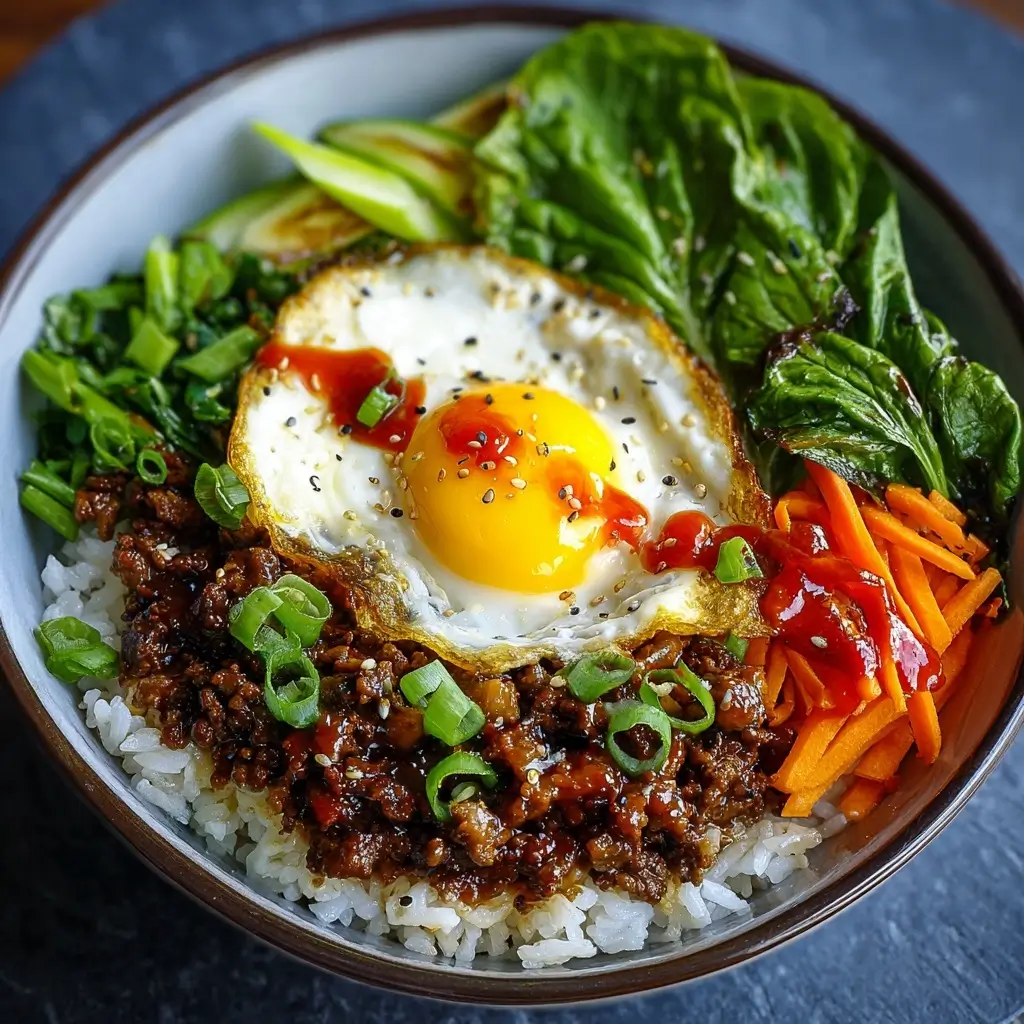
- Assemble the Bowls: In serving bowls, place a generous scoop of warm rice at the bottom. Arrange the cooked beef and vegetables in sections over the rice for visual appeal. Top each bowl with a fried egg, a spoonful of kimchi, and a drizzle of extra gochujang or sriracha mayo. Garnish with additional green onions and sesame seeds.
- Serve Immediately: Serve while hot, encouraging diners to mix everything together just before eating to blend the flavors and textures perfectly.
Tips
- Thinly Slice the Beef: Partially freeze the beef for 30–60 minutes before slicing—it makes cutting thin, even strips much easier.
- Don’t Overcook the Beef: Since it’s marinated and cut thinly, beef cooks very quickly. Overcooking will make it chewy.
- Use High Heat: For optimal searing and caramelization, ensure your skillet is hot before adding the beef.
- Prep Ahead: You can marinate the beef and prepare the vegetables up to a day in advance. Store separately in the fridge and assemble just before serving.
- Rice Texture Matters: Use freshly cooked rice for best results. Day-old rice can dry out unless properly reheated with a splash of water.
- Balance Flavors: Taste your marinade before using—it should have a balanced sweet-salty-spicy profile. Adjust gochujang or sugar as needed.
- Veggie Variety: Feel free to swap or rotate vegetables based on seasonality and availability—bok choy, snap peas, or roasted sweet potatoes work beautifully.
- Make it Spicier: Add crushed red pepper flakes, extra gochujang, or a dash of gochugaru (Korean chili flakes) for more heat.
- Keep Components Separate Until Serving: To maintain texture, especially with delicate greens and crispy veggies, keep ingredients separated until ready to eat.
- Double the Sauce: Leftover marinade can be boiled for 2 minutes and used as a finishing glaze or dipping sauce.
Variations and Customizations
Korean Beef Rice Bowls are incredibly versatile and adapt easily to dietary preferences, regional tastes, and kitchen inventories. Here are some creative variations:
- Vegetarian/Vegan Version: Replace beef with marinated tofu, tempeh, or mushrooms (like shiitake or oyster). Use tamari instead of soy sauce and skip the egg for a fully plant-based meal.
- Low-Carb/Keto Option: Swap rice for cauliflower rice or a bed of leafy greens. Increase healthy fats with avocado slices and extra sesame oil.
- Gluten-Free Adaptation: Use gluten-free tamari or coconut aminos instead of regular soy sauce. Ensure gochujang is certified gluten-free (some brands contain wheat).
- Pineapple Bulgogi Twist: Add crushed pineapple or pineapple juice to the marinade for a sweet-tropical variation inspired by Hawaiian-Korean fusion.
- Spicy Pork Version: Substitute beef with ground pork or pork belly for a richer, spicier alternative often found in Korean street food.
- Noodle Bowl Style: Replace rice with glass noodles (japchae style) or udon for a heartier, slurpable version.
- Breakfast Bibimbap: Use leftover beef with scrambled eggs, sautéed kale, and avocado for a protein-packed morning bowl.
- Meal Prep Friendly: Portion components into airtight containers for up to 4 days. Reheat beef and veggies separately, then assemble for freshness.
- Seafood Variation: Try marinated grilled salmon or shrimp for a coastal Korean twist.
- Deconstructed Kimbap Style: Roll the ingredients into seaweed sheets for handheld bibimbap rolls.
Health Considerations and Nutritional Value
Korean Beef Rice Bowls can be a nutritious, well-balanced meal when prepared thoughtfully. Here’s a general nutritional overview per serving (approximate values based on standard ingredients):
| Nutrient | Amount (per serving) | Benefits & Notes |
|---|---|---|
| Calories | ~550–650 kcal | Depends on portion size, rice type, and added oils/egg. |
| Protein | ~30–35g | High-quality protein from lean beef supports muscle repair and satiety. |
| Carbohydrates | ~55–70g | Mainly from rice and vegetables; choose brown rice for more fiber (~5g/serving). |
| Fat | ~18–22g | Mostly unsaturated from sesame oil; contains heart-healthy fats. |
| Fiber | ~5–7g | From vegetables and whole grains; aids digestion and gut health. |
| Sodium | ~900–1200mg | Can be reduced by using low-sodium soy sauce and limiting added salt. |
| Vitamin A | High | From carrots, spinach, and other colorful veggies—supports vision and immunity. |
| Vitamin C | Moderate | Found in bell peppers, zucchini, and green onions—boosts immune function. |
| Iron | Good source | Heme iron from beef is highly absorbable and helps prevent anemia. |
| Probiotics | Present (if kimchi included) | Supports gut microbiome and digestive health. |
Health Tips:
- Limited processed ingredients make this dish suitable for clean-eating diets.
- Gochujang contains beneficial fermentation compounds, though it’s high in sodium—use in moderation.
- To reduce sugar content, decrease brown sugar or use monk fruit sweetener.
- For weight management, increase vegetable volume and reduce rice portion size.
- Omega-3s can be boosted by topping with salmon roe (ikura) or using omega-3 enriched eggs.
Ingredients
Makes 4 servings
For the Beef Marinade:
- 1 lb (450g) ribeye or sirloin steak, thinly sliced
- 1/4 cup soy sauce (or tamari for gluten-free)
- 3 tbsp brown sugar (or honey/maple syrup)
- 2 tbsp toasted sesame oil
- 2 tbsp rice vinegar
- 1 tbsp gochujang (adjust to taste)
- 3 cloves garlic, minced
- 1 tbsp fresh ginger, grated
- 2 green onions, sliced
- 1 tsp sesame seeds
For the Vegetables:
- 2 cups fresh spinach
- 1 medium carrot, julienned
- 1 small zucchini, thinly sliced
- 1 cup mushrooms (shiitake or cremini), sliced
- 1 cup bean sprouts
- 1/2 bell pepper, thinly sliced (optional)
- 1 tsp vegetable oil (for sautéing)
- Salt, to taste
For Assembly:
- 2 cups cooked white or brown rice
- 4 large eggs (optional)
- 1/2 cup kimchi (store-bought or homemade)
- Extra gochujang or sriracha mayo, for drizzling
- Additional green onions and sesame seeds, for garnish
Directions
- In a mixing bowl, combine soy sauce, brown sugar, sesame oil, rice vinegar, gochujang, garlic, and ginger. Whisk until sugar dissolves and mixture is smooth.
- Add sliced beef to the marinade, ensuring all pieces are coated. Cover and refrigerate for 30 minutes to 4 hours.
- Bring a small pot of water to boil. Blanch spinach for 30 seconds, drain, cool, squeeze dry, then season with a little sesame oil, salt, and sesame seeds. Set aside.
- Heat oil in a skillet over medium heat. Sauté carrots for 2–3 minutes, then remove. Repeat with zucchini, mushrooms, bean sprouts, and bell pepper, cooking each separately and seasoning lightly with salt. Keep vegetables separate for attractive presentation.
- Cook rice according to instructions and keep warm.
- Heat 1 tbsp oil in a large skillet or wok over high heat. Add marinated beef (including liquid) and cook for 3–5 minutes, stirring constantly, until beef is browned and sauce reduces slightly. Stir in green onions and remove from heat.
- If using eggs, fry them sunny-side up in the same pan until whites are set but yolks are runny.
- To assemble: Divide rice among four bowls. Arrange beef and vegetables in sections over the rice. Top each with a fried egg, a spoonful of kimchi, and a drizzle of gochujang or spicy mayo. Garnish with extra green onions and sesame seeds.
- Serve immediately, encouraging guests to mix thoroughly before eating.
FAQ
What is the difference between bibimbap and Korean beef rice bowls?
Traditional bibimbap typically includes a variety of seasoned vegetables and sometimes beef, but Korean Beef Rice Bowls emphasize bulgogi-style marinated beef as the star protein. While similar, the latter focuses more on the savory-sweet beef component.
Can I use frozen vegetables?
Fresh is best for texture and flavor, but you can use thawed frozen vegetables in a pinch—just pat them dry and sauté briefly to avoid sogginess.
Is gochujang necessary?
While substitutions exist (like sriracha + miso), gochujang provides the authentic depth of flavor. It’s worth purchasing for true Korean taste.
How do I store leftovers?
Store components separately in airtight containers in the refrigerator for up to 4 days. Reheat beef and veggies in a skillet; refresh rice with a sprinkle of water.
Can I make this ahead for meal prep?
Absolutely! Prepare the beef, rice, and vegetables in advance and assemble when ready to eat. This prevents sogginess and maintains texture.
Why is my beef tough?
This usually happens due to overcooking or not slicing against the grain. Always cut thin and cook quickly over high heat.
Are there dairy-free options?
Yes! This entire recipe is naturally dairy-free—perfect for lactose-intolerant individuals.
Can I use ground beef?
Yes, though it won’t have the same texture as sliced steak. Cook ground beef in a skillet until browned, then drain fat and toss with marinade.
What rice is best?
Korean short-grain white rice is traditional and sticky, but jasmine or sushi rice works well too. Brown rice adds fiber and a nutty flavor.
Where can I buy gochujang?
It’s available in Asian grocery stores, international sections of supermarkets, or online. Popular brands include Chung Jung One, Sempio, and Mother-in-Law’s.
Summary
Korean Beef Rice Bowls blend marinated bulgogi beef, vibrant vegetables, and fluffy rice into a harmonious, flavor-packed meal rooted in centuries of Korean culinary tradition. Quick to prepare, endlessly customizable, and nutritious, this dish brings restaurant-quality taste straight to your kitchen table.