Introduction
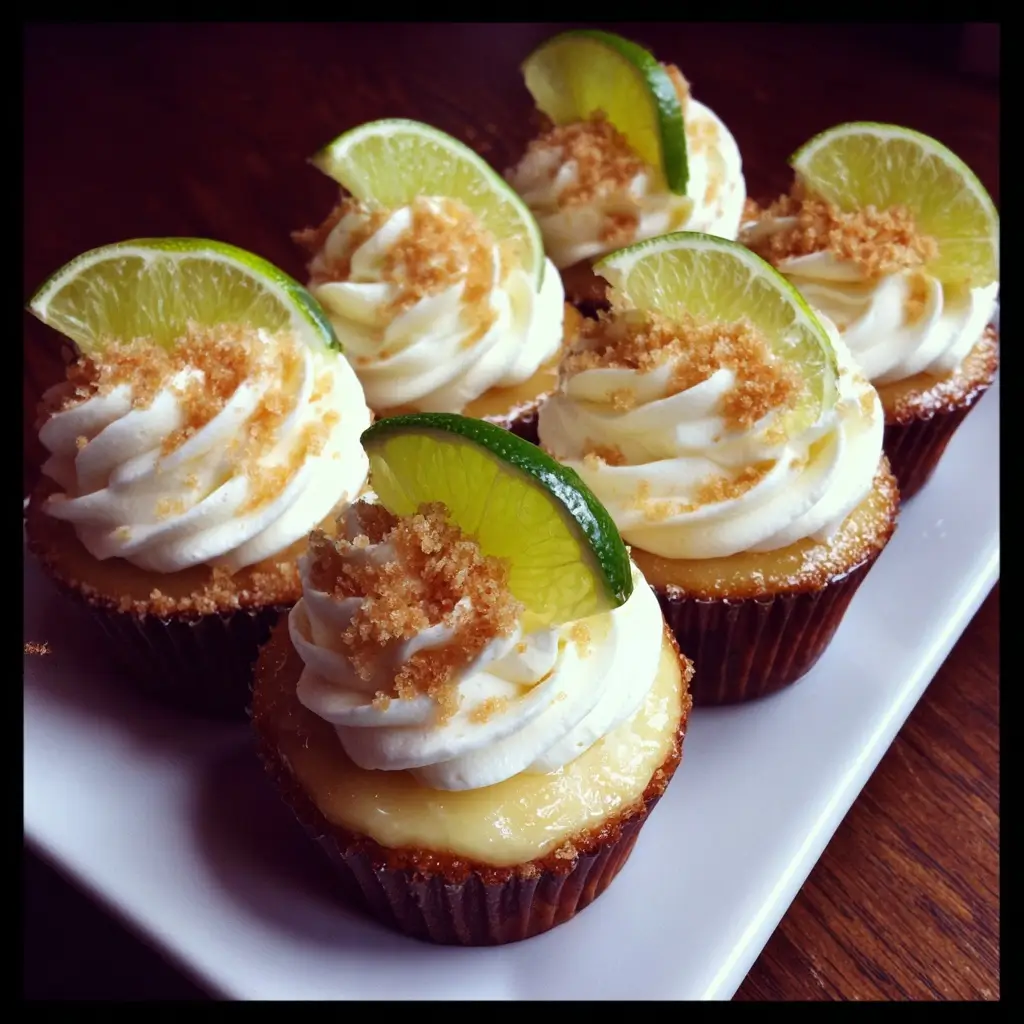
Key Lime Pie Cupcakes are a whimsical, portable, and irresistibly tangy twist on the beloved classic Florida dessert. Combining the bright, zesty essence of key limes with creamy, velvety filling and a buttery graham cracker crust—all elegantly nestled in a cupcake liner—these treats deliver all the nostalgic charm of traditional key lime pie in a perfectly portioned, handheld format. Whether served at summer barbecues, bridal showers, tropical-themed parties, or as an elegant after-dinner indulgence, Key Lime Pie Cupcakes captivate with their vibrant green-tinged filling, delicate crumb, and refreshing citrus lift that cuts through sweetness with sophisticated balance. Their visual appeal—often crowned with billowy whipped cream, a dusting of lime zest, and a tiny graham cracker crumble—makes them as photogenic as they are delicious, turning every bite into a celebration of sunshine, simplicity, and Southern coastal charm.
The History
The story of Key Lime Pie Cupcakes begins not with a single inventor, but with the organic evolution of two iconic American desserts: the legendary Key Lime Pie and the ever-popular cupcake renaissance. Traditional Key Lime Pie traces its origins to the Florida Keys in the late 19th and early 20th centuries, where resourceful residents—particularly sponge fishermen—used locally abundant key limes (smaller, more aromatic, and distinctly yellow-green when ripe), sweetened condensed milk (a shelf-stable staple before refrigeration), and egg yolks to create a no-bake, oven-free confection. The pie gained official recognition in 1957 when it was declared the official state pie of Florida—a designation reaffirmed by legislation in 2006.
The cupcake, meanwhile, rose to national prominence during the 2000s “cupcake craze,” spearheaded by bakeries like Magnolia Bakery and shows like *Sex and the City*. As bakers began experimenting with flavor fusions and structural innovations, the idea of translating beloved pie flavors into cupcake form became inevitable. Key Lime Pie Cupcakes emerged as a natural hybrid—leveraging the cupcake’s versatility to solve key logistical challenges of the original pie: portability, individual serving size, reduced chilling time per unit, and enhanced presentation potential. Early iterations appeared in food blogs and Southern culinary magazines around 2008–2010, often featuring baked crust bases, stabilized fillings, and creative garnishes. Today, they’re a mainstay in bakery case displays, wedding dessert tables, and holiday baking calendars—not just as novelty items, but as refined, technically thoughtful interpretations that honor tradition while embracing modern convenience and aesthetic sensibility.
Ingredients Breakdown
Understanding each component is essential for mastering Key Lime Pie Cupcakes—because success hinges on harmony between tartness, richness, texture, and structure. Below is a comprehensive, function-driven analysis:
- Graham Cracker Crumbs (for crust): Provides the foundational crunch and subtle molasses-cinnamon warmth. Fine, uniform crumbs ensure even layering and optimal binding; coarse pieces can lead to crumbling or uneven baking. Whole-grain or honey-sweetened varieties add depth but may darken the crust excessively—standard cinnamon-spiced graham crackers remain the gold standard for authenticity and color control.
- Unsalted Butter (melted, for crust): Acts as both binder and flavor enhancer. Melted (not browned) butter ensures full coating of crumbs without greasiness. Salt content must be carefully controlled—unsalted allows precise seasoning, preventing oversalting when combined with naturally salty graham crackers.
- Granulated Sugar (for crust): Adds caramelized notes and aids in crust crispness. A small amount (typically 1–2 tbsp) balances the crackers’ inherent saltiness without making the base cloying.
- Key Lime Zest: The aromatic powerhouse—oily citrus peel contains volatile compounds (like limonene and citral) that deliver the unmistakable, floral-tart top note. Always zest before juicing; use a microplane for fine, non-bitter shreds (avoid white pith). Real key limes yield more nuanced aroma than Persian limes—but bottled key lime zest is not recommended due to oxidation and loss of volatility.
- Fresh Key Lime Juice: The soul of the filling. True key limes (Citrus aurantiifolia) are smaller, more acidic, and possess higher citric acid and ester content than common Persian limes—giving that signature “brighter, sharper, more complex” sourness. Bottled juice lacks freshness, enzymatic activity, and volatile oils, resulting in flat, one-dimensional flavor. When key limes are unavailable, a blend of ¾ Persian lime juice + ¼ lemon juice + a drop of orange blossom water can approximate complexity—but fresh key limes remain irreplaceable for authenticity.
- Full-Fat Sweetened Condensed Milk: The structural and textural backbone. Its high sugar content (≈40%) prevents microbial growth, while its concentrated milk solids and caramelized lactose lend creamy body, subtle toffee notes, and thickening power via acid-induced protein coagulation. Low-fat or “light” versions destabilize the filling—leading to weeping, graininess, or poor set.
- Egg Yolks (large, room temperature): Provide emulsification, richness, and golden hue. Room temperature ensures seamless incorporation and prevents curdling when mixed with warm condensed milk. Using only yolks (not whole eggs) yields smoother texture and deeper color—whites would introduce excess water and risk sponginess.
- Heavy Whipping Cream (for topping): Must contain ≥36% milkfat for stable, velvety whipped peaks. Cold cream + cold bowl/whisk ensures maximum air incorporation and heat resistance. Under-whipped cream melts; over-whipped turns buttery. Stabilizers like powdered sugar (with cornstarch) or a touch of cream cheese improve hold—especially critical for event catering or warm environments.
- Optional Enhancers: A pinch of sea salt (enhances all flavors), a teaspoon of vanilla extract (adds roundness without masking lime), or a splash of rum (traditional in some Keys recipes for depth)—all used judiciously to support, never overshadow, the lime.
Step-by-Step Recipe
- Prep & Preheat: Position oven rack in center. Preheat oven to 350°F (175°C). Line a standard 12-cup muffin tin with parchment or high-quality foil cupcake liners (greaseproof liners prevent butter bleed-through). Set aside.
- Make the Crust Base: In a medium bowl, combine 1 ½ cups finely crushed graham cracker crumbs, 6 tbsp melted unsalted butter, and 2 tbsp granulated sugar. Mix with a fork until mixture resembles wet sand and holds together when pinched. Divide evenly among liners (about 1 ½ tbsp per cup). Use a flat-bottomed measuring cup or small glass to firmly press into an even ¼-inch-thick layer covering the bottom and slightly up the sides. Bake for 8 minutes—just until fragrant and lightly golden. Remove and cool completely on a wire rack (at least 15 minutes). Do not skip cooling—warm crust causes filling to melt or separate.
- Prepare Filling: While crusts cool, zest 4–5 key limes (yielding ≈2 tbsp finely grated zest). Juice limes to obtain exactly ⅓ cup (≈80ml) fresh key lime juice—strain to remove pulp/membranes. In a large non-reactive bowl (glass or stainless steel), whisk together zest, juice, 1 (14oz) can full-fat sweetened condensed milk, and 3 large room-temperature egg yolks until completely smooth and homogenous—about 90 seconds. Mixture will thicken slightly and lighten in color. Avoid overmixing, which can incorporate excess air and cause bubbles.
- Fill & Bake: Ladle filling gently over cooled crusts—fill each liner ¾ full (≈3 tbsp). Tap tin sharply 2–3 times on counter to release air bubbles. Place tin on middle oven rack. Bake 16–19 minutes—until edges are set and centers jiggle only slightly (like Jell-O) when gently shaken. Overbaking causes cracking, rubberiness, or separation. Rotate tin halfway through for even baking.
- Cool & Chill: Remove from oven and cool in tin on wire rack for 20 minutes. Then, carefully lift cupcakes out of tin (using tweezers if needed) and transfer to rack to cool completely (≈1 hour). Once fully cooled, cover loosely with plastic wrap (not touching surface) and refrigerate minimum 4 hours—or ideally overnight (8–12 hours). This slow, cold set allows proteins to fully coagulate, acidity to mellow, and texture to firm into luxurious silkiness.
- Whip Topping: At least 30 minutes before serving, chill mixing bowl and whisk attachment. Pour 1 cup very cold heavy whipping cream, 3 tbsp powdered sugar, and ½ tsp pure vanilla extract into bowl. Whip on medium-low until frothy (1 min), then increase to medium-high. Whip 2–3 minutes until stiff, glossy peaks form—do not overbeat. For stability, fold in 2 tbsp softened full-fat cream cheese (pre-beaten until smooth) at the end.
- Decorate & Serve: Pipe or spoon 2–3 tbsp whipped cream onto each chilled cupcake. Garnish immediately with extra lime zest, a tiny sprinkle of graham cracker crumbs, and—if desired—a single edible dried lime slice or mint sprig. Serve straight from refrigerator for optimal contrast of cool cream and tart-firm filling.
Tips
- Crumb Consistency is Crucial: Pulse graham crackers in a food processor until fine—no visible chunks. Sift through a mesh strainer to remove larger particles. Uneven crumbs = weak crust integrity.
- Room-Temperature Yolks Prevent Curdling: Cold yolks hitting warm condensed milk can cause microscopic scrambling. Let eggs sit in warm water for 5 minutes if pressed for time.
- Juice Yield Varies Wildly: Key limes yield only 1–2 tsp juice each. Plan for 12–15 limes to get ⅓ cup. Roll limes firmly on counter before cutting to maximize extraction. Use a citrus reamer—not a fork—for clean, efficient juicing.
- No-Bake Option Exists (for advanced bakers): Skip baking the filling entirely—pour directly into pre-baked, fully cooled crusts. Refrigerate 24+ hours. Texture is softer, more pudding-like, with intensified lime brightness—but requires impeccable ingredient freshness and strict food safety adherence.
- Prevent Weeping (Liquid Separation): Ensure filling is thoroughly chilled before topping. Avoid condensation by removing cupcakes from fridge 5 minutes before piping cream. Never freeze filled cupcakes—the acid breaks down dairy proteins, causing irreversible syneresis.
- Linings Matter: Standard paper liners absorb butter from crust and tear easily. Use greaseproof parchment or foil liners—especially for make-ahead batches. For elegant presentation, try scalloped kraft liners or reusable silicone molds (lightly greased).
- Timing Trick for Parties: Bake crusts 2 days ahead; store airtight at room temp. Prepare filling 1 day ahead; refrigerate covered. Assemble and chill 8 hours pre-event. Whip cream max 2 hours before serving.
- Test Doneness Correctly: The “jiggle test” is more reliable than visual cues. Insert toothpick near center—it should come out mostly clean with moist crumbs (not wet batter). A slight wobble is ideal; stillness means overbaked.
- Acid Balance Adjustment: If limes taste unusually mild, add ½ tsp additional juice—but reduce condensed milk by 1 tsp to maintain set. Conversely, overly aggressive limes? Add 1 tsp extra condensed milk to soften acidity.
- Cooling Surface Matters: Never cool cupcakes on a damp or insulated surface—trapped steam softens crust. Use a bare metal or wire rack for maximum airflow.
Variations and Customizations
While classic Key Lime Pie Cupcakes shine in their purity, endless creative avenues exist—each respecting the core flavor profile while adding dimension, texture, or occasion-specific flair:
- Coconut Key Lime: Add ¼ cup toasted unsweetened coconut flakes to crust; fold 2 tbsp coconut milk powder into filling. Top with toasted coconut curls and a dot of coconut cream.
- Berry Swirl: After filling cups, drop 1 tsp raspberry or blackberry coulis into center and swirl gently with a toothpick. Adds floral-acid counterpoint and stunning marbled effect.
- Spiced Ginger-Lime: Infuse melted butter for crust with 1 tsp minced crystallized ginger. Add ¼ tsp ground ginger + ⅛ tsp ground cardamom to filling. Garnish with candied ginger slivers.
- Chocolate-Graham Crust: Replace ¼ cup graham crumbs with finely ground dark chocolate (70%). Deepens crust richness and creates beautiful contrast against pale filling.
- Vegan Adaptation: Crust: vegan graham crackers + coconut oil. Filling: full-fat coconut milk (canned, refrigerated overnight), lime juice/zest, cornstarch slurry (2 tbsp cornstarch + 3 tbsp water), and agave syrup. Chill 12+ hours. Top with coconut whip.
- Gluten-Free Version: Use certified GF graham-style crackers (e.g., Kinnikinnick or Schär). Verify condensed milk and baking powder are GF-certified. Add ½ tsp xanthan gum to filling for stability.
- Mini Cupcake Edition: Use mini muffin tin. Reduce crust to 2 tsp, filling to 1 tbsp, bake time to 11–13 minutes. Perfect for tasting menus or wedding favors—yield: 36 minis.
- Boozy Key Lime: Add 1 tbsp premium key lime liqueur (e.g., Giffard) or white rum to filling. Reduce lime juice by 1 tsp to preserve acidity balance. Not suitable for children or strict abstinence events.
- Deconstructed “Naked” Style: Skip liners. Press crust into bottom of ramekins or mason jars. Layer filling, then piped cream, then crumbled graham + zest. Rustic, elegant, and ideal for buffets.
- Protein-Powered: Blend 1 scoop unflavored collagen peptides or whey isolate into filling. Increases satiety without altering taste—ideal for post-workout treats or health-conscious gatherings.
Health Considerations and Nutritional Value
Key Lime Pie Cupcakes occupy a nuanced space nutritionally—celebrated for bright, natural ingredients yet inherently indulgent due to concentrated sugars and dairy fats. A standard cupcake (crust + filling + 2 tbsp whipped cream) contains approximately:
- Calories: 280–320 kcal
- Total Fat: 14–17g (8–10g saturated)
- Carbohydrates: 34–38g (28–32g sugars)
- Protein: 4–5g
- Vitamin C: ≈12–15mg (15–20% DV) from lime juice—supporting immunity and collagen synthesis
- Calcium: ≈120mg (10% DV) from condensed milk and graham crackers
- Dietary Fiber: ≈0.5g (primarily from graham cracker crumbs)
Health Highlights:
- Natural Antioxidants: Lime zest contains flavonoids (hesperidin, naringin) and limonene—studied for anti-inflammatory and potential anticancer properties.
- No Artificial Colors or Preservatives: Authentic versions rely solely on lime’s natural yellow-green hue—no FD&C dyes required.
- Low Sodium: ≈110–130mg per cupcake—well below daily limits, especially when using unsalted butter and low-salt graham crackers.
Considerations for Sensitive Diets:
- Lactose Intolerance: Sweetened condensed milk is highly concentrated lactose. Lactase enzyme supplements taken prior to consumption may aid digestion. Vegan versions eliminate dairy entirely.
- Sugar Sensitivity: The high glycemic load (from sucrose in condensed milk + added sugar) necessitates moderation for diabetics or insulin-resistant individuals. Substituting with monk fruit-sweetened condensed milk remains experimental and often compromises texture.
- Gluten & Allergens: Traditional graham crackers contain wheat, honey, and sometimes soy lecithin. Always verify labels for cross-contamination warnings if serving those with celiac disease or severe allergies.
- Pregnancy & Food Safety: Raw egg yolks pose minimal risk in properly refrigerated, acidified (pH <4.6) fillings—but pasteurized yolks or a quick cook method (heating filling to 160°F with constant stirring) is recommended for immunocompromised individuals or pregnant people.
Mindful Enjoyment Strategies: Savor one cupcake slowly—pair with herbal tea or sparkling water to enhance palate cleansing. Freeze unfrosted cupcakes (without cream) for up to 3 months; thaw overnight in fridge and top fresh. Portion control is built-in—making them inherently more balanced than slice-based desserts.
Ingredients
- 1 ½ cups (150g) finely crushed graham cracker crumbs (about 12 full sheets)
- 6 tablespoons (85g) unsalted butter, melted and slightly cooled
- 2 tablespoons (25g) granulated sugar
- Zest of 4–5 key limes (≈2 tablespoons, finely grated)
- ⅓ cup (80ml) freshly squeezed key lime juice (from ~12–15 limes)
- 1 (14-ounce / 400g) can full-fat sweetened condensed milk
- 3 large egg yolks, at room temperature
- 1 cup (240ml) heavy whipping cream (≥36% fat), very cold
- 3 tablespoons (22g) powdered sugar
- ½ teaspoon pure vanilla extract
- Optional garnishes: extra lime zest, graham cracker crumbs, edible flowers, mint
Directions
- Preheat oven to 350°F (175°C). Line a 12-cup muffin tin with parchment or foil cupcake liners.
- In a bowl, mix graham cracker crumbs, melted butter, and granulated sugar until moistened and clumping. Divide evenly among liners (≈1 ½ tbsp each) and press firmly into bottoms and ¼ inch up sides using a small flat tool. Bake 8 minutes. Cool completely in tin on wire rack (15+ min).
- Meanwhile, zest and juice key limes. Strain juice.
- In a large bowl, whisk lime zest, lime juice, sweetened condensed milk, and egg yolks until completely smooth (90 sec). Do not overmix.
- Once crusts are cool, pour filling into each—fill to ¾ height (≈3 tbsp). Tap tin sharply to pop air bubbles.
- Bake 16–19 minutes until edges are set and centers jiggle slightly. Cool in tin 20 min, then transfer to rack to cool fully (≈1 hr).
- Cover loosely and refrigerate minimum 4 hours—preferably overnight (8–12 hrs).
- At least 30 min before serving, chill mixing bowl and whisk. Whip cold cream, powdered sugar, and vanilla to stiff peaks (2–3 min). For stability, fold in 2 tbsp softened full-fat cream cheese.
- Pipe or spoon whipped cream onto each chilled cupcake. Garnish immediately with zest and crumbs. Serve cold.
FAQ
- Can I use regular limes instead of key limes?
- Yes—but expect a milder, less complex flavor. Key limes are smaller, more aromatic, and have higher acidity and ester content. For best results, use a blend: ¾ Persian lime juice + ¼ lemon juice + 1 drop orange blossom water to mimic depth. Never substitute bottled key lime juice—it lacks volatile oils and freshness.
- Why did my filling crack or separate?
- Overbaking is the #1 cause—proteins tighten excessively and weep. Also check: was the filling poured onto warm crusts? Did you whisk too vigorously, incorporating air bubbles? Was the condensed milk low-fat? And crucially—did you refrigerate long enough? Under-chilled filling appears cracked but is often just unset.
- Can I freeze Key Lime Pie Cupcakes?
- Unfrosted cupcakes (crust + filling only) freeze well for up to 3 months—wrap individually in plastic + foil. Thaw overnight in fridge, then top with fresh whipped cream. Never freeze assembled cupcakes with whipped cream—it becomes grainy and weeps upon thawing.
- How do I prevent soggy crusts?
- Ensure crusts are fully cooled before adding filling. Use greaseproof liners. Bake crusts long enough to dry out moisture—but not so long they burn. For ultra-crisp bases, blind-bake with pie weights (dried beans/rice) for first 5 minutes, then remove weights and bake 3 more minutes.
- Is there a no-bake version?
- Absolutely! Skip baking the filling—pour directly into pre-baked, fully cooled crusts. Refrigerate 24–48 hours. Texture will be softer, more pudding-like, with brighter lime notes. Requires impeccably fresh, pasteurized eggs and strict refrigeration (<40°F) at all times.
- My whipped cream deflated quickly—what went wrong?
- Cream was likely not cold enough (bowl, whisk, cream all need chilling), overwhipped (turned buttery), or under-sweetened (powdered sugar stabilizes). Try adding ½ tsp cream of tartar or 1 tsp cornstarch (dissolved in 1 tsp cold milk) during whipping for professional-grade stability.
- How far in advance can I make these?
- Crusts: up to 3 days ahead, stored airtight at room temp. Filling: up to 2 days ahead, refrigerated covered. Fully assembled (with cream): best within 2 hours of piping. For events, bake/fill 1 day ahead, chill, then whip and garnish same-day.
- Can I make them dairy-free?
- Yes—with caveats. Crust: use dairy-free graham crackers + coconut oil. Filling: full-fat canned coconut milk (refrigerated overnight, use only thick cream layer), lime juice/zest, cornstarch slurry, and maple syrup or coconut sugar. Chill 12+ hours. Texture differs—more custard-like—but deeply flavorful.
- Why does my filling taste too sour or too sweet?
- Lime acidity varies by season, ripeness, and variety. Always taste filling pre-pour: if too sharp, add ½ tsp more condensed milk. If too bland, add ½ tsp more lime juice—and reduce condensed milk by 1 tsp to preserve set. Keep a small reserve of both to adjust.
- What’s the best way to transport them?
- Use a cupcake carrier with individual slots and a firm lid. Place in refrigerator until 15 minutes before departure. Pack with ice packs in an insulated bag. Never stack—use dividers. For longer trips (>2 hours), consider freezing unfrosted cupcakes and thawing en route.
Summary
Key Lime Pie Cupcakes are a masterclass in balancing vibrant citrus brightness, rich creamy decadence, and buttery graham cracker texture—all elegantly packaged in a portable, portion-perfect format that honors Florida Keys tradition while embracing modern baking artistry.
With meticulous attention to fresh key lime juice, properly chilled components, precise baking and chilling times, and thoughtful customization options, these cupcakes deliver unforgettable refreshment, visual charm, and nostalgic joy—making them not just a dessert, but a sun-drenched experience in every bite.